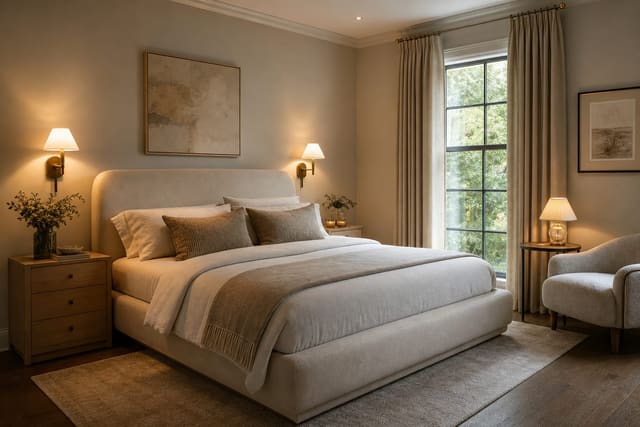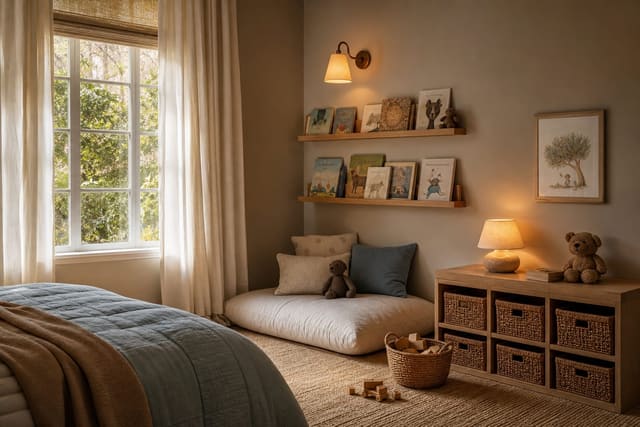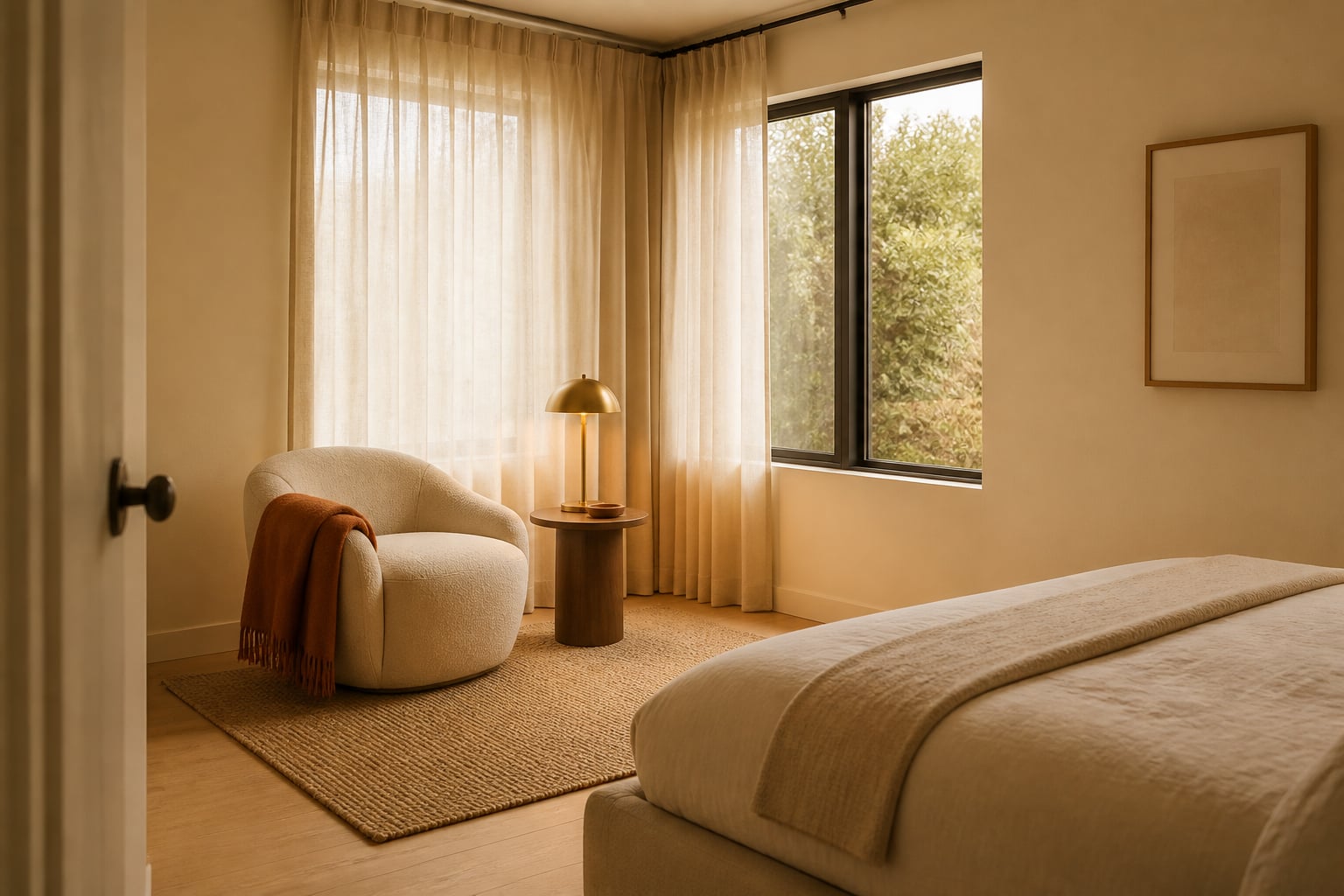
Bedroom sitting area ideas work best when the chair faces a window or art, sits on its own 4x6 rug, and has a side table with a lamp within reach. Give the corner one clear job (reading, dressing, or morning coffee), scale the seating to the room, and keep a clear path around the bed.
What should a bedroom sitting area actually do?
A sitting area works when it solves a specific daily moment: reading before sleep, putting on shoes, drinking coffee away from the kitchen, or taking a quiet phone call. If you can't name the moment, don't buy the chair yet.
Decide if the zone is active or passive. An active zone needs a real chair, lamp, and side table with room to sit without bumping the bed frame. A passive zone can be a bench at the foot of the bed or a small slipper chair near the closet that simply makes the room feel finished.
One good chair usually beats two mediocre ones. A chair 28 to 34 inches wide fits most bedrooms; a seat depth of 20 to 23 inches is comfortable without swallowing the floor. Leave 30 inches of walkway from door to bed and at least 24 inches between the chair and the nearest dresser or bed corner.
How do you scale a master bedroom sitting area?
Measure the open zone as a rectangle and subtract the swing of doors, closet panels, drapery, and dresser drawers. What's left decides whether you need a chair, bench, chaise, or nothing upholstered at all.
For a small corner, use one armless or tight-arm chair, a 14 to 18 inch round table, and a floor lamp with a shade that clears the arm; the trio should fit inside roughly 42 by 42 inches. With closer to 5 by 7 feet, add an ottoman that tucks under or to the side. A fixed chaise only works when the room can spare a long uninterrupted wall.
At the foot of the bed, size the bench 6 to 12 inches shorter than the mattress width: around 48 to 54 inches for a queen, 60 to 72 inches for a king, with a depth near 16 to 20 inches. In a modest bedroom, use the same discipline that makes a small master bedroom feel luxurious: fewer pieces, better proportions, no furniture blocking the path.
Rugs decide whether the area feels attached or stranded. If the chair legs touch the bed's rug, let them land fully on or off it; half-on legs look accidental. If the zone is separate, use a rug at least 4 by 6 feet, large enough for the chair's front legs and the table.
Test this on your own room photo with ReDesign before you finalize the layout, keeping the room structure, daylight, and main path visible so the preview solves the space you actually have.
Which sitting area idea fits your awkward corner?
- Reading chair: the safest default. Place it near a window for daylight or the darker corner where a lamp can earn its keep. Add a table 16 to 20 inches across for a book and a drink.
- Dressing perch: use a firm bench or low stool near the closet or mirror, not a deep lounge chair. Leave 30 to 36 inches in front of a full-length mirror.
- Morning coffee spot: works near a window or fireplace with a chair that has a real back and light control so an east-facing corner doesn't become a glare chamber.
- Parent-and-child reading corner: a low basket of books and a wide chair can work if the room already has family traffic; for a child's own room, kids reading corner ideas need lower shelves and tougher fabrics.
- Mini work perch: the riskiest option. A writing table is fine, but don't let cables and paper stacks turn the bedroom into an office; compare that pressure against flex room and spare bedroom ideas first.
What mistakes should you avoid?
- Buying a matching chair pair because the room looked big in a listing photo. Two chairs need double the space plus a table and a reason to face each other; if they end up shoulder to shoulder, choose one better chair instead.
- Ignoring the view from bed. You'll see this corner while lying down, so angle chairs 20 to 30 degrees toward the bed or window rather than squaring them into a corner.
- Choosing the wrong formality. A 17 inch lounge chair may be awkward for tying shoes; pale linen won't survive pets or lotion. Use performance fabric or a darker weave if the chair will see real use.
- Lighting with the ceiling fixture only. Use a floor lamp 58 to 64 inches tall or a table lamp with the shade bottom near seated eye level, in warm 2700K bulbs.
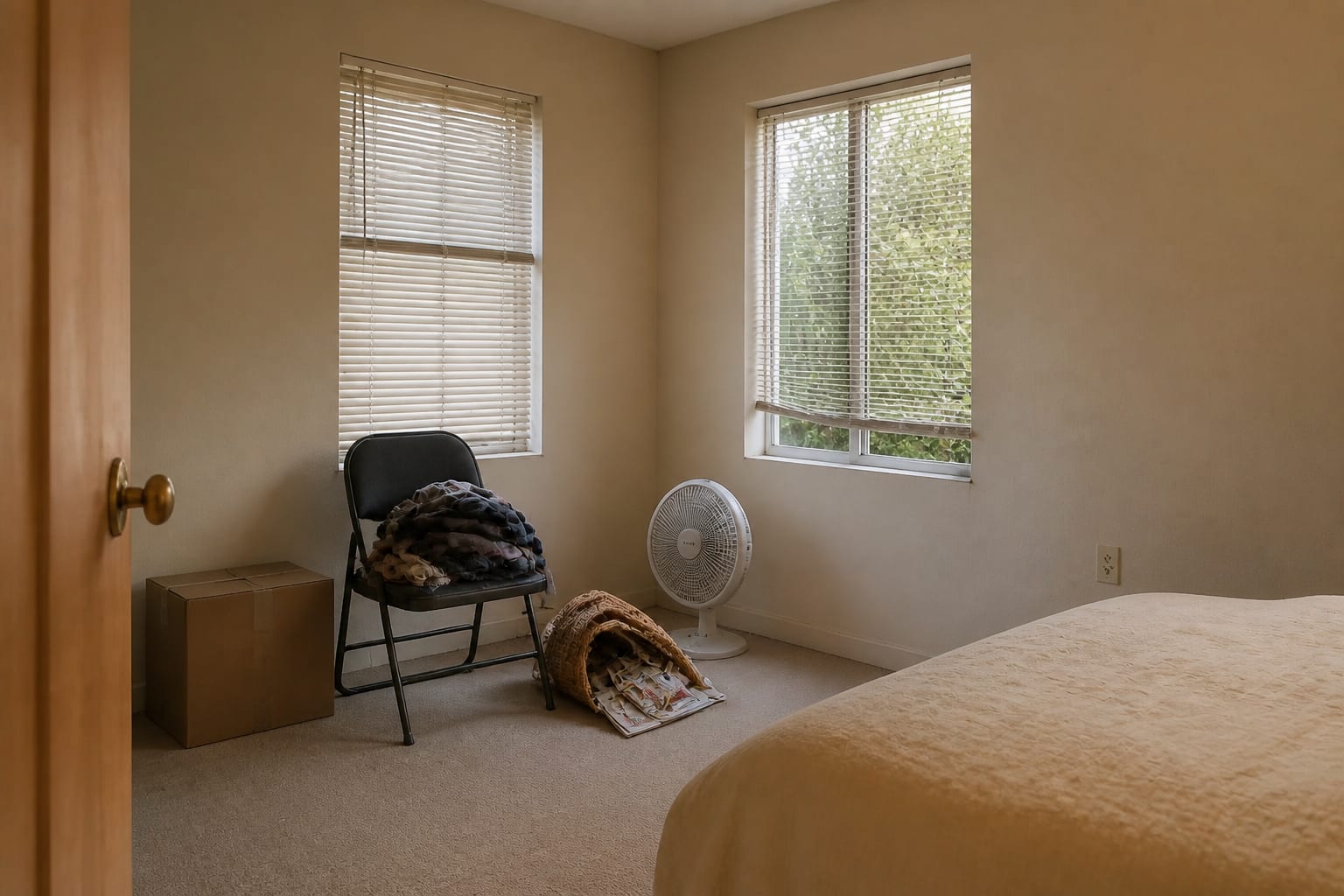
- Treating the chair as a landing strip. If it collects clothes, add closet hooks or a lidded basket before blaming the chair.
How do you preview a bedroom sitting area with AI?
The real problem is rarely the chair alone; it's the chair against the bed, rug, window, and walking path. Upload a clear photo from the corner with the bed, windows, closet doors, and existing rug visible, and keep real nightstands and curtains in frame.
Ask for three versions with different purposes: a reading chair with lamp and table, a foot-of-bed bench, and a dressing seat near the closet. Keep wall color and bedding consistent so you're judging the sitting area, not a full style change, then compare walkway width, lamp placement, and whether the chair blocks or creates the best view.
If the room looks better empty, respect that answer. For the broader workflow, use the AI design complete guide as the parent checklist, then return here for scale, light, and layout choices.
Frequently Asked Questions
What size chair fits in a bedroom sitting area?
A 30 inch wide accent chair fits most bedrooms. A 36 inch chair-and-a-half needs a 14x12 foot room minimum, and larger lounge chairs only fit a primary suite over 200 square feet.
How do I keep the chair from becoming a laundry pile?
Place a 4x6 rug, side table, and lamp around the chair to form a visible zone. The brain treats a defined zone differently from a random chair near the bed, so it gets used instead of piled on.
Should the sitting area face the window or the bed?
Face the chair toward a window or art on a perpendicular wall. Facing the bed makes it feel like a waiting room; check the result against ordinary movement, walkway width, door swing, and evening glare before finalizing the angle.
Does a bedroom sitting area need a separate light?
Yes. A 3000K floor lamp or table lamp lets one person read while another sleeps. Relying on the bedside lamp pulls the sitter onto the bed and the zone never gets used.
What rug size works under a bedroom sitting chair?
A 4x6 or 5x7 rug centered under the chair-table pair anchors the zone. Rugs smaller than 4x6 read as accents, not zones, and let the chair drift visually into the bed area.
> Try this: Ready to see this on your own room? Open ReDesign and run the preview before you buy, paint, drill, or move furniture.
Three transformations to try
1. Window-facing chair with 4x6 rug and one tall floor lamp 2. Two-chair conversation set with round table between 3. Reading bench under window with rug and basket of throws