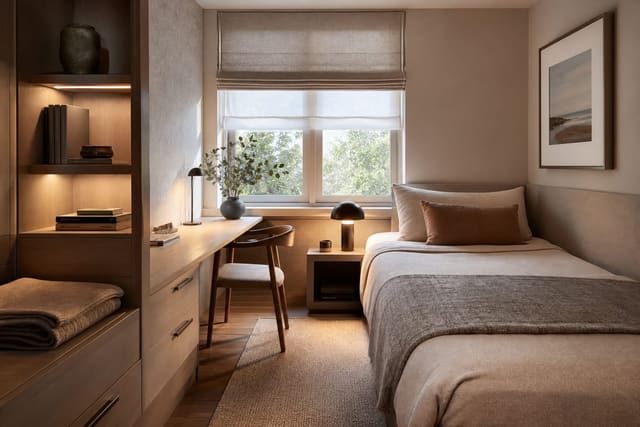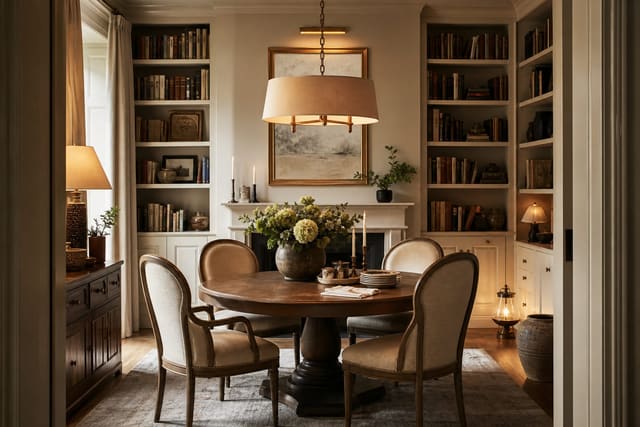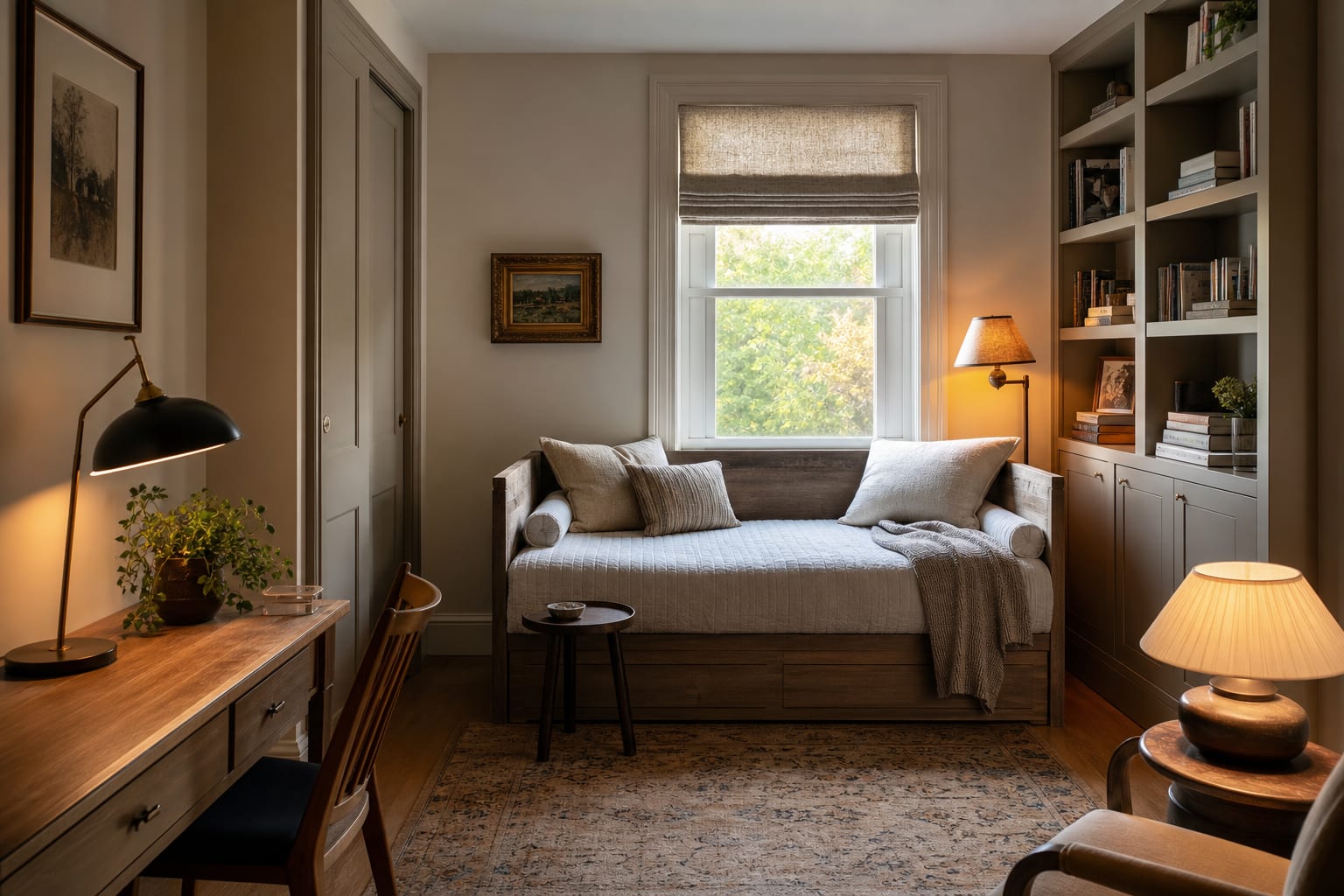
The best spare bedroom ideas assign one primary job — guest room, office, gym, craft studio, reading nook, dressing room, storage, or quiet retreat — and treat every other function as secondary. Give that priority use the best wall, light, and furniture, then hide the rest behind closed storage. An undefined spare room isn't flexible; it's unfinished.
What's the best use for a spare bedroom?
The best use is whichever function matches your actual week, not the prettiest theme. A 10 by 11 foot room can usually handle one full sleep surface, one desk, or one workout zone with dignity — rarely all three.
If you host guests twice a year, don't let a queen bed occupy the best wall 363 days of the year. If you work from home four days a week, lean toward a guest room home office combo that prioritizes daily work over occasional sleepovers.
Name the room's weekly job in one sentence — "this is where I take calls" or "this is where guests sleep" — and the furniture choices get easier.
The decision that stops a spare room from becoming storage
Give the room a primary wall, a storage wall, and a landing zone. The primary wall holds the main function (bed, desk, table, treadmill, or reading chair); the storage wall hides the evidence; the landing zone gives you one honest surface for bags or folded clothes.
Check real clearances before shopping: a desk needs about 30 inches behind the chair, a twin bed is 38 by 75 inches, a queen is 60 by 80 inches, and a useful movement zone for stretching is closer to 6 by 8 feet. A craft table should run at least 30 inches deep for cutting fabric or wrapping gifts.
Keep storage closed unless the objects are genuinely attractive — a 12 to 15 inch deep cabinet hides a lot without eating the room. If another room is competing for the same overflow jobs, compare this plan against repurposing an unused formal dining room before the spare bedroom absorbs every household problem.
Test this on your own room photo with ReDesign before finalizing a layout — keep the daylight, ceiling line, and main path visible so the preview solves the space you actually have.
Which eight flex room ideas earn the square footage?
- Guest room with a daybed. A twin or twin XL daybed with a tailored cover and two firm pillows sleeps occasional guests while keeping the floor open the rest of the year.
- Home office first, guest room second. Put the desk on the best daylight wall; use a wall bed, sleeper chair, or daybed for visitors instead of a queen that crowds the workspace.
- Workout room with closed gear storage. Claim a 6 by 8 foot rectangle and store weights and mats in a cabinet or lidded bench; keep mirrors to 24-36 inches wide.
- Craft or hobby studio. A wipeable table, task lamp, and 10-12 inch deep shelves beat decorative organizers bought before the storage plan.
- Reading or decompression room. One comfortable chair, a 2700K lamp, a side table, and a soft rug can be enough.
- Dressing room. Add a wardrobe, mirror, and bench if the primary closet is failing; leave 30-36 inches in front of a full-length mirror with warm, even light.
- Luggage and linen room done elegantly. Matching closed cabinets, a folding surface, and a guest-ready pillow shelf beat a bed used as permanent staging.
- Kids' homework or project room. A durable table, washable rug, and closable cabinets in a calmer palette than a playroom.
What mistakes make a spare bedroom feel accidental?
Keeping a full guest bed by default is the biggest one — if guests are occasional, swap in a daybed, sleeper sofa, or wall bed instead of letting an unused queen block the closet and window.
Refusing to edit categories is the second: if the room holds office supplies, holiday decor, luggage, toys, and exercise gear, the fix is fewer categories with closed homes, not more baskets.
Furnishing with leftovers reads as temporary — one good chair or properly scaled desk beats five pieces that almost work. And don't ignore light: add a shaded lamp near the main activity, use 2700K for rest and 3000K near a desk, and apply the same restraint that makes a small master bedroom feel luxurious — fewer pieces, better light, nothing blocking the path.
How do I preview a spare bedroom before committing?
Flexible rooms are easy to overpromise on paper: a Murphy bed may block the closet when open, or a craft table's chair may stop the door from swinging. Upload a corner-angle photo showing the window, closet, door swing, and existing clutter — suitcase, printer, exercise mat — so the preview solves the real room.
Test three single-function versions: guest-first with a daybed, office-first with a strong desk wall, and hobby-or-retreat with a larger table or reading chair. Keep wall color and flooring steady so you're judging the layout, not the style.
Prompt for hard constraints: 30 inches of chair pullback, 24 inches beside the bed, closed storage, warm lamp light, and no furniture blocking the closet. The winning version is the one you can explain in a single sentence.
For the broader workflow, use the AI design complete guide as the parent checklist, then return here for scale, light, and layout choices.
Frequently Asked Questions
What is the right priority for a flex bedroom?
Give the weekly function (office, hobby, kids' study) the best window, chair, and light; the occasional function (guests) gets a queen daybed or convertible sofa plus one closed cabinet for sheets and pillows.
Is a daybed or pull-out sofa better for a flex room?
A 75-inch queen daybed reads as seating most days and sleeps two adults on guest weekends. A pull-out sofa is more comfortable for sleep but requires a daily transformation step that often gets skipped.
How do I keep a flex room from becoming a junk room?
Assign every horizontal surface a single use and enforce a weekly reset — bills, holiday gear, and laundry each need a labeled bin elsewhere. Then check ordinary movement: chair pullout, walkway width, door swing, and evening light matter more than a perfect catalog angle.
Do I need a real closet in a flex spare bedroom?
For occasional guests, a 12-inch deep wardrobe and four wall hooks are enough. A full reach-in closet is only necessary if the room is used regularly by a long-term guest or family member.
Can a flex bedroom still meet bedroom code?
Yes. Most jurisdictions count a bedroom if it has a closet (or wardrobe), an egress window, and a door; adding office or hobby furniture doesn't change that legal classification.
> Try this: Ready to see this on your own room? Open ReDesign and run the preview before you buy, paint, drill, or move furniture.
Three transformations to try
1. Office-first with queen daybed for occasional guests 2. Hobby-first with a 30x72 worktable and shallow drawers 3. Guest-leaning with murphy bed and tucked desk