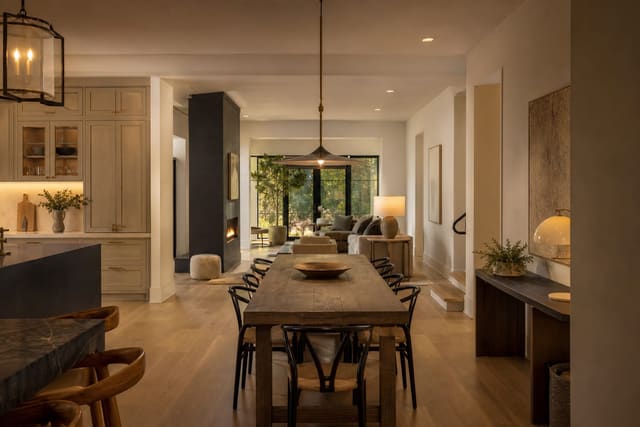
You can repurpose a formal dining room nobody uses by giving it one clear daily job — home office, library lounge, homework hub, game room, or hybrid dining space — while keeping the chandelier and sideboard as anchors. Match the new function to the room's location, sightlines, and light, and it can still host holiday meals when needed.
What can you do with a formal dining room you never use?
Turn it into a room that supports daily life: a work zone, reading room, music room, homework hub, cocktail lounge, craft studio, or hybrid dining space that still handles guests. The best idea matches the room's position in the house, not the most dramatic option.
A dining room near the entry works well as a library or receiving room since guests see it first. One between the kitchen and living room usually wants flexibility — a homework table by day, dessert table at night. A room tucked behind doors can handle messier work: sewing, model building, or a two-person office.
Keep the table if it still helps the new function. A 36 to 42 inch round table makes a great game or puzzle surface, while a 72 inch rectangular table can become a shared desk with lamps and cable control added. The conversion fails when the table stays only because removing it feels emotionally hard.
Which new job fits the room's bones?
Check doorways, windows, and walls before picking a use. A room with two wide openings and no door suits a library lounge, piano room, or display-heavy hobby space, but not confidential calls. A room with a closable door can become an office or quiet study without forcing the household to whisper.
Leave at least 30 inches for a walking path, 36 inches if people regularly pass behind chairs. Don't place a desk where the chair backs into a kitchen-to-living-room shortcut.
Light should steer the decision too. A north-facing room with one window may suit a moody library better than a precision craft space; a sunny room supports plants or a home office, with lined curtains or solar shades to cut glare.
If the room is small, borrow the discipline from small dining rooms under 100 square feet: fewer pieces, better scale, no furniture needing ceremonial clearance.
Test this on your own room photo with ReDesign before you choose — keep doorways, walls, windows, main furniture, and fixed features visible so the preview solves the room you actually have.
The 7 strongest formal dining room alternatives
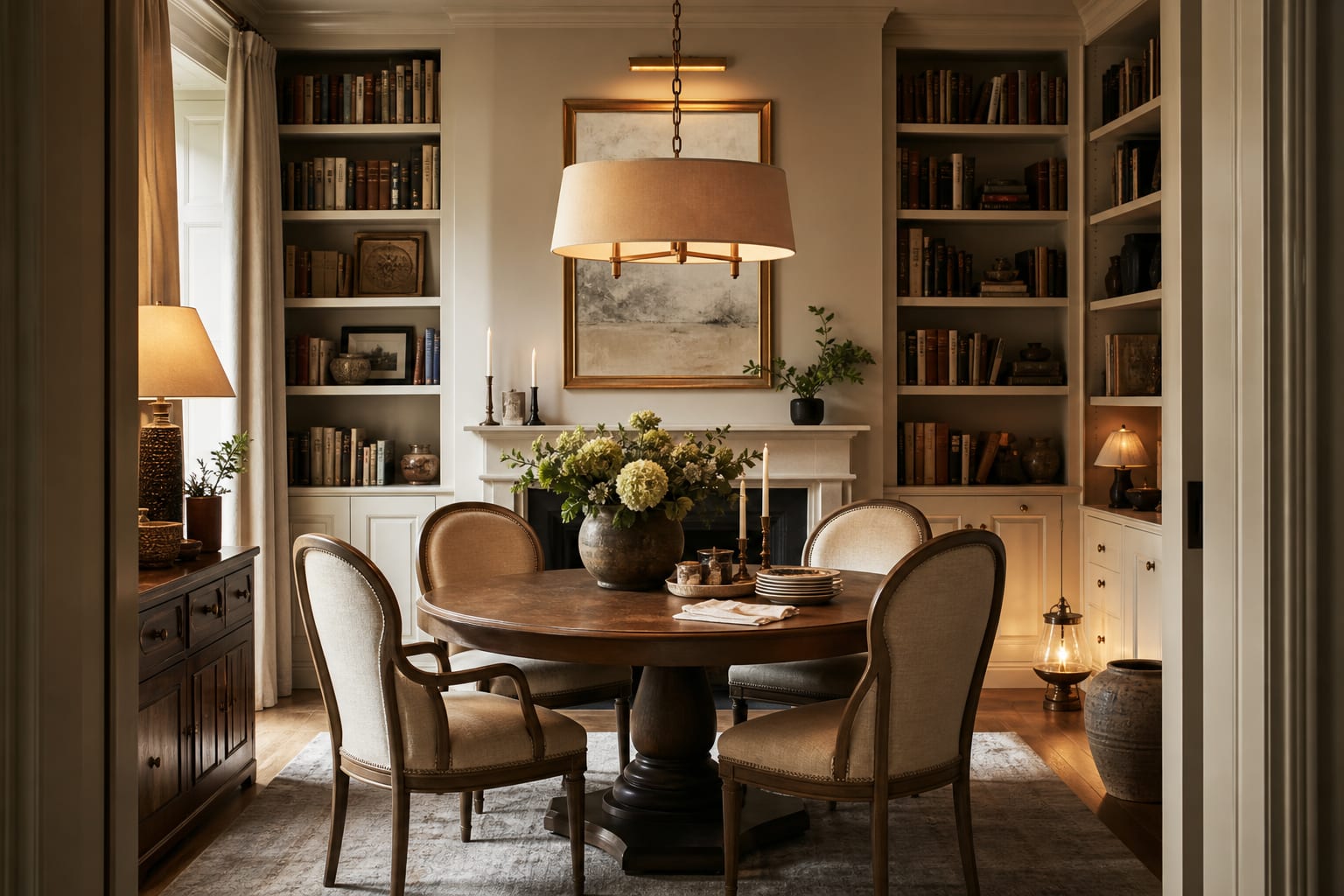
- Library lounge — bookcases on the longest wall, two upholstered chairs, a 24 to 30 inch round table between them. Keeps a grown-up feel while earning daily use.
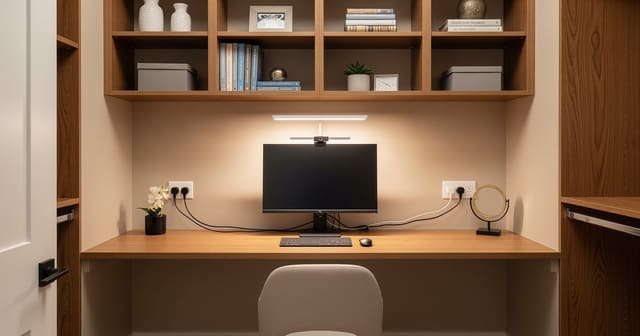
- Home office — desk perpendicular to the window to avoid glare. A 60 inch desk suits one person; two people need roughly 84 inches combined or separate desks.
- Homework and project room — a wipeable table, closed storage for paper and chargers, and a shallow 12 to 15 inch cabinet for supplies.
- Game room — keep the table, add a games cabinet, and hang a pendant 30 to 36 inches above the tabletop for intimate light.
- Cocktail or coffee lounge — swap the dining set for a small sofa, two chairs, and a bar cabinet; keep surfaces edited.
- Craft or wrapping room — a durable table, peg rail, lidded bins, and task lighting; use closed cabinets if visible from the entry.
- Flex guest room — a daybed or wall bed works only if the room still functions daily. See flex room and spare bedroom ideas before committing to a convertible piece.
Common mistakes that make the conversion feel temporary
Don't leave the chandelier stranded over nothing. Keep a table-like surface beneath it, or replace it with a flush mount or pendant that suits the new furniture. If you keep it, let it relate to a desk, game table, or seating group.
Don't push every piece against the walls. Pull at least one chair, table, or ottoman inward by 12 to 18 inches so the center of the room has a purpose again.
Don't ignore views from adjacent rooms. A monitor's back or craft bins can become the first thing visitors see from the foyer or kitchen. If the room feels like a narrow pass-through, the layout approach in narrow dining room galley arrangements keeps the path clear.
Don't remove all dining capability if the house still needs it occasionally. A round table with leaves or a folding surface stored nearby can cover holidays without preserving a museum room year-round.
Use AI to preview your dining room before you commit
The biggest question in a dining room conversion isn't the label — it's whether the new furniture mass looks right from connected rooms. Upload a straight photo of the actual room and test versions that keep openings, windows, trim, and the light fixture visible.
Shoot from the main doorway first, then from the kitchen or living room if those views matter. Include the ceiling line, two walls, and the full width of the opening. If the table is leaving, run one preview with it removed and one with it reused to compare the tradeoff.
Ask for focused options: a library lounge with bookcases, an office with closed storage, a game room that keeps the table, a coffee lounge with smaller seating. Keep wall color and flooring consistent unless you plan to change them.
How to make the new room feel intentional by next weekend
Give the room one primary job, then edit out anything that contradicts it. A library lounge can have a game drawer, but not double as storage for tax files and backpacks. A home office can keep two guest chairs, but the desk and storage should lead.
Use the rug to announce the change. For seating, let at least the front chair legs sit on the rug — an 8 by 10 usually beats the old 5 by 8 under-dining size. For an office, use low-pile or skip the rug under rolling chairs.
Switch to warm bulbs, 2700K to 3000K, to flatter wood, books, and evening use. Add one table or floor lamp so light exists at seated height, not just from the chandelier.
Finish with closed storage — cabinets, skirted consoles, lidded boxes, file drawers — so the room feels permanent. The goal is giving good architecture a daily job, not erasing its formal history.
Frequently Asked Questions
What is the best use for an unused formal dining room?
Convert it to a home office (one or two desks), a reading lounge with two chairs and a sofa, a kids' playroom, or a second sitting room. Pick the daily use the rest of the house currently lacks.
Can I still host holidays if I repurpose the dining room?
Yes. Keep a compact table (around 60 inches) as a desk or work surface day-to-day, and store leaves nearby for full extension on holidays. Converting back typically takes about 30 minutes twice a year.
Should I remove the chandelier when converting a dining room?
Usually no. The chandelier anchors the room as an architectural feature; swap in dimmable 2700K bulbs and add task lamps for daily work. It becomes mood lighting at night while the room does its new job by day.
What about the sideboard or buffet?
Keep it. It becomes office storage, library storage, or a craft supply cabinet without modification. Remove it only if the new use needs different storage, such as a full bookshelf wall for a library.
Does repurposing a dining room hurt resale?
Rarely. Conversions that preserve the chandelier, sideboard, and architectural details read as flexibility, not loss, to buyers. Converted rooms generally photograph better than empty, unused formal dining rooms in most markets.
> Try this: Ready to see this on your own room? Open ReDesign and run the preview.
Three transformations to try
1. Dining-room-to-home-office with chandelier kept 2. Reading lounge with sideboard as library storage 3. Kids art studio with table as work surface