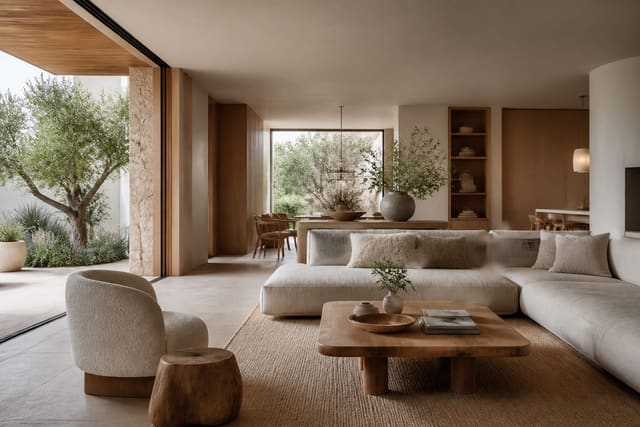
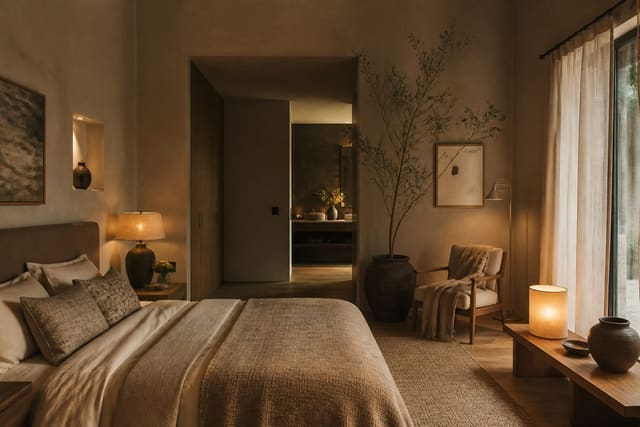
The difference between Organic Modern and Japandi comes down to philosophy versus feeling. Japandi is a culturally rooted fusion of Japanese minimalism and Scandinavian function that treats negative space as intentional. Organic Modern is a newer interiors category that softens modern lines with natural materials, warm neutrals, and sensory texture. Japandi is disciplined quiet; Organic Modern is relaxed warmth.
What's the Core Difference Between the Two Styles?
A Japandi room is trying to reduce. It draws on wabi-sabi, the Japanese idea of beauty in imperfection and transience, and ma, the value placed on negative space. It also pulls from Scandinavian traditions: functional craft, natural materials, and everyday hygge-style comfort.
An Organic Modern room is trying to soften. It takes modern architecture or furniture lines and warms them up with texture, rounded forms, natural fibers, stone, pale wood, and earthy color. It's a design-market label, not a cultural tradition, and it caught on as designers looked for an antidote to cold minimalism.
Japandi isn't just a beige room with a low sofa, and Organic Modern isn't just Japandi with a boucle chair. They overlap visually, but their center of gravity differs.
Where Does Japandi Come From?
From Japan, Japandi draws restraint, asymmetry, imperfection, low profiles, and negative space. Wabi-sabi appears in hand-thrown ceramics, uneven glazes, aged timber, kintsugi repair, and linen creases. Ma appears in the room's pauses: an empty wall, a clear tabletop, an unfilled corner.
From Scandinavia, it borrows functional craft and furniture meant for daily use. A Japandi dining chair should be beautiful but also practical at breakfast. This is why Japandi looks minimal without feeling sterile — the edit carries meaning.
A good Japandi space often includes:
- Low, clean-lined furniture
- Dark or mid-tone wood: walnut, smoked oak, ebony-stained finishes
- Handmade ceramics with irregular edges
- Natural linen, wool, wood, stone, and rattan
- Cool neutrals like charcoal, slate, sage, and deep indigo
- Large areas of visual pause on walls, tables, and shelving
For textile choices that suit either style, see the Bouclé Fabric Guide; color, silhouette, and surrounding clutter decide which camp a piece lands in.
Where Does Organic Modern Come From?
Organic Modern has no single country or craft lineage behind it. Think of it as modernism after it learned to relax: clean architecture, a low simple sofa, but curved furniture, nubby textiles, pale oak, travertine, plaster walls, and a sunlit palette. It became especially prominent from 2020 onward, when interiors shifted toward calm, tactile comfort.
Typical Organic Modern elements include:
- Light or warm wood: white oak, ash, maple, pale walnut
- Warm neutrals: clay, sand, ivory, oatmeal, taupe, warm greige
- Curved sofas, rounded coffee tables, arched mirrors, sculptural lamps
- Natural linen, wool, rattan, stone, and woven textures
- Visible layering: throws, bowls, books, branches, art
- A soft, grounded, approachable atmosphere
For more on the style, read What Is Organic Modern?
Which Colors and Wood Tones Separate Them?
Color is the fastest tell. Japandi favors cooler, deeper tones: charcoal, slate, sage, stone gray, smoked brown, deep indigo. Organic Modern sits in warmer earth tones: clay, sand, bone, warm greige, camel, oatmeal.
Wood tone follows the same logic. Japandi favors darker wood — walnut, ebony-stained, smoked oak — for visual weight and quiet contrast. Organic Modern favors lighter, warmer wood — white oak, ash, pale maple — for an open, relaxed feel.
| Element | Japandi | Organic Modern |
|---|---|---|
| Palette | Charcoal, slate, sage, indigo | Clay, sand, oatmeal, warm greige |
| Wood tone | Walnut, ebony, smoked oak | White oak, ash, pale maple |
| Surface clutter | ~60–70% clear | ~40–50% clear |
| Mood | Quiet, restrained | Warm, tactile, layered |
Shared materials can blur the line. Both love linen, wool, wood, stone, and rattan; the difference is tone and treatment. A rattan chair with a black frame leans Japandi; the same chair beside white oak and cream boucle leans Organic Modern.
How Much Negative Space Does Each Style Need?
Japandi is more disciplined about emptiness — a console might hold one ceramic vessel and a low tray, not five framed photos and a stack of books. As a rule of thumb, aim for surfaces that stay 60–70% clear.
Organic Modern allows more presence, closer to 40–50% clear, especially with textural, tonal objects: a stone bowl, linen-covered books, a branch arrangement. If every table has a vignette and every chair has a throw, the room is probably Organic Modern, not Japandi, even with low furniture and beige walls.
How Do I Tell Them Apart in My Own Home?
- Look at the wood first. Dark walnut and ebony point to Japandi; white oak and ash point to Organic Modern.
- Check the palette temperature. Charcoal, slate, and indigo lean Japandi; clay, sand, and warm greige lean Organic Modern.
- Clear one surface. If it looks better 60–70% empty, you're leaning Japandi; if it needs layered texture to feel finished, that's Organic Modern.
- Study the objects. Imperfect ceramics and visible repair support wabi-sabi; smooth sculptural accessories feel more Organic Modern.
- Notice the mood. Japandi should feel quiet and intentional; Organic Modern should feel warm and relaxed.
For bedroom-specific ideas, see Warm Minimalist Bedroom Ideas.
Bring the Look Home with Re-Design
The fastest way to understand the difference is to see your own room in both styles. With Re-Design, generate a Japandi version with darker wood, cooler neutrals, and more negative space, then an Organic Modern version with lighter oak, warm greige, and layered texture. Compare them side by side before repainting or buying furniture.
Which Style Should You Choose?
Choose Japandi for discipline, calm, and cultural depth — ideal for bedrooms, dining rooms, and small apartments where restraint feels intentional. Choose Organic Modern for warmth and easy livability — better for families, open-plan living rooms, and anyone who wants minimalism with more cushions and texture. If you're torn, ask how much emptiness you can honestly live with day to day.
Frequently Asked Questions
What is the difference between Organic Modern and Japandi?
Organic Modern is a contemporary style that softens modern design with natural materials, warm neutrals, light wood, and tactile layering. Japandi is a culturally rooted blend of Japanese minimalism and Scandinavian craft, with more negative space, cooler palettes, darker wood, and a stronger philosophical foundation.
Is Japandi warmer than Organic Modern?
Usually not. Japandi can feel warm through wood, craft, and texture, but its palette leans cooler overall: charcoal, slate, sage, and deep indigo. Organic Modern typically feels warmer because it favors clay, sand, oatmeal, warm greige, and pale wood throughout.
Can I mix Organic Modern and Japandi?
Yes, but pick a lead style. If Japandi leads, keep more surfaces empty, use darker wood, and limit accessories. If Organic Modern leads, use lighter wood, warmer neutrals, and more layered texture. Mixing both equally often produces a pleasant but visually unclear room.
Is wabi-sabi the same as Organic Modern imperfection?
No. Wabi-sabi is a Japanese aesthetic concept centered on imperfection, impermanence, and transience, seen in aged surfaces, irregular ceramics, and kintsugi repair. Organic Modern also likes handmade texture, but usually as an aesthetic choice rather than a deeper cultural philosophy.
Which style is more minimal?
Japandi is more minimal in the strict sense, using negative space as an active principle and keeping surfaces around 60–70% clear. Organic Modern avoids clutter too, but allows more accessories, textiles, and layered natural materials on a given surface.