Organic modern design is the warmest branch of minimalism, and that warmth is the whole point. It keeps the clean lines and clutter-free discipline of modern interiors but swaps cold steel and stark white for raw wood, stone, curved forms, and earthy neutrals. The result feels calm and grounded instead of clinical. If you have wondered why some minimalist rooms feel serene while others feel like waiting rooms, the difference is usually this style. Here is what organic modern design actually involves, the specs that matter, and the missteps that quietly ruin it.
Where Organic Modern Comes From
Organic modern design grew out of a reaction against the cold, hard-edged minimalism that dominated the 2010s. Designers kept the uncluttered floor plans and restrained palettes people loved, but reintroduced the natural warmth that strict minimalism had stripped away. The style borrows the honest materials and indoor-outdoor philosophy of mid-century and Scandinavian design, then softens everything with curves and tactile finishes. At its core, organic modern asks a simple question: how do you make a clean, modern room feel like a refuge rather than a showroom? The answer is nature. Wood grain, stone veining, and woven fibers carry visual richness that no paint color can replicate, so the room can stay simple without feeling empty. Ceiling heights matter here; the style favors low-slung furniture, often with seat heights around 16 inches to 18 inches, which makes a standard 8 foot ceiling feel more expansive. Color temperature is deliberate too, with warm light around 2700K replacing the cool 4000K bulbs that make earthy tones look gray. Organic modern is not a passing trend so much as a correction, a way of keeping modern discipline while restoring comfort. The style also pulls from wabi-sabi, the idea that imperfection and natural wear add beauty rather than detract from it, which is why a knotty board or a slightly uneven hand-thrown bowl belongs here. That philosophy gives organic modern its forgiving, lived-in quality, since nothing has to be flawless to look right. Understanding that origin helps you make better choices, because every decision should push the room toward calm and warmth rather than novelty. Once you see organic modern as warm minimalism with a backbone of natural materials, the rest of the rules make intuitive sense and the style becomes easy to apply consistently across any room in your home.
See also our guide to Boucle Fabric Guide for more on what is organic modern design.
The Core Materials and Color Rules
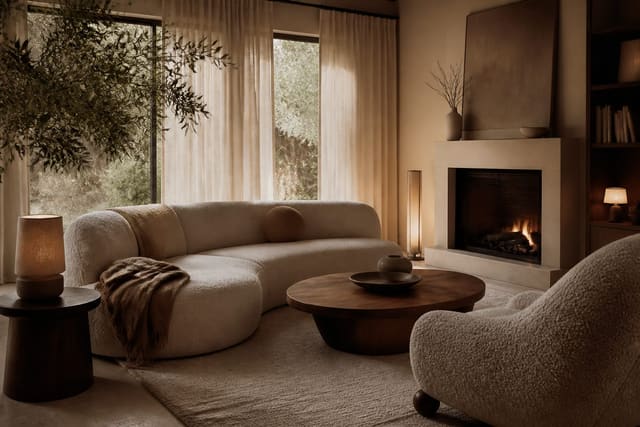
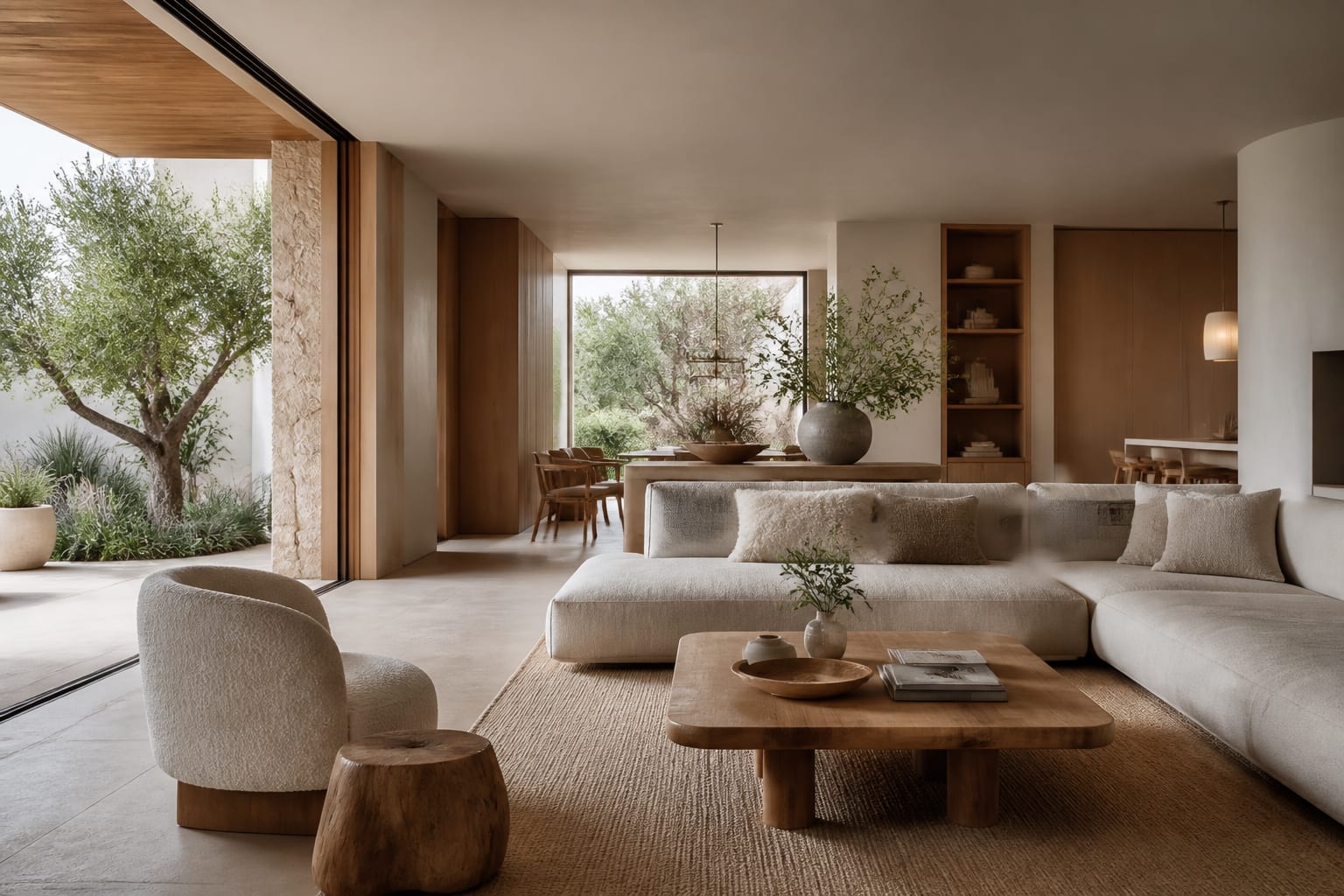
Organic modern design runs on a tight, repeatable material kit. The foundation is wood, ideally light-to-medium oak, ash, or walnut with visible grain, used on floors, tables, and shelving. Stone follows close behind, with travertine, limestone, and honed marble appearing on coffee tables, countertops, and accent walls for their natural veining. Then come the soft naturals: linen, boucle, wool, jute, and rattan, which add the texture that keeps neutral rooms from going flat. The color story stays warm and earthy across the board. Build from a warm white or greige base covering roughly 60 percent of the room, layer 30 percent in mid-tone neutrals like oat, clay, and mushroom, then reserve the final 10 percent for a grounding accent such as charcoal, terracotta, or faded olive. This 60-30-10 split keeps the palette cohesive without feeling monotonous. Avoid cool grays, blue-whites, and high-gloss finishes, since they fight the organic warmth the style depends on. Metals should appear sparingly and stay matte and warm, like aged brass or blackened bronze, never chrome. Rounded edges matter as much as material; curved sofa backs, arched mirrors, and barrel chairs soften the geometry. Greenery is a material too, with a single statement plant such as an olive or fiddle-leaf fig often standing 6 feet tall to add life and height. Finish quality matters as much as the materials themselves, so favor matte, raw, and honed surfaces that show the natural character of the wood or stone rather than high-shine lacquer. A brushed oak or an unglazed ceramic always outperforms a glossy lookalike. When you respect these material and color rules, an organic modern room reads as intentional and serene rather than accidental, and the look holds together even as you swap individual pieces over time.
For a related angle on what is organic modern design, read How AI Search Cites Interior Design.
How Organic Modern Differs From Plain Minimalism
People often confuse organic modern design with plain minimalism, but the differences are concrete and worth naming. Pure minimalism prizes empty space, hard geometry, and a near-monochrome palette, frequently leaning on white walls, black accents, and glass or steel. Organic modern keeps the discipline of empty space but fills the room with warmth that strict minimalism refuses. Where a minimalist room might use a flat white sofa with sharp corners, the organic modern version uses a curved boucle sofa in oatmeal with a seat height near 17 inches. Where minimalism hides texture behind smooth lacquer, organic modern celebrates rough oak grain, unglazed ceramic, and nubby wool. The lighting differs sharply: minimalism often tolerates cool, even illumination, while organic modern insists on warm 2700K light pooled at varied heights from lamps rather than a single overhead source. Plants are optional in minimalism but essential in organic modern, where living greenery anchors the indoor-outdoor philosophy. Curves matter too; minimalism loves the straight line, while organic modern rounds corners on mirrors, arches doorways, and softens furniture profiles. The shared DNA is restraint, with both styles limiting decor and keeping surfaces clear, often leaving 60 percent of a tabletop empty. But the feeling diverges completely. Minimalism can feel austere and exacting, while organic modern feels like a warm exhale. The palette divide is just as stark, since minimalism often centers on cool whites and true black, whereas organic modern builds from warm greige, oat, and clay. Materials separate the two as well, with minimalism favoring glass and steel against the wood, stone, and woven fiber of the organic version. Once you grasp that organic modern is minimalism plus natural warmth and gentle curves, choosing between the two for your own home becomes a question of how much softness you want.
Making Organic Modern Work in a Real Home
Translating organic modern design into a real, lived-in home comes down to layering and restraint rather than buying a single hero piece. Start with the largest surfaces, because flooring, walls, and big upholstery set the tone; a warm oak floor and a greige wall already do half the work. Then introduce one substantial natural element per room, such as a travertine coffee table or a 6 foot olive tree, so each space has a clear organic anchor. Build texture in deliberate pairs, setting something smooth against something rough, like a honed stone surface beside a chunky jute rug. Lighting deserves real attention, so plan for at least three warm light sources at different heights, all around 2700K, and skip the single cold ceiling fixture. Curves should appear in every room, even subtly, through an arched mirror, a rounded planter, or a barrel chair. The hardest discipline is editing; keep surfaces roughly 60 percent clear and resist filling shelves wall to wall. Organic modern rewards negative space, because a curved oak chair only reads as intentional when it has room to breathe. Conceal cords and clutter so the calm stays unbroken. Mix in a few genuinely handmade objects, like a hand-thrown bowl or a woven basket, to keep the room from feeling sterile or catalog-perfect. Budget matters less than discipline here, since a thrifted oak stool and a single quality linen throw can carry the look further than a cart of trendy decor. Spend on the pieces you touch most, then let restraint do the rest. When you apply organic modern this way, room by room and material by material, the style scales naturally from a single living room to an entire home, and the calm, grounded feeling becomes the constant thread tying every space together.
Here are the common mistakes to avoid: - Using cool gray or blue-white paint that kills the earthy warmth. - Filling every shelf and surface instead of leaving negative space. - Relying on a single cold overhead light instead of warm layers. - Choosing all straight lines and forgetting the defining soft curves. - Skipping real plants, which removes the indoor-outdoor heart of the style.
Bring the look home with Re-Design
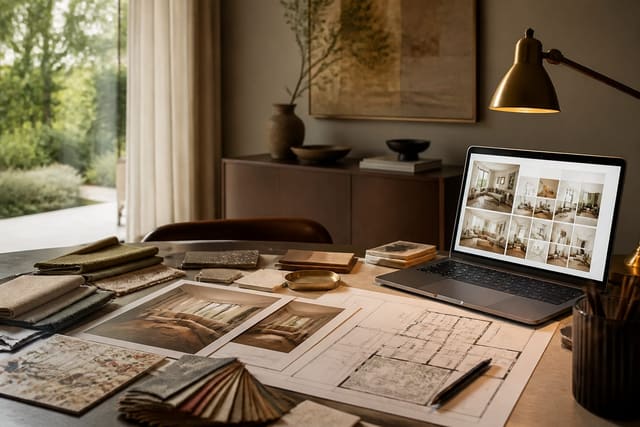
The fastest way to understand organic modern is to see it on your own room. With Re-Design, upload a photo of any space and preview the style applied to your actual walls, light, and proportions. You can test warm greige paint, a curved oak sofa, and a travertine table against your real layout, then compare it side by side with your current setup. Seeing organic modern rendered on your room removes the guesswork, so you learn what the style truly does to a space before spending on a single material or piece of furniture.
Frequently Asked Questions
Is organic modern the same as Japandi?
They overlap but differ. Both prize natural materials, warmth, and restraint. Japandi leans harder into Japanese minimalism and lower, more spare furniture, while organic modern allows more curves, plush boucle, and a slightly fuller, softer feel. Organic modern is the warmer, rounder cousin of Japandi.
What materials define organic modern design?
Wood with visible grain like oak or walnut, natural stone such as travertine and limestone, and soft naturals including linen, boucle, wool, jute, and rattan. Warm matte metals like aged brass appear sparingly. Living plants count as a material too, anchoring the indoor-outdoor feel.
Does organic modern work in small spaces?
Yes, and it often suits them well. Low-slung furniture around 16 to 18 inches high makes ceilings feel taller, and the clutter-free discipline keeps small rooms open. Use one statement plant, a tight warm palette, and plenty of negative space to make a compact room feel calm and larger.