Most people file plywood under "construction material" and stop there. I think that is a mistake, and the design world has quietly proven it: Baltic birch plywood, handled with care, reads as warm, modern, and deliberately crafted rather than cheap. The honest answer to whether you can use plywood as a design material indoors is yes, emphatically, as long as you respect the edges and the finish.
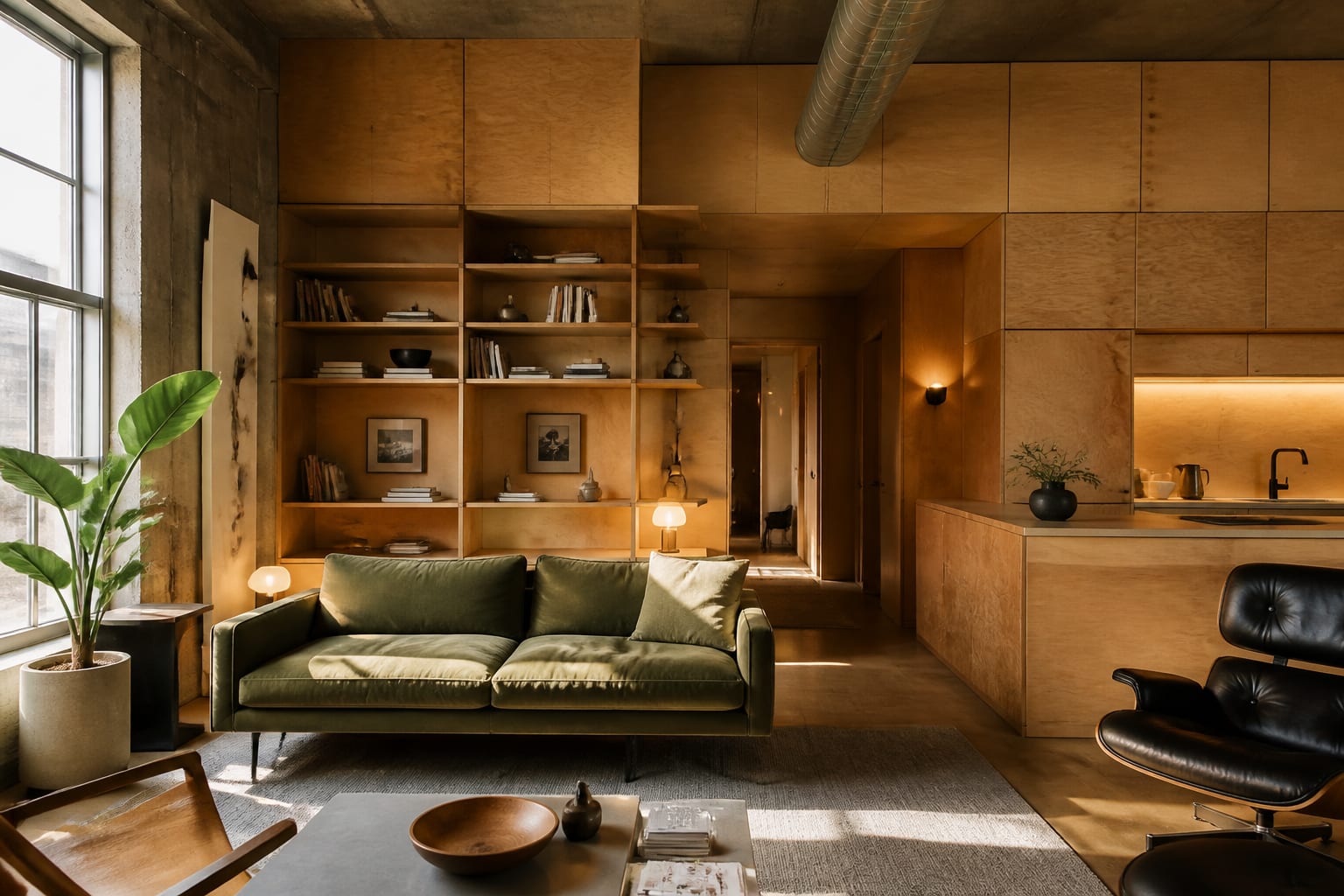
The appeal is partly budget and partly the look itself. That pale birch face with its calm grain and the striped edge of the laminations is a design feature, not a flaw to hide. Used well, plywood gives you a soft-industrial warmth that painted MDF never will.
Color is the other quiet advantage. Birch reads as a soft, pale neutral that sits comfortably between true white and warm oak, so it bridges a cool, minimalist palette and a cozier one without committing fully to either. That makes it forgiving in rooms you are still figuring out, and it photographs beautifully because the grain adds texture without adding visual noise. A wall of birch ply gives you the warmth of wood and the calm of a neutral at the same time, which is a rare combination at this price.
Why plywood earns a place in good rooms
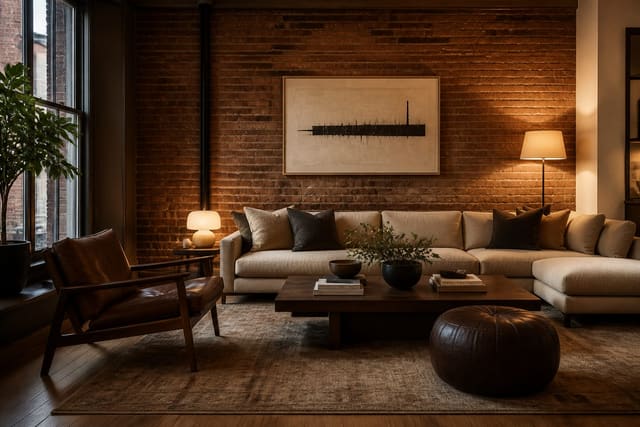
The reason designers reach for Baltic birch is consistency. A quality sheet has many thin, uniform plies with no internal voids, so the edge reads as a crisp, repeating stripe instead of a gappy mess. That edge is the whole aesthetic. When you build a shelf or a cabinet and leave the edge exposed and sealed, you get a detail that looks intentional and custom, the kind of honesty you also find in exposed brick walls where the raw material is the point.
Plywood also plays beautifully with other utilitarian materials. Pair it with black steel hardware, raw or sealed concrete, and simple linen, and you land in the soft-industrial register without the coldness pure concrete can bring. The pale birch warms the room while the clean lines keep it modern.
There is a sustainability angle that quietly helps the case, too. Engineered from thin veneers of fast-growing birch, a single sheet uses the log far more efficiently than milling solid lumber, and the dimensional stability means a plywood panel resists the warping and seasonal movement that plagues wide solid-wood boards. For a long built-in that has to stay flat and square across years of humidity swings, that stability is a practical reason to choose ply on its own merits, not just to save money.
Ideas worth stealing for your own space
Here is where plywood actually shines. These are the moves I keep coming back to:
- Full-height birch ply wall paneling in a hallway or behind a bed, run in vertical sheets with thin reveal gaps between them for a rhythmic, gallery-like wall.
- Floating shelves cut from 3/4 inch ply with the striped edge facing out, sealed in matte hardwax oil so the lamination lines read as a feature.
- A plywood platform bed or bench built from clean sheet stock, where the exposed edge becomes the only ornament the piece needs.
- Kitchen or office built-ins faced in birch ply with simple finger-pull notches instead of hardware, for a seamless, modern front.
- A slatted plywood room divider or screen, ripped into consistent strips and spaced for light to pass through.
- Window seat and bench storage in plywood, where the practical box becomes a warm focal point under the glass.
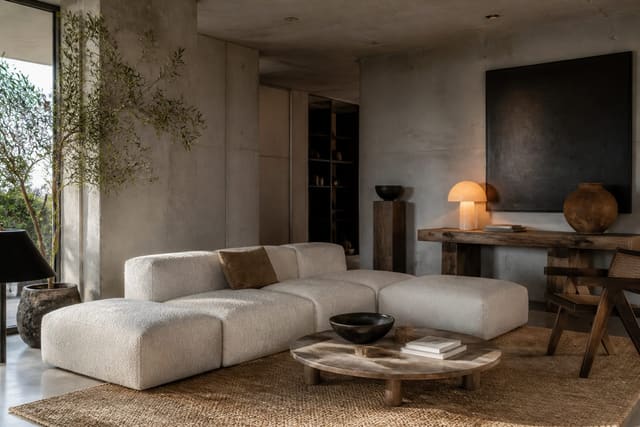
Any one of these gives a room a custom-cabinetry feel for a fraction of the cost. The trick is restraint: let the material be quiet and let the edge do the talking, the same discipline that makes concrete interior surfaces feel designed rather than unfinished.
A quick word on where plywood does and does not belong. It thrives on vertical surfaces and in dry rooms: paneled walls, headboards, shelving, cabinet carcasses, benches, and desks. It is a weaker choice anywhere it takes standing water or constant abrasion, so I keep raw birch ply away from shower walls and busy floors unless it is a specialty marine or specially sealed product. In a kitchen, ply fronts are wonderful, but I still pair them with a hardier counter and a proper backsplash rather than asking the wood to fight grease and steam directly. Used inside its lane, plywood looks intentional for decades; pushed outside it, it disappoints fast.
Getting the details right
The difference between plywood that looks custom and plywood that looks like a garage project is almost entirely in the edges and the finish. Always buy cabinet-grade or Baltic birch with a clean face veneer and tight, void-free laminations. Cheaper sheathing ply has gaps and patches that ruin the exposed-edge look.
Sand progressively, finishing at around 220 grit, so the face and the edge feel smooth, then seal with a clear oil, hardwax oil, or matte water-based polyurethane to keep the pale tone. Avoid glossy finishes; they make ply look plasticky and cheap. For shelving spans over 30 inches, stick with 3/4 inch stock or add a hidden support to prevent sag.
The exposed edge needs one more decision: leave it raw-striped or band it. A clear-sealed lamination edge is the modern, honest look and my usual pick. If you want a more finished, furniture-grade result, you can apply iron-on birch edge banding to hide the plies, which gives a solid-wood appearance on all four sides. Both are valid; just decide before you cut, because the two looks call for slightly different sheet grades and very different finishing time.
Watch the orientation of the face grain as you lay out parts, the same way a cabinetmaker does. Running the grain consistently across a row of drawer fronts or a paneled wall makes the whole assembly read as one considered piece rather than a pile of offcuts. It costs nothing but attention, and it is most of what separates a custom-looking result from a rushed one.
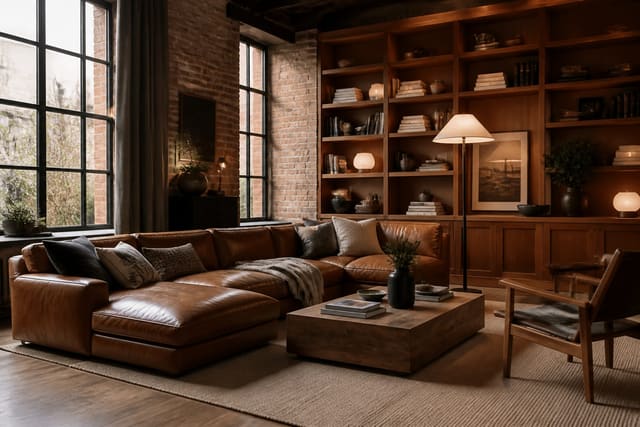
This attention to surface and edge is the same instinct behind broader soft-industrial styling, where humble materials look intentional because someone sweated the finish. Plywood rewards that effort more than almost any material at its price.
Budget honestly before you fall for the look. Cabinet-grade Baltic birch is affordable per sheet, but the cost of a plywood project lives in the labor: clean cuts, banded or sealed edges, careful grain matching, and a patient finish all take time, whether yours or a maker's. Done well, plywood gives you the warmth and custom feel of bespoke cabinetry at a fraction of the solid-wood price, which is exactly why architects keep specifying it. Done in a rush with cheap sheets and a glossy can of poly, it looks like what people assume plywood is. The material is generous; it just asks you to respect the edges and the finish.
Use AI design to preview plywood interior design before you commit
Plywood is forgiving on the wallet but unforgiving on commitment once it is cut, screwed, and finished. Before you order sheets, it helps to see the warm birch tone against your existing floor, paint, and furniture. With Re-Design you upload a photo of your room and re-render it with birch ply paneling, a plywood built-in, or a slatted divider so you can judge how the pale wood reads in your actual space.
That preview answers the questions a sample chip cannot: does the birch warm the room or fight your floor, and does the soft-industrial direction suit the light you have. Upload your photo, test a paneled wall against a built-in shelf wall, and commit to plywood once you have seen it standing in your own room rather than imagined it.