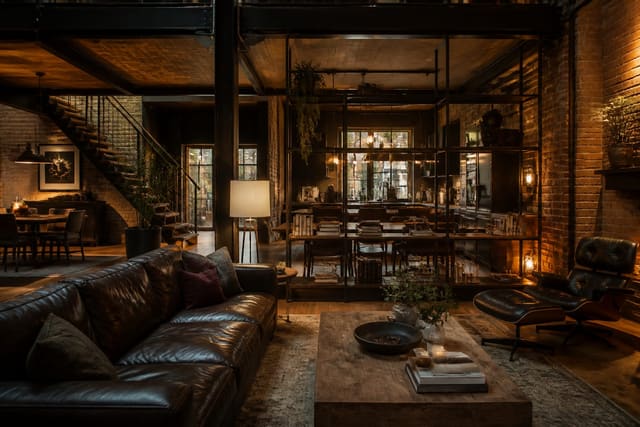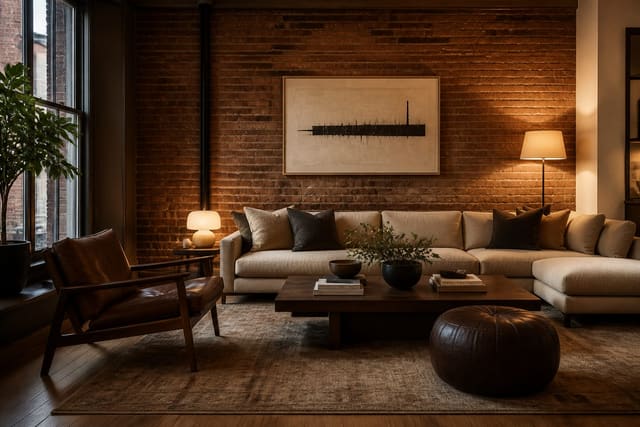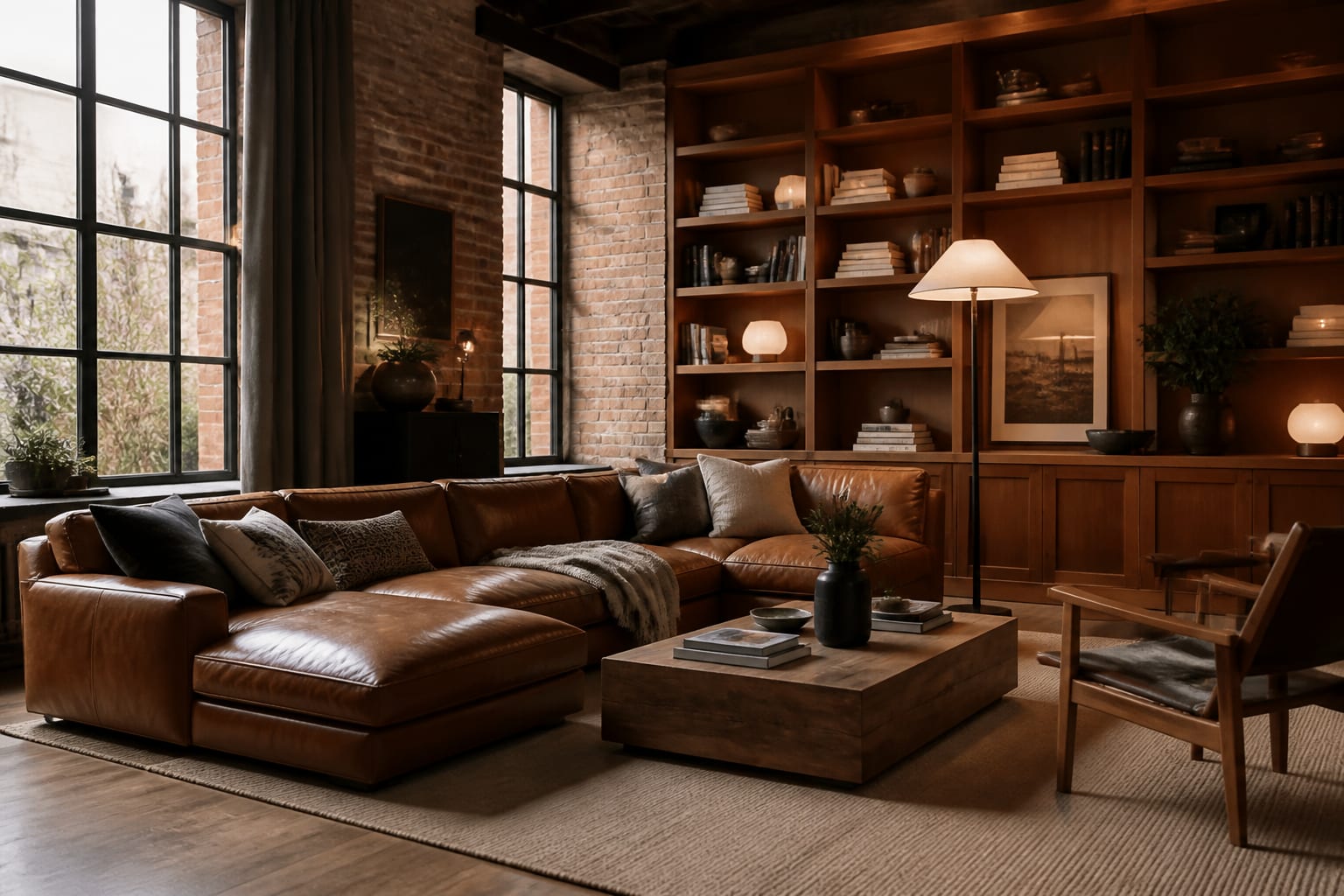
Soft industrial style feels warm when hard materials like brick, steel, and concrete are balanced with wood, wool, leather, and warm lighting instead of left bare. The strongest soft industrial style ideas keep one raw material as the feature, add two or three warm counterweights, and use scale, larger rugs, layered lamps, full-length curtains, to soften the room rather than relying on themed accessories.
What is soft industrial design?
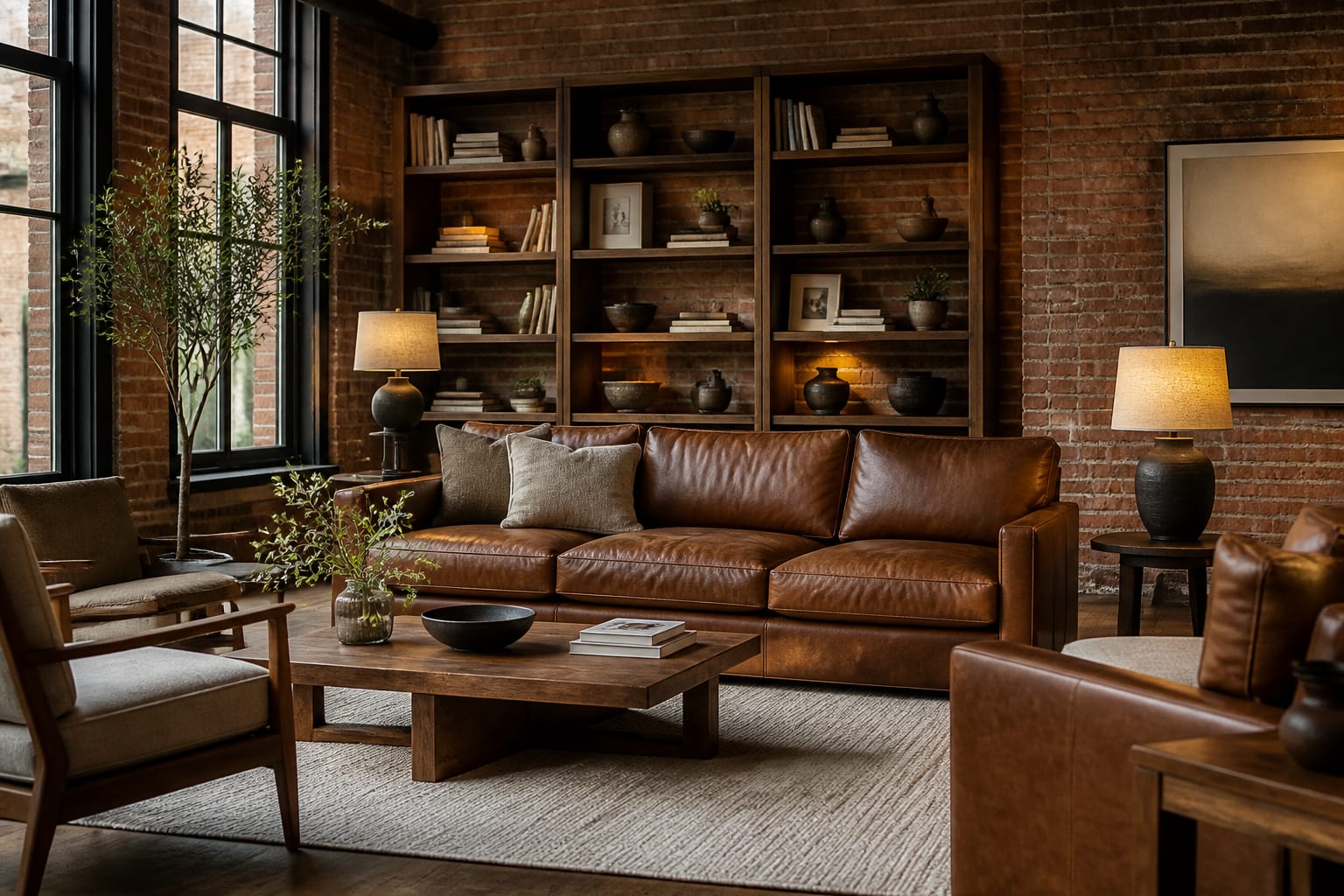
Soft industrial design keeps industrial materials, brick, steel, concrete, leather, reclaimed wood, but balances them with warm light, tactile textiles, rounder furniture, and lived-in color. It is less a separate style than a more habitable version of industrial interiors: classic industrial shows a building's bones, soft industrial makes those bones comfortable to live with.
Blackened metal gives a room structure; fabric and wood make that structure feel kind. A steel shelf can stay if it holds books, pottery, and lamplight. A concrete floor works if a rug large enough to gather the furniture sits on top of it. For the raw-material side of the look before you soften anything, see this guide to what industrial interior design means.
Which warm industrial decor moves change the room fastest?
Start with the hardest surface in the room, not the trendiest object.
- Add a large rug first. Bare hard floors make industrial rooms feel loud; start near 8 ft. x 10 ft. in a compact living room, or 9 ft. x 12 ft. so a sofa and chairs share one zone.
- Swap bare bulbs for shaded, layered light. Use warm bulbs around 2200K-2700K and combine a floor lamp, table lamp, and wall or picture light so the room glows at more than one height.
- Bring in cognac, rust, olive, bone, camel, or warm mushroom. These still read urban but give brick and concrete heat instead of relying only on black and gray.
- Choose upholstery with rounded or padded edges. A curved sofa arm, leather sling chair, or boucle accent chair breaks up too many straight metal lines.
- Use wood where hands land. A walnut table, reclaimed pine console, or thick wood desk warms a room more than another black accessory.
- Hang curtains high and wide. Set the rod 6-10 in. above the casing and 8-12 in. past each side; linen, cotton, or canvas softens the wall plane against brick, tile, and metal.
- Give exposed brick a partner. A large mirror, 30 in. x 40 in. artwork, or low sideboard keeps a textured wall from feeling bare; see more in exposed brick wall design ideas.
- Add one aged, handmade object. Stoneware bowls, old books, iron candlesticks, or ceramic lamps read better than decorative gears or fake factory signs.
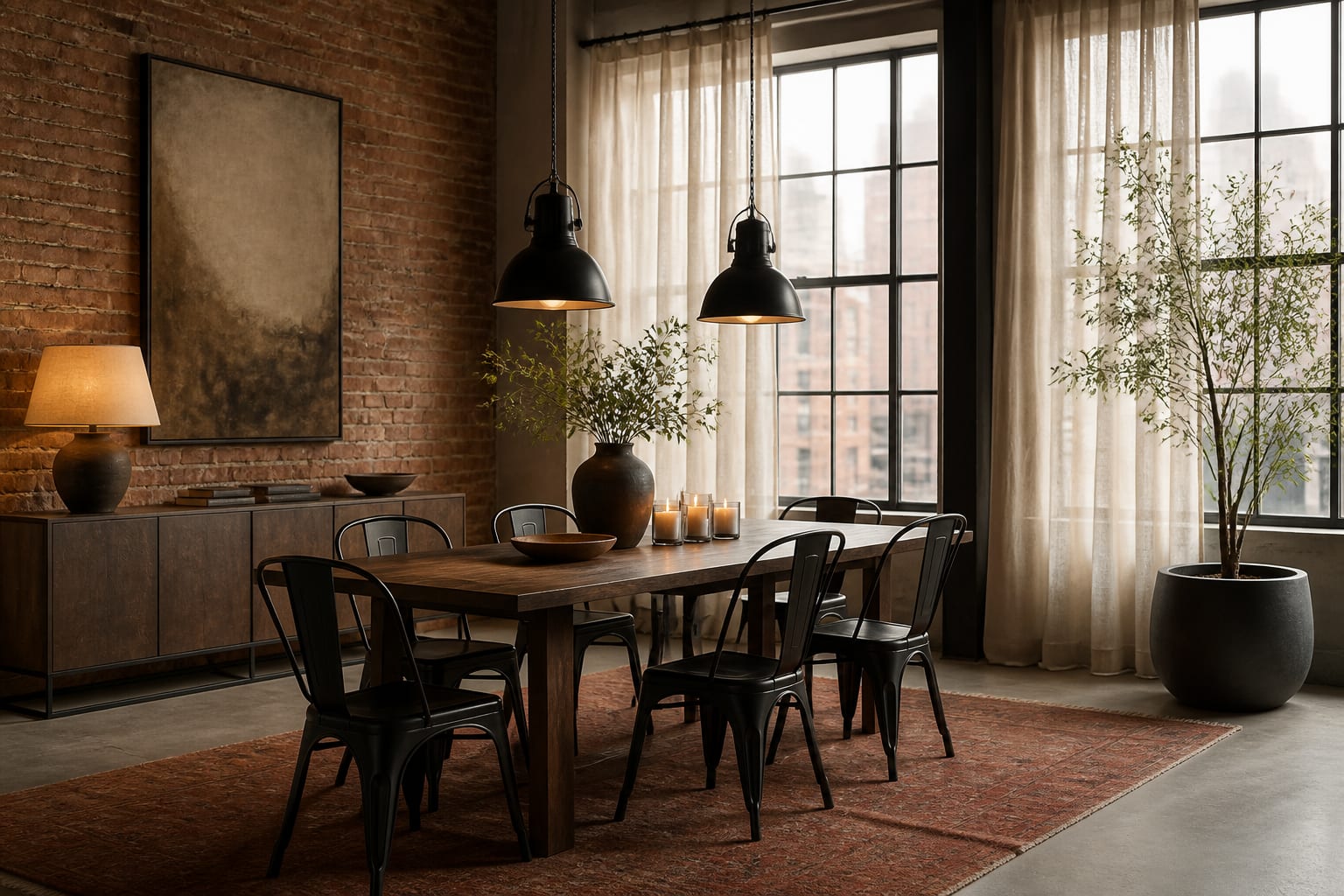
How should brick, steel, concrete, and fabric share the work?
Give each material one job: brick supplies texture, steel draws the outline, concrete adds weight, wood brings warmth, fabric makes the room livable. When one material tries to do every job, the space goes flat.
| Material | Job in the room | Warm pairing |
|---|---|---|
| Brick | Texture and color variation | Walnut, leather, terracotta, aged brass (orange brick); black metal, olive, charcoal (pale brick) |
| Steel | Punctuation, not decoration | Slim profiles over chunky pipework, especially under 8 ft. ceilings |
| Concrete | Structural weight | Wood grain, warm bulbs, low-pile rug, leather seating |
| Wood | Warmth where hands land | Left natural or lightly finished, paired with fabric and light |
| Fabric | Comfort system | Wool, linen, canvas, hide, faded rugs at seating and windows |
Concrete absorbs warmth fast, so compensate with grain, low-pile texture, and warm bulbs wherever it appears. If your home has the volume of a converted structure, barn conversion interior design can carry heavier beams and darker shadows because the scale does some of the softening itself. Leave 14-18 in. between sofa and coffee table and about 30-36 in. for main walkways; warmth doesn't help if the room is awkward to move through.
Common soft industrial mistakes to avoid
- All-black palettes shrink the room. Reserve black for lines and anchors, then add rust, warm white, tobacco, or aged brass for temperature.
- Skinny furniture underwhelms raw materials. Brick, concrete, and steel need presence: a 36-48 in. coffee table, a deep sideboard, or nightstands around 24-30 in. high.
- Soft decor without scale change stays cold. Two cream pillows can't fix a concrete floor; fix it with a larger rug, layered lamps, and warmer wood.
- Overloaded open shelving creates noise. Keep shelves 10-14 in. deep and leave breathing room so the metal frame still reads clean.
- Loft references crush low ceilings. Near an 8 ft. ceiling, use lighter walls, lower dark furniture, and one strong industrial feature instead of stacking dark paint, pipe shelves, and cage lights together.
There's a quieter mistake too: making the room too polite. Soft industrial isn't beige industrial, so keep friction, a rust rug against black metal, a wool throw on tobacco leather, cream curtains beside brick.
Use AI design to preview industrial with warmth
Soft industrial style is hard to judge one purchase at a time because every material changes its neighbor. A cognac sofa can warm a brick wall or turn muddy beside orange flooring, and a black shelving unit can look crisp on cream plaster but heavy over a dark floor.
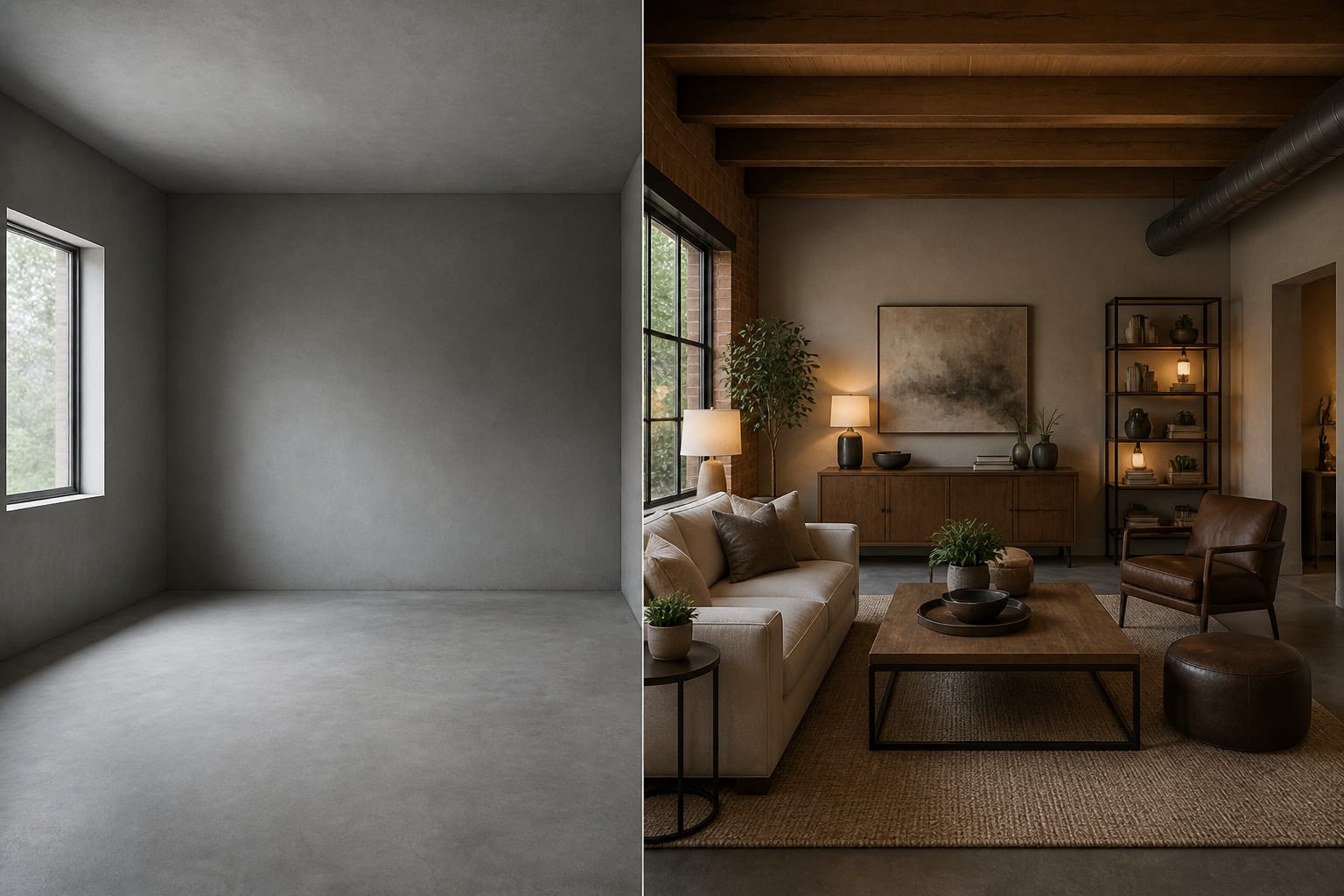
Upload a photo of your actual room to Re-Design and test full versions before buying the heavy pieces: one with brick as the feature, one with lighter walls and stronger black metal lines, one where warmth comes mostly from wood, leather, and lamps. Keep your real windows, floor color, and furniture scale visible so the preview answers your home instead of inventing a fantasy loft. Compare the same angle each time and ask which version still feels industrial once the edges are softened, the best answer usually has one strong raw material, two or three warm counterweights, and enough fabric to feel ready for real life.
Frequently Asked Questions
What is soft industrial style?
Soft industrial style keeps raw materials like brick, steel, and concrete but balances them with warm lighting, wood, leather, and textiles. It softens classic industrial design's cold edges while keeping the loft-like structure and texture that make the style recognizable.
How do I keep exposed brick from feeling cold?
Add a large mirror, artwork, or low sideboard so the wall has a partner, then repeat warm tones nearby: walnut, leather, or terracotta for orange brick, or black metal and olive for pale brick. Warm bulbs help most walls read richer at night.
What lighting makes industrial rooms feel warmer?
Bulbs around 2200K-2700K make brick, walnut, rust, and leather look richer than cooler white light. Combine a floor lamp, table lamp, and wall or picture light so the room has glow at multiple heights instead of one harsh overhead source.
Can soft industrial style work in a low-ceiling apartment?
Yes, but scale down. Use lighter wall colors, lower dark furniture, vertical curtains, and one strong industrial feature rather than combining dark paint, pipe shelving, and cage lighting, which can visually crush an 8 ft. ceiling.
How can I test industrial decor before buying furniture?
Upload a photo of your room to an AI design tool like Re-Design and generate a few complete versions, one brick-forward, one metal-forward, one wood-and-fabric-forward, using the same camera angle so you can compare which balance of hard and warm materials suits your actual space.