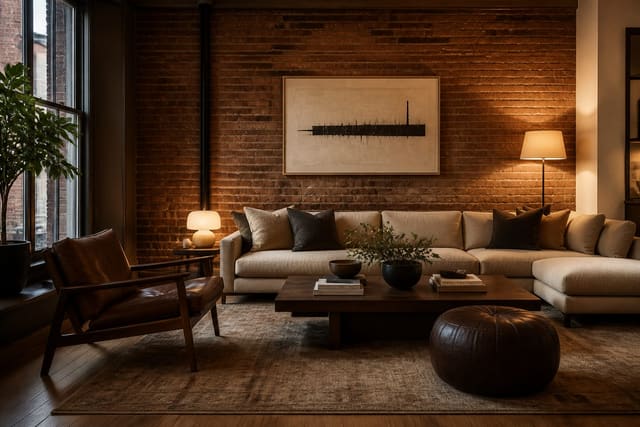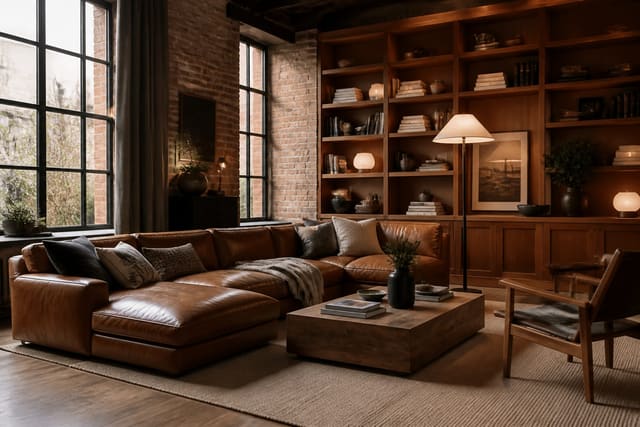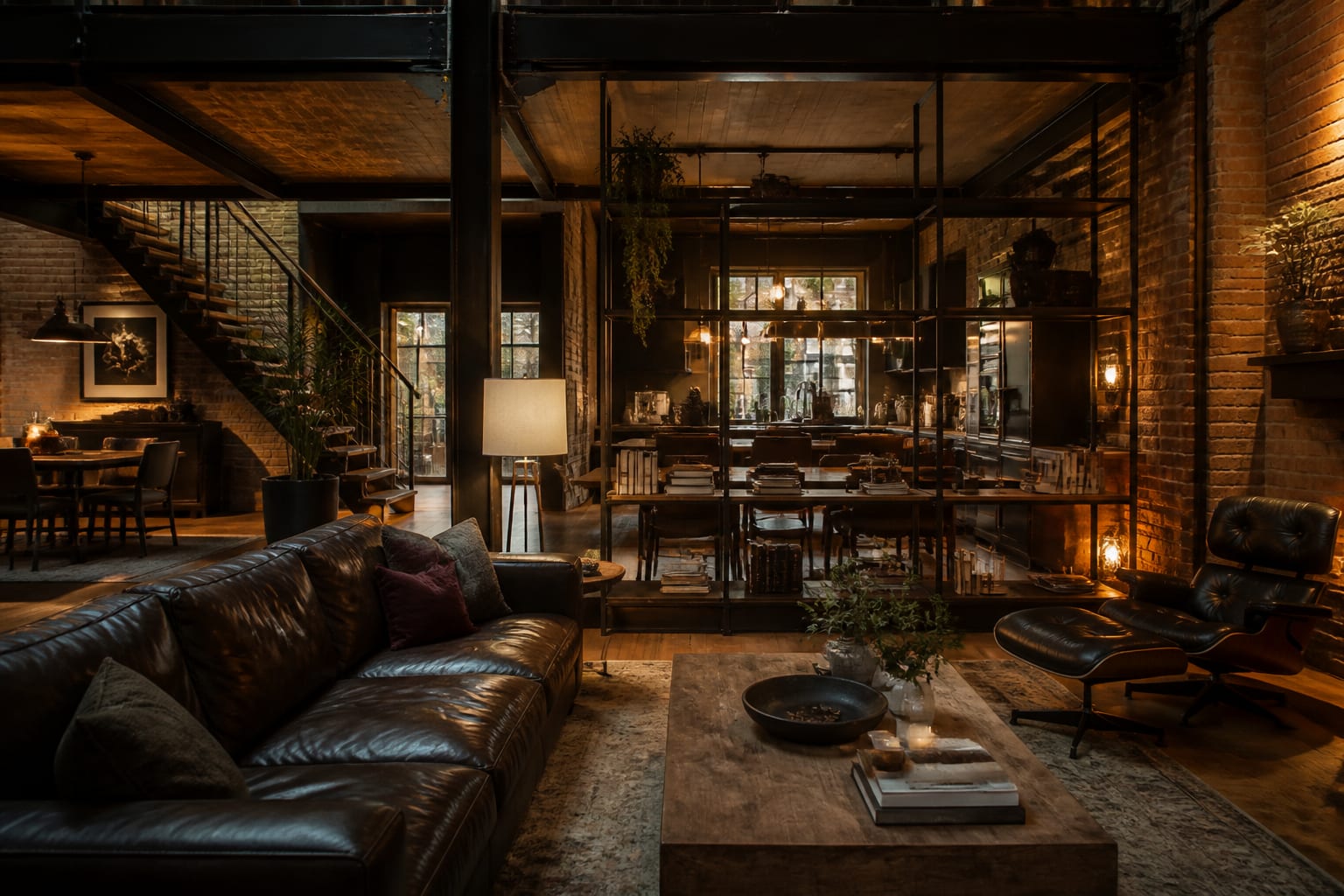
Industrial interior design is a home style built on exposed structure, utilitarian materials, and sturdy furniture — brick, steel, concrete, reclaimed wood, and leather balanced with warm textiles and layered light. It works best when raw materials are paired with softness and scale, not stacked into a cold, echoey loft cliché.
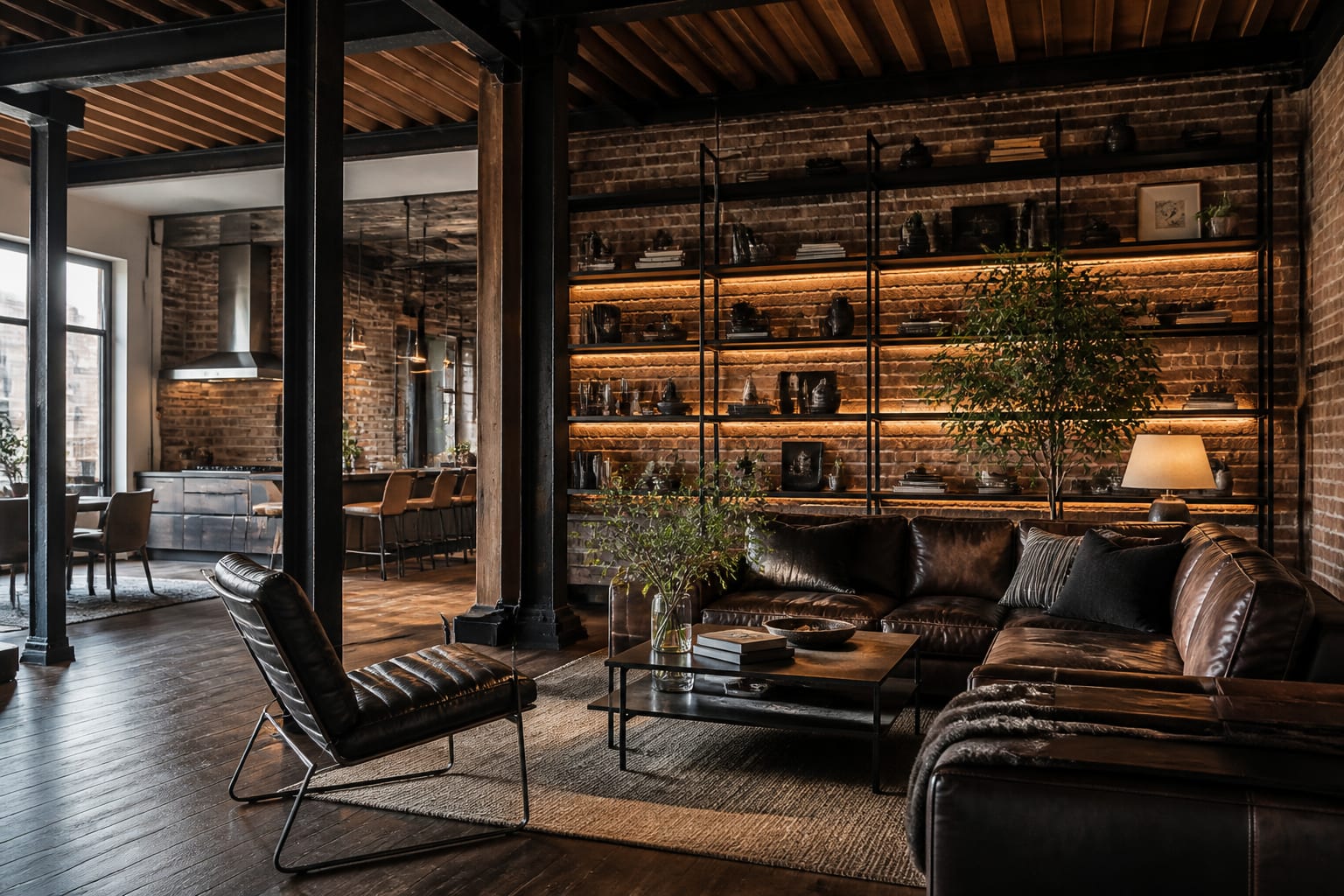
What is industrial interior design, really?
Industrial design grew out of warehouses, workshops, and factory conversions, but the livable version is far more edited than the cliché. Think brick, steel, concrete, reclaimed wood, aged leather, plaster, ribbed glass, blackened metal, and practical lighting with a little shadow.
The industrial design definition is not "unfinished." Unfinished looks abandoned; industrial deliberately shows how a space is made — beams, bolts, pipes, shelves, masonry, grain, and metal edges all participate in the design. The best version has friction: rough against smooth, dark against warm, heavy against soft.
Proportion matters too. Tall ceilings, wide windows, and open plans absorb darker paint, oversized pendants, and big leather seating. In a standard 8 ft ceiling home, use a lighter hand: slimmer black lines, warmer walls, softer rugs, and one or two raw surfaces rather than every warehouse reference at once.
Which materials create the industrial look without making it cold?
The safest approach is to give each material a job: brick brings texture, steel brings outline, wood brings warmth, concrete brings mass, and textiles bring relief.
- Brick as feature, not background. One exposed or brick-look wall can carry a room; pair it with a single large artwork or low storage piece. See exposed brick wall ideas before over-styling the texture.
- Black metal in thin, repeated lines. A 1 in metal frame, black curtain rod, sconce, or shelf bracket reads as architecture when repeated 3–4 times, not as scattered hardware.
- Wood where hands land. Reclaimed pine, walnut, white oak, or teak on tables, shelves, stools, and cabinet fronts stops steel and concrete from feeling sterile.
- One major leather piece. Cognac, tobacco, oxblood, or black leather on a sofa, chair, or headboard gives the room body without covering every surface.
- Textiles with weight. Low pile wool rugs, washed linen, heavy cotton, and canvas soften sound and touch. An 8 ft x 10 ft rug is a minimum for most living rooms; 9 ft x 12 ft anchors seating better.
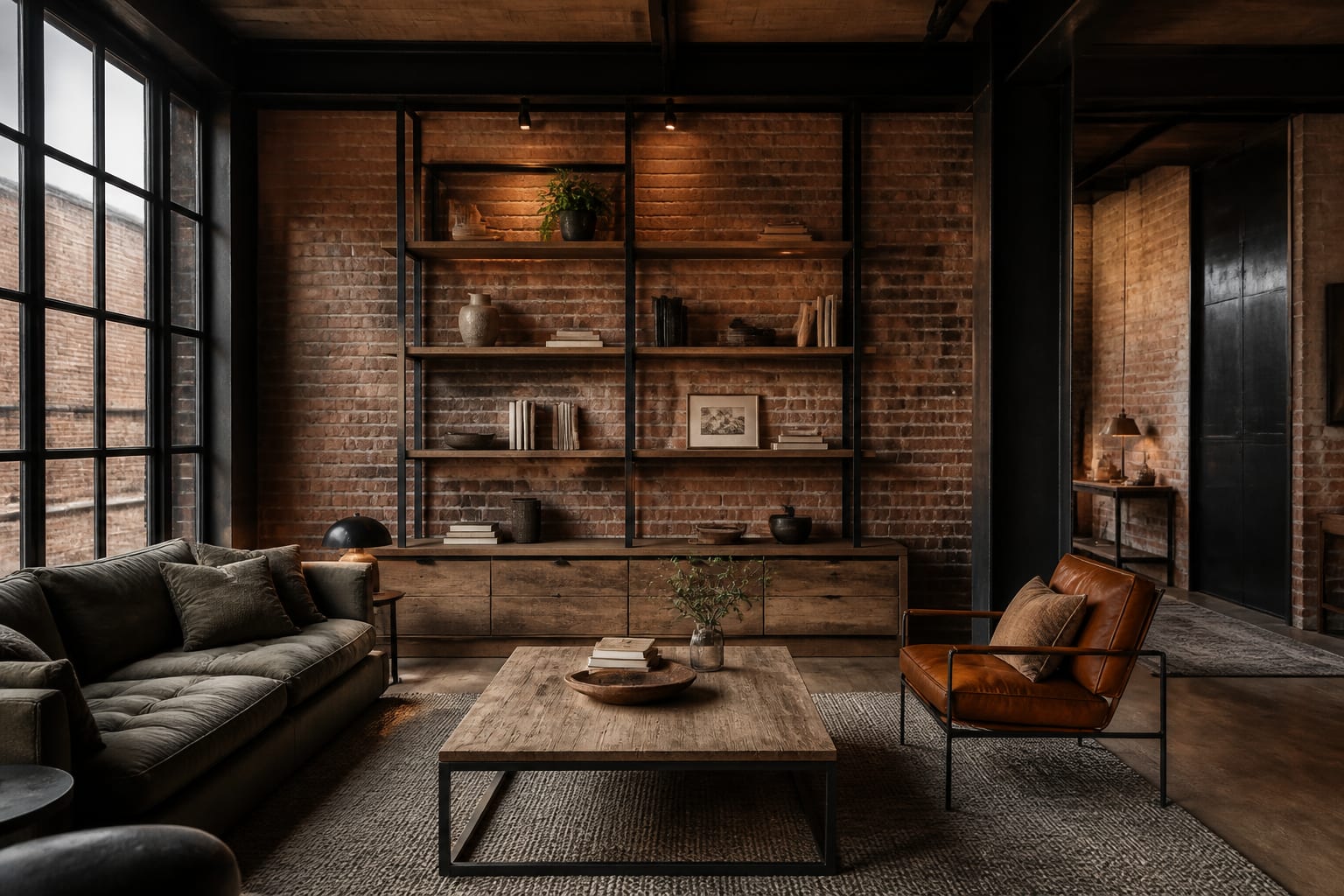
How do you make loft design style work in a normal home?
Borrow the logic of loft design style without forcing the architecture. Pick one dominant cue — a brick wall, concrete-look counter, black-framed glass door, steel shelving, leather sofa, or reclaimed wood table — then support it quietly.
In small spaces, keep the darkest elements low or narrow: a black coffee table, slim metal bookcase, or leather chair adds strength without turning walls into a cave. Ceilings under 8'6" should skip bulky pipe shelving near the top; mount curtains 6 in–10 in above the casing for height instead. A large charcoal, rust, camel, or olive rug can bridge beige carpet or laminate with the industrial palette.
Open-plan rooms need zoning through rugs, lighting, and furniture backs. Leave 30 in–36 in for walkways and 14 in–18 in between sofa and coffee table, since industrial pieces read visually heavy and cramped circulation makes a room feel like storage.
For a gentler result, try soft industrial style ideas: still metal, brick, and wood, but with cream walls, rounded upholstery, and quieter contrast.
Common mistakes to avoid
Industrial style has a small margin for error because the materials are forceful.
- Props instead of architecture. Decorative gears, faux factory signs, and pipe shelves with no storage purpose announce a theme instead of improving a space. Use real, useful forms.
- Too much cool gray. Concrete, steel, gray tile, and black hardware flatten each other under weak light. Add tobacco leather, walnut, rust, cream, or brass for heat.
- Skinny furniture. Delicate legs look nervous beside brick and steel; use a 36 in–48 in coffee table and shelving that looks capable of holding real weight.
- Ignoring acoustics. Brick, tile, glass, and concrete bounce sound. Rugs, curtains, upholstered chairs, and cushions keep conversation from echoing.
- Copying scale without volume. Barn conversion interior design relies on beams and height; in a smaller home, borrow the timber and texture but keep furniture profiles simpler.
Use AI design to test industrial style before you commit
Industrial design is risky to assemble piece by piece, since each raw material changes the next decision. Black shelving can sharpen brick or crowd a low room; a concrete counter can look refined beside oak and clinical beside blue-white cabinets.
Upload a photo of your actual room to Re-Design and preview full industrial directions before buying expensive pieces. Test one version with brick texture, one with darker metal and lighter walls, and one built mainly from leather, wood, lighting, and art — keeping your real windows, ceiling height, and layout visible.
This matters most for renters and new builds without authentic loft bones. Compare peel-and-stick brick, limewash walls, black-framed doors, or a cognac sofa without committing to the heaviest version first.
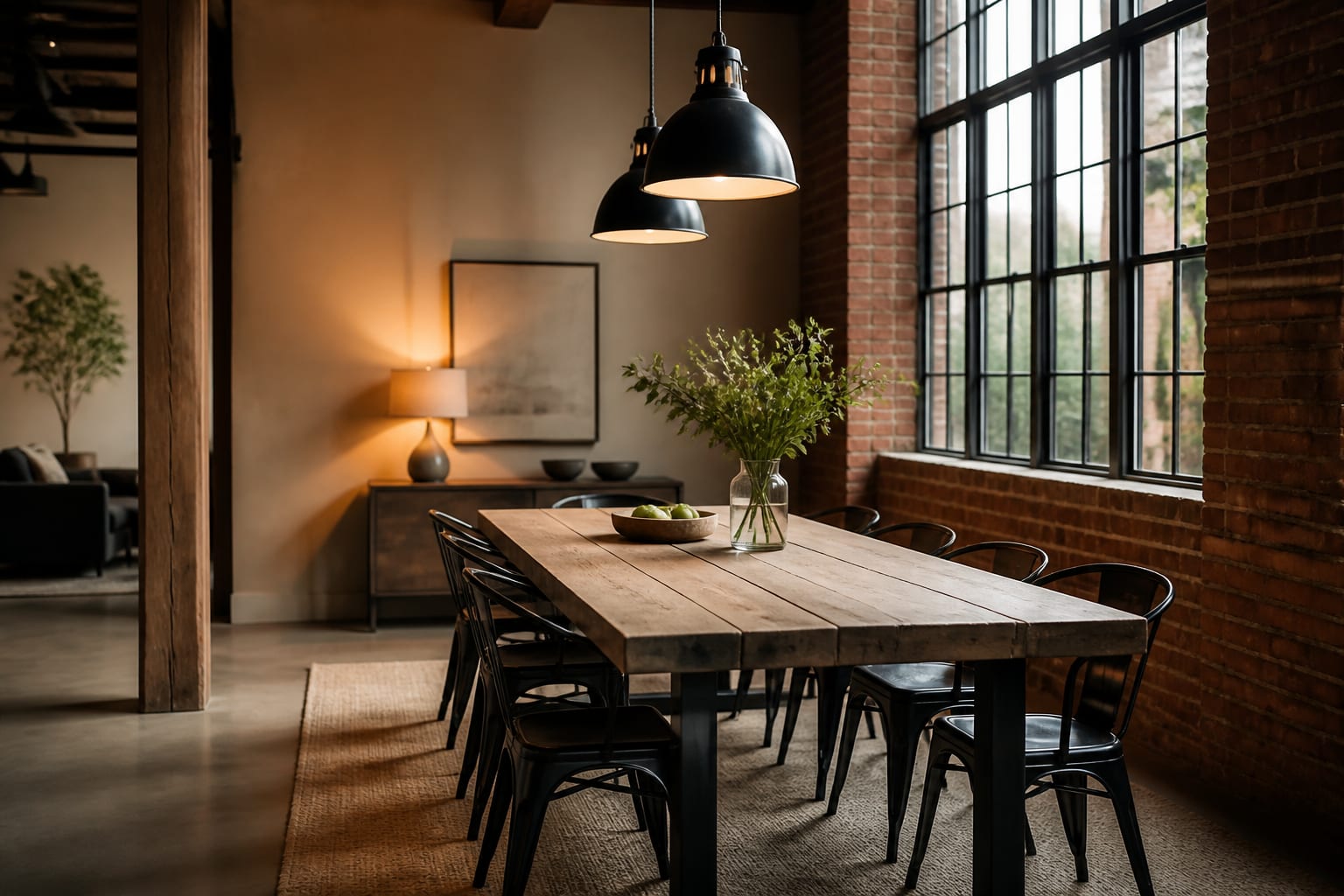
What finishing details make industrial design feel livable?
Finish the room like it was collected through use, not bought as a matching set: ceramic vessels, black-and-white photography, old books, stone bowls, metal task lamps, linen curtains, and one plant with a strong silhouette. Keep shelves edited so materials stay visible.
Lighting is the final test. Use warm white bulbs around 2700 K and layer at least three sources — overhead or architectural light, a lamp near seating, and an accent on art or a dark corner.
Stand at the entrance and name the strongest material in a few seconds. If it's brick, steel, wood, concrete, leather, or plaster, the design has a point of view; if the answer is just "dark," add warmth where people touch — chair, rug, table, lamp, curtain, bed.
Frequently Asked Questions
What is industrial interior design in simple terms?
It's a style that shows a room's real structure and materials — brick, steel, concrete, wood, leather — instead of hiding them, balanced with warm textiles and layered lighting so the space feels lived-in rather than like an unfinished factory.
Does industrial style only work in lofts with high ceilings?
No. Loft architecture makes darker paint and oversized fixtures easier to carry, but a standard 8 ft ceiling home can use industrial style with a lighter hand: slimmer black metal lines, warmer wall colors, and one or two raw surfaces instead of many.
How do I keep an industrial room from feeling cold?
Balance every hard material with something warm: tobacco leather, walnut wood, cream textiles, aged brass, or olive tones. Layer warm white 2700 K lighting and add rugs, curtains, and upholstery to soften sound and touch.
What's the difference between industrial and soft industrial style?
Industrial leans on stronger contrast — more black metal, cooler tones, and heavier textures. Soft industrial keeps the same brick, metal, and wood but adds cream walls, rounded upholstery, and fabric shades for a gentler, warmer result.
Can renters achieve an industrial look?
Yes. Peel-and-stick brick, black-framed mirrors or shelving, reclaimed-look wood furniture, and a leather sofa can create the aesthetic without permanent changes. Testing options with an AI preview first avoids costly guesses on rented walls.