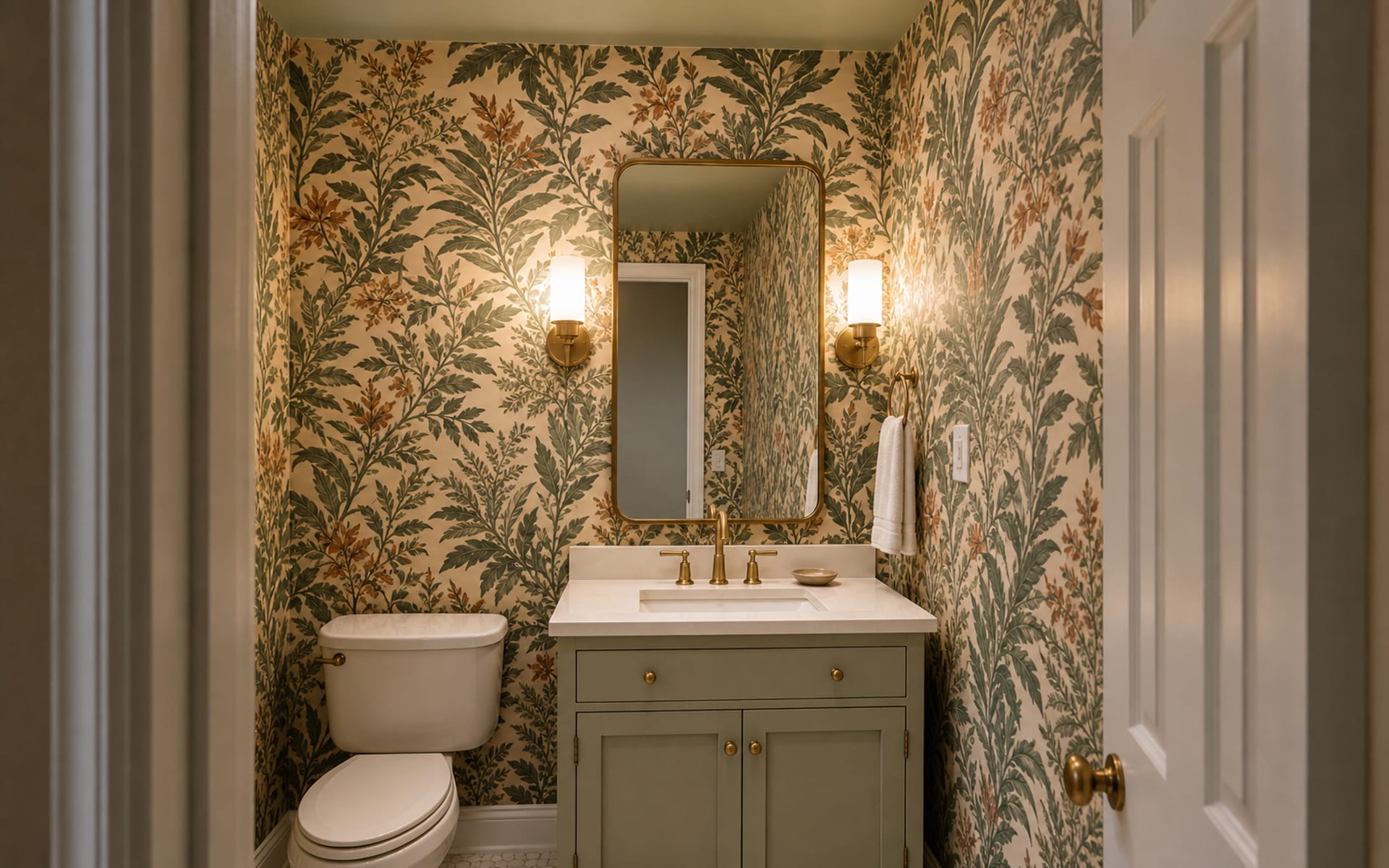
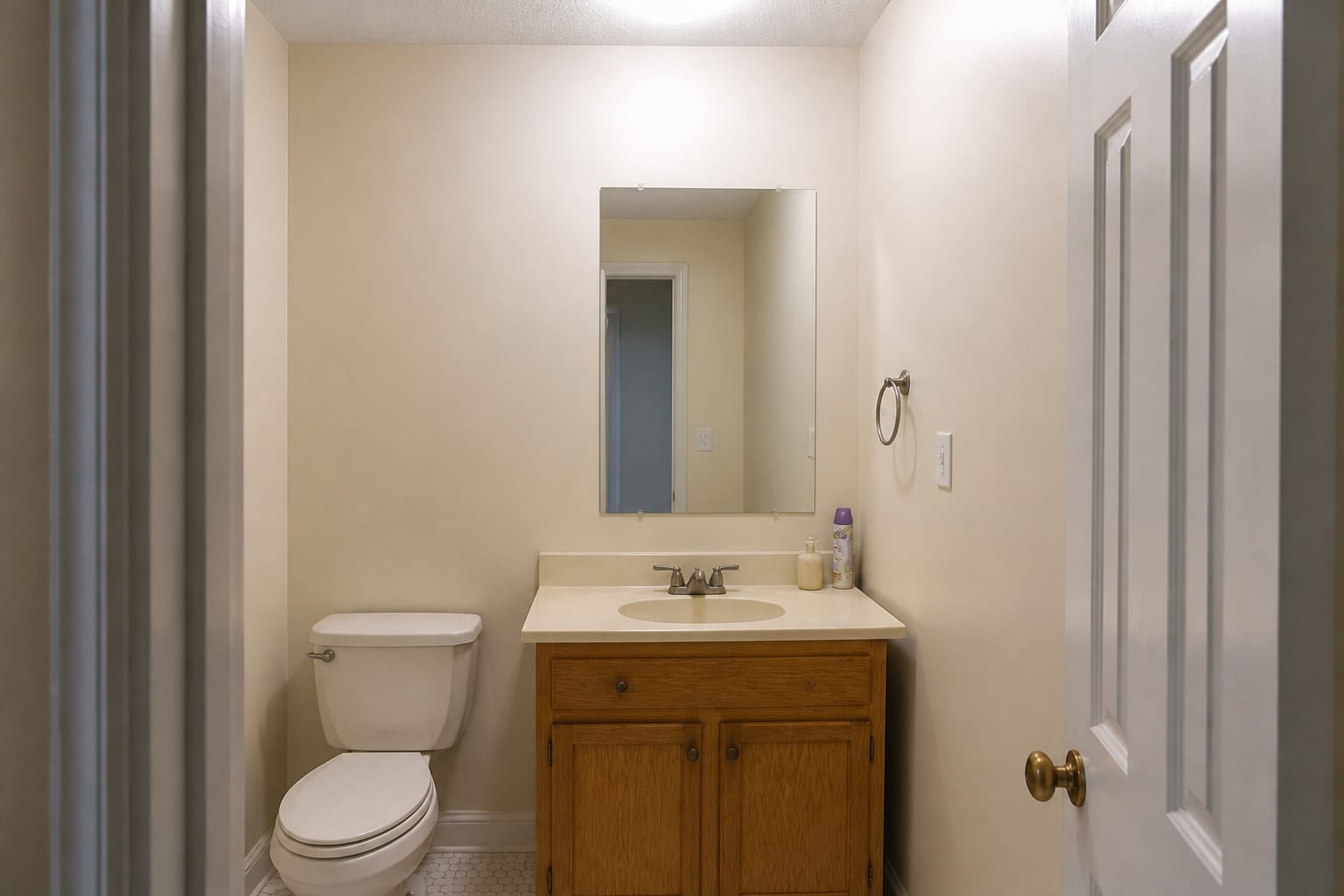
Powder room wallpaper works best with a clear, medium-to-large scale pattern, warm 2700K lighting, and a mirror with enough frame or shape to hold its own against the print. Because the room is small and visited briefly, bold color and pattern read as intentional rather than overwhelming, as long as those three elements are dialed in first.
A powder room can be bold because nobody has to live inside the pattern.
Why can a powder room handle bolder pattern?
A powder room is small, enclosed, and visited briefly, which makes it a good place for wallpaper with personality. Proportion still matters: a tiny print can look nervous, while a clear medium or large repeat feels deliberate. For the broader planning discipline behind a move like this, see Ceiling Wallpaper Ideas, since any pattern has to survive the room you already have, not a blank mood board.
Start by photographing the room straight on and noting what's fixed: the sight line from the doorway, the main light source, and any surface that can't be changed. Keep clearances honest — 30 to 36 inches on the main path where possible, and enough door or drawer swing that the finished room stays functional. Those numbers decide whether the design survives daily use, not just a first look.
How do pattern scale, mirror, and lighting work together?
Choose the wallpaper and mirror as a pair. A patterned wall needs a mirror with enough frame or shape to hold its place against the print. Add sconces or a warm fixture so the pattern reads with depth; a 2700K bulb makes paper feel richer than a cool white lamp. If the direction starts drifting into vague style labels, ground it against Small Bathroom Design to keep choices practical.
- Tiny powder room: one clear repeat, paired with a mirror that has a strong frame.
- Low ceiling: keep the ceiling color close to the wallpaper's ground tone.
- Rental: try peel-and-stick on the sink wall before committing to every wall.
- Traditional room: pair botanical paper with simpler brass or bronze fixtures.
Use that list as a quick audit before buying anything custom. If a pattern blocks a door, steals the only bright wall, or depends on a fixture you can't install, it isn't ready yet. A better version usually changes fewer things and makes those few things more precise.
How should the ceiling and vanity respond to the wallpaper?
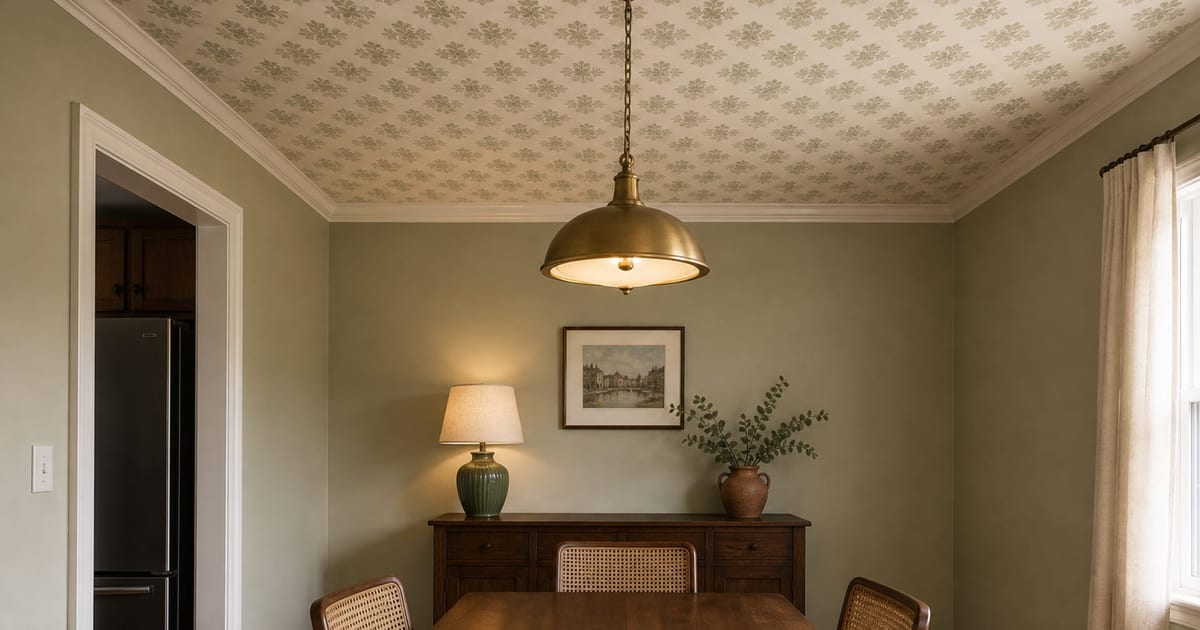
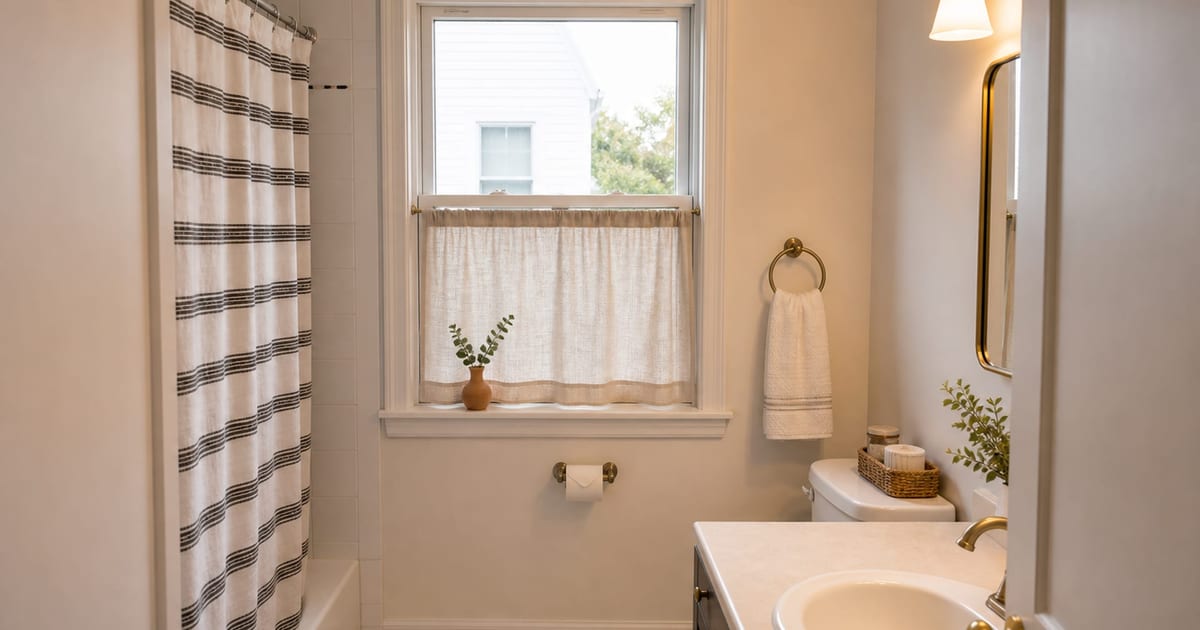
The ceiling can be painted a single color pulled from the paper, papered in a quieter companion print, or left warm white if trim ties it together. The vanity shouldn't compete with the wallpaper — a simple painted or wood piece usually reads better than an ornate one. For a workflow on photographing and prompting a small space before you commit, see Small Bathroom Cafe Curtain Ideas.
Pick the one viewpoint that matters most — usually the doorway view or the mirror view — and judge any pattern by whether it improves that view without creating a worse problem outside the frame. The strongest choice isn't the most dramatic one; it's the one that makes the room easier to use and understand.
What mistakes make powder room wallpaper fail?
- A tiny, busy print can make the walls buzz instead of feel bold.
- Keeping builder-grade lighting after papering makes new wallpaper look flat.
- Ignoring the ceiling leaves an unfinished white lid above a dramatic room.
The deeper mistake is skipping the room's existing evidence — floor color, window placement, ceiling height, plumbing, and door swings already tell you what the room can become. A single inspiration photo often hides the dull constraints: outlet locations, a radiator, a cabinet door, or an awkward window height. Translate the inspiration into measurements and materials before you translate it into a cart.
How can AI previews help before you commit?
Re-Design is useful here because the preview starts from your actual photo instead of a blank mood board. Upload a straight, well-lit image showing the floor, ceiling line, windows, doors, and fixtures, then ask for a controlled preview that keeps the room's architecture and daily path intact.
Try a few focused prompts rather than one fantasy renovation:
- Preview botanical wallpaper with brass sconces
- Test darker wallpaper with a painted ceiling
- Compare peel-and-stick wallpaper on a rental powder room wall
Judge results by usefulness, not drama. Did the preview keep the same window, floor, and doorway? Did it respect a 30 to 36 inch route and preserve sink access? If the output invents architecture or hides the hard part, rerun it with stricter instructions before spending money.
Frequently Asked Questions
What wallpaper is best for a powder room?
Clear medium-scale botanicals, block prints, stripes, or scenic patterns work well when lighting and mirror scale support them. Avoid tiny busy prints, which can buzz rather than feel bold in a small enclosed space.
Can a small powder room handle dark wallpaper?
Yes, especially with warm lighting and a mirror that reflects light back into the room. Dark paper often makes a small powder room feel intentional and cozy rather than cramped.
Should I wallpaper the ceiling too?
Only if the pattern or a companion paper stays calm and doesn't compete with the walls. Painting the ceiling a color pulled from the wallpaper is usually the simpler, safer choice.
Is peel-and-stick wallpaper good in a powder room?
It can work well because powder rooms have less humidity than a full shower bathroom. Surface prep and proper adhesion still matter for a clean, lasting result.
What mirror works best with bold wallpaper?
Use a mirror with enough frame, shape, or thickness to read clearly against the pattern. Very thin, frameless mirrors can visually disappear next to a confident print.