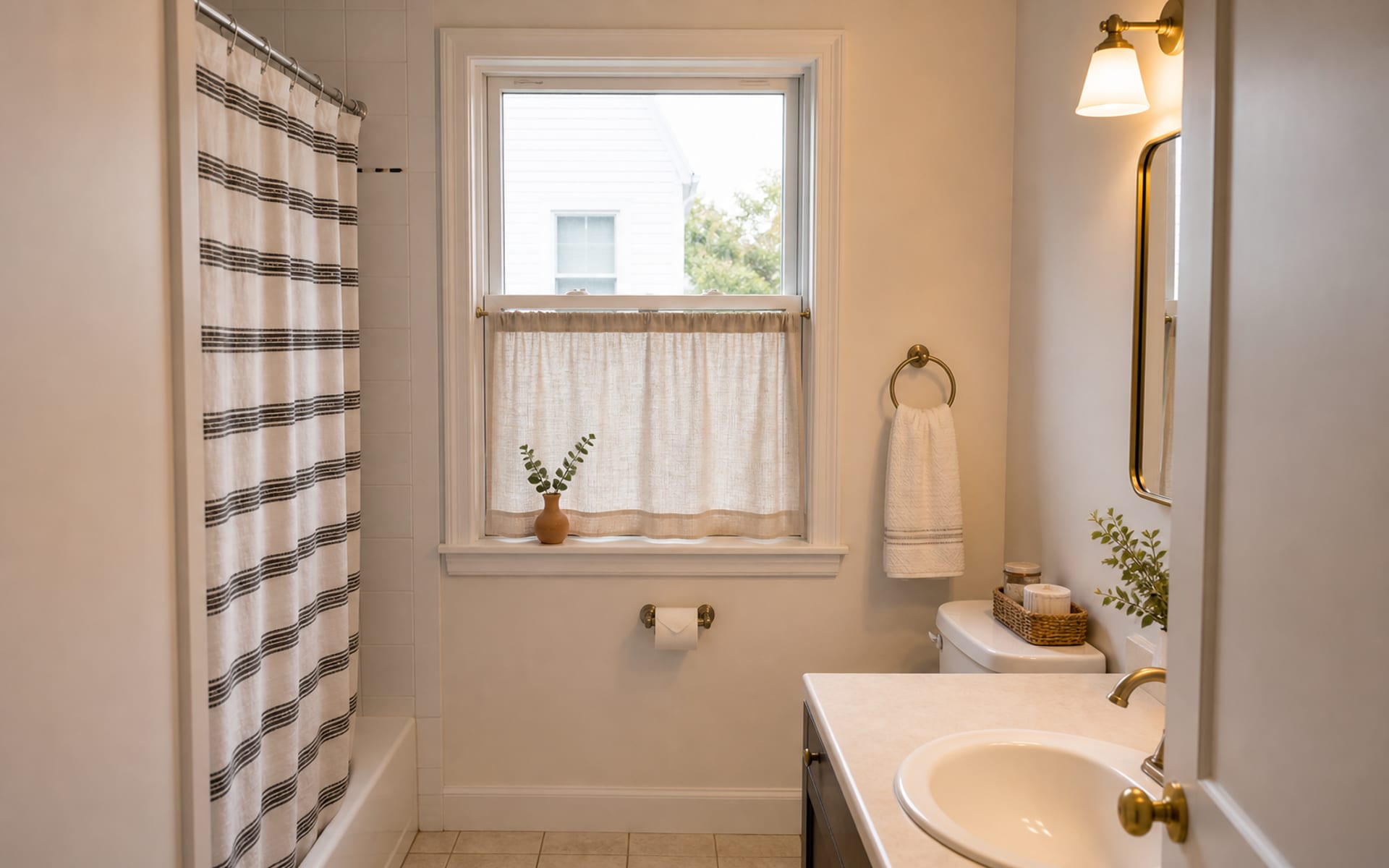
A small bathroom cafe curtain works by covering the lower sash for privacy while leaving the top of the window open, so daylight keeps coming in. Get the balance right by mounting the rod at the exact sight-line height, using washable fabric, and letting the panel end at or just below the sill. Get it wrong and you trade privacy for a dim, damp-smelling room.
Why cafe curtains work in small bathrooms
Small bathrooms need light and privacy at once, and full curtains or opaque shades usually solve one by killing the other. A cafe curtain keeps the upper glass open, which matters when there's only one modest window and no square footage to spare. The broader planning discipline in Small Bathroom Design still applies: this idea has to survive the room you already have, not a mood board.
Before shopping, check the sight line from the doorway, the main light source, and any fixed surfaces you can't change. Photograph the room straight on, list what's nonnegotiable, and change one thing at a time. Keep clearances honest: 30 to 36 inches for a main path, 16 to 18 inches between seating and a table if there's room to sit. Those numbers decide whether the design survives Monday morning, not just the photo.
Fabric, rod, and length rules
Use washable fabric with enough body to hang neatly, not something that sags or holds moisture. Mount the rod at the sash rail, the lower third, or the exact outside sight line rather than guessing at the midpoint. Let the panel finish at or just below the sill so it never brushes wet surfaces. If the style choice starts drifting into taste debates, cross-check it against vanity depth, width, and height guidance so the visual direction stays practical.
- Powder room: tailored linen panel, top sash left open.
- Small full bath: washable fabric, checked against splash distance from the tub.
- Rental bath: tension rod plus removable privacy film, no drilling.
- Street-facing bath: test lower-sash coverage from outside at night with the lights on.
Run any curtain idea against this list before buying custom. If it blocks a door, steals the only bright wall, or makes a cabinet unusable, it isn't ready. A better version usually changes fewer things and makes those few things more precise.
Where the idea fails
Cafe curtains struggle when the window sits inside the shower splash zone, when the fabric is too heavy to dry, or when lower coverage still leaves a direct neighbor sight line. In those cases, frosted film paired with a smaller curtain often works better. For photographing and prompting the space during planning, keep rental-friendly AI design open as a reference.
The same idea looks different room to room because constraints shift. A bathroom punishes extra depth faster than a living room, especially when a curtain crowds the standing zone at the sink or tub. Pick the one viewpoint that matters most, usually the doorway view or the mirror view, and ask whether the change improves that view without creating a worse problem outside the frame.
Common mistakes
- Covering the whole window erases the reason cafe curtains work.
- Heavy lined fabric in a humid bath looks soggy and dries slowly.
- Mounting the rod without checking the outside sight line leaves privacy gaps.
The deeper mistake is skipping the room's existing evidence. Floor layout, window placement, ceiling height, plumbing, and natural light already tell you what the curtain can become. A single inspiration photo hides the dull constraints: the outlet location, the radiator, the wet zone, the awkward window height. Translate inspiration into measurements and materials before it turns into a cart.
Preview it before you commit
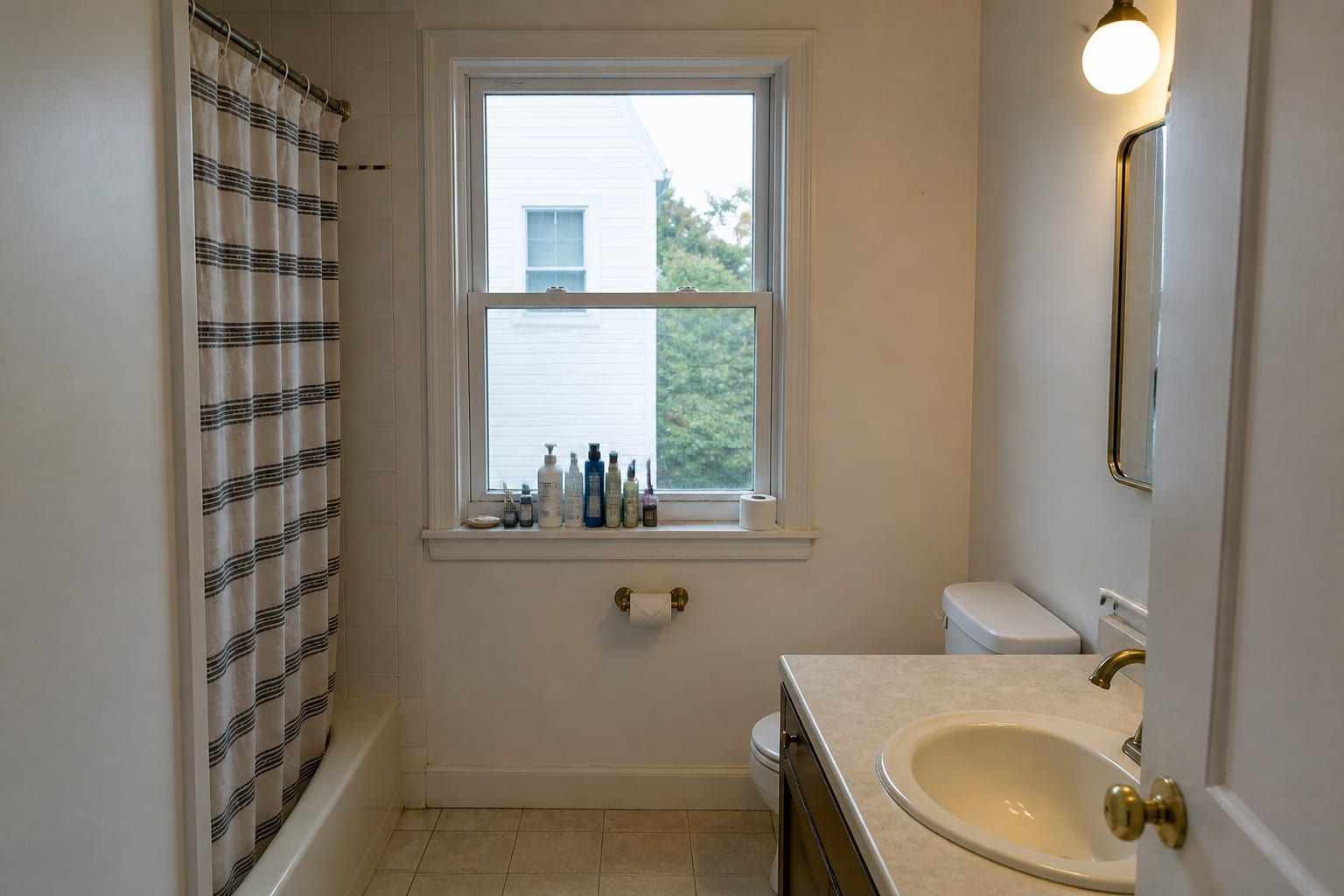
Re-Design is useful here because the preview starts from your actual photo instead of a blank mood board. Upload a straight, well-lit image showing the floor, ceiling line, windows, doors, and fixed fixtures. Then ask for a controlled version that keeps the room's architecture and daily path intact.
Try three focused prompts instead of one fantasy renovation:
- Preview a linen cafe curtain in a small bathroom
- Test a renter-friendly tension-rod cafe curtain
- Compare cafe curtain with frosted lower glass
Judge results by usefulness, not drama. Did the preview keep the same window, floor, and doorway? Did it respect the 30 to 36 inch route the room needs? Did it preserve the sink access or storage that matters most? If the output invents architecture or hides the hard part, rerun it with stricter instructions before spending money.
Frequently Asked Questions
Are cafe curtains good for bathroom privacy?
Yes, when the lower sash is the privacy problem and the upper glass can stay open for daylight. They fail if the whole window needs coverage for a street-level sight line.
What fabric works in a bathroom?
Washable cotton, linen blend, or performance fabric is safer than heavy lined drapery. Avoid fabric that stays damp, since it will smell and sag over time.
Where should the rod go?
Mount it at the height that actually blocks the sight line, often near the sash rail or lower third of the window, not automatically at the midpoint.
Can I use a cafe curtain in a shower window?
Only with moisture-safe fabric and enough splash clearance. Frosted film is often the better choice inside a wet zone where fabric would stay damp.
Do cafe curtains work in rentals?
Yes. Use a tension rod, removable adhesive supports, or pressure-mounted hardware if the lease limits drilling, and skip permanent brackets entirely.