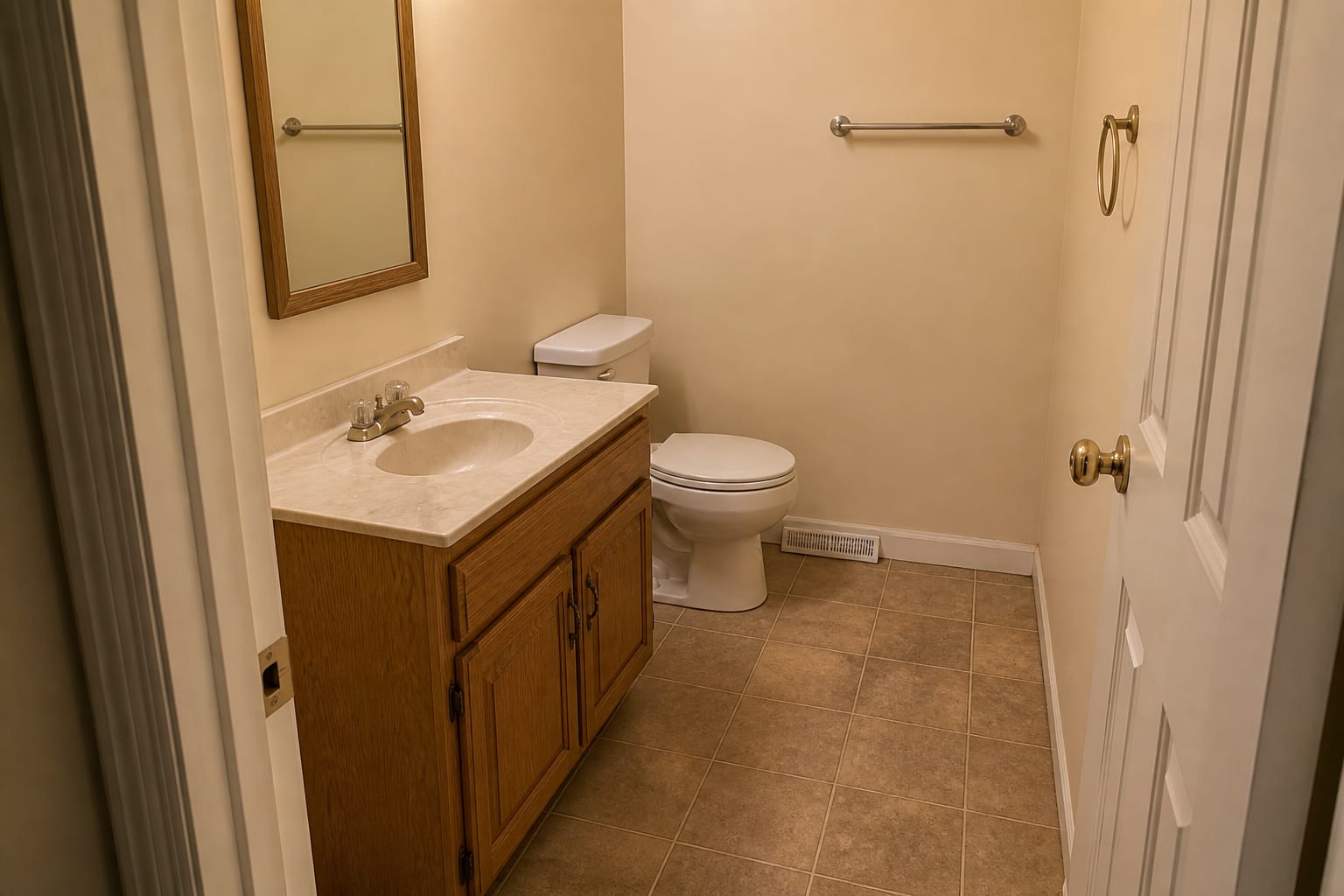
Get small bathroom vanity scale right by picking depth before style: a 16 to 18 inch deep vanity often preserves the walkway that a standard 21 inch model blocks. Then confirm width, height, door swing, and sink placement together, since a pretty vanity that forces you to turn sideways has failed. Measure the room before you shop.
The right vanity is measured from the walkway, not the showroom aisle.
What vanity depth works best in a small bathroom?
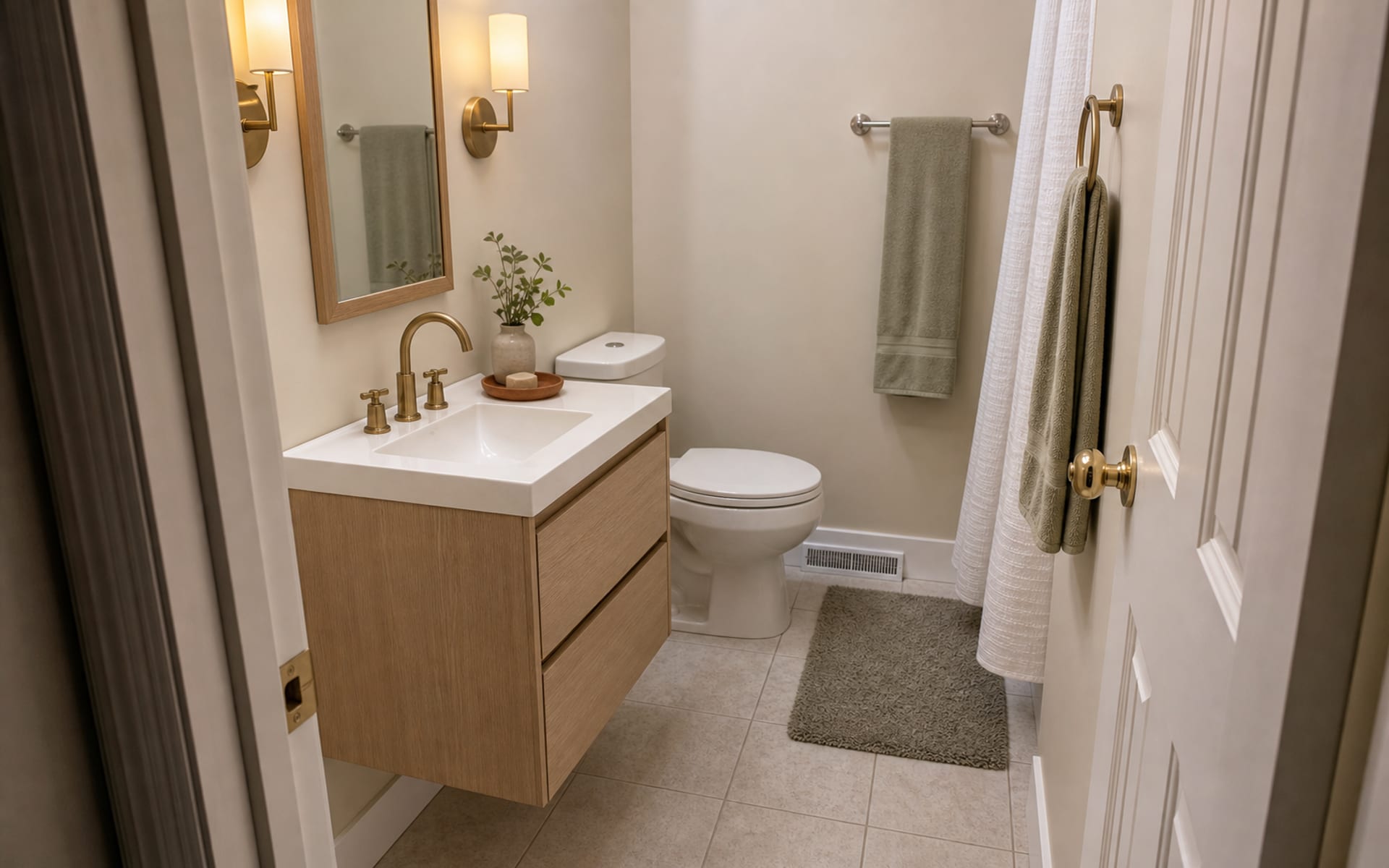
Standard vanities run about 21 inches deep, which can overwhelm older small bathrooms. A 16 to 18 inch depth often preserves the walkway near a tub, toilet, or door, but the sink basin, faucet reach, and counter splash all need to work inside that smaller footprint. See Small Bathroom Design for the broader planning approach this idea has to survive.
Start by photographing the room straight on and listing what's fixed: the doorway sight line, daily path, main light source, and any surface that can't change. Keep clearances honest: 30 to 36 inches for a main path where possible, and enough door or drawer swing that the finished room isn't annoying. These numbers decide whether the design survives Monday morning, not decoration.
How wide and tall should the vanity be?
Vanity width should leave comfortable approach space and code-aware clearance around the toilet. Height often lands between 32 and 36 inches, but the right number depends on who uses it, mirror height, and existing plumbing. Drawers need room to open without hitting a door casing or tub apron.
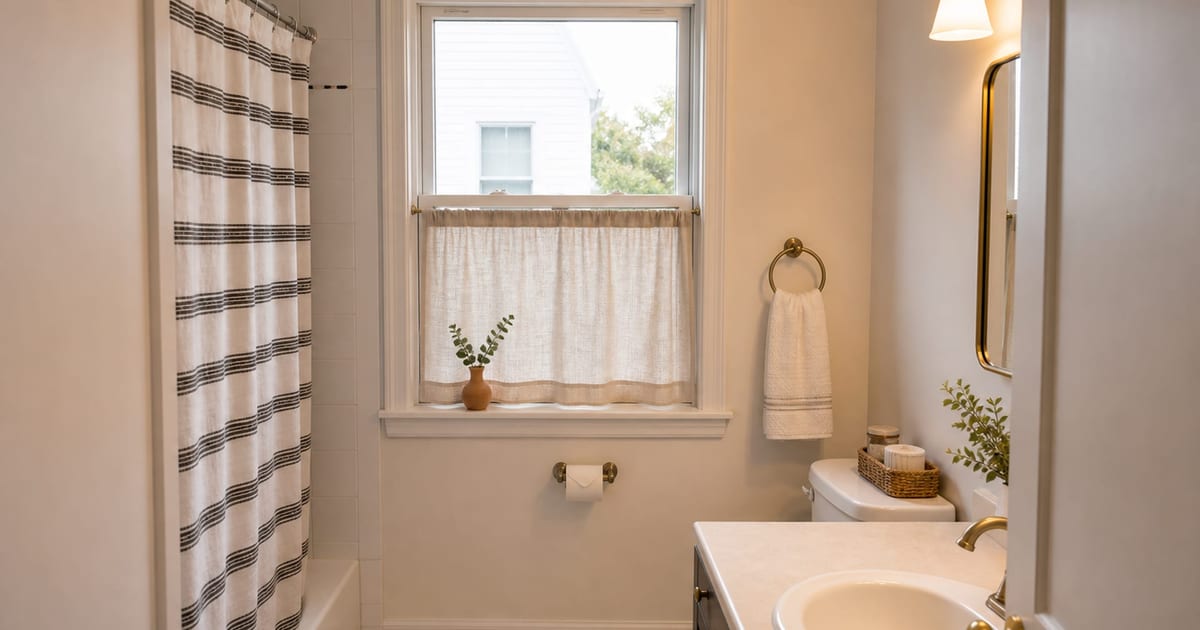
If the plan starts drifting toward style labels before scale is settled, compare it against Small Bathroom Cafe Curtain Ideas to keep the direction practical. Scale rules are filters, not taste police — the room can still be personal and layered, but each layer needs a reason to be there.
- Narrow bath: test 16 to 18 inches of depth before anything deeper.
- Powder room: use a smaller sink and a stronger mirror instead of bulky storage.
- Shared bath: prioritize drawers and medicine storage over open shelving.
- Rental bath: add a freestanding cabinet only if it preserves door swing and the toilet path.
Use that list as a quick audit before buying anything custom. If a vanity blocks a door, steals the only bright wall, or depends on a fixture you can't install, it isn't ready yet.
How does the right vanity change by room type?
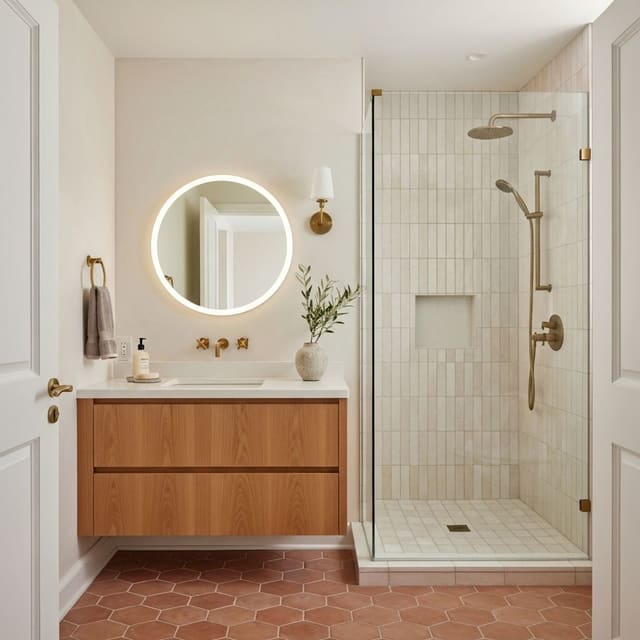
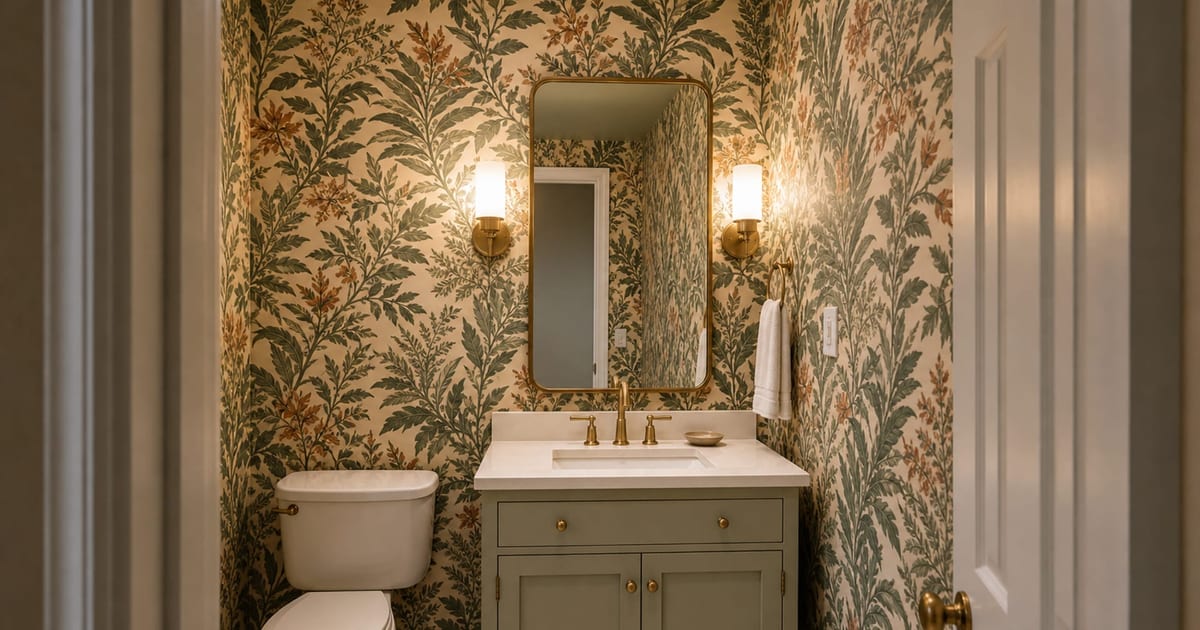
A smaller vanity with good drawers often works harder than a wider vanity with one open cabinet. If plumbing eats the center, use side drawers, a shelf above the toilet, or a medicine cabinet instead of buying extra width for storage that belongs in a closet. Check Powder Room Wallpaper Ideas for a workflow on photographing and prompting a small space.
The fixed constraints shift room to room: a bathroom punishes extra depth faster than a living room punishes an extra inch of furniture, especially once it eats into the standing zone. A rental asks whether the change can leave cleanly; an older house asks whether the original detail is worth keeping. Pick the one viewpoint that matters most — usually the doorway view or the mirror view — and judge any change by whether it improves that view without creating a worse problem outside the frame.
What mistakes ruin small bathroom vanity scale?
- A 21-inch deep vanity in a narrow bath can steal the only comfortable standing zone.
- Ignoring drawer swing creates storage you can't actually use once towels or doors are in the way.
- Choosing a vessel sink without checking final counter height can make daily use awkward.
The deeper mistake is skipping the room's existing evidence. Floors, window placement, ceiling height, plumbing, door swings, and natural light already tell you what the space can become; a plan that fights all of them may photograph well but live badly. A single inspiration photo also hides the dull constraints — outlets, radiators, wet zones, awkward window heights. Translate inspiration into measurements and materials before you translate it into a cart.
How can AI help preview vanity scale before buying?
Re-Design starts from your actual photo instead of a mood board. Upload a straight, well-lit image showing the floor, ceiling line, windows, doors, fixed fixtures, and the piece you're worried about, then ask for a version that keeps the room's architecture and daily path intact.
Try three focused prompts instead of one fantasy renovation:
- Preview an 18-inch deep vanity in a small bath
- Test a floating powder-room vanity with clear floor
- Compare drawer storage against cabinet storage
Judge results by usefulness, not drama. Did the preview keep the same window, floor, and doorway? Did it respect the 30 to 36 inch route the room needs, and preserve the storage, sink access, or clearance that matters most? If the output invents architecture or hides the hard part, rerun it with stricter instructions before spending money.
Frequently Asked Questions
What vanity depth is best for a small bathroom?
Sixteen to 18 inches often works in tight rooms, while 21 inches fits better when the walkway and door swing are generous. Measure the actual clearance around the door and toilet before choosing.
How wide should a small bathroom vanity be?
Choose the widest vanity that preserves toilet clearance, door swing, and comfortable standing room. Many small baths land between 24 and 36 inches wide depending on layout.
Is a floating vanity better?
A floating vanity can make the floor feel clearer and help tight rooms breathe, but wall structure, plumbing, and storage needs must support it. Confirm blocking and plumbing access before installing.
What vanity height is comfortable?
Many modern vanities sit around 34 to 36 inches high, but shorter users, vessel sinks, and existing mirror height can shift the ideal number. Test the height against who actually uses the sink.
How do I get storage in a tiny vanity?
Use drawers when plumbing allows, add a medicine cabinet, and reserve nearby shelves for daily items instead of forcing everything under the sink. This keeps a small footprint functional without adding width.