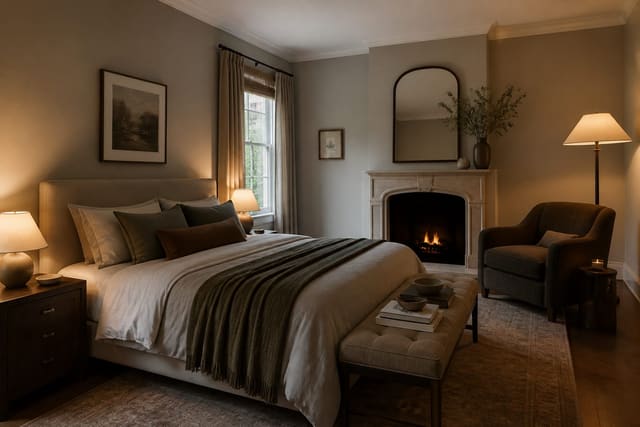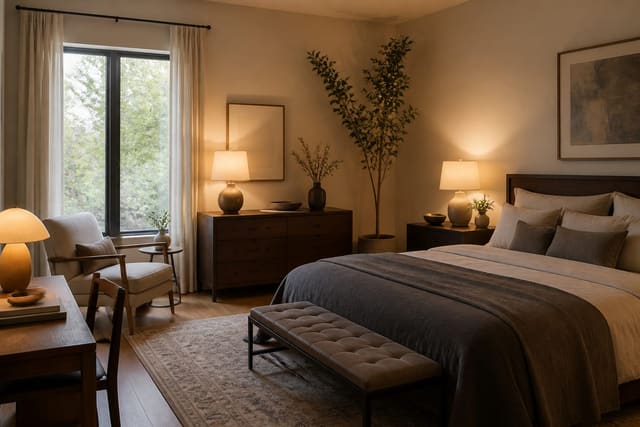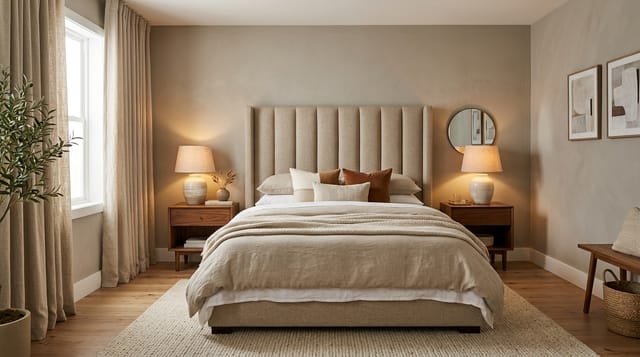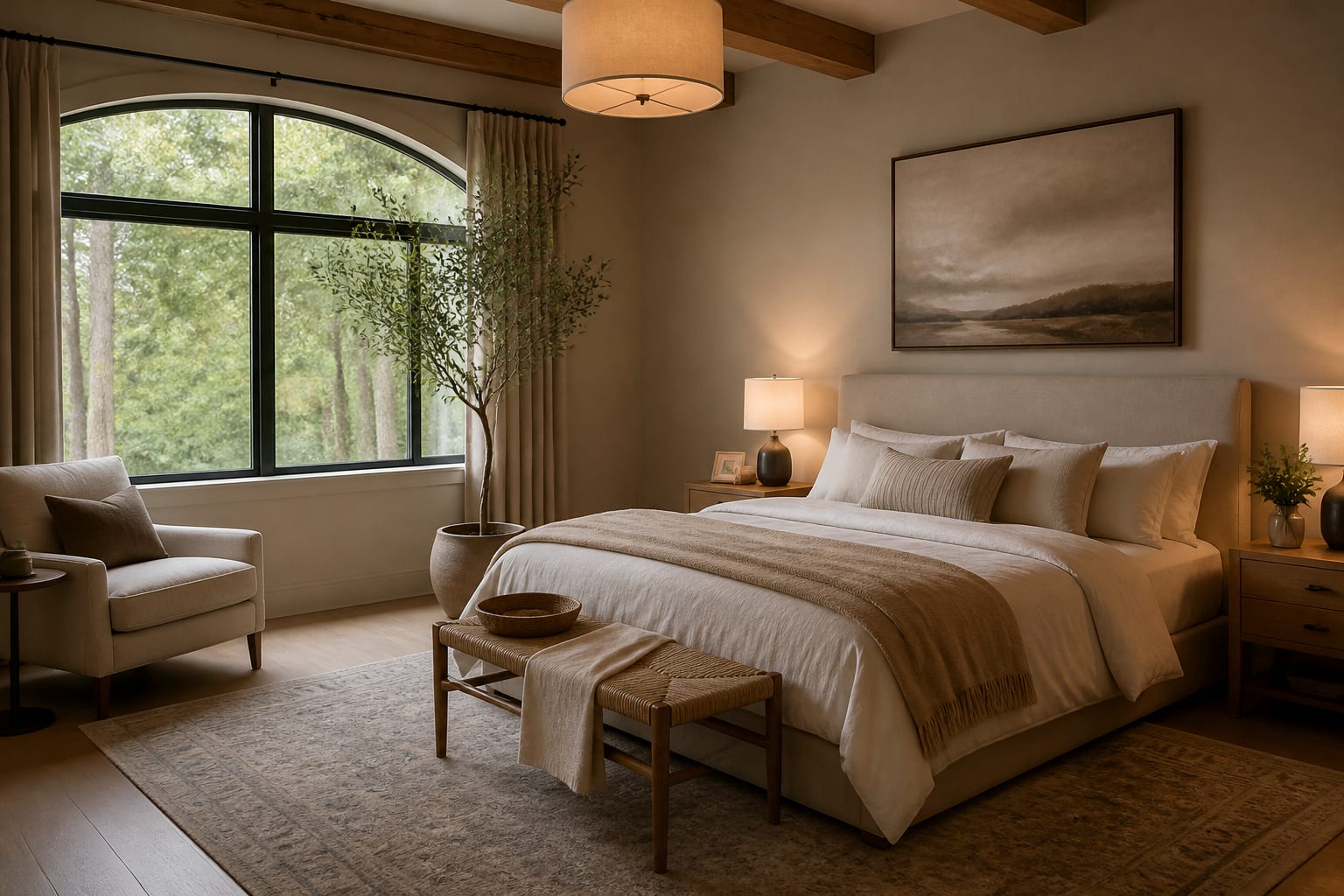
A primary bedroom becomes a retreat when you remove the wrong things, not when you add expensive ones. The single biggest move is taking the work, the screens, and the visual clutter out, then layering in warm 2700K light, soft textures, and a bed built for actual sleep. A calm room is a subtracted room first.
My read is that most bedrooms fail at rest because they double as offices, laundry staging, and gym corners. A retreat does one job well. So I design the room around sleep and quiet, and I send every competing function somewhere else before I spend a dollar on decor.
Strip the room down to sleep
Start by deciding what the room is not. A retreat is not a home office, a folding station, or a peloton studio. Every one of those functions adds visual noise and a mental to-do list that fights rest. If you cannot relocate a function entirely, hide it behind a screen or inside a closed cabinet so it leaves your sightline from the bed.
Then clear the surfaces. Aim to keep nightstands about 70% empty, holding a lamp, maybe a book, and nothing else. Dressers should not become a dumping ground for receipts and keys. The goal is that when you lie down and look around, your eye finds soft, settled surfaces rather than a dozen small obligations. A deliberate bedroom layout that floats the bed on the main wall and keeps walkways at 24 to 36 inches makes the whole room read as intentional.
Calm also comes from a tight palette. Pick 3 to 4 muted colors with low contrast, like warm white, soft greige, and a dusty blue or sage, and repeat them across walls, bedding, and curtains. High-contrast, busy patterns keep the eye scanning, which is the opposite of what you want at bedtime. The same restraint applies to artwork: hang one calm, larger piece rather than a busy gallery wall, and keep its colors inside the same palette so it settles into the room instead of demanding attention from the pillow.
Build a bed that earns the word retreat
The bed is the whole point, so over-invest here. Layering is what separates a hotel bed from a dorm bed:
- A fitted sheet in a 300 to 500 thread count cotton percale or sateen.
- A flat sheet, folded back over the duvet to frame the top of the bed.
- A duvet or comforter with a washable cover in your palette.
- Two sleeping pillows, two euro shams at 26 inches, and one or two accent pillows.
- A folded throw blanket across the foot for texture and warmth.
That layering gives the bed depth and that inviting, made-by-housekeeping look without anything exotic. Keep the colors within your 3-to-4 palette so the layers read as calm, not busy. A throw at the foot and a couple of textured shams do more for the room than any single pricey piece of furniture.
Position the bed on the wall you see first when you enter, ideally with a solid headboard you can sit against. A 48-to-54-inch headboard anchors the room and gives the bed presence. Leave 24 to 36 inches of clearance on each side for nightstands and easy access, and try to keep the bed off the wall shared with a noisy hallway or bathroom so sound does not carry to your pillow at night.
Light and texture for actual rest
Lighting is the lever most people ignore, and it controls how restful the room feels more than any object. Swap cool, bright bulbs for warm 2700K, and put every fixture on a dimmer. After sunset, run the room under 50% brightness, leaning on bedside lamps rather than the overhead fixture, which flattens the room and signals daytime. If you want the full reasoning, my bedroom lighting guide breaks down the layers in detail.
Then build in texture, because soft materials read as comfort. A wool or plush rug underfoot, linen curtains, a chunky knit throw, and an upholstered headboard give the room a tactile softness that paint alone cannot. Hang curtains 4 to 6 inches above the window frame and wide enough to clear the glass, then let them just kiss or lightly puddle on the floor; the added height makes the room feel calmer and larger.
Finally, manage darkness and sound. Blackout curtains or a quality liner block streetlight, and a small rug plus fabric softens echo so the room feels hushed. A few quiet upgrades help here too: cover or remove any glowing electronics, swap a ticking clock for a silent one, and keep the air cool around 65 to 68 degrees, the range most people sleep best in. These are the unglamorous touches that actually decide whether you sleep, and they cost far less than new furniture.
Common mistakes to avoid
The most common mistake is treating a retreat as a shopping list and cramming the room with furniture until there is nowhere for the eye to rest. Restraint is the design; an empty corner is a feature, not a gap to fill.
A second mistake is keeping bright, cool overhead light as the only source, which kills any sense of calm the moment you flip the switch. Layer in warm lamps on dimmers instead. A third is letting the room keep a second job, with a desk or treadmill in the corner reminding you of work and chores from the pillow. A fourth common mistake is a busy, high-contrast palette of five or six colors that keeps the eye busy at bedtime. The last is skipping window treatments, leaving bare blinds that let in streetlight and make the room feel unfinished and exposed.
Use AI design to plan your bedroom retreat
The tricky part of a retreat is that calm is hard to picture in advance, since you are trying to imagine a quieter version of a room you already see as cluttered. Re-Design makes that easy to test. Upload a photo of your bedroom and the AI design re-renders it with a softer palette, layered bedding, and warmer light so you can see the restful version before you move a single piece of furniture.
Because you upload your real room, the previews keep your actual window placement, ceiling height, and proportions intact while swapping the mood. Try a greige-and-linen scheme with a tall upholstered headboard, then preview a moodier dusty-blue version with blackout curtains to decide which one feels like the retreat you want to come home to, all before you spend anything.