Ranch houses get a bad rap, and I think most of it is undeserved. The honest answer is that the bones are genuinely good: single-story living, an easy connection to the yard, and rooms that flow into each other before open plans were trendy. What dates a ranch is rarely the architecture. It is the popcorn ceilings, the brown 1970s trim, the dark paneling, and a kitchen walled off from everything else.
The trick with a ranch is to modernize without erasing what makes it a ranch. The long, low horizontal lines are the point, so updates that fight them, like a giant two-story addition or heavy ornate moldings, tend to look wrong. My read is that the best ranch updates lean into the mid-century roots: clean trim, warm wood, generous glass, and a floor plan that breathes. Below is how I would approach it, from the structural moves down to the finishes.
Open up the floor plan
The defining update for almost any ranch is opening the kitchen. These houses were built when kitchens were closed, utilitarian rooms, so you usually inherit a wall between the cooking space and the living or dining area. Taking that wall down, assuming it is not load-bearing, is the single highest-impact change you can make, and even a load-bearing wall can usually be replaced with a beam and a couple of posts for a larger but still reasonable budget.
Ranches also tend to have a tight entry that dumps you straight into the living room. You can carve out a sense of arrival without building walls by changing flooring direction, adding a low bench, or floating a console. The goal is to keep the open feel while giving the eye places to land. Because a ranch floor plan often forces one space to do two jobs, like a living room that also holds a desk, it helps to think in zones; the tiny house interior design ideas approach of defining areas with rugs and furniture backs works especially well in a long, open ranch.
Fix the light and the ceiling
Light is the second big lever. Original ranches are often dim because the windows are small and the eaves are deep. Enlarging a window or two, or replacing a solid back door with a slider, transforms how the house feels for a fraction of a full remodel. If you cannot move glass around, focus on layered lighting: recessed cans on dimmers, a few wall sconces, and warm lamps, all in the 2700K to 3000K range so the wood tones stay warm rather than going clinical.
The ceiling is the other tell. Popcorn texture and an eight-foot flat ceiling read as dated the moment you walk in. A few moves help:
- Scrape or skim-coat popcorn ceilings to a smooth finish (test for asbestos on anything pre-1980 first).
- Vault the ceiling into the attic trusses if the framing allows, which suits a ranch's low profile beautifully.
- Add a simple beam detail in clean-finished wood to draw the eye up without ornamentation.
- Paint the ceiling the same white as the walls in a flat finish to make a low ceiling recede.
If you want the bright, airy feel that suits a ranch full of glass, the light-and-trim playbook in the cape cod interior design ideas guide stacks neatly on top of the glass and ceiling work.
Update finishes without losing the character
Finishes are where a ranch either ages gracefully or looks frozen in 1975. The dated culprits are predictable: orange-toned oak trim, brass-and-glass everything, dark wall paneling, and busy patterned tile. You do not have to gut it. Painting heavy paneling, swapping hardware, and refinishing oak floors to a more natural tone handles most of the visual age for a modest budget.
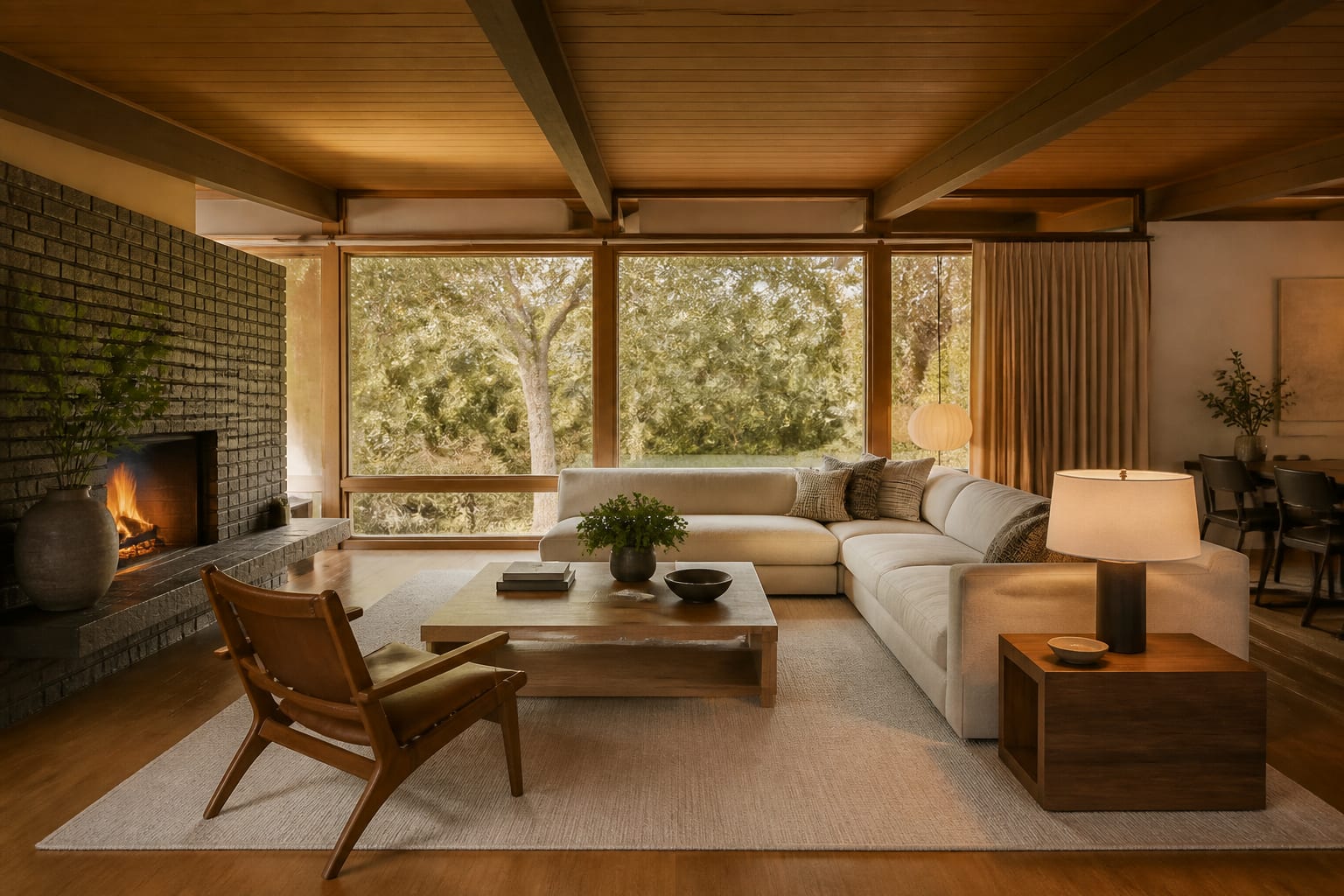
Lean into the mid-century DNA when you choose new materials. Warm walnut and teak tones, simple slab cabinet fronts, large-format tile, and matte black or warm metal fixtures all read as current while respecting the era. Refinishing existing oak floors to a more neutral tone, rather than ripping them out, is usually the better-value call and keeps the warmth a ranch wants. Flooring continuity matters here too, since one consistent material running through the open zones makes a long ranch feel larger and calmer than a patchwork of different floors room to room. Keep the furniture low and horizontal to echo the rooflines, and resist the urge to over-decorate; ranches look best a little spare. If you are blending a few looks here, say mid-century furniture with a more contemporary kitchen, the restraint in the townhouse interior design ideas playbook keeps it from turning into a costume.
Common mistakes to avoid
The most common mistake is adding formality a ranch was never meant to carry: crown molding, heavy drapes, ornate light fixtures, and a two-story foyer addition all fight the low horizontal lines and look bolted-on. A second frequent mistake is going too cold and gray; the mid-century ranch wants warmth, so an all-gray, all-white scheme drains the character out of it.
People also tend to over-divide the space again right after opening it, dropping in a giant island or a wall of cabinets that recreates the closed feeling they just removed. Keep sightlines open. Another mistake to avoid is ignoring the yard; a ranch's best feature is its ground-floor connection to outside, so blocking the back windows with heavy furniture or skipping the slider wastes the architecture. Finally, do not match every wood tone exactly. A ranch reads richer with two or three coordinated wood tones than with one flat, uniform stain everywhere.
Use AI design to preview ranch house interior design ideas before you commit
The scary part of a ranch remodel is the structural stuff, since removing a kitchen wall or vaulting a ceiling is hard to picture from a floor plan. With Re-Design you upload a photo of the room as it stands and preview the wall gone, the ceiling opened, or the trim simplified, so you can see whether the open kitchen actually flows the way you hope before a contractor swings a hammer. Testing a slider where a solid wall is now will tell you in seconds how much the light changes.
The AI design tool is also a low-stakes way to settle the finish debates that stall ranch projects, like whether to paint the paneling or live with the oak. Upload the room, generate a painted version and a refinished version, and look at them side by side instead of arguing from paint chips. Because the render keeps your real windows and proportions, the mid-century moves get judged against your actual house rather than a generic ranch in a catalog.