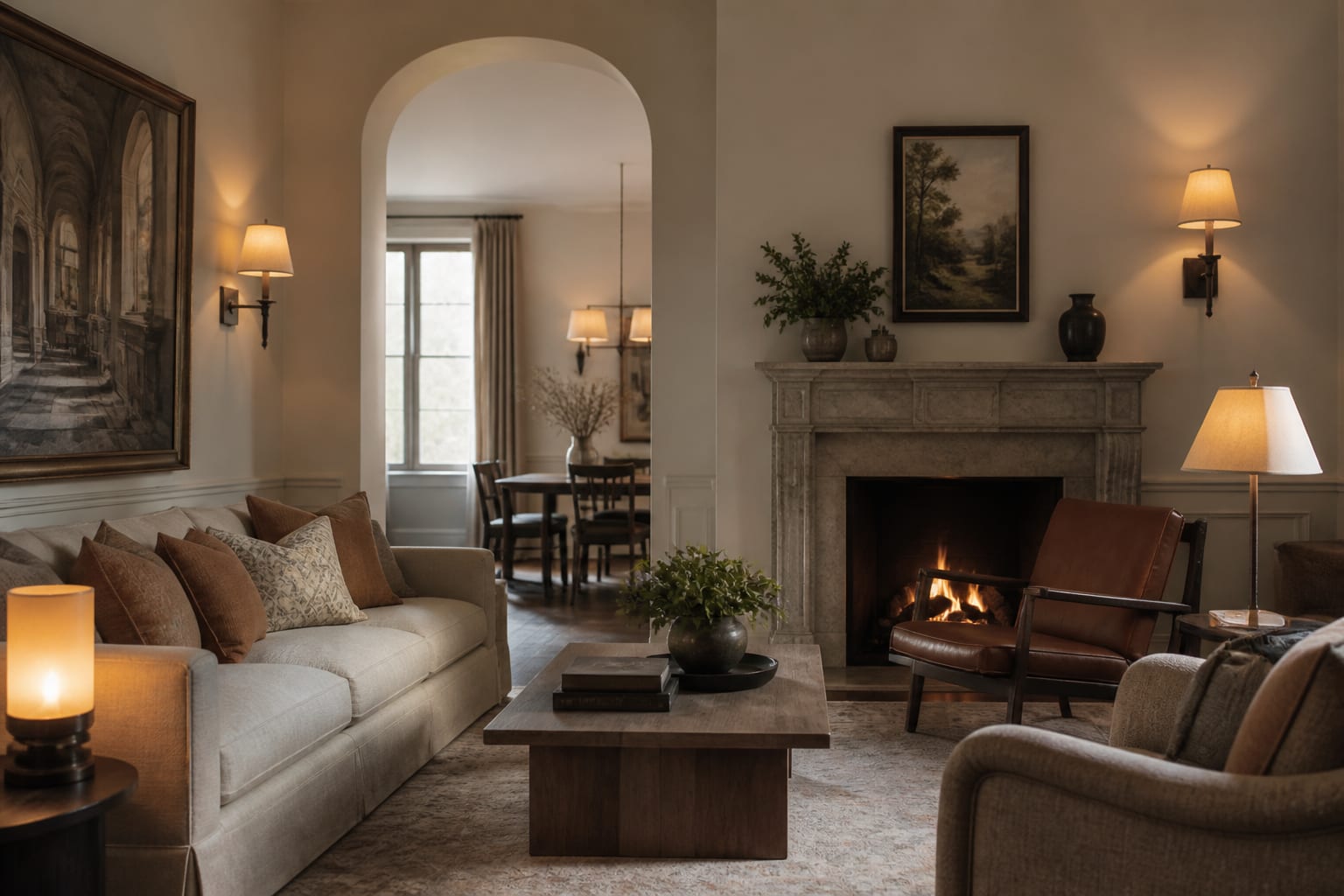
Most people treat sconces as decoration first and light second, and that is backwards. A sconce hung at the wrong height or fitted with the wrong bulb becomes a glare bomb you squint past, no matter how pretty the fixture. Get the placement and the light right and a pair of sconces can replace a harsh overhead, frame a bed, or rescue a dim hallway with a soft wash that flatters faces and walls alike. The fixture style is the easy part. The mounting height, the beam direction, and the bulb color are what separate a wall light that works from one you stop noticing.
How high should you mount a sconce?
Height is the decision that makes or breaks a sconce, and the right number depends on the job. For general wall lighting in a living room or hallway, center the fixture about 60 to 66 inches from the floor, which puts the brightest part of the glow above standing eye level so nobody catches the bare bulb. Hang a row of hallway sconces and space them 8 to 10 feet apart at that same height for an even rhythm of light down the corridor.
Bedside sconces follow a different logic because you use them sitting up against pillows. Mount them so the bottom of the shade sits around 30 to 36 inches above the mattress, which usually lands the fixture center near 60 inches off the floor, and offset them 3 to 6 inches to the outside of the headboard so the light falls onto a book rather than your face. Swing-arm models earn their keep here, since you can pull the light over a page and push it back against the wall when you sleep. If you are reworking a rental apartment where drilling into the wall is a problem, plug-in swing-arm sconces give you the same adjustable reading light without a single new hole that needs patching at move-out.
How do you light a bathroom mirror with sconces?
The single biggest grooming-light mistake is one fixture mounted above the mirror, which drops shadows under the eyes, nose, and chin and makes shaving or makeup harder than it should be. Side lighting fixes it. Flank the mirror with a sconce on each side, mounted with the center around 66 inches from the floor, roughly at eye level, and spaced 28 to 40 inches apart depending on mirror width. That cross-light fills the shadows a top fixture creates and lights the face evenly from both directions.
Use frosted or opal shades at a vanity rather than clear glass with an exposed filament bulb, because diffuse light is far kinder to skin and to your eyes when you are leaning in close. For color, 3000K is the sweet spot at a vanity, warm enough to feel residential but neutral enough that makeup colors read true. A combined output around 1,600 lumens across the two fixtures covers a standard mirror without washing the room into operating-room brightness.
Which bulb and shade should you choose?
The bulb sets the mood more than the fixture does. For living rooms, bedrooms, and dining areas, 2700K is the warm, lamplight color that makes a space feel relaxed after dark. Reserve the slightly cooler 3000K for task zones like vanities, kitchens, and reading corners where you want a crisper light. Keep every sconce in a single room at the same color temperature, because a mix of 2700K and 4000K bulbs on the same wall reads as a mistake even to people who could not name why.
Shade direction is the other lever. An uplight sconce throws the glow up the wall and across the ceiling for a soft ambient bounce, which is ideal flanking a sofa or fireplace. A downlight sconce focuses a pool below it, better for reading or for grazing a textured wall. Fixtures that emit both up and down give you the most flexibility in a hallway or stairwell. Always put sconces on a dimmer; a 9-watt LED at full output is great for cleaning and too bright for a quiet evening, and the dimmer is what lets one fixture serve both. A simple in-wall dimmer runs about $25, and it is the cheapest upgrade that makes lighting feel custom. Sconces also do quiet work in small spaces, where a wall-mounted fixture frees up the floor and tabletop area a lamp would otherwise eat.
Common sconce mistakes to avoid
Most sconce regrets trace back to a handful of repeat offenders. Run through this list before you drill: - Mounting bedside sconces too low, under about 30 inches above the mattress, so the bulb glares straight into your eyes while you read. - Relying on a single fixture above the bathroom mirror, which casts hard shadows under the eyes and chin instead of lighting the face evenly. - Mixing color temperatures, pairing a 2700K sconce with a 4000K one on the same wall, so the light reads uneven and clinical. - Skipping the dimmer, which locks a 9-watt LED at one brightness and kills any chance of setting a softer evening mood. - Choosing clear glass with an exposed filament bulb at a vanity, where the bare point of light is harsh on both skin and eyes. - Spacing hallway sconces more than 10 feet apart, which leaves dark gaps between pools of light instead of an even wash.
See how sconces fall in your own room with Re-Design
A sconce in a catalog photo tells you nothing about how it will sit on your particular wall, beside your headboard, or against your paint color. Upload a photo of the room into Re-Design and preview a pair of sconces flanking the bed, the mirror, or the sofa before you buy a single fixture or call an electrician. You can swap a slim modern fixture for a brass library style, test an uplight against a downlight, and judge the scale against your actual furniture in seconds. That preview shows you whether the height and spacing read balanced in your space, so you commit to the look you already know works rather than guessing from a product page.
Frequently Asked Questions
How high should bedside sconces be mounted?
Mount bedside sconces so the bottom of the shade sits about 30 to 36 inches above the mattress, which usually centers the fixture near 60 inches off the floor. Offset each one 3 to 6 inches outside the headboard so the light falls onto your book instead of your eyes. Swing-arm models let you pull the light over a page and push it back to read against the wall when you are done.
Where should sconces go around a bathroom mirror?
Place a sconce on each side of the mirror with the center around 66 inches from the floor and 28 to 40 inches apart, depending on how wide the mirror is. Side lighting fills the shadows that a single top-mounted fixture casts under the eyes and chin. Use frosted shades and 3000K bulbs so the light is diffuse and flattering when you lean in close.
Can renters install sconces without an electrician?
Yes. Plug-in and battery-powered sconces give you real wall lighting with no junction box and no wiring. Plug-in swing-arm models mount with a few small screws and run a cord to the nearest outlet, and rechargeable LED sconces stick up with no cord at all. Both let you add bedside or accent light and remove it cleanly when you move out.
What color temperature is best for sconces?
Use 2700K in living rooms, bedrooms, and dining areas for a warm, relaxed glow after dark, and step up to 3000K at vanities and reading spots where you want a crisper light. Keep every sconce in one room at the same temperature so the light reads consistent, and put them on a dimmer so the same fixture works for both bright cleaning and a quiet evening.