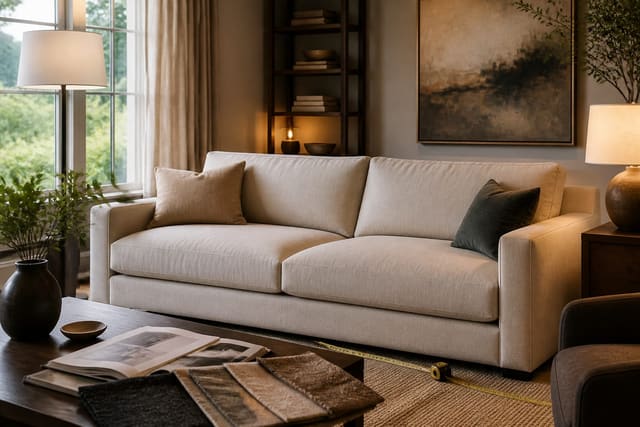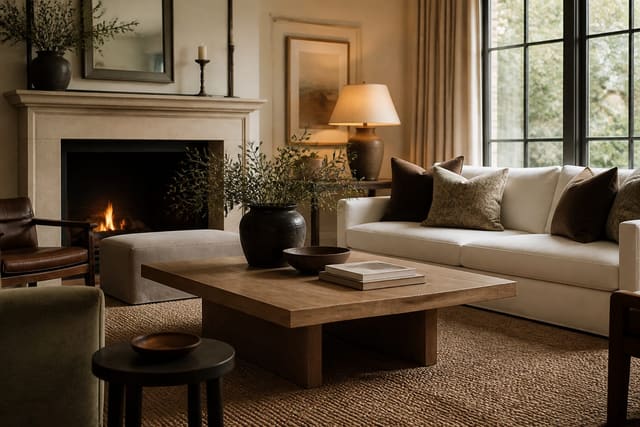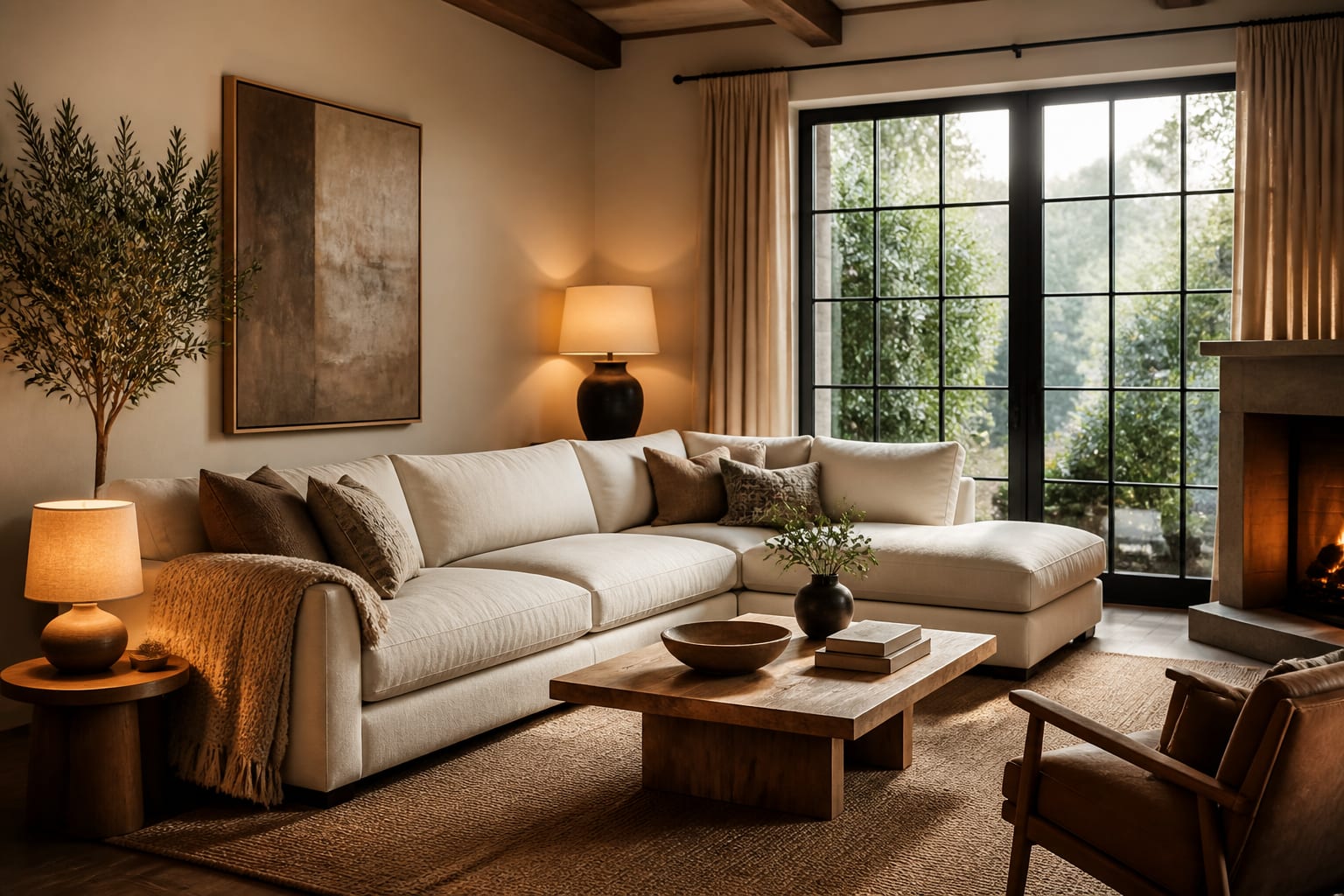
A sectional is the most committed furniture purchase in a living room, and the most commonly oversized. People fall for the lounge-everywhere fantasy, order the biggest configuration they can afford, and end up with a piece that blocks the walkway, crowds the television, and dominates a room it was supposed to serve. The better way is to choose the configuration and the orientation first, off real measurements of your room, and let the seat count follow. Get the shape and the chaise side right, leave the clearances honest, and a sectional becomes the most comfortable, functional anchor in the house rather than a wall of upholstery you edge around.
Which configuration fits your room?
The configuration is the first and biggest decision, and it follows the architecture of the room more than personal preference. An L-shaped sectional is the workhorse: it tucks into a corner, faces seating toward a television or fireplace, and leaves the rest of the room open. It suits the majority of living rooms and reads balanced in a square or slightly rectangular space. The two-piece L with a chaise is the most flexible version, since the chaise can often be ordered for either end.
A U-shaped sectional is for big rooms that host. With seating on three sides, it wraps a coffee table and seats six or more, which is ideal for a family room or a den built around movie nights. The catch is footprint: a U needs a room of at least 13 by 13 feet to avoid swallowing the space, and it pushes seating away from any wall, so plan the clearances carefully. In a tight room, a U-shape is the classic over-reach.
Modular and sofa-with-chaise setups buy you flexibility. A modular sectional comes as separate seats you arrange and rearrange, which is the right call for renters or anyone who moves often or wants to reconfigure later. A standard sofa paired with a separate chaise or ottoman gives a similar lounge feel with less permanence. If you are still deciding between a sectional and a regular sofa, our guide to how to choose a sofa walks through seat depth, fill, and frame quality that apply to both.
How do you size a sectional correctly?
Oversizing is the cardinal sectional sin. The longest run of the sectional should land at roughly two-thirds the length of the wall it sits against, the same proportion that keeps a standalone sofa from looking jammed in. A 12-foot wall wants a sectional run around 96 inches, not a 120-inch slab pressed wall to wall. Leaving a foot or more of wall on each side lets the piece breathe and keeps the room from feeling fully upholstered on one side.
Clearance is the number people skip and regret. Hold 30 to 36 inches of walkway on every traffic side of the sectional so people pass without turning sideways, and keep at least 18 inches between the seat front and the coffee table so shins clear. A chaise that juts into the main walkway is the fastest way to make a room feel cramped, so measure the path before you commit to the depth of the chaise.
Depth and height shape comfort and fit. A deep 40 to 42-inch seat is built for lounging and lying down, but it eats floor space and pushes people into a reclined posture that is awkward for conversation or working on a laptop. A shallower 36 to 38-inch seat sits more upright, fits tighter rooms, and suits shorter sitters whose legs would otherwise dangle. Match the depth to how you actually use the room, and remember a deeper sectional needs more clearance in front, not less.
What ideas make a sectional work harder?
Beyond the basic L in a corner, a sectional can solve several layout problems at once. A few configurations and tricks worth considering:
- Float a sectional in a large room with a console behind it to divide the seating zone from a walkway or second area.
- Use the chaise as a room divider in an open plan, with its back defining the edge of the living zone.
- Choose a modular setup so the same seats can wrap a corner now and stretch along a wall later.
- Add a matching ottoman in front of the chaise to extend a two-seat lounge into a daybed for guests.
- Pick a sectional with a built-in storage chaise to hide blankets and remotes in a room short on closets.
- Pair a low-back sectional, under 33 inches tall, in a room with a view so the piece does not block the window.
The right coffee table completes the setup, and a sectional changes what shape works best. A square or round table centered in the L gives equal reach from both runs of seating, and our guide to coffee table ideas covers sizing the table to the seating so every seat has a surface within reach.
Common mistakes to avoid
Sectional regret is almost always a sizing or orientation problem, and both are expensive to fix once the piece arrives. The anti-patterns to avoid:
- Ordering the chaise on the wrong side; left-facing versus right-facing is easy to mix up and hard to return.
- Buying a sectional that runs the full length of the wall, leaving no breathing room on either side.
- Choosing a U-shape for a room under 13 by 13 feet, which boxes in the space and kills the walkways.
- Picking a 42-inch deep seat for a small room, then losing a foot of floor and crowding the coffee table.
- Dropping the walkway below 30 inches with an overlong chaise that juts into the traffic path.
- Pushing a sectional against two walls in a corner when the room is wide enough to float it for a better layout.
Price reinforces the case for measuring twice. A quality sectional runs roughly $1,800 to $5,000, and most retailers treat them as custom orders that are non-returnable once the orientation is set. That makes the chaise side and the overall footprint decisions you want to get right on paper, since a $3,500 piece in the wrong configuration is a costly mistake to live with.
Preview it in Re-Design first
A sectional is the piece most worth previewing before you buy, because its footprint and chaise orientation are nearly impossible to judge from a product photo. Upload a picture of your living room into Re-Design and place different sectionals, L-shapes, U-shapes, and modular setups, to see how each fills your actual corner and how much walkway is left. You can flip the chaise from one side to the other, compare a deep lounge seat against a shallower one, and confirm the run is two-thirds of the wall rather than wall to wall. Seeing the true footprint in your own room prevents the costly orientation mistakes a custom order makes permanent.
Frequently Asked Questions
What size sectional should I buy?
Size the longest run to roughly two-thirds the length of the wall it sits against. A 12-foot wall calls for a run around 96 inches, leaving a foot of breathing room on each side rather than filling the wall completely. Then confirm you can keep 30 to 36 inches of walkway around the piece and 18 inches in front. The seat count should follow the room, not drive it.
How do I know which chaise orientation to choose?
Stand in your room facing where the sectional will go and decide which side the long chaise should extend toward, usually the side with more open floor and away from the main walkway. Retailers label this left-facing or right-facing as you look at the piece, and conventions vary, so confirm with the seller. Orientation is hard to reverse on a custom order, so verify it before buying.
Is a sectional too big for a small living room?
Not necessarily, but the configuration matters. Skip the U-shape and oversized L in a small room and choose a compact two-piece L or a sofa-with-chaise instead, sized to two-thirds of the wall. Keep the seat depth around 36 to 38 inches to save floor space and protect the 30-inch walkways. A right-sized sectional can actually use a small room's corner more efficiently than two separate pieces.
How much clearance does a sectional need?
Leave 30 to 36 inches of walkway on every traffic side so people pass comfortably, and keep at least 18 inches between the seat front and the coffee table for legroom. A deep 40-inch seat needs more clearance in front, not less. Plan the walkways before you choose the chaise depth, since a chaise that juts into the path is the quickest way to make a room feel cramped.