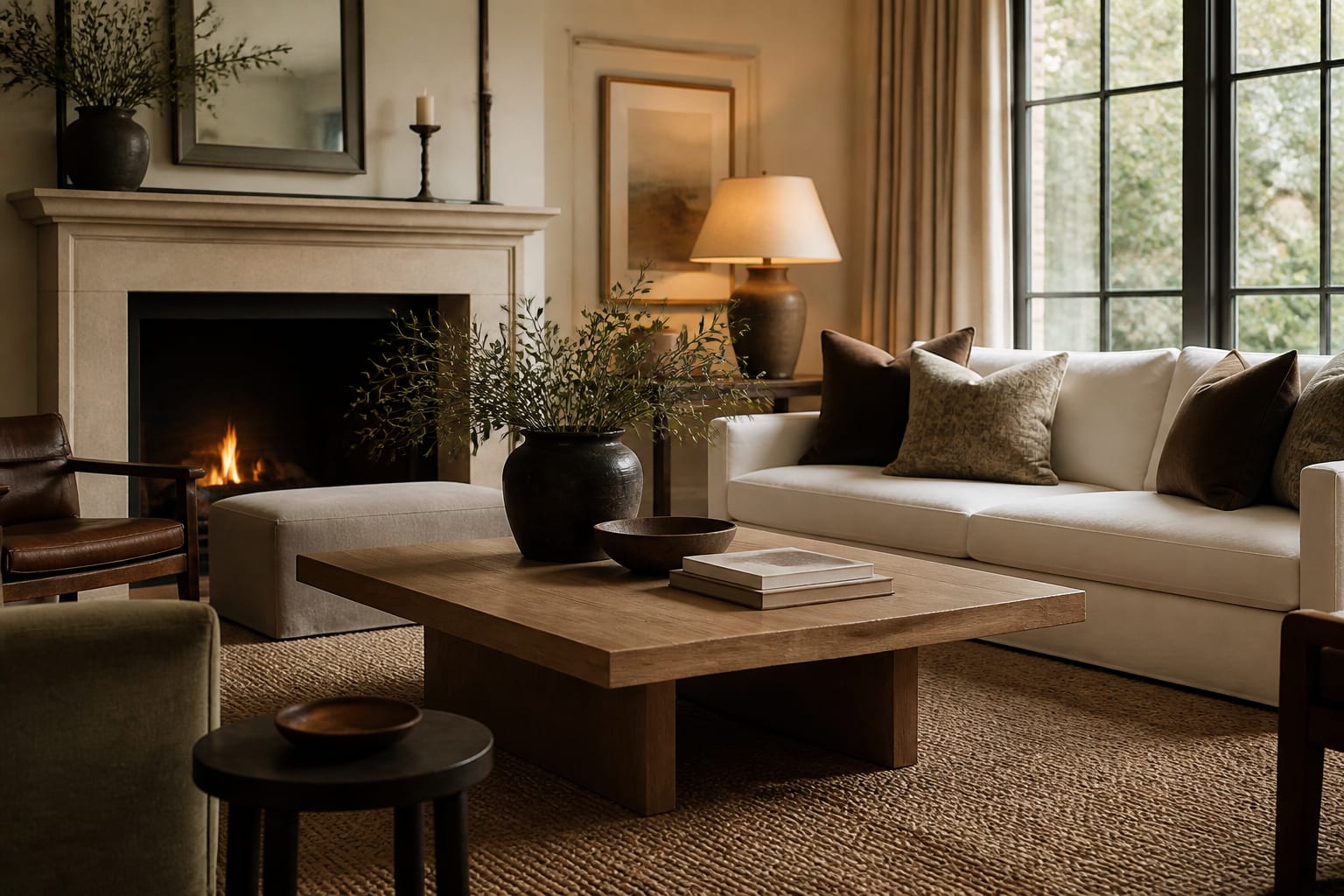
The right coffee table starts with three numbers, not a finish: a height within 2 inches of your sofa seat (16 to 18 inches), a length near two-thirds of your sofa's length, and 14 to 18 inches of clearance on every side. Nail those and nearly any style works; skip them and even a beautiful table feels wrong every day.
How big should a coffee table be?
Length should land near two-thirds of your sofa's length: an 84-inch sofa pairs with a 48- to 54-inch table, and a 72-inch loveseat wants something closer to 40 inches. Go shorter and the table looks like a stray footstool; go longer and it dominates the room.
Height keys off the sofa, not the floor. Aim for the tabletop within 2 inches of the seat cushion, typically 16 to 18 inches, so you can reach a drink without bending. Taller cocktail-height tables read formal and crowd sightlines, while anything under 14 inches forces an awkward reach. If you're still choosing the sofa itself, see how to choose a sofa for seat-height notes that set the table you'll want.
Clearance finishes the math: leave 14 to 18 inches between the sofa and table edge, and hold 30 to 36 inches of open floor on walkway sides. In a tight room, clearance matters more than the table itself.
What shape works best for your seating?
Shape follows the layout. A straight sofa wants a rectangle or oval that echoes its line; a sectional wants a square centered in the L for equal reach from both runs (see sectional sofa ideas for how the corner changes your reach).
Rounds and ovals win in tight floor plans and homes with small children, since there are no sharp corners and the footprint reads smaller. The tradeoff is surface area, so style a round table with one tray and one tall object rather than a full spread.
Nesting or paired small tables solve for flexibility: two 20-inch cubes act as one table, then split for a second seat or slide aside for open floor. They suit rooms that flex between lounging and hosting, and renters who move often.
How do you style the top?
Follow a simple formula: height, containment, life, personality.
- A stack of two to four large books, tallest on bottom, for height.
- A tray, 12 to 18 inches across, to corral the remote, coasters, and a candle.
- One low plant or a short vase of stems for a living note.
- A single sculptural object or bowl that reflects your taste.
- A candle or small box for scent and texture.
Work in odd-numbered groups, vary heights, and keep at least half the tabletop clear so it still functions as a surface. Swap a piece or two with the seasons to keep it fresh. See AI living room design ideas for how the table fits the larger room composition.
Common mistakes to avoid
- Leaving more than 18 inches between sofa and table, forcing a long lean for drinks.
- Setting the tabletop more than 2 inches above or below seat height.
- Choosing a table under half the sofa's length, leaving it stranded.
- Squeezing a bulky rectangle into a room and dropping the walkway under 30 inches.
- Over-styling the top so there's no room for a plate or laptop.
- Matching the table wood exactly to the floor, flattening the room into one tone.
A table that contrasts the floor, even slightly, gives the eye a place to rest. A glass or metal-and-stone table earns its place in a wood-heavy room for this reason, typically $300 to $1,200 depending on size and finish.
Preview your table in Re-Design
Scale is hard to judge from a product page, where a 54-inch table and a 40-inch one can look identical against a white backdrop. Upload a photo of your living room into Re-Design and drop in different tables to see how each sits against your actual sofa, walkway, and rug. Compare a rectangle against a round or a glass top against solid wood, and confirm the proportions before you spend a dollar.
Frequently Asked Questions
How tall should a coffee table be?
Aim for a tabletop within 2 inches of your sofa's seat cushion height, usually 16 to 18 inches. That keeps the surface reachable without bending. Taller cocktail-height tables feel formal and crowd the sightline, while anything under 14 inches forces an uncomfortable reach down.
How far should a coffee table be from the sofa?
Leave 14 to 18 inches between the sofa edge and the table. That's close enough to reach a drink without leaning and far enough to clear your shins when you stand. On walkway sides, hold 30 to 36 inches of open floor so people can pass comfortably.
What size coffee table fits my sofa?
Aim for roughly two-thirds of your sofa's length. An 84-inch sofa pairs with a 48- to 54-inch table; a 72-inch loveseat wants closer to 40 inches. Shorter than half the sofa looks stranded, while longer than two-thirds starts to dominate the seating area.
What shape coffee table is best?
Match shape to your seating. Long sofas pair with rectangles or ovals; sectionals do best with a square centered in the L. Rounds and ovals win in tight rooms and homes with kids since they have no sharp corners. Nesting pairs suit rooms that flex between everyday use and hosting.