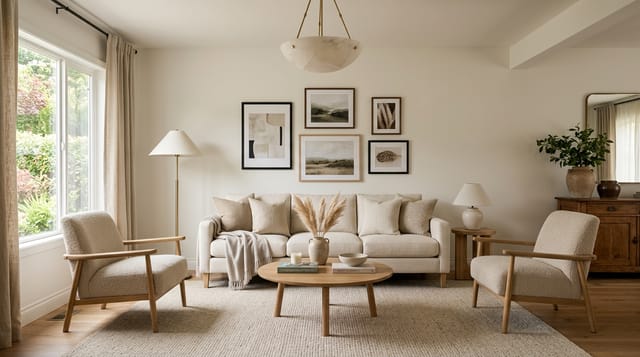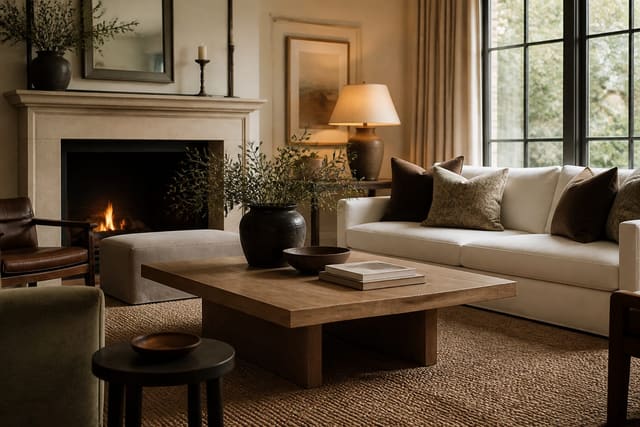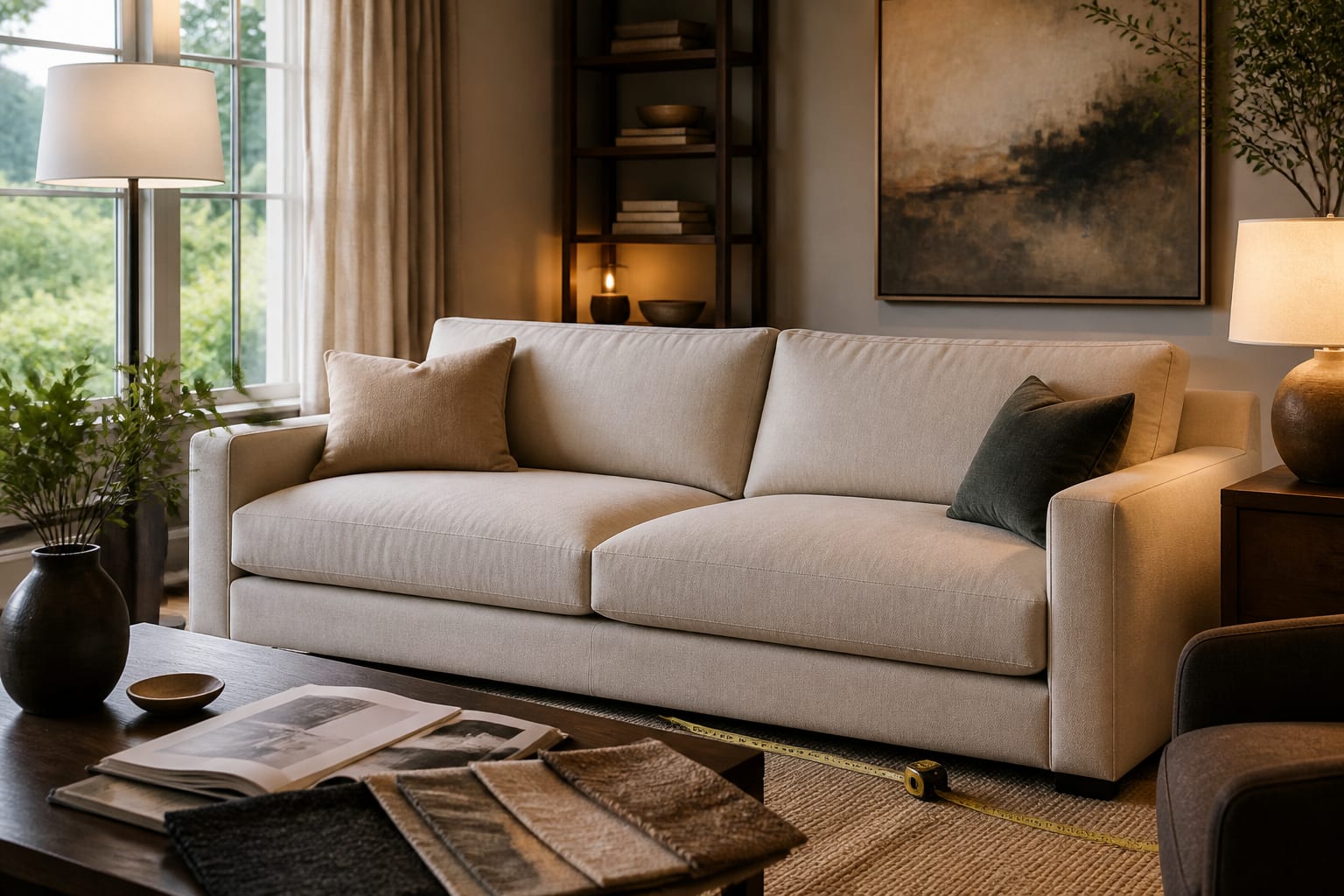
A sofa is the single most-used and most-photographed object in most living rooms, and it is also the one people most often get wrong. My read is that the regret almost always traces back to buying for the showroom instead of the room you actually have: the wrong scale, a seat too deep to sit upright in, a fabric that looks great until a dog and a glass of red wine find it. A sofa is a multi-year commitment at a multi-hundred or multi-thousand dollar price, so it deserves the same scrutiny you would give a mattress.
The good news is that a great sofa is decodable. Once you know what to check in the frame, the fill, the dimensions, and the fabric, you can walk past the marketing and judge a couch on its merits. Below is the buying logic I use, with the specs that separate a sofa you keep for 15 years from one you curb in 2.
Start with the frame and the fill
Everything you love or hate about a sofa in year five comes down to what you cannot see in the showroom. The frame is the skeleton, and you want kiln-dried hardwood such as maple, oak, or birch, joined with dowels, corner blocks, and screws rather than staples and glue. Softwood and particleboard frames are cheaper, and they are why a bargain sofa starts to creak and sag in 2 to 3 years. Lift one corner; a quality frame rises as a unit without twisting.
The suspension and fill decide comfort and longevity. Eight-way hand-tied springs are the traditional benchmark, but a well-built sinuous spring system performs well for far less money, so do not pay a premium for the name alone if the build quality is there. For cushions, high-resiliency foam with a density around 1.8 to 2.5 pounds holds its shape over years of daily use, and a foam core wrapped in down or polyester fiber gives you a softer, slouchier look without the constant fluffing that an all-down cushion demands every single time you stand up. These fundamentals carry across every seating decision, including the broader AI living room design ideas that frame how the sofa relates to everything around it.
Get the dimensions right for your body and room
Scale is where most sofas fail, and it is the easiest thing to verify with a tape measure. A few numbers do most of the work, so check them before anything else:
- Seat depth: 22 to 24 inches lets most people sit back with feet on the floor; 25 inches and up is a lounging depth that shorter sitters find swallows them.
- Seat height: 17 to 19 inches off the floor is comfortable for standing up easily, which matters more as the years pass.
- Overall length: measure your wall and leave 3 to 6 inches of breathing room on each side rather than filling the wall corner to corner.
- Doorway clearance: a sofa must clear your doors, stairwells, and turns; a 38 inch deep sofa will not pivot through a 30 inch door.
Once the sofa fits the room, the rest of the layout follows: allow about 18 inches between the sofa and the coffee table so legs and trays have room, a clearance worth confirming alongside your coffee table ideas so the two pieces work as a pair rather than a collision.
Choose fabric and configuration for real life
Fabric is where lifestyle honesty pays off. Performance fabrics, tight-weave synthetics or solution-dyed options, shrug off spills and resist pilling, and the durability spec to look for is the double-rub count: 15,000 is fine for light use, while 30,000 and above suits a busy family sofa that takes daily abuse. Natural linen and cotton look beautiful and wrinkle, stain, and fade faster, so reserve them for low-traffic, low-sun rooms where you are not fighting a south-facing window all afternoon. Leather is durable and ages well but runs cold in winter, warms slowly, and shows scratches from pets, so it rewards a household that wants patina rather than pristine. Whatever you pick, order swatches and live with them for a few days under your own lighting before you commit, because the same fabric reads warmer or grayer depending on the room.
Configuration is the last big fork. A standard three-seater around 84 inches anchors a room cleanly and leaves walking room, while an L-shaped or U-shaped sectional eats more floor but seats a crowd and helps define an open space. If you are leaning toward the bigger footprint, weigh chaise orientation and modularity carefully, because a left-facing chaise in the wrong corner blocks a walkway you use every day. That trade-off is exactly the ground covered in sectional sofa ideas before you commit a large chunk of your room to one fixed shape that is expensive to undo later.
Common mistakes to avoid
The most common mistake is buying on looks alone and skipping the frame question entirely, then wondering why a beautiful sofa feels rickety after a couple of winters. The second is misjudging scale: people consistently underestimate how a deep, low, oversized sofa will dominate a modest room, and a 96 inch piece in a 12 foot room leaves no space to walk around it.
Another frequent error is ignoring the delivery path, because the sofa that fits the room but not the staircase becomes an expensive return or a window-removal saga. Always measure doors, hallways, and turns first. People also choose fabric for the showroom rather than the household, putting pale linen in a home with a shedding dog and a sunny south window. Finally, do not assume firmer is always better or softer is always better; match the seat depth and cushion firmness to how you actually sit, because a lounging sofa is miserable for someone who likes to sit up and read.
Use AI design to preview how to choose a sofa before you commit
The gap between a fabric swatch and a finished room is where most sofa regret lives, and that is the gap Re-Design closes. You upload a photo of your living room and test sofa options in place: a charcoal three-seater versus a cream sectional, a low lounging profile versus an upright one, and you immediately see how each reads against your walls, rug, and the light you actually get. Scale that looked fine in a catalog often looks enormous once it is rendered in your real room.
I use it to pressure-test the two decisions that are hardest to imagine, color and footprint, before paying for either. Upload the room, generate a handful of sofa variations in different fabrics and configurations, and you arrive at the store, or the checkout, already confident the piece will fit the space and the way you live in it rather than just the showroom it was photographed in.