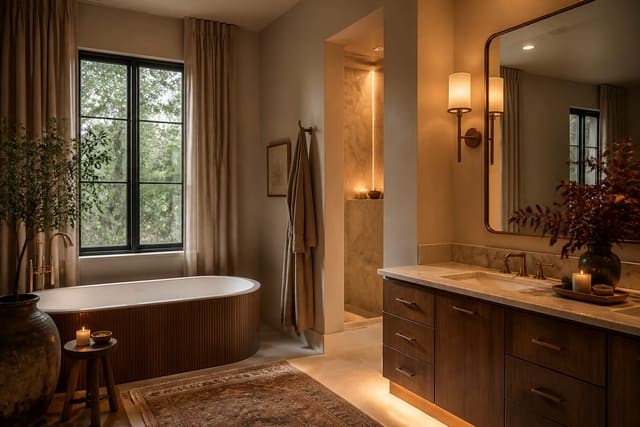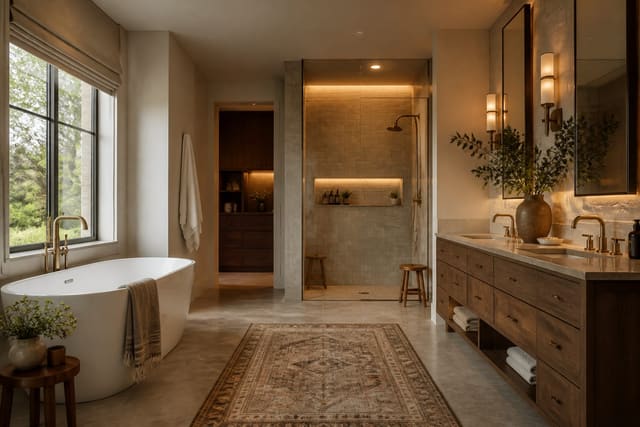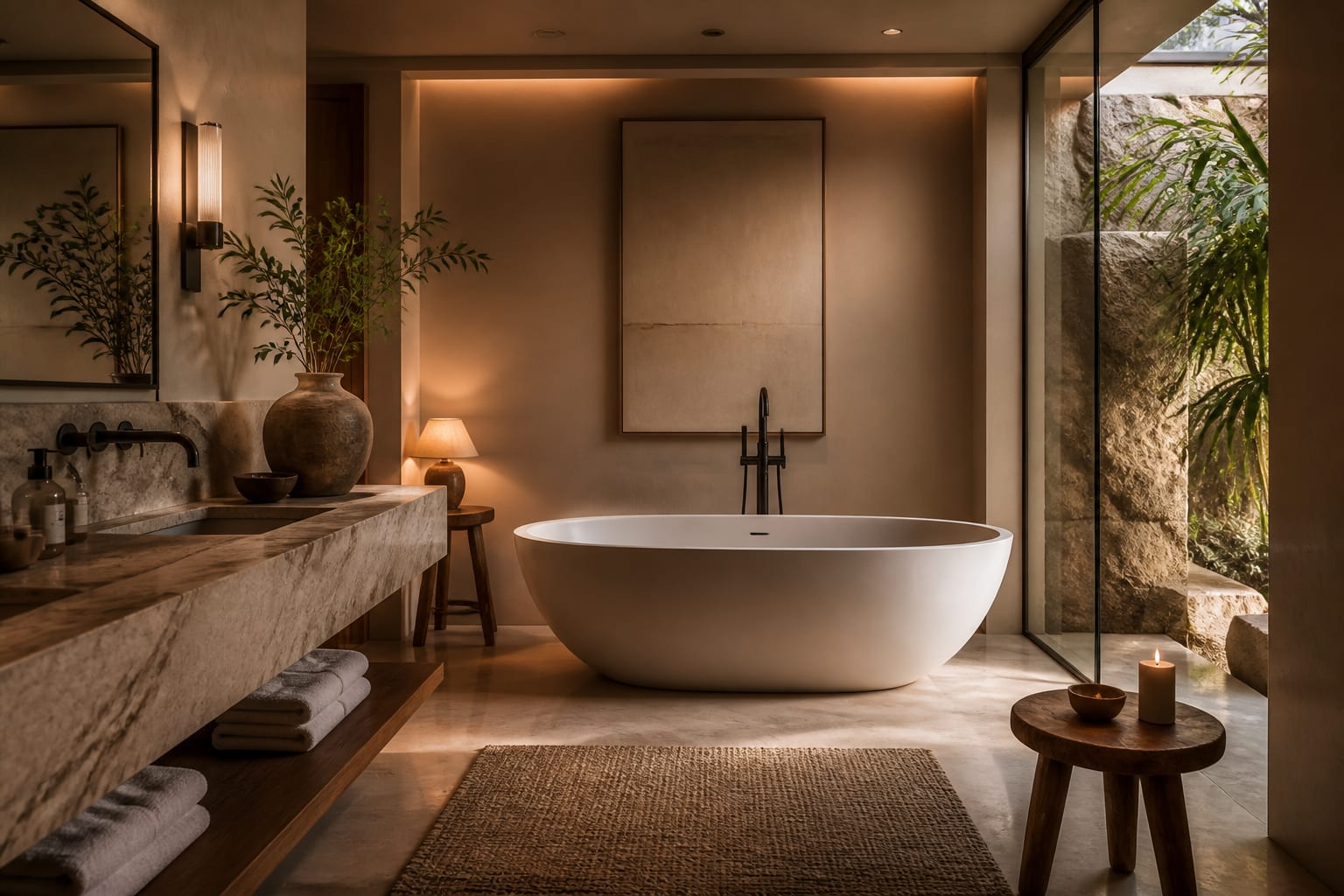
The mistake most people make is treating a spa bathroom as a shopping list of soft towels, a bamboo bath caddy, and a scented candle. Those things are nice, but they sit on top of a room that still feels like a builder-grade box. A real spa feeling comes from the bones: layered, dimmable light, warm underfoot surfaces, a tub you can actually sink into, and clutter pushed out of sight. Get those four right and even an ordinary 5-by-8-foot bathroom starts to feel like somewhere you choose to linger rather than somewhere you rush through.
Start with light, not towels
Walk into any hotel spa and notice what you cannot see: a single bright ceiling fixture blasting the whole room. Spa light is layered and low. You want at least three sources you can control independently. Keep the overhead on a dimmer for cleaning and getting ready, add side lighting at the vanity so faces are lit evenly without shadows, and slip in a third low source, a small lamp on a counter or a strip under a floating vanity, for the soak-in-the-dark moments.
Color temperature does the heavy lifting here. Use 2700K bulbs throughout, the warm lamplight tone, rather than the 4000K daylight bulbs builders default to. That single swap shifts the whole mood from clinical to candlelit, and it costs about $6 a bulb. Then put everything on dimmers. A bathroom lit at 100 percent for a 7 a.m. shower should drop to maybe 15 percent for an evening bath, and only a dimmer gives you both from the same fixtures. If you want to go further, a waterproof LED strip behind the tub or below a niche, run on a separate switch, gives you that floating glow that reads instantly like a retreat.
Choose materials that feel warm underfoot
The spa feeling is physical before it is visual. Cold tile underfoot at 6 a.m. is the opposite of relaxing, which is why heated floors top almost every renovation wish list after the fact. Electric radiant mats run about $8 to $15 per square foot installed, and in a small bathroom that is often only a few hundred dollars of mat under tile you were laying anyway. Pair it with a programmable thermostat so the floor is warm before your alarm goes off.
For surfaces, lean into texture and natural materials rather than high-gloss everything. Large-format porcelain in a honed, matte finish reads more like stone and shows fewer water spots than polished tile. Warm wood tones, real or convincing porcelain look-alikes, soften a room full of hard surfaces, which is part of why a generous primary bathroom so often leans on warm wood for vanities, stools, and accents. A teak bath mat or a small wood stool by the tub adds organic warmth that ceramic and chrome cannot. Keep metal finishes consistent, one tone across the faucet, towel bars, and lighting, so the eye is not pulled around the room by competing shine.
Spa bathroom ideas worth stealing
Here are concrete moves that punch above their cost and effort. Pick the few that fit your room rather than trying to cram them all in: - Install a deep freestanding or drop-in soaking tub that holds water 14 to 18 inches deep, so the bath covers your shoulders instead of your shins. - Add a recessed shower niche, roughly 12 by 24 inches, set at chest height, to retire the rusting corner caddy and keep bottles out of sight. - Mount a handheld shower on a slide bar alongside the fixed head so you can rinse the tub and adjust height for everyone. - Hang an oversized towel warmer; even a small one keeps two bath sheets toasty and doubles as a sculptural detail on a bare wall. - Swap the vanity mirror for a backlit one with built-in 2700K to 3000K LEDs, which gives flattering, shadow-free grooming light. - Float the vanity off the floor by 8 to 10 inches and add a single shadow-line LED beneath it for a calm, hovering glow. - Bring in one large plant that tolerates humidity, a pothos or a bird of paradise, to break up hard lines with something living.
Keep the palette calm and the clutter hidden
Nothing kills a spa mood faster than a counter crowded with mismatched bottles, a toothbrush cup, and a tangle of cords. The discipline of a serene bathroom is mostly editing. Decant daily products into a couple of matching pump bottles, corral the rest behind closed doors, and leave the counter holding one tray with three or four items at most. A floating vanity with a deep drawer hides more than open shelving ever will, and it keeps sightlines clean.
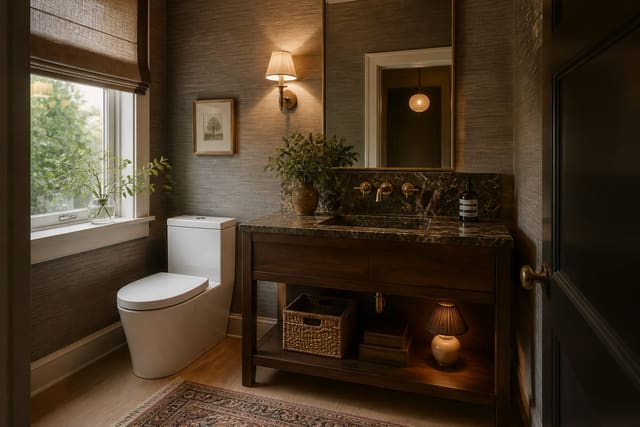
Color matters as much as quantity. Spa palettes stay muted and nature-leaning: soft greens, warm greiges, sandy off-whites, the occasional deep charcoal for grounding. Hold the whole room to 2 or 3 of these tones and let texture, not bold color, carry the interest. If you are choosing paint or tile and feeling stuck, working through a focused set of bathroom color directions first will keep you from buying a gallon you regret. The same restraint that makes a small powder room feel intentional applies here: fewer competing colors, more breathing room, and natural light wherever the window allows.
See your spa bathroom before you commit in Re-Design
A matte greige tile and a deep freestanding tub look gorgeous in a showroom and might feel cold or cramped in your actual 5-by-8 layout. Rather than guess, upload a photo of your current bathroom into Re-Design and preview the spa version against your own walls, window, and fixtures. Try a warm wood vanity against a charcoal accent wall, drop in a soaking tub where the old one sits, and dial the lighting from bright to dim to see how the mood shifts. Testing the palette and the big-ticket pieces this way means you walk into the tile shop knowing exactly which combination already reads as a retreat in your space.
Frequently Asked Questions
What makes a bathroom feel like a spa?
The feeling comes from a few coordinated choices rather than any single product. Warm, layered, dimmable lighting at 2700K replaces the harsh overhead; warm underfoot surfaces like heated floors or wood accents replace cold tile; a deep soaking tub and hidden storage replace shallow basins and cluttered counters. Hold the palette to 2 or 3 muted, natural tones and the room reads as a retreat even at a small size.
How deep should a soaking tub be?
A true soaking tub holds water 14 to 18 inches deep, enough to cover your shoulders when you lean back, compared with the roughly 8 inches of water a standard alcove tub leaves you sitting in. Look at the listed water depth or overflow height, not just the tub's exterior dimensions, since a tall tub with a low overflow still leaves you half-submerged.
Are heated bathroom floors worth it?
For most people, yes. Electric radiant mats cost roughly $8 to $15 per square foot installed, which in a small bathroom is often only a few hundred dollars added to a tile job you are already doing. Paired with a programmable thermostat, the floor is warm before you step on it, and it is consistently the upgrade homeowners say they would never skip again.
What colors work best in a spa bathroom?
Stay muted and drawn from nature: soft sage and eucalyptus greens, warm greige, sandy off-white, and a grounding charcoal or deep slate as an accent. Limit the whole room to 2 or 3 of these and let texture, like honed stone and warm wood, carry the visual interest instead of bold color. The restraint is what keeps the space feeling calm rather than busy.