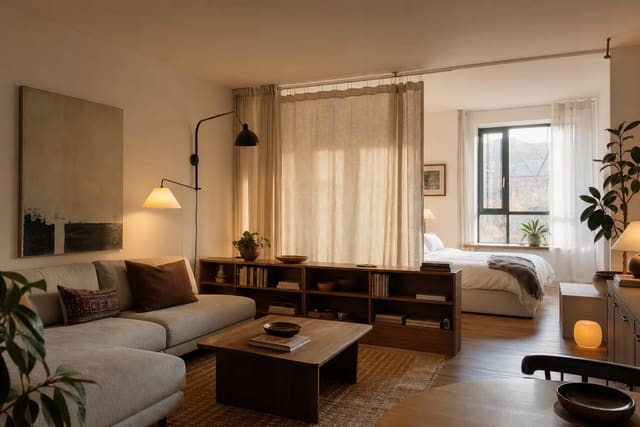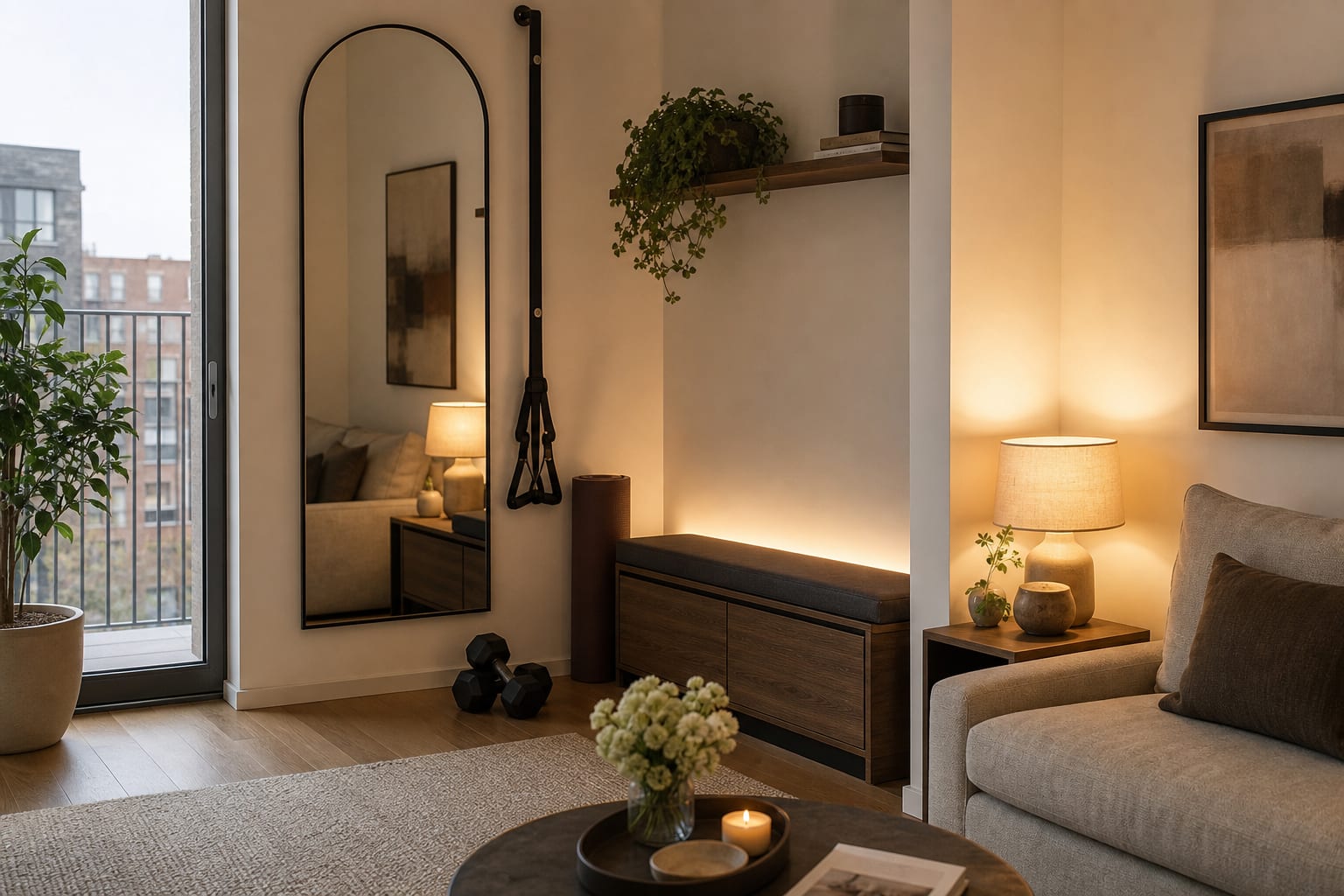
A studio apartment gym workout zone fits in 36 to 60 square feet: protect one 6x4-foot mat area, pick foldable or wall-mounted gear, and keep a clear walking path open. Anchor the zone against one wall, add warm floor-level lighting, and store every prop out of sight so the room still reads as living space, not storage.
What Makes a Studio Workout Zone Work?
A usable rectangle is closer to 6 by 8 feet than a single yoga mat (24 by 68 inches), giving room for squats, pushups, lunges, and band work without clipping furniture. Pick a spot beside the sofa, at the foot of the bed, or near a window — a mat floating in the center of the room makes everything else feel temporary.
Every working zone needs one protected side: a wall, bookcase, curtain, or the back of a sofa. That edge makes the area read as a small room instead of a random mat. If your layout already feels blended together, review studio apartment layout ideas that create zones before buying any equipment.
Keep 24 inches clear where arms or knees open, 30 inches if you use blocks or a bench, and 18 inches at the mat's top edge so your head doesn't meet a radiator or bed frame. If those numbers don't fit, plan for a standing strength corner instead of a full floor-work zone.
What Equipment Keeps 50 sq ft From Becoming Clutter?
Be ruthless about size. One mat, adjustable dumbbells, two resistance bands, a jump rope (if flooring and neighbors allow), and a folding step cover more routines than one bulky machine that ruins the room.
- Choose vertical storage first: a wall rail, over-door rack, or 12-inch-deep bookcase holds bands, towels, and a foam roller without stealing floor space.
- Keep dumbbells on a low rack or inside a lidded bench, not scattered underfoot.
- Limit kettlebells to weights you actually rotate through — three good weights beat eight guilt objects.
- A folding bench (14 to 16 inches high) should lock securely and slide behind a sofa or under a bed.
- Skip anything needing heavy wall anchoring if you're renting and unsure the wall can bear the load.
A mirror around 24 to 36 inches wide is enough for form checks in most apartments. Place it to reflect daylight or a calm wall, not the unmade bed or drying rack — that single choice decides whether the corner feels intentional or exposed.
Test this on your own room photo with ReDesign before finalizing the layout; keep the room structure, daylight, and main path visible so the preview solves the space you actually have.
How Should Lighting, Flooring, and Noise Work Together?
Use a shaded lamp or dimmable floor lamp around 2700K to 3000K near the workout area. Overhead light alone glares when you're on your back, and cool bulbs make a small apartment feel harsher at night.
On hardwood, laminate, or vinyl, use a dense mat that lies flat under side lunges. On carpet, skip stacking a soft mat over deep pile — it hurts balance work. For strength training, use rubber tiles only under the working zone, not wall to wall.
If you live above someone, favor low-impact strength, mobility, Pilates, yoga, or resistance band circuits over jumping workouts. Put felt pads under movable furniture and use nesting or lightweight tables (28 to 34 inches wide) so the space clears without effort. If the bed sits closest to the zone, a studio apartment bedroom divider can keep sleep and workouts visually separate.
What Mistakes Ruin a Studio Workout Zone?
- Buying for a fantasy routine. A studio can't absorb a treadmill, rower, bike, and punching bag at once — design for the movement you do three times a week.
- Open storage for every prop. Rolled mats, bands, shoes, and containers turn the apartment into a backstage fitness closet; hide most of it behind a door or in opaque bins.
- Blocking daily circulation. Keep at least 30 inches for the main walking path so you never step on weights in the dark.
- Fighting the room's style. Match gear to your palette — black metal, oak storage, canvas bins — so it reads as practical, not juvenile.
- Ignoring ventilation. Put the zone near a window or add a quiet fan, and keep a towel and spray bottle nearby so the mat gets cleaned before it rolls under the bed.
Should You Preview the Zone With AI Before Committing?
Use AI design to preview a studio workout zone because 50 sq ft can look generous on paper and awkward once the sofa, bed, rug, and outlets appear together. A mat may fit mathematically while still blocking the wardrobe; a mirror may brighten the corner while reflecting the kitchen mess.
Upload a photo from a corner showing the bed, sofa, window, and main walkway — leave the real hamper, coffee table, and storage bins in frame, since those decide whether the plan survives daily life. Test three versions: beside the sofa with a movable table, at the foot of the bed with a storage bench and mirror, and in a window corner with wall hooks and a rolled mat cabinet.
When you use AI room design for small apartments, prompt for real constraints: 6 by 8 feet of clearance, 24 inches at the mat side, closed equipment storage, warm 2700K to 3000K light, and an open main walkway. The winning preview is the one where the mat comes out in seconds and the studio still feels livable.
For the broader upload workflow, use the AI design complete guide as the parent checklist, then return here for scale, light, and layout choices.
Frequently Asked Questions
How much floor space do I need for a home workout in a studio?
A 6 by 4 foot mat covers yoga, kettlebell, and bodyweight work. A 6 by 8 foot zone adds room for a foldable treadmill or rower. Below 24 square feet, only stretching and strap-based work is realistic.
Should I buy a folding treadmill or a rower for a studio?
Choose based on storage: a folding rower stores vertically against a wall at about 24 inches deep, while a folding treadmill stores horizontally under a bed if the frame clears at least 11 inches. Pick the one your apartment can actually hide.
How do I keep workout gear from dominating the studio?
Use wall-mounted pegboard or a tall closet bay for kettlebells, bands, and mats so the visible room reads as living space when you're not exercising. Loose dumbbells in a corner read as "gym with a bed." Check chair pullout, walkway width, and evening light before finalizing the layout.
What about noise and the downstairs neighbor?
A 3/4 inch rubber tile under a yoga mat absorbs impact from bodyweight and light strength work. Save plyometrics for daytime hours and skip dropped barbells entirely in a studio — your downstairs neighbor will notice every one.
How do I light a studio workout zone?
Add one floor lamp at 3000K aimed at the workout corner and skip overhead fluorescents. Warmer light keeps floor exercises visible and keeps the room from reading as a gym once the workout ends.
> Try this: Ready to see this on your own room? Open ReDesign and run the preview before you buy, paint, drill, or move furniture.
Three transformations to try
1. 6x4 mat with wall pegboard and folding rower against the closet
2. Foldable treadmill under bed with bed-frame storage cubbies
3. Strap-and-band system on door with mat tucked behind sofa