The space under a staircase is the most wasted square footage in the average home, and the usual fix, a cramped closet with a single shelf, barely scratches it. That triangular volume can swallow far more than coats if you build to its actual shape instead of fighting it. The smart move is to match the storage type to the height available at each point: deep pull-outs where the ceiling is low, full-height hanging where it is tall, and display or seating where neither makes sense. Treat the wedge as three zones, not one box, and you reclaim usable space most people write off entirely.
Start by mapping the three height zones
A staircase rises at a fixed angle, so the space beneath it is a wedge that goes from full ceiling height at one end to almost nothing at the other. Designing for that slope is the whole trick. Walk it and mark three zones. The low end, anything under roughly 24 inches of clearance, is awkward for a person but perfect for horizontal pull-out drawers that slide the contents out to you. The middle band, around 24 to 60 inches, is the sweet spot for open cubbies, shoe shelves, or a row of baskets you can reach without stooping. The tall end, above 60 inches, is where a person stands comfortably, so reserve it for hanging coats, a broom closet, or a small desk.
Getting the depth right matters as much as the height. A typical staircase runs 36 to 42 inches deep front to back, which is generous, deeper than a standard 24-inch closet. That depth is exactly why fixed shelving fails here: anything pushed to the back vanishes into a dark crawl space you will never empty. Plan the build around bringing the back of the wedge to you, and the depth becomes an asset instead of a trap.
Pull-out drawers beat fixed shelves every time
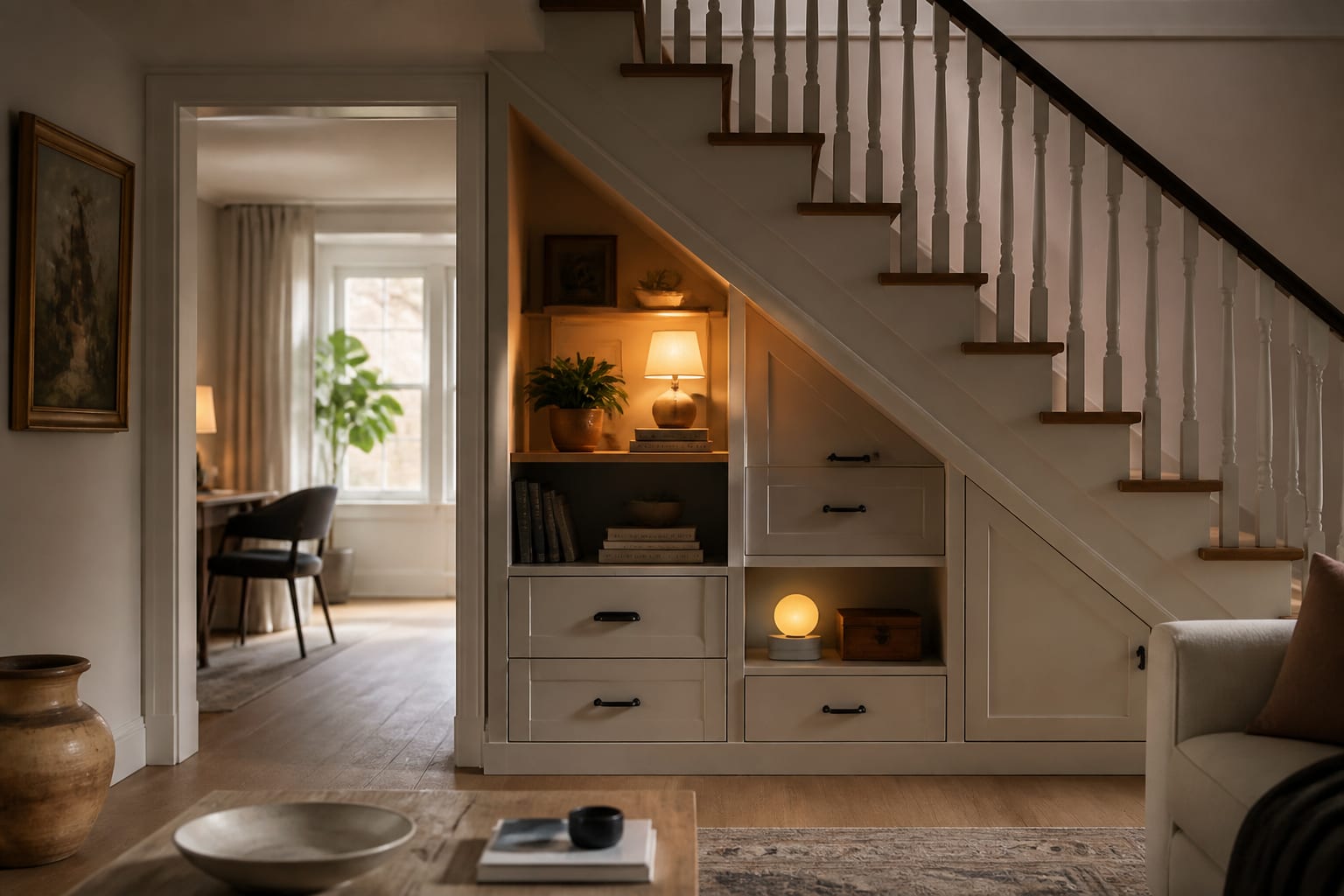
If you do one thing under your stairs, make it pull-outs. Full-extension drawer slides rated for 75 to 100 pounds let a drawer travel its entire length out into the room, so the deepest, lowest, hardest corner of the wedge becomes the easiest to reach. Build the drawers as tall as the local clearance allows, stepping them down as the staircase descends, and you end up with a staircase of drawers that mirrors the steps above. Each one can hold a specific load: holiday decorations in the deep ones, shoes in the shallow ones, cleaning supplies in a tall middle unit.
Do not stop at the obvious cavity. The toe-kick at the base of the run hides a 4-inch-tall drawer that is ideal for flat items like gift wrap or table linens. On an open staircase, the risers themselves can become shallow drawers, a trick that turns the stairs into storage without touching the cavity at all. Soft-close hardware adds about $15 per drawer and is worth it on units this heavy. A staircase often sits along a hallway, so matching the drawer fronts to that corridor's trim and color keeps the built-in from announcing itself as a bolt-on.
When a closet or a nook beats storage
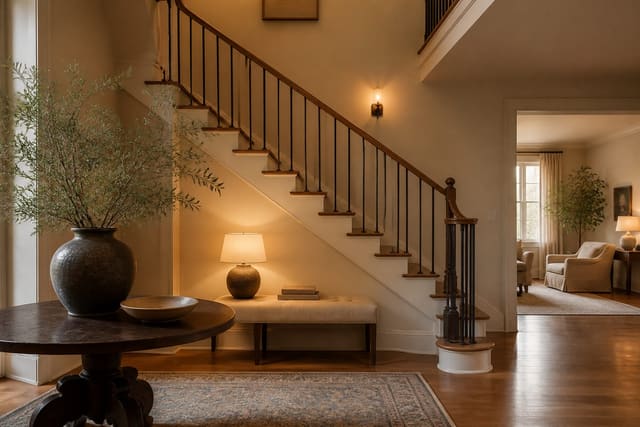
Not every under-stair space should be packed with drawers. If the staircase opens off an entry, a proper coat closet in the tall zone earns its keep: hang a rod at 60 inches, add a shelf above it at 68 inches for hats and bins, and put a bench with shoe cubbies below. If you already have enough storage, the wedge makes a better destination than a warehouse. A reading nook with a 30-inch-deep padded bench, a sconce, and a couple of shelves turns dead space into the coziest seat in the house, especially for kids.
A powder room is the ambitious option. The tall zone of a staircase can fit a compact half-bath, since a toilet needs about 60 inches of length and 30 inches of width, and a corner sink tucks under the slope. It is a plumbing project, not a weekend build, but it adds real resale value. Whatever you choose, finish the open face so it reads as architecture, not an afterthought. The way a thoughtful staircase design treats the railing and treads as features, your under-stair build should look deliberate from the first glance.
Under-stair ideas worth building
With the zones mapped, here are concrete builds that suit the wedge: - A bank of stepped pull-out drawers on full-extension slides, sized down to follow the staircase slope, for seasonal bins and bulky gear. - A walk-in or reach-in coat closet in the tall zone with a 60-inch rod, an upper shelf, and a bench below for shoes. - A 30-inch-deep reading nook with a cushioned bench, two sconces at 60 inches, and shelves tucked into the slope. - A home office cubby with a 42-inch desk, a single floating shelf, and a task lamp at 4000K for focus. - A wine rack or beverage station in the cool, dark cavity, with cubbies sized to standard 750 ml bottles. - Toe-kick drawers along the base of the run for flat, easily-lost items like wrapping paper and linens. - A pet station with a feeding nook, a tucked-in crate, and a drawer for food and leashes.
See your staircase reworked in Re-Design
The hard part of an under-stair project is picturing the finished build inside a space that currently holds a vacuum and a tangle of cords. Upload a photo of your staircase to Re-Design and the app renders the cavity as a finished build, so you can compare a wall of drawers against a cozy nook or a coat closet using your own slope and proportions. Test whether painted drawer fronts or natural wood suits the adjoining hallway, and judge how a reading bench would actually sit under your particular rise before you commit to a layout. It turns an abstract wedge of dead space into a concrete plan you can hand to a carpenter.
Frequently Asked Questions
How deep is the space under a staircase?
Most staircases give you 36 to 42 inches of depth from the front opening to the back of the wedge, which is deeper than a standard 24-inch closet. That depth is generous but tricky, because anything stored at the back disappears into a dark, hard-to-reach crawl. The fix is pull-out drawers on full-extension slides that bring the contents out to you, rather than fixed shelves that bury whatever you push to the back.
What can I store under the stairs?
Match the storage to the height at each point. The low end under about 24 inches suits horizontal pull-out drawers for seasonal bins and shoes, the middle band around 24 to 60 inches fits open cubbies and baskets, and the tall end above 60 inches handles hanging coats, a broom closet, or a small desk. Toe-kick and riser drawers reclaim the last few inches that most builds leave empty.
Can I build a bathroom under the stairs?
Yes, the tall zone of a staircase can hold a compact powder room, since a toilet needs roughly 60 inches of length and 30 inches of width and a corner sink fits under the slope. It is a plumbing project rather than a weekend build, so budget accordingly, but a half-bath in otherwise dead space adds genuine resale value and keeps guests out of your private bathroom.