Contemporary interior design is the most misunderstood style label in the industry, mostly because people use it as a synonym for modern when the two mean different things. Contemporary describes whatever is current right now, which makes it a moving target rather than a fixed look you can copy from a single decade. That distinction matters because it changes how you make decisions. Instead of chasing a strict rulebook, you adopt principles that age well: restraint, strong proportion, honest materials, and a willingness to update. This guide explains what the style actually involves, the measurable rules that give it structure, and where it parts ways with modern design so you can apply it with intent.
What Is Contemporary Interior Design?
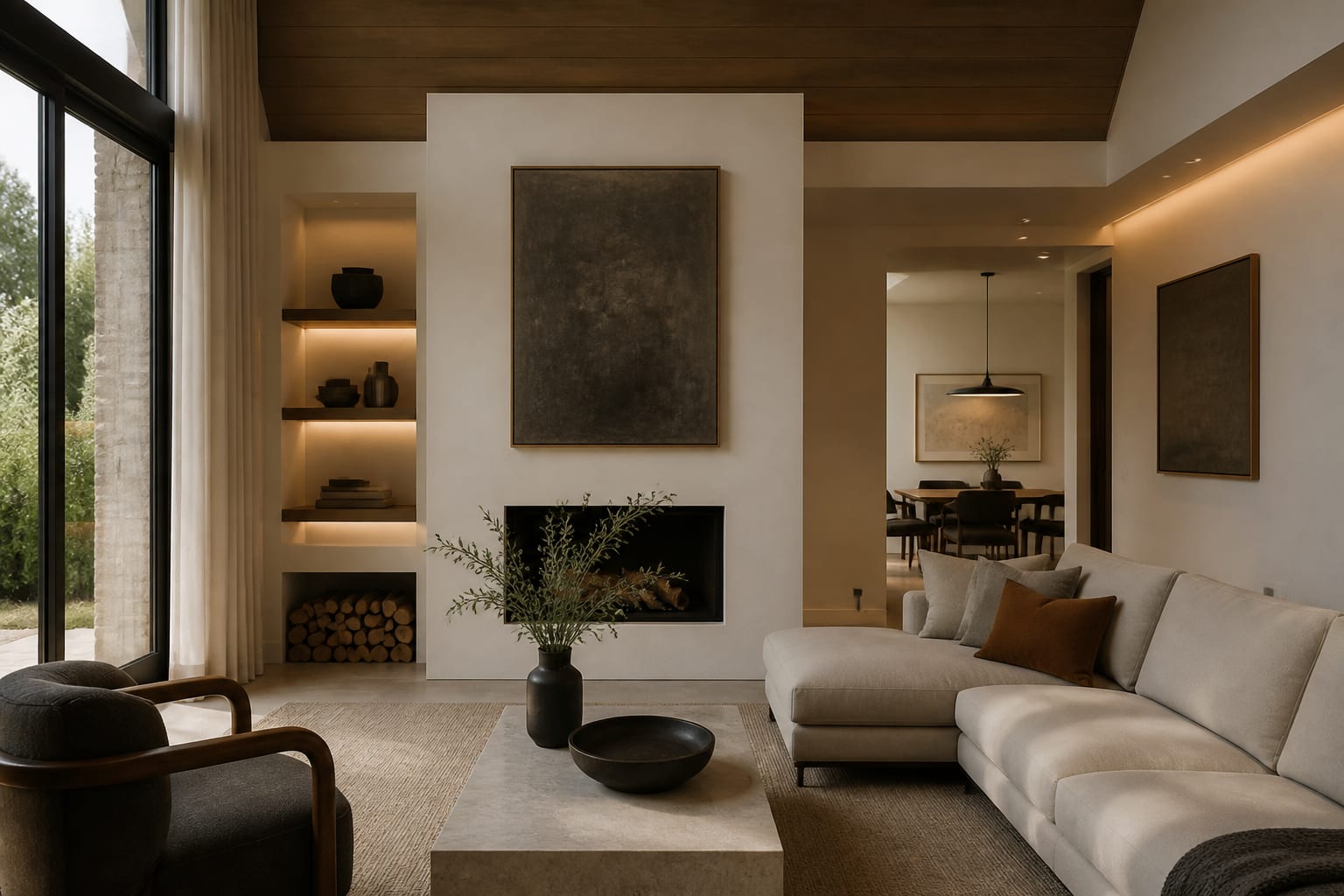
Contemporary interior design is the style of the present moment, an evolving approach that reflects current tastes rather than locking into one historical era. That single idea explains almost everything about how it behaves. Because it tracks what is happening now, it pulls comfortably from minimalism, mid-century, industrial, and global influences, blending them into a look that feels fresh without committing to any one of them. The throughline across all its forms is restraint paired with strong structure. You will see clean architectural lines, open and uncluttered layouts, and a palette built mostly from neutrals with carefully placed contrast. Materials read as honest: natural wood, stone, glass, metal, and tactile textiles are allowed to look like themselves rather than being dressed up or hidden. Form usually follows function, so a contemporary piece earns its place by doing a job well and looking composed while it does it. Curves and softer shapes are welcome alongside straight edges, which keeps the style from feeling rigid. The other defining quality is that it expects to change. A room designed this way in 2015 looks different from one designed now, and that is the point rather than a flaw. Designers working in this mode build a calm, flexible foundation and then swap accents, art, and accessories as sensibilities shift. The bones stay steady while the surface stays current. Understanding this evolving nature is the key that makes the rest of the style click into place, because it frees you from treating any single trend as permanent.
See also our guide to Smart Home Interior Design for more on what is contemporary interior design.
Contemporary vs. Modern: The Real Difference
The confusion between contemporary and modern is the single most common mistake in design conversations, and clearing it up sharpens every choice you make afterward. Modern design refers to a specific historical movement, broadly the styles that emerged from the early to mid twentieth century and crystallized in the mid-century period. It has fixed hallmarks: warm woods like teak and walnut, tapered legs, organic curves married to function, and a defined era of furniture you can name and date. Modern is, in effect, finished. Its vocabulary was set decades ago and does not change. Contemporary, by contrast, is whatever is current, so it is never finished and never frozen. A contemporary room might borrow a mid-century chair, but it sits beside elements modern purists would reject, such as cooler tones, mixed metals, or current materials that did not exist when modernism formed. Color tells the difference clearly. Modern interiors often embrace warm, saturated period tones, while contemporary schemes lean cooler and more neutral, with crisp whites, greys, and black used as graphic punctuation. Lines differ too. Modern celebrates the organic curve as a signature, whereas contemporary moves freely between sleek straight edges and softer forms depending on what feels current. The practical takeaway is that modern is a destination you recreate, and contemporary is a direction you keep walking. If you want a look you can replicate from a catalog of a known era, you want modern. If you want a flexible foundation that absorbs new ideas over time without a full renovation, you want contemporary. Both can share clean lines and uncluttered space, which is exactly why they get tangled, but their relationship to time is what truly separates them.
For a related angle on what is contemporary interior design, read How AI Search Cites Interior Design.
The Measurable Rules That Give It Structure
Contemporary design feels effortless when it works, but that ease rests on a few concrete proportions you can actually measure. Color is the first lever. Apply a 60/30/10 split, where roughly sixty percent of the room is your dominant neutral, thirty percent a secondary supporting tone, and ten percent a deliberate accent. This ratio keeps neutral schemes from going flat and stops accents from taking over. Restraint in materials is just as structural. Hold a room to two or three core materials, such as oak, brushed metal, and linen, and repeat them rather than introducing a new finish on every surface; cohesion comes from repetition, not variety. Lighting carries a spec too. Choose bulbs in the 2700K to 3000K range for living areas to keep the warm, relaxed quality the style favors, and put primary sources on dimmers so a single room can shift from task-bright to evening-low. Ceiling height shapes the airy feel that contemporary depends on, and the style reads best where ceilings reach roughly nine feet or higher, though clever lighting and vertical lines can stretch the perception of lower rooms. Negative space follows a loose guideline as well: aim to leave about a third of shelving and surface area empty so what remains registers as a choice. Scale relationships matter throughout, like sizing a coffee table to about two-thirds the length of the sofa. None of these numbers are rigid laws, but together they form the skeleton that lets the surface details stay fluid. When you respect the proportions, you can update the accessories endlessly and the room will keep looking deliberate rather than accidental.
How to Apply Contemporary Style at Home
Putting the theory to work starts with the bones of the room rather than the decor. Begin with architecture and layout: clear sightlines, open circulation, and uncluttered floors do more for a contemporary feel than any single purchase. Establish your neutral foundation across the walls, flooring, and largest pieces, then decide on the one accent direction you will carry through art and accessories. Because the style evolves, build the expensive, permanent elements to be quiet and flexible, and spend your willingness to change on the small, swappable items. A neutral sofa and a calm rug can host a parade of pillows and prints over the years without ever looking dated. Pay attention to texture, since a restrained palette needs tactile variety to avoid feeling sterile; mix matte, woven, smooth, and natural surfaces within the same tonal family. Layer lighting in three roles rather than relying on one overhead fixture, and conceal clutter behind closed storage so the calm surfaces stay calm. Edit as a habit, not a one-time event. Walk the room periodically and remove anything that no longer earns its place, because contemporary spaces stay current partly through subtraction. When you want a bolder statement, concentrate it in one place, whether a sculptural light, a single large artwork, or an accent wall, so it reads as intentional. The most reliable path is to get the proportions and the foundation right first, then treat styling as an ongoing conversation you adjust as your taste and the broader aesthetic shift. That mindset, more than any shopping list, is what keeps a home genuinely contemporary.
Here are the common mistakes to avoid: - Treating contemporary and modern as identical, then mixing fixed and evolving cues - Spreading color everywhere instead of holding accents to about ten percent - Using too many materials at once, which breaks the cohesion the style needs - Choosing cool bulbs that make warm neutral rooms feel like an office - Overfilling shelves and surfaces, erasing the negative space that defines the look - Buying loud, trend-driven permanent pieces that date the room within a year
Bring the look home with Re-Design
Reading about contemporary design is useful, but seeing it in your own room is what makes the principles stick. Upload a photo of your space to Re-Design and preview a contemporary scheme before you buy a single thing. You can test a 60/30/10 palette, swap materials, and compare warm versus cool lighting against your actual walls and light. Trying directions virtually first means you commit only to choices that genuinely suit your room, your proportions, and your taste, which saves money and the frustration of returns. It turns abstract guidelines into a plan you can see.
Frequently Asked Questions
Is contemporary the same as modern interior design?
No. Modern is a fixed historical movement from the early to mid twentieth century with set traits like teak, tapered legs, and organic curves. Contemporary means whatever is current and keeps evolving, so it borrows from many styles and changes over time. They share clean lines, which is why people confuse them, but their relationship to time differs.
What are the main traits of contemporary interior design?
Clean architectural lines, open and uncluttered layouts, and a neutral palette punctuated by deliberate accents define it. Materials stay honest, with natural wood, stone, metal, and glass shown as themselves. Form follows function, negative space is intentional, and texture replaces heavy color. Above all, the look stays current by swapping accents while keeping a calm, flexible foundation.
Does contemporary design have to feel cold or minimal?
Not at all. While it favors restraint, warmth comes from layered textures, natural materials, and lighting in the 2700K to 3000K range. Contemporary is not the same as strict minimalism; it simply edits clutter. Adding wood, woven textiles, plants, and a single bold accent keeps a contemporary room feeling welcoming rather than stark or impersonal.