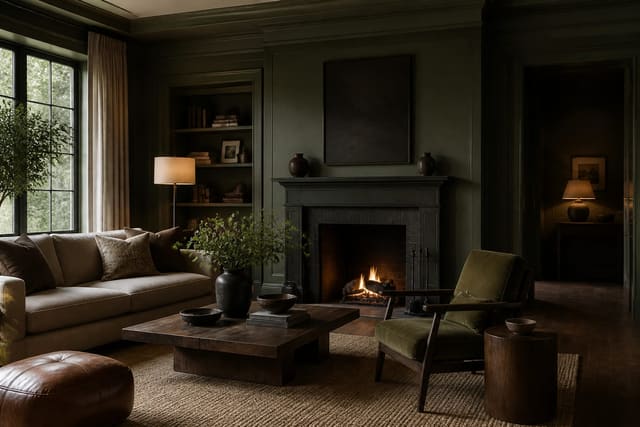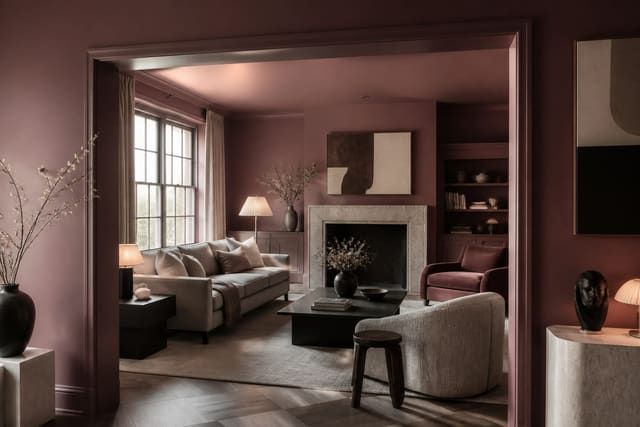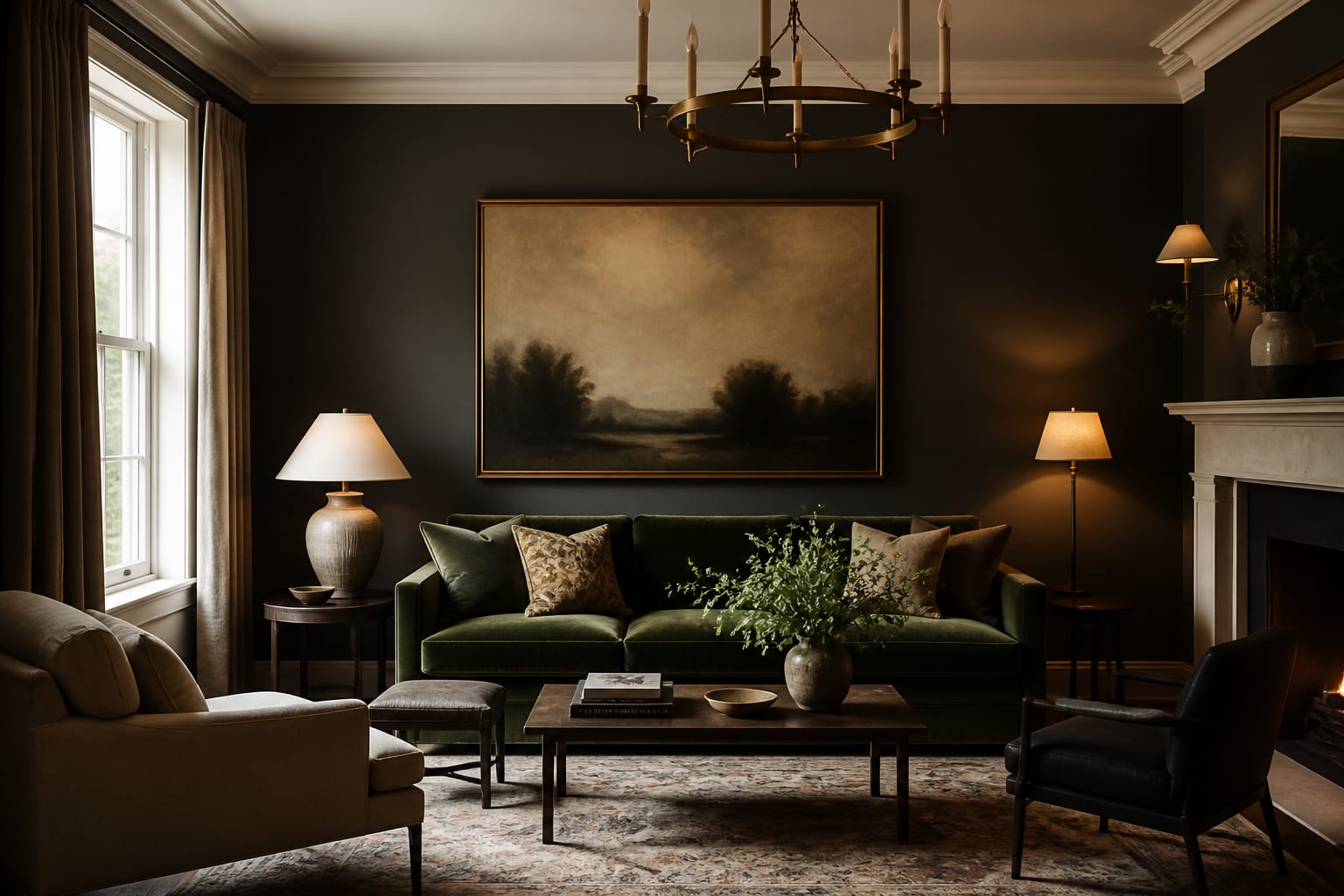
A great accent wall is about placement as much as color, so choose the wall before you choose the finish. The most common misfire is painting a random wall bold and hoping it works, when the feature should land on the natural focal point you already look toward. The best candidate is usually the wall behind a bed, sofa, or fireplace, the surface your eye lands on first when you enter. From there the options open up: a single saturated color, full color drenching, board-and-batten paneling, peel-and-stick wallpaper, or a textured plaster. Pick the focal wall, match the idea to the room, and a feature wall adds depth without overwhelming the space.
Choosing the Right Wall to Feature
The wall you pick matters more than the color or material you put on it. The strongest accent wall is the one your eye naturally lands on when you walk into the room, which is almost always a wall with a built-in focal point. In a bedroom that is the wall behind the headboard; in a living room it is the wall behind the sofa or the one holding the fireplace and television; in a dining room it can be the wall the table sits against. Choosing a wall with an existing anchor gives the accent a reason to exist, while a random side wall with a door and a window cut into it usually looks busy and accidental. Avoid walls broken up by too many openings, since the accent needs a reasonably solid surface to register as a deliberate feature. A solid wall, or one with a single centered window, frames the color or texture cleanly. Consider sightlines from adjoining rooms too; in an open plan, the accent wall should look intentional from the spaces that see it, not just from inside its own room. Scale also guides the choice, because a feature wall works best when it has enough mass to balance the rest of the room, so a short stub wall rarely carries the effect. Lighting plays a part as well; a wall that catches good natural or directed light shows off a saturated color or a textured surface far better than one stuck in shadow. Walk into the room and notice where your gaze settles first, then make that the accent. Get the placement right and almost any of the ideas below will land; get it wrong and even a beautiful color feels off.
See also our guide to Forest Green Interior Design Ideas for more on accent wall ideas.
Paint and Color-Drenching Ideas
Paint is the fastest, cheapest accent and still the most popular for good reason. The classic move is a single saturated color on the focal wall, with deep teal, forest green, navy, terracotta, or a moody charcoal all reading as confident choices against neutral surrounding walls. Two coats give the richest depth, and a tinted primer under a dark color saves you an extra coat. For a softer effect, use a deeper shade of the surrounding wall color so the accent feels like a natural step rather than a hard break. Color drenching takes the opposite, bolder approach: you wrap one color across the accent wall, the adjacent trim, the ceiling, and sometimes the door, so the whole envelope reads as a saturated cocoon. This works beautifully in small rooms, snugs, and powder rooms, where the immersive color feels intentional rather than cramped, and it removes the harsh line between wall and trim that can make a single accent wall feel pasted on. A half-painted accent, where color climbs only partway up the wall to around 40 to 60 inches and a clean line caps it, adds a contemporary touch and works well behind a bed where the painted block frames the headboard. You can also paint an arch or a soft-edged shape on the focal wall for a playful, modern feature that needs no special materials beyond tape or a pencil and a string. Whatever the approach, repeat the accent color somewhere else in the room, in a cushion, lampshade, or frame, so the wall connects to the scheme instead of floating alone. Paint lets you commit to a bold idea for the price of a gallon or two, which is why it remains the entry point for most feature walls.
For a related angle on accent wall ideas, read Dusty Rose Interior Design Ideas.
Paneling, Texture, and Architectural Ideas
When you want a feature wall with depth you can feel, add texture and architecture rather than just color. Board-and-batten paneling, with vertical battens spaced evenly across the wall, brings craftsman character and pairs well with a painted finish in a single deep color. Slatted wood, where narrow vertical strips run floor to ceiling with small gaps between them, gives a warm, modern, almost spa-like rhythm and softens sound in a room. Shiplap, run horizontally, leans coastal and casual, while vertical shiplap stretches the perceived ceiling height. Picture-frame molding, where simple trim rectangles are applied to the wall and painted along with it, adds quiet traditional elegance for a modest material cost. Fluted or reeded panels, with their fine vertical ribs, have become a favorite for a tactile, contemporary statement behind a bed or media unit. For a richer, hand-finished look, limewash or textured plaster gives a soft, cloudy depth that flat paint cannot match, and it reads as artisanal in a way that suits warm, organic interiors. Exposed or faux brick brings industrial warmth to a loft-style space, and a single stone-clad wall around a fireplace anchors a living room with natural texture. Each of these catches light differently through the day, so a paneled or plastered wall changes character from morning to evening in a way a flat painted wall does not. Architectural treatments cost more and take longer than paint, but they survive trends better because they read as part of the room's structure rather than a color choice you might tire of. Choose the texture that matches your home's age and mood, then keep the surrounding walls plain so the feature has room to breathe.
Wallpaper, Tile, and Statement Material Ideas
For the boldest accent walls, pattern and material do what paint alone cannot. Peel-and-stick wallpaper has made bold pattern low-risk, since you can apply a large-scale floral, a geometric, or a moody mural to the focal wall and remove it later without damaging the surface, which makes it ideal for renters and the commitment-shy. Traditional pasted wallpaper offers richer textures and finishes for a permanent feature, from grasscloth that adds natural fiber warmth to metallic patterns that shimmer under lamplight. A mural or oversized scenic print turns the wall into the room's artwork and works especially well behind a bed or sofa where you want a clear focal moment. Tile is the natural statement choice in kitchens and bathrooms; a full wall of zellige, a handmade-look subway, or a bold patterned cement tile becomes a durable, washable accent that no paint can rival for richness. In a fireplace surround, a slab of veined marble or a stacked-stone panel reads as a permanent architectural feature. Fabric and upholstered panels add softness and acoustic damping behind a headboard for a luxe, hotel-like effect. Even a wall of open shelving styled with books and objects can act as a living accent that you restyle with the seasons. When using pattern, let it be the star and keep furnishings against it simple, since a busy wallpaper behind a busy sofa fights itself. Repeat one color drawn from the pattern in the room's accessories so the wall ties into the whole scheme. These statement materials cost and commit more than a tin of paint, but they deliver the kind of feature wall that defines a room and draws every eye the moment someone walks in.
- Paint the wall behind the bed in deep teal and frame it with the headboard.
- Color-drench a powder room, wrapping wall, trim, and ceiling in one moody shade.
- Add vertical board-and-batten paneling painted in forest green for craftsman character.
- Install floor-to-ceiling slatted wood for a warm, modern, sound-softening feature.
- Apply a large-scale peel-and-stick mural behind the sofa for renter-friendly drama.
- Tile a kitchen or bath wall in handmade-look zellige for a washable statement.
- Use a half-painted accent climbing to 40-60 inches with a clean line behind the bed.
- Finish a focal wall in limewash plaster for soft, cloudy, artisanal depth.
Bring the look home with Re-Design
Bold accent walls are exactly where previewing pays off most. Upload a photo of your room to Re-Design and see a deep teal, a color-drenched scheme, paneling, or a patterned wallpaper rendered on your actual focal wall before you buy paint or order materials. Test which wall reads best and check how the accent plays with your existing furniture and light. Seeing the look in your own space removes the gamble of committing to a bold color sight unseen. Once the accent wall looks right on screen, shop with full confidence.
Frequently Asked Questions
Which wall should I choose for an accent wall?
Pick the wall your eye lands on first, almost always one with a built-in focal point: behind the bed, behind the sofa, or around the fireplace. Avoid walls broken up by several doors and windows, since the accent needs a fairly solid surface to register. In open plans, make sure the wall also looks intentional from the adjoining rooms that see it.
What is color drenching on an accent wall?
Color drenching wraps a single color across the accent wall, the adjacent trim, and often the ceiling and door, so the whole envelope reads as one saturated cocoon. It suits small rooms, snugs, and powder rooms, where the immersive effect feels intentional. It also removes the hard line between wall and trim that can make a standalone accent wall look pasted on.
Is wallpaper or paint better for an accent wall?