Dusty rose is not pink — it is pink with grey in it, and that grey is exactly what makes it useful as an interior design foundation. The muted, slightly powdery quality of the color sits comfortably next to warm neutrals, deep charcoals, and aged metals in ways that a saturated pink never could.
The risk with dusty rose is undercommitting. A single throw pillow in dusty rose on an otherwise beige sofa reads as an afterthought. Used with confidence — as a wall color, a tiled surface, a primary upholstery fabric — it anchors a room in warmth without the sweetness that keeps people from using pink in adult spaces. The rooms that pull it off treat dusty rose as a genuine neutral rather than an accent.
Dusty Rose on Walls: Finding the Right Finish and Depth
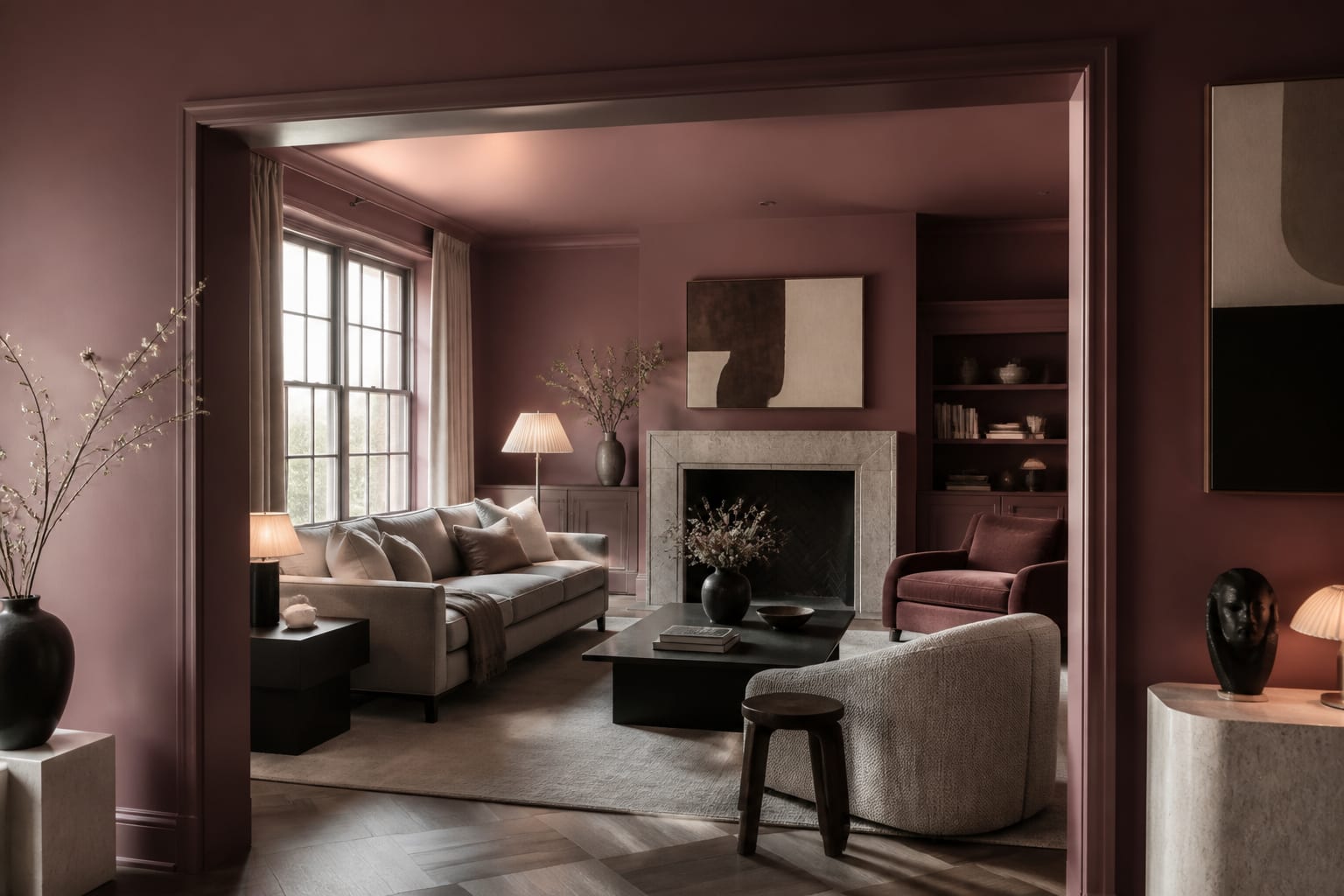
Dusty rose wall color works hardest in rooms with warm, indirect light — north-facing rooms where the grey undertone in the pigment keeps the color from shifting orange, or south-facing rooms where abundant light stops it from reading muddy. The finish matters: flat or matte paint absorbs light and gives the color a velvety, enveloping quality, while eggshell or satin adds just enough sheen to brighten smaller rooms without making the hue look washed out.
Limewash and venetian plaster finishes in dusty rose tones are the most sophisticated application of the color on walls. The natural variation in the application means the color shifts slightly across the surface — lighter in the center of each pass, richer at the edges — which makes the wall look like it has depth rather than a flat coat. This technique also avoids the too-perfect evenness that can make dusty rose read as an 18-year-old's bedroom rather than a considered adult interior.
In a bedroom, dusty rose walls paired with charcoal linen bedding and dark wood furniture find the balance between warmth and sophistication that the color promises. Avoid pairing it with all-white furniture, which pushes the room toward sweet. In a dining room, dusty rose on the walls with a dark wood dining table and aged brass candleholders creates a warm, candlelit atmosphere that photographs beautifully at dinner parties.
See also our guide to Accent Wall Ideas for more on dusty rose interior design.
Upholstery and Soft Furnishings in Dusty Rose
Dusty rose upholstery earns its place when the fabric has enough texture to shift the color across different light angles. Velvet is the highest-performing option: the pile changes from muted blush to rich rose as the light moves, which keeps the piece from looking static. Tightly woven linen in a dusty rose tone is a quieter alternative that works in more casual settings and holds up better to daily use.
A dusty rose sofa in a living room works best in rooms that already have a dark grounding element — a charcoal rug, a deep navy accent chair, a dark-stained wood coffee table — that keeps the pale upholstery from floating in the room without visual anchor. Without a dark element, a room full of dusty rose and white reads as ungrounded, even if the individual pieces are beautiful.
For rooms where a full dusty rose sofa is too large a commitment, a pair of dusty rose armchairs with a deep charcoal primary sofa is an equally effective palette. The chairs bring warmth and color without requiring the full risk of a major upholstery investment. Add dusty rose through a velvet lumbar pillow on the sofa to tie the color across the seating group without overextending it.
For a related angle on dusty rose interior design, read Forest Green Interior Design Ideas.
Dusty Rose Tile and Hard Surface Applications
Dusty rose tile in a bathroom is the use of the color that ages the best and photographs the most distinctively. Zellige tile — hand-made Moroccan ceramic with natural variation in glaze color and surface — in a dusty rose or blush pink tone gives a bathroom an artisan quality that no printed porcelain can replicate. The color variation across individual tiles means the surface reads as rich and layered rather than flat.
For a more graphic application, large-format porcelain in a muted terracotta-rose tone on the floor, paired with white or cream wall tile, gives a bathroom a warm, almost Italian-modernist quality. The dusty rose reads as a sophisticated neutral at that scale rather than a color statement, especially when the fixtures are in aged brass or unlacquered metal.
Dusty rose plaster or limewash on a bathroom wall, rather than tile, creates the softest and most hotel-like version of the color in a wet space. This requires proper waterproofing and a plaster product rated for wet environments, but the result is a surface that glows in candlelight and shifts beautifully between natural and artificial lighting in a way that tile never does.
Building a Complete Palette Around Dusty Rose
Dusty rose's strongest full-room pairings all share one characteristic: at least one element with real visual weight that prevents the palette from looking washed out. Deep charcoal works best for contrast — as a rug, a throw, or an accent wall in a reading nook. Terracotta provides warmth-on-warmth depth without competing, and works particularly well when dusty rose is the dominant wall color. Warm sage or muted olive gives the palette a botanical reference that keeps it from reading as overtly feminine.
Metals anchor a dusty rose palette at its hardware scale. Aged brass reads most naturally with the color's warm undertones. Brushed gold is adjacent but slightly more contemporary. Avoid polished chrome or brushed nickel in rooms where dusty rose is the lead color — the cool metal undertone fights the pink's warmth and makes the room feel unresolved at the detail level.
Floors in a dusty rose room should either recede or provide grounding. A warm natural oak floor with a light wire-brush finish supports the palette's organic character. A terracotta tile floor creates a richer, more saturated version of the same warmth. Avoid cool grey or stark white floors, which undercut the cozy, enveloping quality that dusty rose rooms do best.
- Apply dusty rose as a limewash or venetian plaster wall finish to give the color depth and prevent it reading flat or childlike.
- Ground a dusty rose living room with a deep charcoal rug and dark wood coffee table so the light upholstery does not float visually.
- Choose zellige tile in a blush or dusty rose glaze for a bathroom surface with artisan variation that painted tile cannot replicate.
- Pair dusty rose walls with aged brass fixtures and terracotta accents to keep the palette warm, earthy, and fully resolved.
- Use dusty rose velvet on an armchair or headboard rather than a full sofa if you want the color present without a total commitment.
- Introduce warm sage or muted olive as a secondary color to give the dusty rose palette a botanical dimension that avoids sweetness.
- Use dusty rose charcoal linen bedding as the primary contrast element against dusty rose bedroom walls to read sophisticated rather than soft.
Bring the look home with Re-Design
Dusty rose is one of the most light-sensitive colors in interior design — it reads very differently at noon versus candlelight, and against warm wood versus cool grey. Re-Design lets you upload a photo of your specific room and preview dusty rose walls, upholstery, or tile in your actual space, so you can see exactly how the color behaves in your light conditions before making any purchase.
Frequently Asked Questions
How do I use dusty rose without the room looking like it belongs to a teenager?
The key is pairing dusty rose with materials that have age and weight: dark wood, aged brass, charcoal linen, terracotta ceramics. Avoid pairing it with gold metallics, white-painted furniture, or pastel companions, which push the palette toward sweet. A limewash or plaster wall finish rather than flat paint also signals craft and intention in a way that immediately reads as adult design rather than nursery color.
Does dusty rose work in a living room as a wall color?
Yes, particularly in rooms with warm afternoon light where the color shifts to a rich, almost terracotta-adjacent tone later in the day. Pair dusty rose walls with a deep charcoal sofa or rug as the primary contrast element, and choose warm wood floors or a jute rug to ground the palette. The combination is warm and enveloping without reading as saccharine, especially when the furniture has visual weight.
What metal finishes pair best with dusty rose interiors?
Aged brass, unlacquered brass, and antique bronze are the strongest partners for dusty rose because they share the color's warm undertone and slightly vintage quality. Brushed gold works for a more contemporary look. Polished chrome and standard brushed nickel both have cool undertones that create tension against dusty rose's warmth, so they are best avoided as primary fixture or hardware finishes in rooms where the color is dominant.