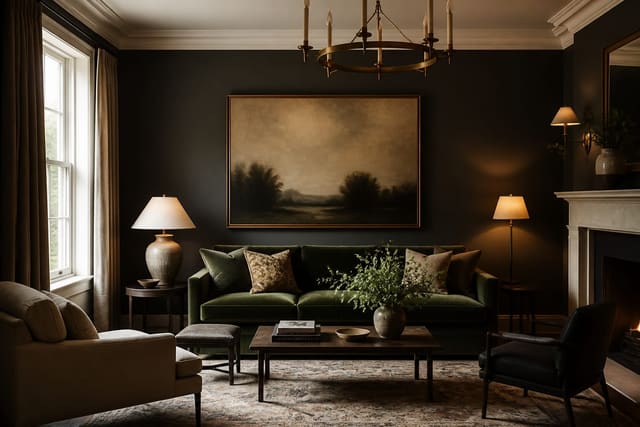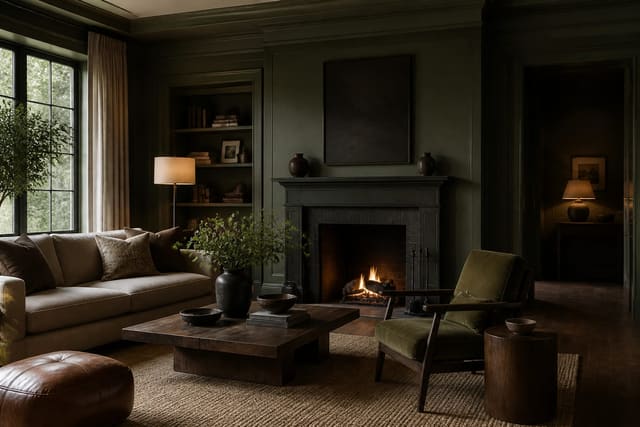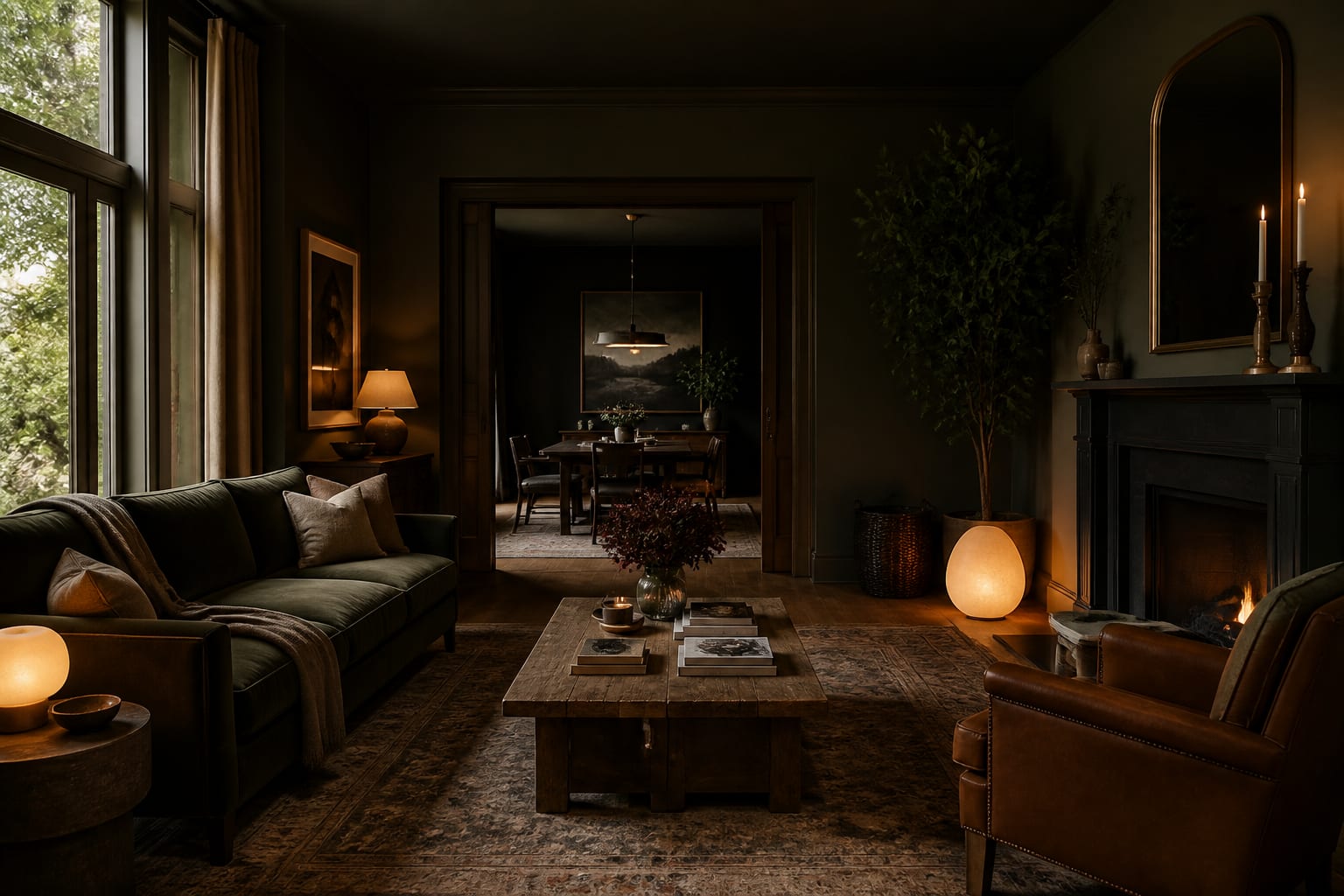
Moody interior design is not about making rooms dark — it is about using darkness as a material in its own right. A room painted in deep charcoal or inky navy with layered warm lighting is more intimate, more enveloping, and more visually interesting than the same room in white with a single overhead fixture.
The rooms that achieve moody design successfully share a common logic: dark wall color, warm artificial light at low color temperature, rich tactile materials, and a deliberate absence of clutter. Nothing is left over. Every surface, every object, every lamp contributes to the atmosphere rather than simply occupying space. That discipline is what separates a moody room from one that just looks gloomy.
Choosing the Right Dark Color for the Room
The color family you choose for a moody room determines its emotional register as much as the depth of the shade. Deep charcoal and graphite are the most versatile because they read as sophisticated neutrals that recede behind furniture and art. Navy and indigo have a cooler, more intellectual quality — they work particularly well in home offices, libraries, and rooms where concentration is as important as comfort. Deep forest olive and near-black hunter green carry warmth and an organic quality that makes them the most livable option for bedrooms and living rooms.
Undertone is the variable that causes the most regret. Charcoals with a blue undertone go cold in low light; those with a brown or purple undertone stay warm. Deep navy can shift green in certain light sources, which surprises many homeowners after the paint is dry. Always test any dark color on a large painted sample — at least 12x12 inches — and observe it at multiple times of day and under the artificial lighting you actually plan to use before committing to the full room.
Paint sheen affects how dark colors behave. A flat or matte finish absorbs light and gives a deep color its maximum density and warmth. Eggshell adds slight reflectivity that brightens the room minimally while keeping the depth. Satin or semi-gloss on a dark wall creates noticeable reflection that reduces the enveloping quality that moody design depends on. Reserve higher sheens for trim and woodwork, where the contrast against flat dark walls is visually sharp and intentional.
See also our guide to Accent Wall Ideas for more on moody interior design ideas.
Lighting Strategy: The Most Critical Variable in Moody Design
In a moody room, lighting is not a secondary consideration after paint and furniture — it is the primary design tool. Dark walls absorb ambient light rather than reflecting it, which means the room depends entirely on its artificial light sources for atmosphere. A single overhead ceiling fixture in a dark room produces a flat, shadowless pool of light that looks institutional. Layered sources at different heights produce the rich, variably illuminated quality that moody design requires.
Table lamps placed on every surface that can accommodate them — side tables, console tables, shelving, mantels — are the fastest way to create warmth in a dark room. Set bulbs to 2200K or 2700K warm white, which reads amber and firelike rather than clinical. Wall sconces placed at eye level, rather than ceiling height, add horizontal bands of warm light that describe the wall surface without flooding it.
Candlelight is not a decorating accessory in a moody interior — it is a lighting layer. Pillar candles on a dining table, a fireplace mantel, or a bathroom ledge produce a warm flickering light that no bulb replicates. The combination of warm electric sources, natural flame, and pools of unlit shadow creates the atmospheric depth that moody design depends on for its emotional effect.
For a related angle on moody interior design ideas, read Forest Green Interior Design Ideas.
Materials and Textiles That Sustain Moody Atmosphere
Dark walls demand materials with tactile richness and physical weight, because the room has no light walls to provide contrast relief. Velvet on sofas and chairs absorbs and reflects the limited ambient light in changing ways that give the seating visual life. Leather — particularly aged or slightly distressed leather — adds a sensory dimension that contrasts productively with the visual depth of dark walls. Natural linen and wool in dark or medium tones provide soft contrast without breaking the enveloping quality of the palette.
Wood tones in a moody room should lean dark and warm: walnut, oiled oak, and smoked oak all read as natural extensions of the dark palette rather than contrasting elements that compete for attention. Very light blonde wood or white-painted furniture introduces a brightness that undercuts the moody quality, unless the room is large enough to use that contrast as a deliberate compositional device.
Rugs in a moody room carry significant weight because they cover the largest horizontal surface in the space. A deep jewel-toned rug — burgundy, deep teal, or charcoal with warm pattern — grounds the seating group without introducing competing brightness. Natural materials in darker colorways, like a charcoal or espresso-toned jute or sisal, provide texture without pattern and keep the floor anchored.
Room-by-Room Application of Moody Design
Moody design performs best in specific rooms where its enveloping quality serves the room's function. The dining room is the easiest room to convert: dark walls, low pendant lighting over the table, and candlelight create an atmosphere that makes every meal feel considered. The investment is modest — a gallon of paint and a pendant fixture — and the effect is immediate.
The bedroom is the second natural home for moody design. A room painted top to bottom — walls and ceiling — in a deep navy or warm charcoal becomes fully enveloping in a way that no single-wall treatment achieves. Paired with blackout linen drapes, layered bedding in dark linen and velvet, and bedside lamps with warm amber bulbs, a moody bedroom produces one of the most genuinely restful sleeping environments in residential design.
Home offices and libraries are the rooms where moody design carries the most intellectual authority. Deep green or charcoal walls lined with books, a leather or dark velvet desk chair, a single warm task lamp, and low ambient lighting create the concentrated, focused atmosphere that distinguishes a real working study from a room that simply has a desk in it. The darkness reduces visual distraction and creates the same productive enclosure that serious readers and writers have always sought.
- Paint walls and ceiling the same deep shade to create a fully enveloped atmosphere that a single accent wall never achieves.
- Replace overhead ceiling fixtures with table lamps at multiple heights to produce layered warm light rather than a single flat pool.
- Choose velvet or leather upholstery in dark or jewel tones so seating surfaces hold visual life without reflecting overhead glare.
- Set all artificial light sources in a moody room to 2200K-2700K warm white to prevent the walls from reading cold or clinical.
- Use candlelight on dining tables, mantels, and bathroom ledges as a genuine lighting layer rather than a decorative accessory.
- Select dark warm-toned wood — walnut, smoked oak, or oiled ash — for furniture so the pieces extend the palette rather than break it.
- Keep horizontal surfaces edited and sparse: a moody room's atmosphere depends as much on deliberate negative space as on material richness.
Bring the look home with Re-Design
Committing to dark walls is a significant decision that most people hesitate on because it is so hard to visualize from a paint chip. Re-Design lets you upload a photo of your actual room and generate a realistic preview of it painted in deep charcoal, navy, or forest black — complete with your specific lighting and existing furniture — so you can see the moody result before you open a single can of paint.
Frequently Asked Questions
Will a dark moody room feel smaller and more cramped?
Not necessarily. Dark rooms can actually feel more spatially resolved because the wall surfaces recede and the eye focuses on the lit objects — furniture, art, lamps — rather than tracking the perimeter of the room. The key is layered warm lighting that creates depth. A dark room with a single overhead light does feel claustrophobic; the same room with table lamps at three heights and candles feels intimate and expansive within its own envelope.
What is the best moody paint color for a bedroom?
Deep navy, warm charcoal with a brown undertone, and dark hunter green are the three most consistent performers in bedrooms. Navy creates a cool, enveloping quality that aids sleep; warm charcoal is the most universally flattering against skin tones and warm wood furniture; deep hunter green has an organic, slightly sylvan quality that is particularly effective in rooms with natural wood floors and linen bedding. Test all three as large samples under your bedside lamp light before deciding.
How do I make a moody room work if I rent and cannot paint the walls?
The most effective rental approach is to create a dark visual environment through furniture and textiles rather than wall color. A dark velvet sofa, a deep-toned area rug, dark curtains hung from ceiling to floor, and a gallery wall of dark-framed art across one entire wall approximate the enveloping quality of dark walls at a fraction of the commitment. Supplement with warm-white lamp lighting at every surface and the room will read as moody even against white rental walls.