Forest green is the most grounding color in interior design right now, and it earns that status because it pulls in natural reference without resorting to pastoral clichés. Used boldly — as a full wall, a lacquered cabinet, a velvet sofa — it anchors a room rather than decorating it.
The range within the family is wide: from the slightly muted, grey-shifted shades of deep fern to the rich blue-green territory of hunter and the warmer, earthier tones of olive. Each reads differently depending on light source and adjacent materials. Getting forest green right means committing to the undertone that matches your room's light, then building the rest of the palette outward from there.
Using Forest Green on Walls and Architectural Surfaces
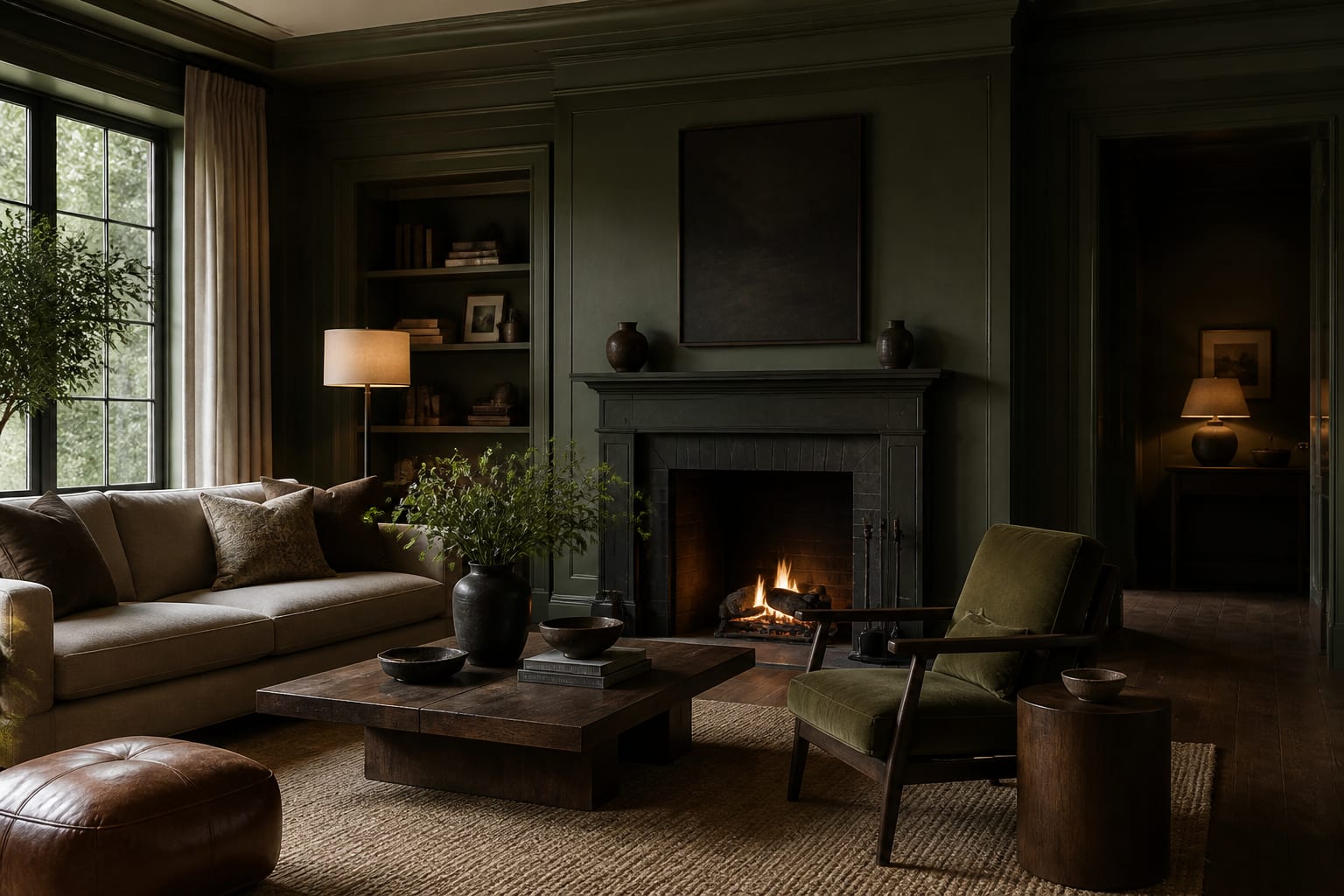
Painting a room forest green is a different commitment than a neutral — it changes the room's emotional temperature, not just its hue. The most effective approach is to take the color all the way: ceiling included, or at minimum to the top of the crown molding, so the paint wraps the space rather than sitting as a single flat panel. A half-hearted application — one accent wall in an otherwise white room — risks reading as tentative rather than intentional.
In a bedroom, a forest green feature wall behind the bed creates a visual anchor that makes the rest of the room feel composed and purposeful. Pair it with warm white linens and natural linen drapes rather than crisp cool whites, which fight the green's warmth. Brushed brass light fixtures and warm oak furniture reinforce the organic, earthy character of the color.
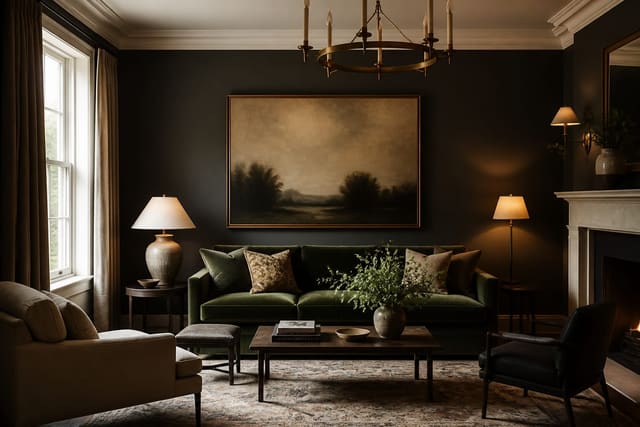
In a living room, forest green on three walls — leaving the window wall lighter — creates a wrapped, cocoon-like quality that is particularly effective in evenings with warm lamp light. The color absorbs and reflects warm light beautifully, shifting from a bright botanical tone in afternoon sun to a rich, moody depth after dark.
See also our guide to Accent Wall Ideas for more on forest green interior design ideas.
Forest Green Cabinetry in Kitchens and Bathrooms
Forest green kitchen cabinetry is the residential design choice that has demonstrated the most longevity over the past several years, and it holds because the color is specific enough to feel considered but neutral enough in its natural reference to avoid feeling trend-dependent. Lower cabinets in forest green with upper cabinets in a warm off-white or greige is the version that works in the widest range of kitchen sizes and light conditions.
Hardware finish is critical: brass or unlacquered brass pulls and knobs on forest green cabinetry reinforce the botanical, slightly vintage character of the color. Matte black hardware reads more contemporary and graphic. Either works, but mixing them within the same kitchen breaks the cohesion that forest green cabinetry depends on for its effect.
In a bathroom, forest green vanity cabinetry paired with white or cream wall tile is a restrained way to bring the color into a smaller room without overwhelming it. A painted forest green vanity topped with a Calacatta marble or warm cream quartz countertop — where the veining picks up both the green and the white — ties the palette together without requiring expensive custom cabinetry.
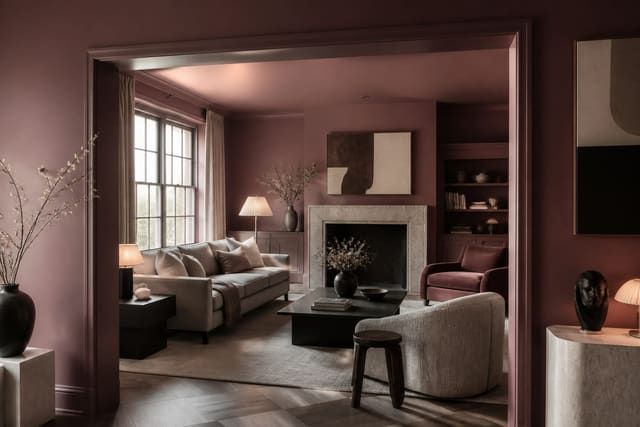
For a related angle on forest green interior design ideas, read Dusty Rose Interior Design Ideas.
Furniture and Upholstery in Forest Green
A forest green velvet sofa is the living room anchor that works across interior styles from traditional to contemporary, which is rare for a color this saturated. Velvet as the fabric is not a coincidence: the pile catches light differently at every angle, so the green shifts from bright to almost black depending on how you sit. That movement keeps the piece from reading as static or heavy despite its depth of color.
For rooms where a full green sofa is too large a commitment, a pair of forest green accent chairs flanking a fireplace or TV wall delivers the same grounding effect at smaller scale. Linen or bouclé in a natural off-white on the primary sofa then lets the chairs read as the intentional focal point rather than one more neutral surface.
A forest green upholstered bed — headboard only, or a full platform bed frame — gives the bedroom a hotel-quality focal point that anchors the room without requiring any other strong color in the space. Keep the bedding neutral and the remaining furniture in warm wood or natural rattan to let the bed frame hold the room's entire personality.
Pairing Forest Green with Other Colors and Materials
Forest green's most reliable pairings draw from adjacent positions in the natural world: warm cream, sand, terracotta, and weathered brass all echo the organic context from which the color derives its authority. These combinations feel effortless because they reference actual environments — a forest floor, a garden wall, a shaded porch — rather than purely abstract color theory.
For a more graphic, contemporary take, forest green against deep charcoal or almost-black reads with high contrast and sophistication. This combination — green cabinetry below, very dark upper cabinets or walls above — works particularly well in open-plan kitchens where the dark palette gives the space presence against a brighter surrounding room.
Terracotta is forest green's most underused partner. The two are complementary in the natural sense — earth and canopy — and a terracotta tile floor or a terracotta-glazed ceramic lamp base with forest green walls creates a palette that feels both saturated and balanced. Limit the terracotta to one or two deliberate accents rather than using it as a second wall color to keep the forest green reading as the dominant, grounding note.
- Paint a bedroom ceiling and walls the same forest green shade for a fully immersive, enveloping atmosphere.
- Pair forest green lower kitchen cabinets with warm off-white uppers and unlacquered brass hardware for maximum cohesion.
- Choose a forest green velvet sofa as the primary living room anchor and build the rest of the palette in neutrals around it.
- Introduce a terracotta tile floor or accent ceramics to complement forest green walls with an earthy, nature-referencing contrast.
- Use forest green as a headboard wall in a bedroom to anchor the bed without requiring any physical headboard furniture piece.
- Select warm brass or bronze fixtures rather than chrome when forest green is the dominant wall or cabinet color in a room.
- Balance deep forest green upholstery or walls with natural linen, jute, and rattan to keep the palette from reading as heavy.
Bring the look home with Re-Design
Forest green reads very differently depending on your room's light, existing flooring, and surrounding furnishings. Re-Design lets you upload a photo of your actual space and preview forest green walls, cabinetry, or upholstery rendered directly into your room before committing to paint or fabric — so you see the real-light result rather than guessing from a swatch.
Frequently Asked Questions
Does forest green work in a north-facing room with limited natural light?
Yes, but you need to adjust the specific shade. In low-light rooms, choose a forest green with a warmer, slightly olive or brown undertone rather than a cool blue-green, which will read murky without direct daylight to activate it. Supplement with warm-white artificial lighting at 2700K and use lighter materials on the floor and ceiling to reflect what light is available back into the space.
What wood tones pair best with forest green walls?
Warm-toned woods — medium oak, walnut, and lighter ash with a natural finish — all pair well with forest green because they share the warm, organic character of the color. Avoid very cool grey-stained or whitewashed woods, which fight the green's warmth and make the palette feel unresolved. Dark espresso finishes work well in high-contrast schemes where the goal is depth and richness over warmth.
Can forest green work in a small room without feeling claustrophobic?
A small room painted in a deep, enveloping color like forest green can actually feel more intentional and considered than the same room painted white — as long as the furniture stays light in color and the ceiling is addressed. Take the paint up to and across the ceiling for a truly wrapped effect, keep furniture in natural light woods or creams, and use mirrors strategically to reflect light. The effect reads as a considered jewel-box room rather than a cramped one.