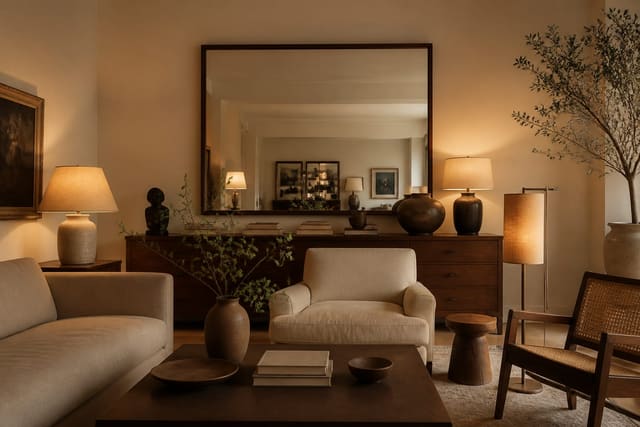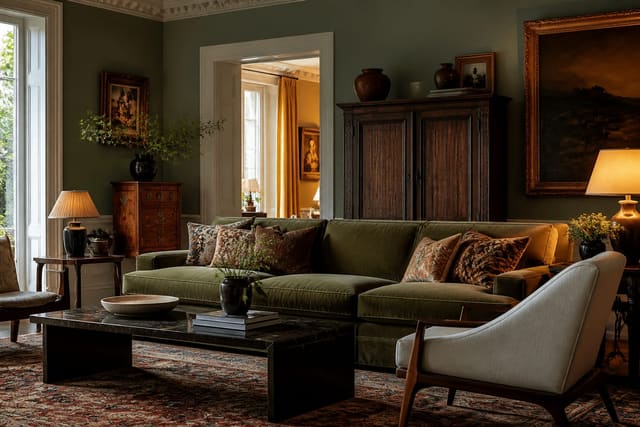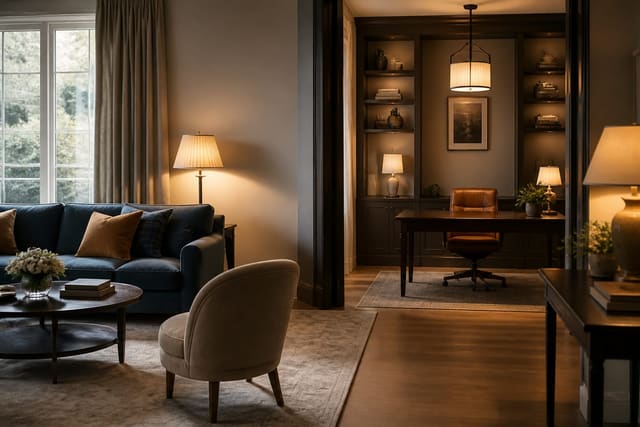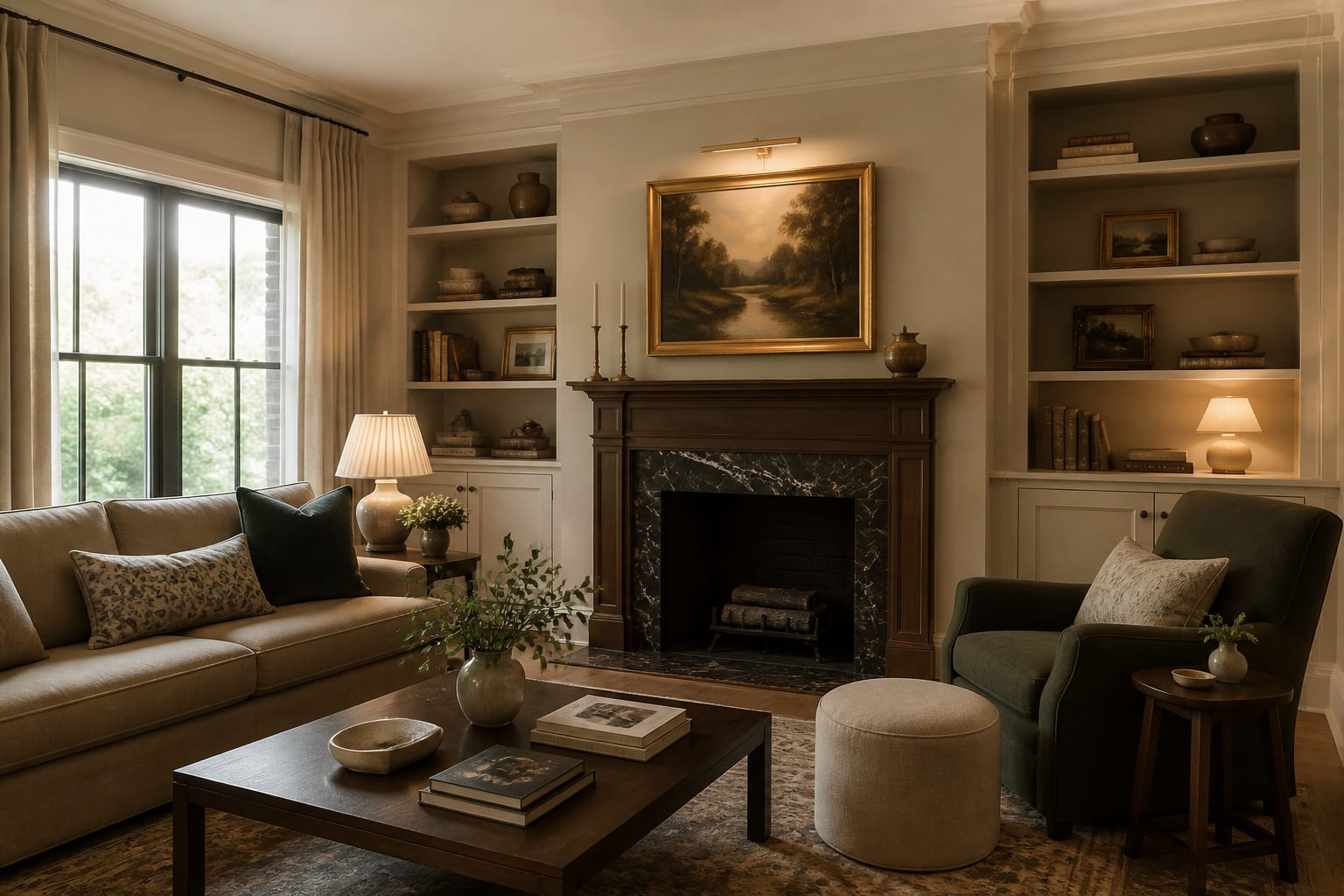
New builds feel soulless for a specific, fixable reason: builders cut the details that cost labor. I think the blank-box feeling almost never comes from the floor plan and almost always from the absence of trim, texture, and lighting beyond the bare minimum. You get flat drywall, 2-inch builder casing, a single recessed light per room, and one wall color throughout. None of that is wrong; it is just unfinished in the way that reads as generic.
The good news is that character is buildable, and most of it is additive rather than structural. You are layering in the moldings, materials, and lighting the builder skipped. The honest answer is that you can take a beige box to something that looks like it has been loved for years, mostly with trim carpentry, paint, and a few fixtures, and very little of it requires permits or a contractor. Here is the order I would tackle it in.
Start with trim and millwork
Trim is where character lives, and it is the single biggest tell that separates a custom home from a spec build. Builders default to thin, flat casing and short baseboards because every inch of profile is labor. Upgrading door and window casing to 3.5 inches and running taller baseboards in the 5 to 7 inch range changes the proportion of every room. Add crown molding where the ceiling height allows it, even a simple 3-inch profile, and the rooms gain a finished edge they were missing.
Wall millwork does even more. Board-and-batten on a hallway, picture-frame molding on a dining room wall, or a paneled accent behind a bed gives the eye texture and shadow lines that flat drywall cannot. These projects are forgiving, mostly cut-and-nail work with MDF, and they are where a weekend of effort pays off the most. If your new build came with a few odd rooms, like a flex space off the entry, defining what it actually is through millwork and furniture, along the lines of the dual-purpose room ideas approach, gives those blank rooms a reason to exist.
Fix the ceiling and the walls
The flat eight or nine foot ceiling is the second blank surface most new builds hand you. You do not need a vault to fix it. A grid of box beams, a single coffer, or even wood planking adds depth overhead that a smooth painted lid never will. Paint helps here too: a builder-white ceiling against builder-white walls reads as institutional, so a warmer white or a subtle wall color creates contrast that feels intentional.
Walls are the largest canvas, and a few specific moves break up the monotony:
- Paint one room a saturated color rather than the whole-house greige, to prove the rooms are different.
- Add texture with limewash, a grasscloth wallpaper, or a plaster-look finish on a focal wall.
- Vary the sheen; a flat ceiling, eggshell walls, and a semi-gloss trim already create subtle depth.
- Hang real art and mirrors at proper height instead of leaving acres of empty drywall.
New builds are also frequently dim, since builders place the cheapest minimum of recessed cans and skip switching for lamps. The reflectance and layering tactics in the dark room solutions guide apply directly, especially adding sconces and lamps to fill the corners those single ceiling lights leave dark.
Layer materials, age, and personality
Character also comes from contrast and patina, which is exactly what builder finishes lack. A spec house leans on materials that look identical on day one and day three thousand: laminate, plastic, lacquered chrome. Introducing materials that age, like an unlacquered brass pull, soapstone, natural linen, or a vintage rug, gives the house a sense of time. You only need a few; one or two patina-prone materials per room is enough to warm the whole thing.
The other source of personality is your own mix. New builds tempt you to buy a matching furniture set, which doubles down on the showroom feel. Instead, blend old and new, high and low, so the room reads as collected over time. This is where a deliberate mix matters, and the mixing design styles framework keeps a vintage chair and a modern sofa reading as intentional rather than mismatched. Add books, plants, and a few imperfect, personal objects; character is partly just evidence that a real person lives there.
Common mistakes to avoid
The most common mistake is going straight to decor before fixing the architecture. Throw pillows and a gallery wall on top of flat builder trim still read as a builder box with pillows. Address the trim, ceiling, and lighting first, then decorate. A second frequent mistake is faux-historic overkill, like slapping shiplap on every surface or installing fake ceiling beams that are obviously hollow and too big for the room; one or two well-chosen details beat a costume of them.
People also tend to keep the whole house one color out of fear, which guarantees the blank feeling persists. Commit to at least one room with a real color or treatment. Another mistake to avoid is ignoring the lighting temperature; mixing 5000K daylight bulbs with warm lamps makes a room feel restless and clinical, so standardize around 2700K to 3000K. Finally, do not skip scale when you add trim, since oversized crown in a low room or tiny casing on tall doors looks as wrong as no trim at all.
Use AI design to preview adding character to a new build home before you commit
Millwork and ceiling detail are exactly the changes that are hard to imagine on a blank wall, and they are expensive to undo once the nail holes are in. With Re-Design you upload a photo of the bare room and preview board-and-batten, a beam ceiling, taller baseboards, or a painted accent wall, so you can judge the proportion of the trim against your real ceiling height before you buy a single board. Seeing a 3-inch versus a 5-inch baseboard in your own hallway settles the debate fast.
The AI design preview is also the easiest way to test color and material commitments that feel risky in a new house, like a saturated dining room or a limewash focal wall. Upload the space, generate a few versions, and live with the images for a day before you commit paint and labor. Because the render keeps your actual windows, doors, and flooring, every added detail is measured against the house you really have, which is the whole point when you are trying to make a brand-new box feel like it has a past.