A room does not need taller walls to feel taller; it needs better visual discipline. My opinion is blunt: most squat rooms are not doomed by architecture, they are being dragged down by furniture, curtains, contrast, and clutter in the wrong places. The fix is not one magic mirror or a can of white paint. It is a set of choices that makes the eye travel upward without noticing the trick.
What visual tricks make a room feel taller?
Visual tricks that make a room feel taller are vertical lines, high-mounted window treatments, lower furniture profiles, soft ceiling contrast, upward light, and mirrors placed to reflect height rather than clutter. The room should read as one continuous volume, not as a stack of chopped horizontal bands.
Start with the largest visual weight in the space. A sofa with a 30–33 inch back, exposed legs, and a cleaner arm does more for perceived height than a bulky skirted sofa that blocks the floor. In bedrooms, a headboard around 42–54 inches can stretch the wall without becoming a padded barricade. If the room is genuinely low, avoid tall furniture that almost touches the ceiling; a bookcase stopping 6 inches below a low ceiling often makes the ceiling line look more obvious.
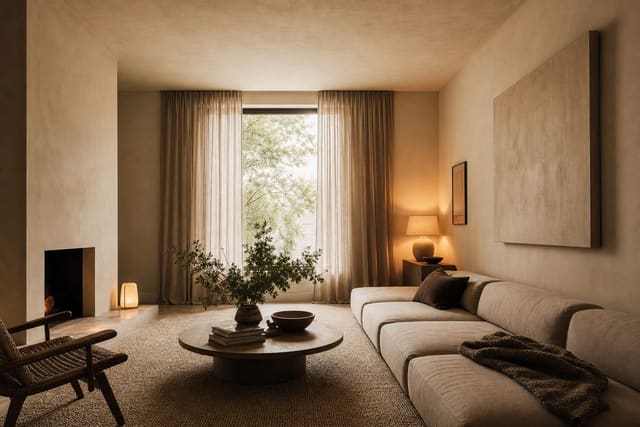
The cleanest vertical cues are not always decorative. Tall curtain folds, narrow sconces, reeded cabinet doors, a single vertical canvas, or a slim floor lamp can all pull the eye up. Use two or three of those moves, not all of them. If you want the deeper ceiling-specific version, pair this guide with low ceiling room design tricks, but keep the main idea simple: fewer breaks, clearer verticals, calmer top edge.
Which lines should move up, down, or disappear?
The fastest way to add visual height is to edit the lines that tell your eye where the room stops. Curtain rods should usually move up, furniture backs should often move down, and extra stripes near the ceiling should disappear.
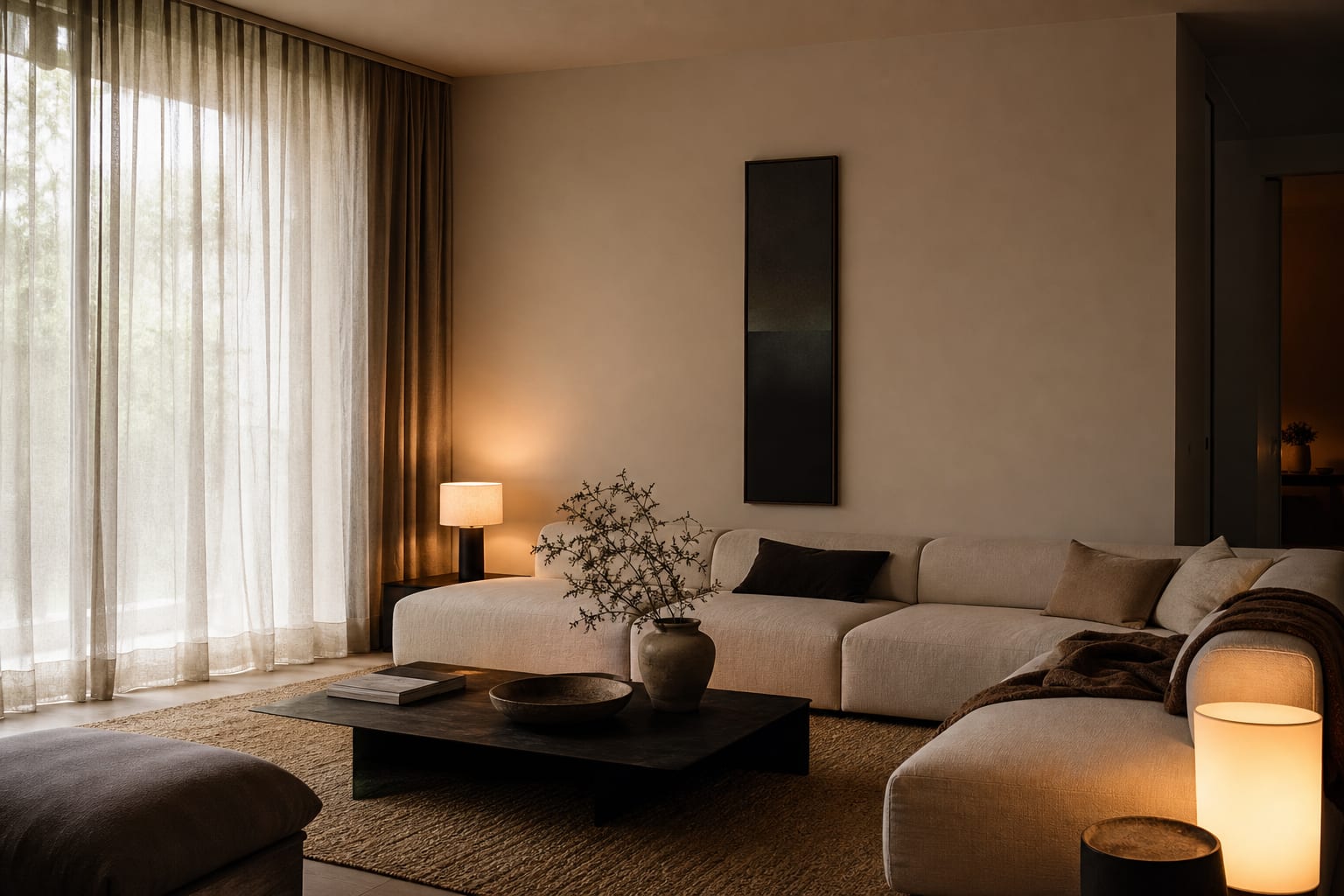
Mount drapery 2–4 inches below the ceiling or crown line when the wall allows it. If the ceiling is very low, leave a small breathing gap rather than jamming the rod into the corner. Extend the rod 8–12 inches beyond the window casing on each side, so the fabric stacks off the glass and makes the window look taller and wider. Let panels skim the floor, with about 1/2 inch of clearance for everyday vacuuming, pets, and radiators.
Art should not climb desperately toward the ceiling. Keep the center of most primary artwork around 57–60 inches from the floor, then choose a taller piece or a stacked composition if the wall needs height. A 24 inch wide by 48 inch tall artwork can do more than four tiny frames scattered above eye level.
Remove accidental horizontal stops. A dark picture rail, high-contrast crown, short curtain rod, squat console, and low gallery row can make the room feel measured in slices. Paint narrow trim closer to the wall color if it keeps cutting the height. Choose one long cabinet instead of three short storage pieces if the wall feels busy; a 72–84 inch console with tall lamps reads calmer than a cluster of small objects.
How do color, mirrors, and light stretch the walls?
Color should blur the ceiling edge rather than spotlight it. A bright, cold white ceiling over warm beige or clay walls can look like a lid; a ceiling painted the same color as the walls, or one step lighter in the same undertone, usually feels more generous. Soft warm white, pale mushroom, muted cream, gentle greige, and barely blue-green are safer than hard contrast in a low or boxy room.
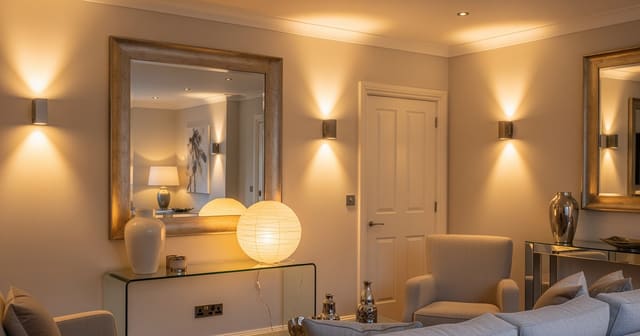
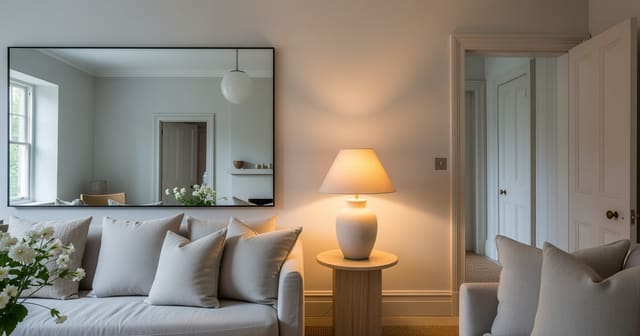
Mirrors help only when they reflect something useful. A mirror reflecting a ceiling fan, a messy shelf, or a dark hallway doubles the problem. Hang a mirror so its center sits around 58–62 inches from the floor, or place a taller leaning mirror where it can catch a window, curtain height, or vertical wall plane. For more precise placement, use the same logic in mirrors that amplify light: reflect brightness and depth, not the room’s weakest corner.
Lighting is the other half of the illusion. A single overhead disk makes a short room feel flatter because every shadow drops straight down. Use light at the sides of the room instead: table lamps, plug-in sconces, picture lights, and shaded floor lamps. In living rooms and bedrooms, 2700K bulbs usually feel warm and forgiving; 3000K works in kitchens, offices, and utility rooms where you need a cleaner task light.
If the room lacks daylight, do not solve that by making every surface glossy. Gloss can create glare without adding depth. Matte pale paint, linen curtains, warm bulbs, and reflective surfaces placed with restraint are more convincing. The strategies in faking natural light in any room pair especially well with visual height tricks because brightness and verticality need to work together.
Common mistakes to avoid when chasing visual height
The most common mistake is buying tiny furniture because the ceiling feels low. Small pieces can make the room look nervous and underfed. One properly scaled sofa with a lower back, an 8' x 10' rug, and two tall curtain panels usually beats six undersized pieces trying not to offend the room.
Another mistake is hanging everything too high. High art does not make a wall look taller; it makes the normal human zone feel abandoned. Keep art related to furniture, then use vertical shape inside the art, frame, or textile to lead the eye upward.
Do not add stripes everywhere. Vertical stripes on walls, fluted cabinets, ribbed lamps, tall curtains, and narrow art can become visual static if they all compete. Choose one dominant vertical rhythm and let the rest of the room stay quiet.
Avoid heavy overhead fixtures when head clearance is already tight. A flush mount or short semi-flush that drops no more than 6–10 inches is often enough. If people walk under the fixture, keep the lowest point around 7 feet above the floor when possible; otherwise the room may feel physically shorter, not just visually shorter.
The last mistake is ignoring the floor. A rug that is too small makes the furniture look like separate low islands. In most modest living rooms, front legs should sit on the rug by at least 6 inches, and the rug should be wider than the sofa by roughly 12–24 inches. That grounded base lets the vertical tricks feel intentional instead of theatrical.
Use AI design to preview the taller room before you commit
Visual height is difficult to judge from a shopping cart because the effect comes from relationships: rod height, sofa profile, wall color, mirror angle, rug size, and lamp placement. Upload a straight photo of the room and test those moves together before buying custom curtains or repainting the ceiling.
Prompt the preview with exact constraints: low-ceiling living room, sofa with 32 inch back, linen curtains mounted 3 inches below the ceiling, 8' x 10' wool rug, soft wall-and-ceiling color, warm 2700K lamps, tall narrow art, and no heavy pendant. Then run a second version with the curtains at the existing window height, a darker ceiling, or a bulkier sofa. The comparison will show which choice is doing the real work.
For a bedroom, test a 48 inch upholstered headboard, 24 inch nightstands, slim sconces mounted about 58–62 inches from the floor, floor-length curtains, and a rug that extends at least 18 inches beyond the sides of the bed. For rentals, preview tension rods, plug-in sconces, removable wall color, freestanding mirrors, and lighter furniture before making holes.
Use the render as a proportion check, not a fantasy room. If the tallest-looking version has fewer objects, softer contrast, and better side lighting, trust that. A room feels taller when the eye moves easily from floor to wall to ceiling without tripping over clutter, hard stripes, or heavy shapes.
Transform your space in seconds. No design experience needed. Try Re-Design Free