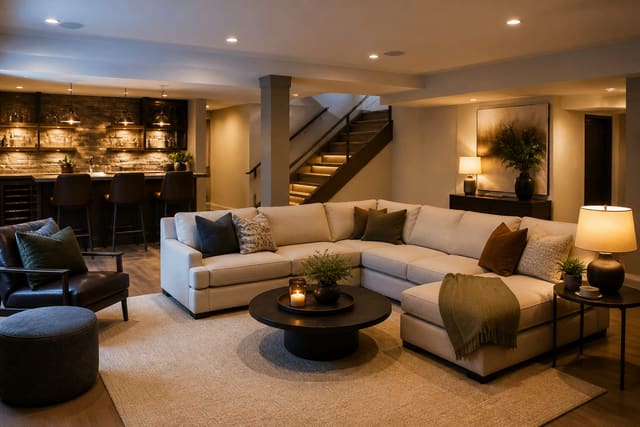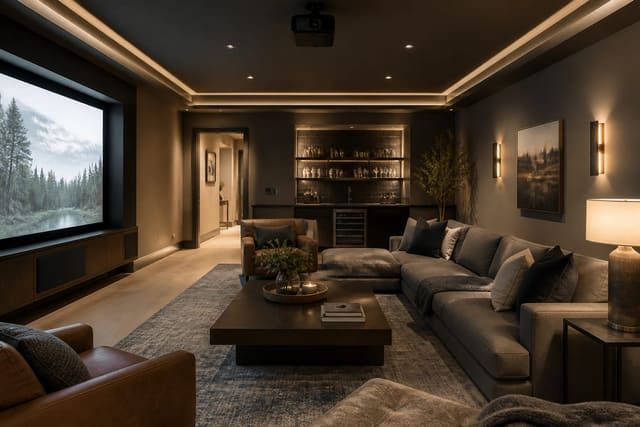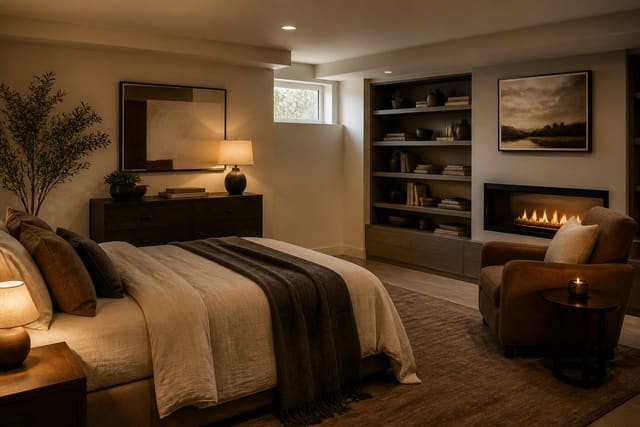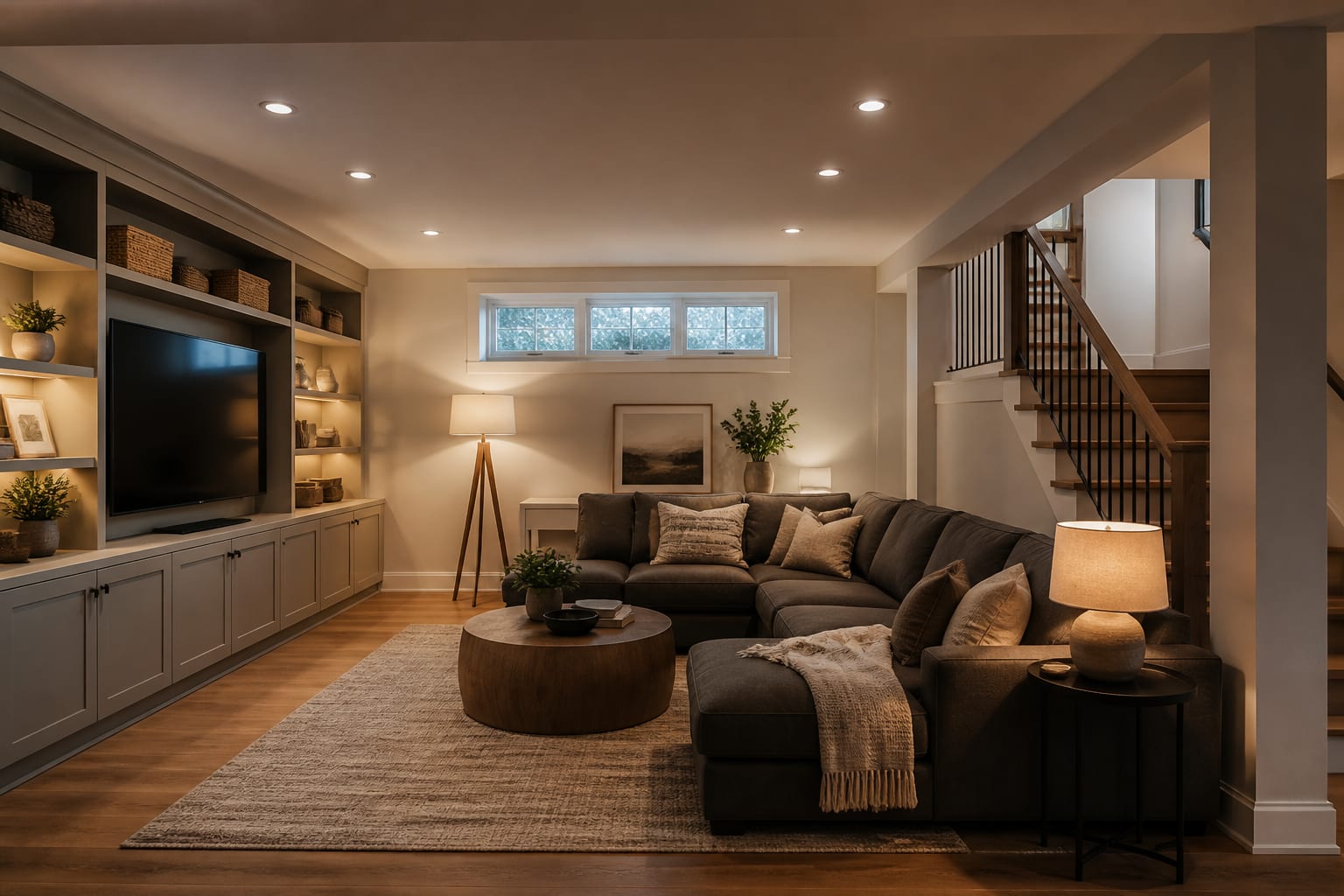
AI basement design ideas turn a photo of your unfinished or underused lower level into visual options for layout, lighting, storage, and style before you remodel. The best results respect real constraints, like support posts, low ceilings, and exposed pipes, instead of faking a finished look, helping you decide whether the space should become a media room, guest suite, or gym.
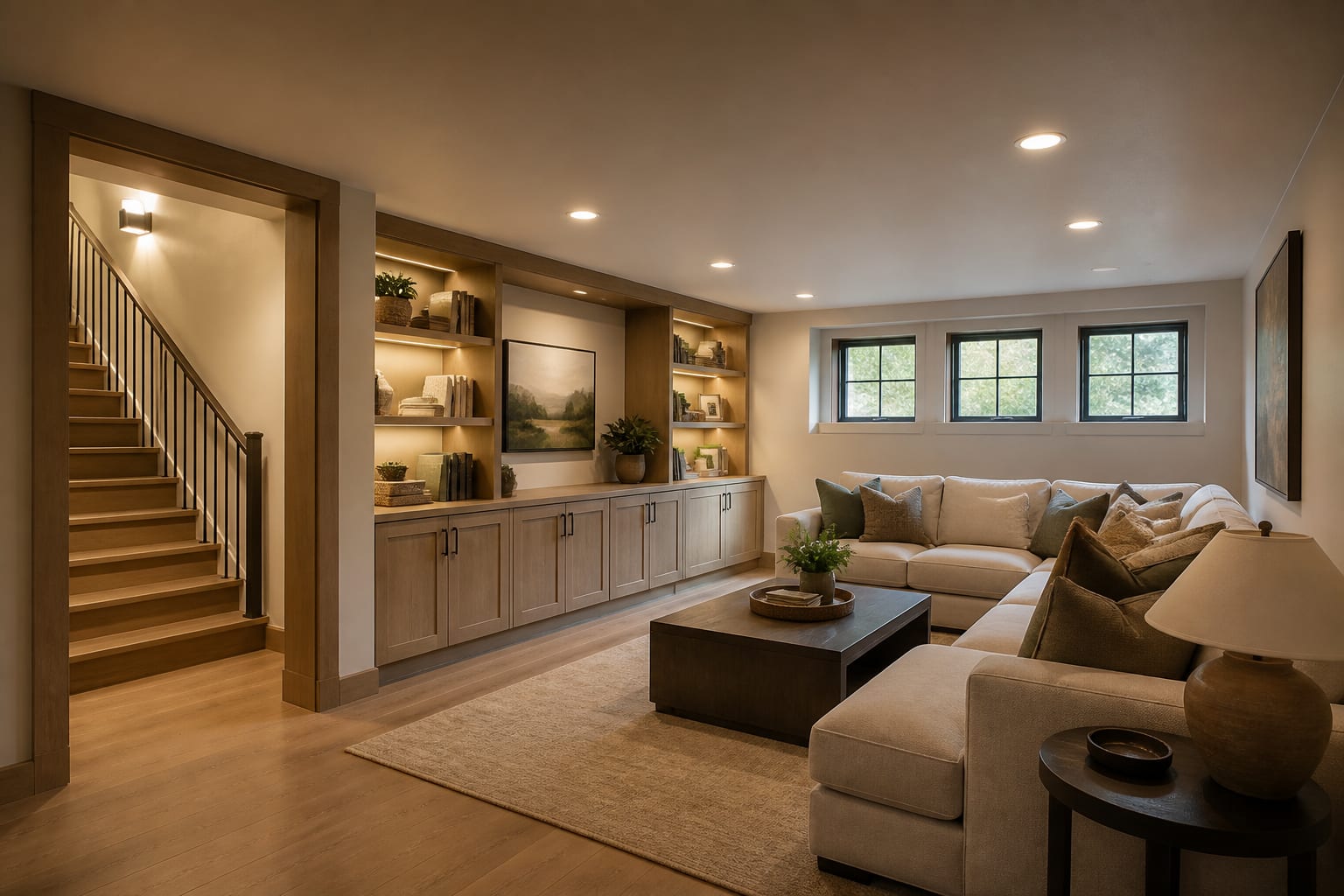
What should your basement become before you pick finishes?
Give the basement one primary job before choosing flooring, paint, or furniture. It can support secondary uses, but it needs a lead role or it stays a prettier storage room. Pick the activity that would actually pull people downstairs: movie nights, guests, workouts, homework, gaming, or serious storage. If you're unsure how finished to go, basement finishing ideas that survive real life is a useful reality check before adding velvet seating and a built-in bar.
Combine only directions that can share noise, light, and storage:
- Media lounge: works even with a low ceiling if the room is wide enough. Plan an 8-10 foot viewing distance and a 30-inch path beside seating.
- Guest bedroom: only viable when egress, ceiling height, ventilation, and privacy check out. See basement bedroom code and comfort ideas first.
- Closed storage wall: turns bins and holiday decor into a design feature; 15-18 inch deep cabinets hold a lot without eating the room.
- Playroom or teen hangout: basements absorb noise well; use washable flooring, a large rug, and one wall of closed storage.
- Home gym: only where floor, ceiling, and ventilation suit movement; keep 36 inches clear around equipment.
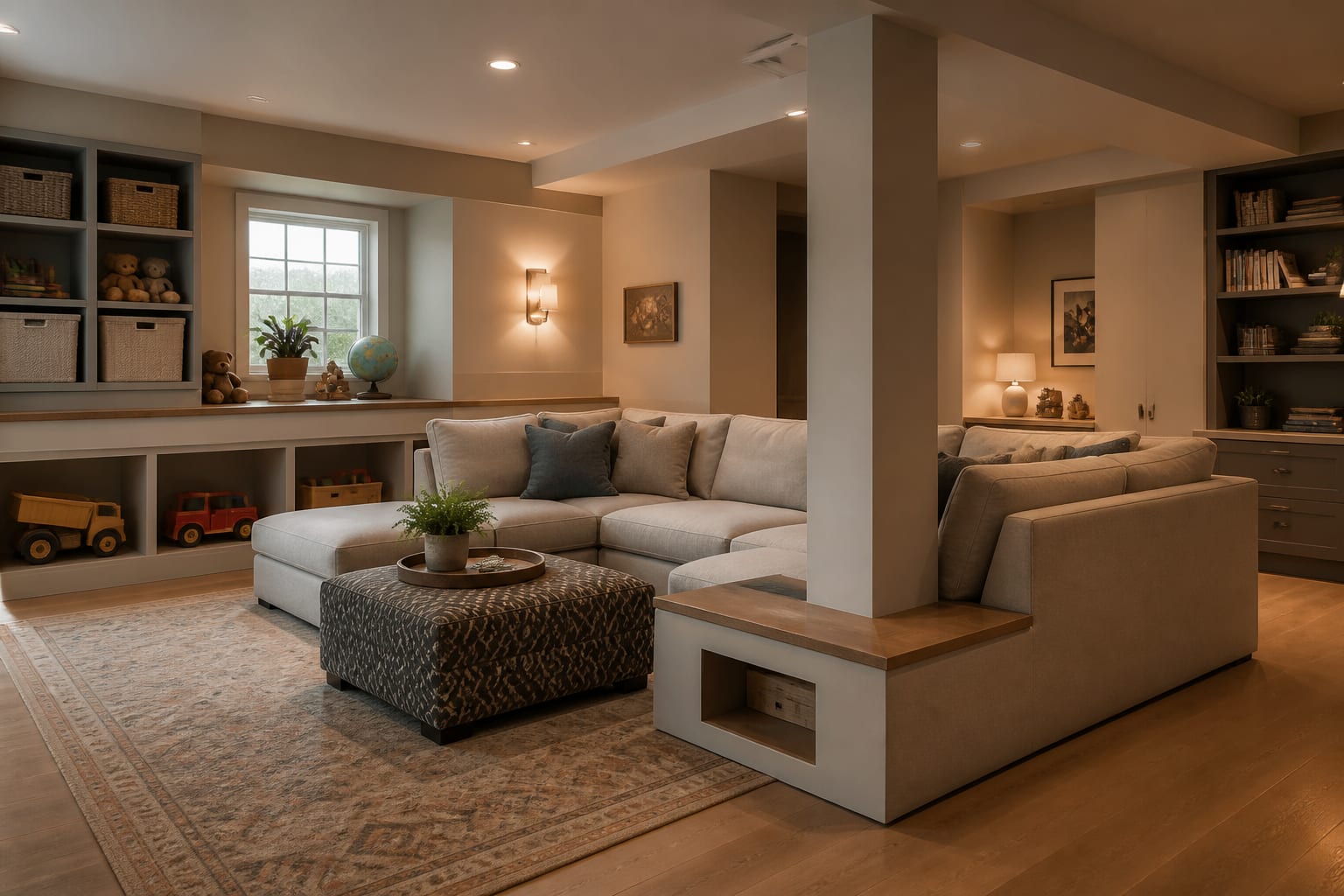
Which layout, lighting, and flooring keep a basement from feeling underground?
Circulation, ceiling treatment, light, and floor warmth need to work together; paint alone won't fix a cold slab and one bulb. Keep the first 6-8 feet after the stairs clear, and if the stairs open straight into the room, face the most inviting zone toward that arrival point.
Layer the lighting since there's no daylight to rely on: ambient recessed or flush-mount fixtures, lamps at seating height, sconces on the darkest wall, and task light over desks or laundry. Warm 2700K suits movie rooms and lounges; 3000K works near hobbies, bars, and desks.
Choose flooring for moisture tolerance and comfort, such as luxury vinyl, tile with rugs, sealed concrete, or engineered products rated for below-grade use. Add a large rug or carpet tile zone in kids' rooms or lounges.
Give columns and soffits a job: build a post into a shelf or let it define a seating edge, and paint soffits to match the ceiling so they recede. For serious viewing setups, basement home theater layout ideas covers seating depth, speaker placement, and glare, details that matter more than screen size.
What mistakes derail an AI basement remodel?
Most mistakes happen when the render looks finished without solving why nobody uses the room. A prettier basement that stays cold, damp, dark, or inconvenient is still a failure.
- Erasing utilities. Panels, valves, cleanouts, and sump pumps need access; ask AI to preserve service zones and keep 24 inches of clearance.
- Going dark before fixing light. A moody palette in a low-ceiling room reads as a cave without enough lamps and wall wash.
- Skipping code on a bedroom. Egress, alarms, ceiling height, and ventilation matter more than a bed and curtain.
- Covering everything in open storage. Bins and gear become the view; use doors, drawers, or curtains so the finished zone feels calm.
- Buying furniture before mapping obstacles. Tape out sectional, cabinet, or desk footprints around posts and doors before ordering anything hard to return.
Keep the ugly constraints in the prompt so the concept has to solve them, not hide them.
How do you use AI to preview a basement before you commit?
Measure the basement and name your nonnegotiables first. Upload a straight, well-lit photo from the bottom of the stairs, plus a second angle from the far corner if posts or utilities are hard to read, and keep the stairs, beams, posts, mechanical door, and window locations intact.
A grounded prompt: "Redesign this unfinished basement while keeping the stairs, support posts, mechanical room door, low duct soffit, and existing window locations. Create a warm family media lounge with a sectional, closed storage wall, durable below-grade flooring, 2700K layered lighting, a small desk zone, and a 36-inch clear path from stairs to storage. Do not add a bedroom, bathroom, or construction that hides utility access."
Run three versions with different priorities: one maximizing storage, one built for movies, one keeping open floor for kids or workouts. The winner should make daily use obvious, not just look expensive.
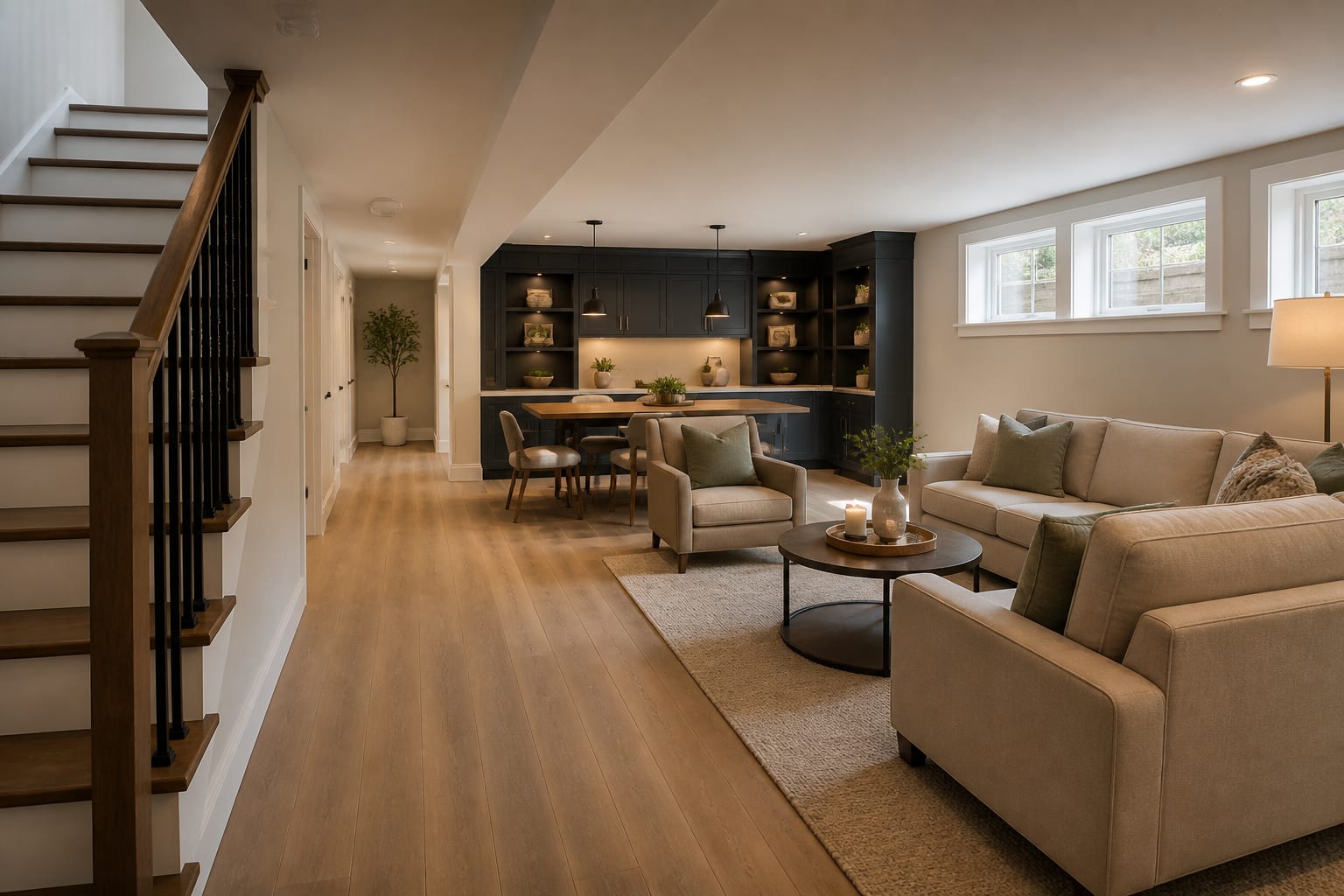
Which finishing touches make a basement feel like part of the house?
Repeat one wall color family, one flooring direction, one metal finish, and one wood tone rather than copying the upstairs room exactly. Warm white, clay, olive, charcoal, pale oak, walnut, matte black, and aged brass tend to hold up underground because they add depth under artificial light. Repeat the darkest finish at least three times, such as cabinet pulls, lamp bases, and frames.
Use storage as architecture: a wall of plain slab doors calms a basement faster than decorative baskets, and any leftover unfinished zone should get an intentional boundary, like a door, curtain, or shelving wall.
Add comfort below grade with soft seating, washable textiles, acoustic panels where echo is harsh, and a rug large enough to anchor the furniture group. Keep fixtures tight to a low ceiling and add warmth through lamps and sconces instead of pendants.
Before spending, confirm moisture, insulation, subfloor, HVAC, electrical load, stair clearance, egress, and permits. AI can show potential fast, but the real room gets the final vote.
Frequently Asked Questions
What photo works best for an AI basement redesign?
Use a straight, well-lit shot from the bottom of the stairs showing the full room, including posts, ceiling height, ducts, windows, and utility doors. Add a second angle from the far corner if details are hard to see. AI can only preserve what it can see, so hidden posts or cropped ceilings lead to unrealistic renders.
Can AI show a basement bedroom accurately?
AI can visualize a basement bedroom layout, but it cannot verify egress, ceiling height, ventilation, or local code requirements. Treat any bedroom render as a concept and confirm safety and legal requirements with a local professional before finishing the space for sleeping.
How do I stop my basement render from looking too finished?
Keep visible utilities, low ceiling height, posts, and existing flooring in the prompt instead of asking AI to erase them. Renders that hide mechanical access, exaggerate ceiling height, or skip storage needs look great but won't match what you can actually build.
What lighting temperature works best in a basement?
Warm 2700K light suits media rooms and lounges, while 3000K works well near desks, hobbies, and laundry areas. Since basements lack daylight, layer ambient, lamp, sconce, and task lighting rather than relying on one overhead fixture.
Should a basement have one function or several?
A basement should have one primary function, such as a media lounge, gym, or guest suite, with secondary uses added only if they can share noise, lighting, and storage needs. Combining too many unrelated activities without planning zones usually creates a cluttered, underused room.