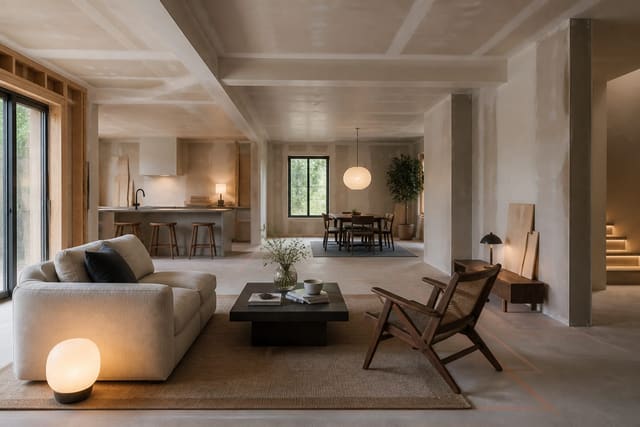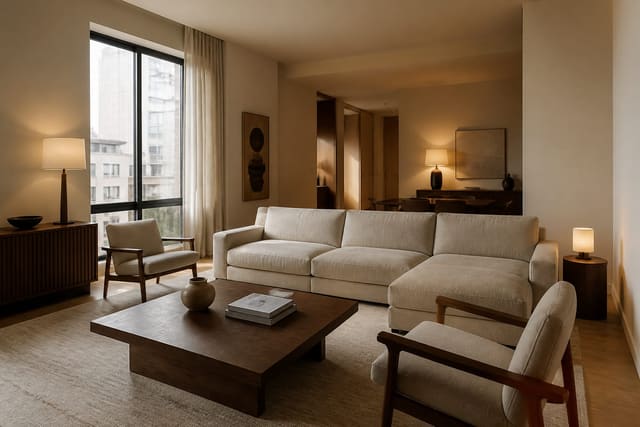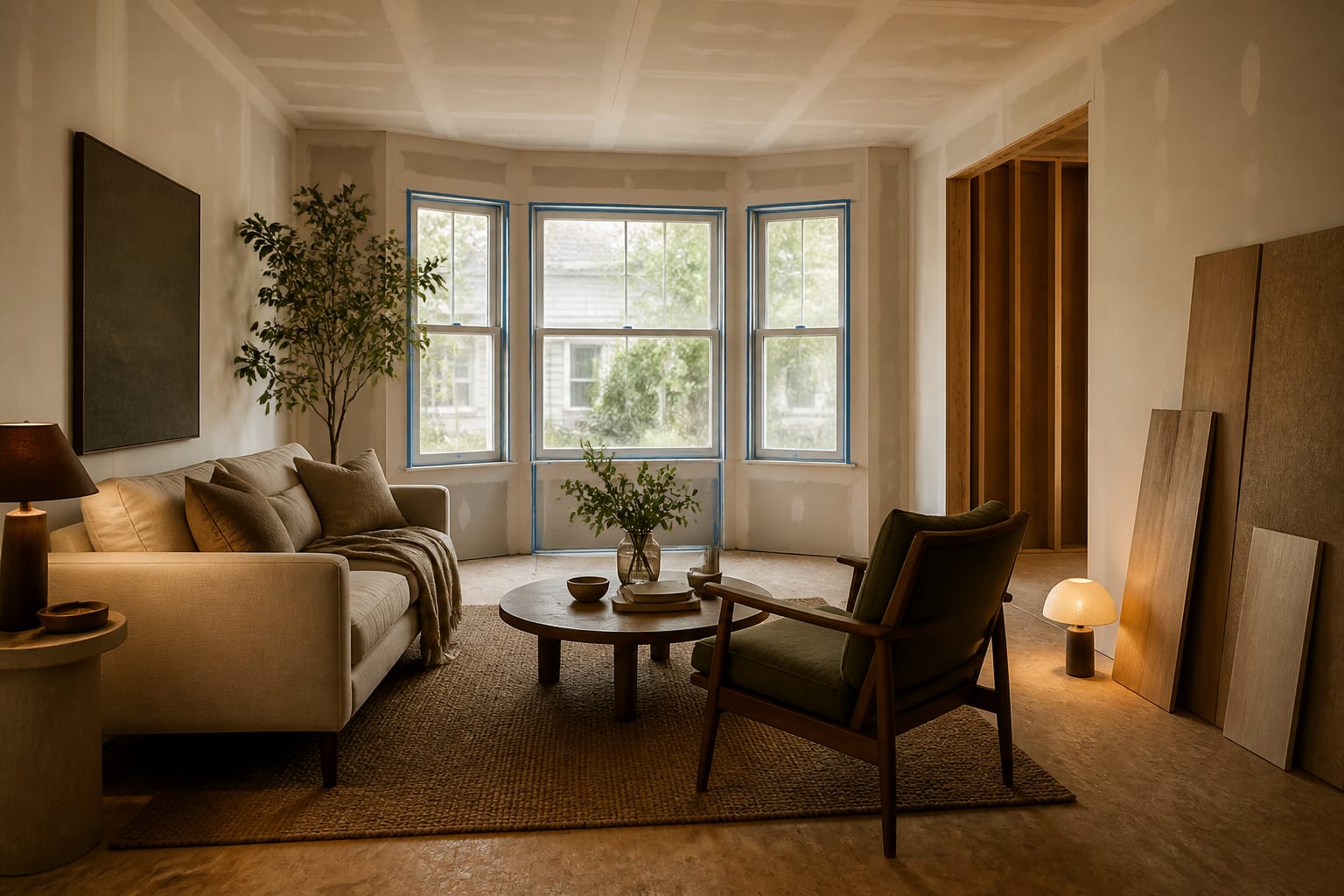
AI room design for a home rebuild works by turning photos of the cleaned shell, old room images, plans, and finish samples into visual concepts for layout, lighting, storage, color, and furniture direction. It won't replace a contractor or inspector, but it helps you plan the room before drywall and cabinets lock decisions in place.
How does AI help design a rebuild after flood or fire damage?
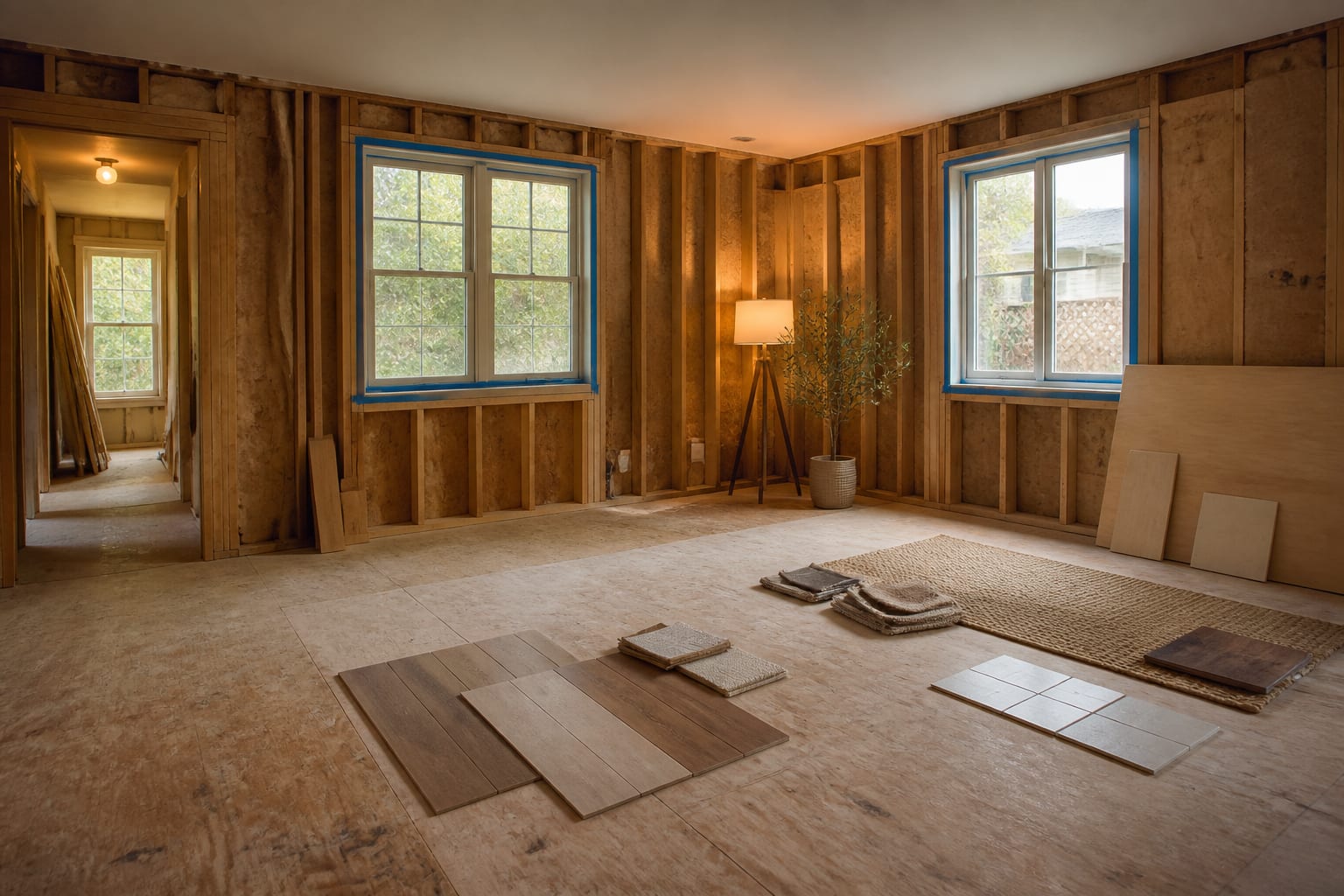
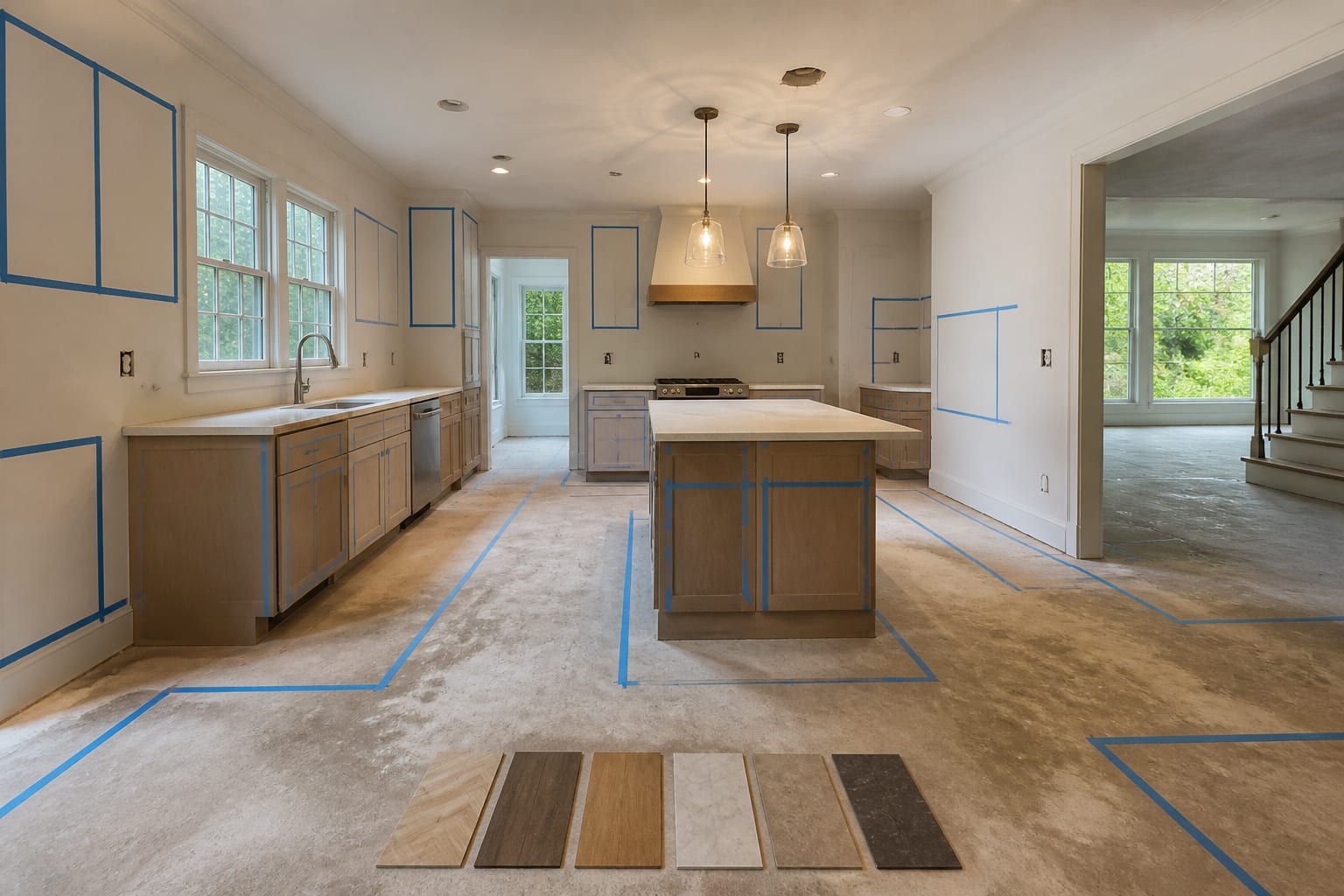
Photograph each room after it's cleaned and cleared, then add pre-damage photos showing windows, fireplaces, built-ins, or cabinet locations worth remembering. If walls are open, capture outlets, plumbing rough-ins, HVAC vents, door swings, stair rails, and ceiling height before they disappear behind drywall.
A rebuild benefits from the same discipline used when people AI design a new build before construction finishes: both involve planning rooms that aren't fully dressed yet. The difference after a disaster is emotional — you're not just planning a pretty room, you're deciding what should return and what should finally change.
Which rebuild decisions should happen before drywall closes?
The best design work happens while the house is still flexible. Once drywall, flooring, cabinets, and trim return, the window for electrical and layout corrections narrows fast. Decide the room's job first: a flooded den might become a ground-floor bedroom, and a fire-damaged kitchen might finally get a pantry or a separated homework counter.
Prioritize the choices that get expensive to revise later:
- Place lighting from the furniture plan, not the center of the empty room. Dining fixtures hang 30 to 36 inches above the tabletop; island pendants sit 30 to 36 inches above the counter.
- Add wall blocking where heavy pieces may land. Mirrors, floating vanities, grab bars, and TV mounts are easier to support before walls close. Mark mounting zones on photos so the AI preview and contractor reference the same wall.
- Confirm circulation before flooring is ordered. A wider cased opening, pocket door, or revised cabinet depth may fix what made the old room awkward. Aim for 36 inches on main routes, 30 inches only where truly tight.
- Choose durable transitions deliberately. Flood repairs often patch new and old floors together. Preview a threshold, rug plan, or full-floor color strategy before accepting a random strip between materials.
How should layouts change after flood or fire damage?
Don't rebuild the old room automatically. A disaster repair exposes decisions that were already failing: a sofa blocking the patio door, a laundry room with no landing surface, a kitchen with no pantry.
For flood-prone lower levels, design for smarter recovery: furniture with legs, no wall-to-wall storage trapping moisture-prone corners, washable rugs instead of one huge textile that's impossible to move. For fire repairs, watch sightlines and residue-prone surfaces — a rebuilt fireplace or range wall may become visually dominant, so preview whether warm white walls, deeper trim, or closed storage keeps the repaired zone from looking like a patch.
Furniture scale needs extra attention because empty repaired rooms feel larger than they are. A family room may look ready for a 108-inch sectional until the coffee table, media cabinet, and walkway return. Test an 84- to 96-inch sofa, two chairs, and an 8-by-10 or 9-by-12 rug before assuming the biggest option is safest.
If the home may sell after repairs, restraint matters. The same logic behind an AI redesign for resale helps you pick finishes that photograph cleanly without stripping the home of warmth.
How do you use AI to compare rebuild options before pricing?
AI works best with a rebuild-style prompt: upload a straight photo of the cleaned room, then describe what must stay, what's being replaced, and what the room needs to support afterward.
Example: "Design this fire-damaged 12-by-15-foot family room after remediation, keep the existing window and fireplace location, add an 8-by-10 or 9-by-12 rug option, use an 84-inch sofa, include closed toy storage, warm 2700K lamps, durable flooring, no wall removal, no changes to the stair opening." Constraints beat fantasy renovations.
Run separate versions for layout, finish palette, and storage. If the tool changes every surface at once, you won't know whether the improvement came from furniture arrangement, lighter flooring, warmer bulbs, or a cabinet wall.
Privacy matters more here than in normal room photos. Claim paperwork, medication bottles, children's names, mail, and contractor documents can appear in the background. Crop the image first and review a private AI room design workflow if anything unrelated to layout or finishes is visible.
Judge every AI image against the real shell. If a preview removes a column, widens a window, hides a floor drain, erases a radiator, or invents a second exit, keep the mood and reject the plan.
What mistakes should you avoid when redesigning a damaged shell?
Emotional pressure after a flood or fire makes rushed decisions feel reasonable. Slow down enough to keep grief, fatigue, and contractor scheduling from choosing the room for you.
- Rebuilding the exact old layout can preserve the problem that made daily life awkward. Test a narrower table or bench if the old one blocked a door.
- Choosing finishes room by room can make repaired areas look disconnected. Preview flooring, trim, and cabinet tone across adjacent spaces so new work doesn't announce the water or smoke path.
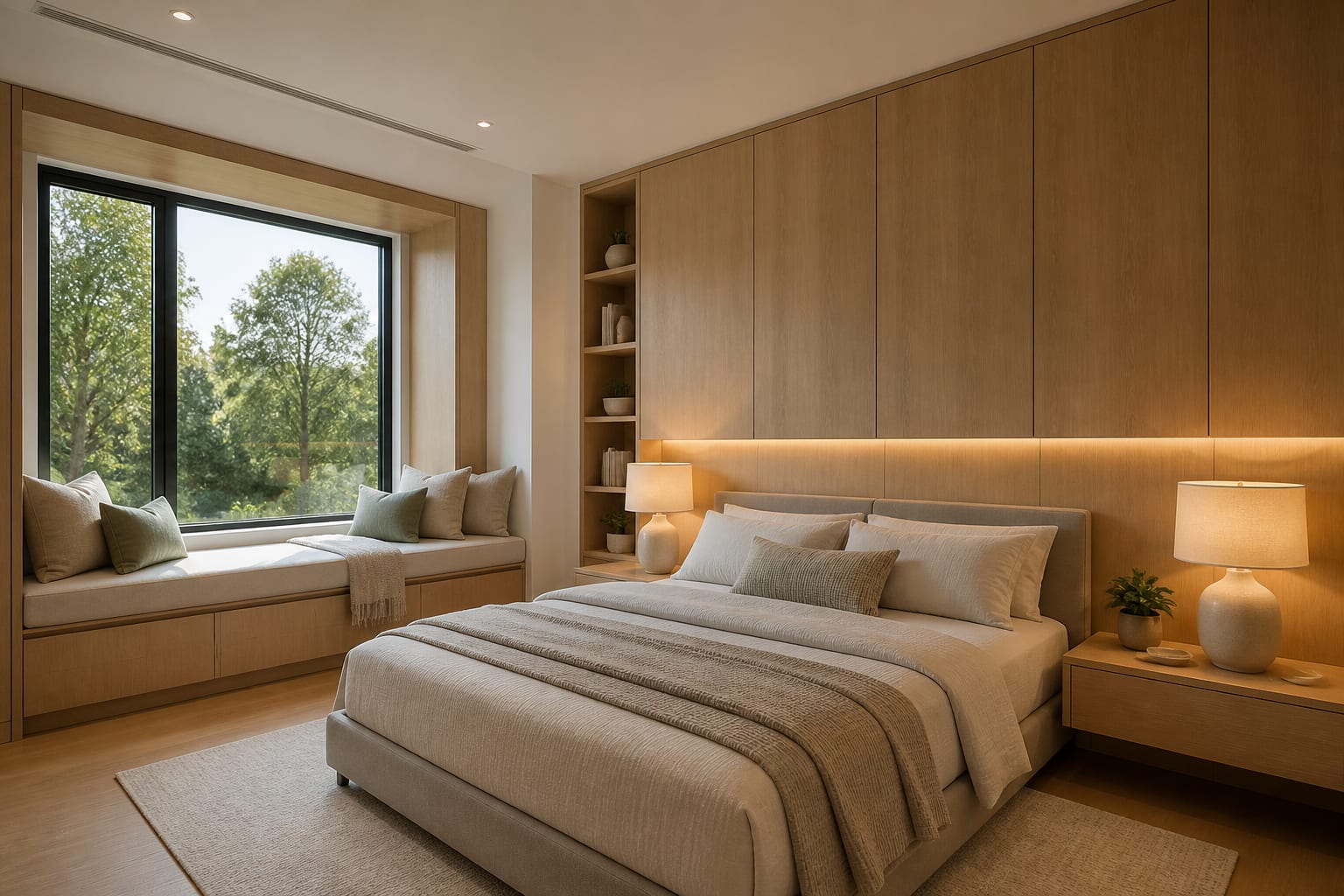
- Waiting too long on electrical decisions can leave the room underlit. Plan sconces 60 to 66 inches from the floor near a bed or vanity, and choose 2700K bulbs for relaxed rooms or 3000K for task areas.
- Buying furniture before scope is finalized creates storage problems on top of repair problems. Wait on custom upholstery and built-ins until wall lengths, flooring thickness, and door swings are confirmed.
- Treating durability as one material choice can backfire. A washable rug, raised storage, wipeable paint, and an accessible shutoff route may matter more than one product marketed as tough.
Another quiet mistake: designing only from the insurance scope. That document describes replacement value and approved work, not a room plan. Use it as a boundary, then design around how people actually cook, sleep, enter, store, and recover.
When is the rebuild design ready to approve?
The plan is ready when the repaired shell, the measured layout, and the AI preview all tell the same story. Confirm wall lengths, ceiling height, window width, floor transitions, door swings, cabinet depths, outlet locations, lighting drops, and every main walkway before approving finishes.
Buy in order: room layout first, then permanent finishes, then lighting, then storage, then rugs and large furniture, then art and smaller objects. If a piece depends on a wall still being reframed or a floor height that may change, it's not ready to order.
A good post-disaster design shouldn't feel like a shrine to what happened. It should feel clearer, safer, and more intentional than the room that was lost, with the old home's best parts carried forward and its irritations left behind.
Frequently Asked Questions
Can AI verify that a room is safe to rebuild after fire or flood damage?
No. AI tools preview layout, lighting, storage, and finishes visually, but they cannot assess structural safety, mold remediation, electrical code compliance, or insurance scope. Rely on licensed contractors and inspectors for safety decisions, and use AI previews only for planning the visible design once the shell is cleared.
Should I rebuild my old layout or change it after a disaster?
Change what wasn't working. A disaster repair often exposes problems that existed before the damage, such as blocked doorways or missing storage. Use the rebuild to fix circulation, lighting placement, and storage gaps rather than reproducing the exact layout that was already failing.
What should I photograph before drywall closes back up?
Photograph outlets, plumbing rough-ins, HVAC vents, door swings, stair rails, ceiling height, wall lengths, and window widths while walls are still open. This documentation lets you plan lighting drops, wall blocking for mounted items, and furniture placement accurately before the room is finished.
How do I keep disaster photos private when using AI design tools?
Crop out claim numbers, addresses, medication labels, mail, and contractor paperwork before uploading any room photo. Disaster-recovery photos often contain more personal information than typical room photos, so review a private AI room design workflow if backgrounds include anything unrelated to layout or finishes.
In what order should I buy furniture and finishes for a rebuild?
Set the room layout first, then permanent finishes, then lighting, then storage, then rugs and large furniture, then art and smaller objects. Avoid ordering anything that depends on a wall still being reframed or a floor height that hasn't been finalized.