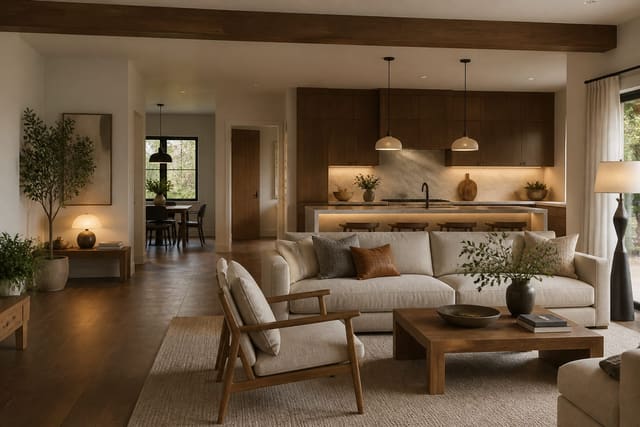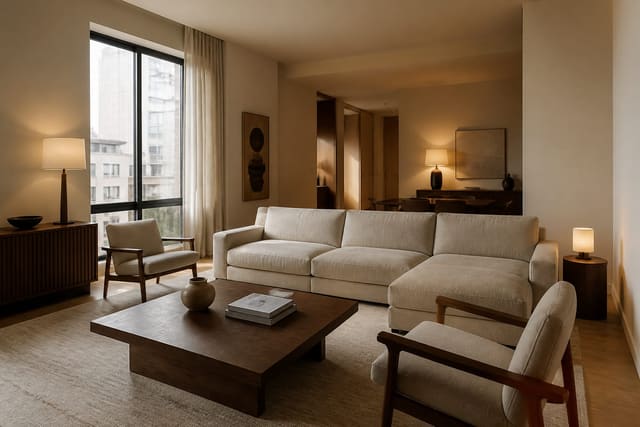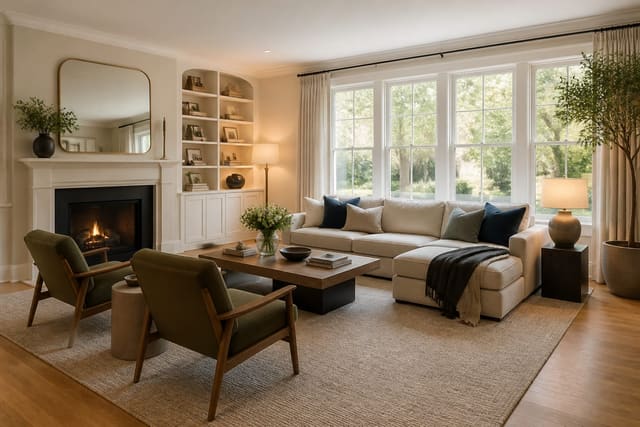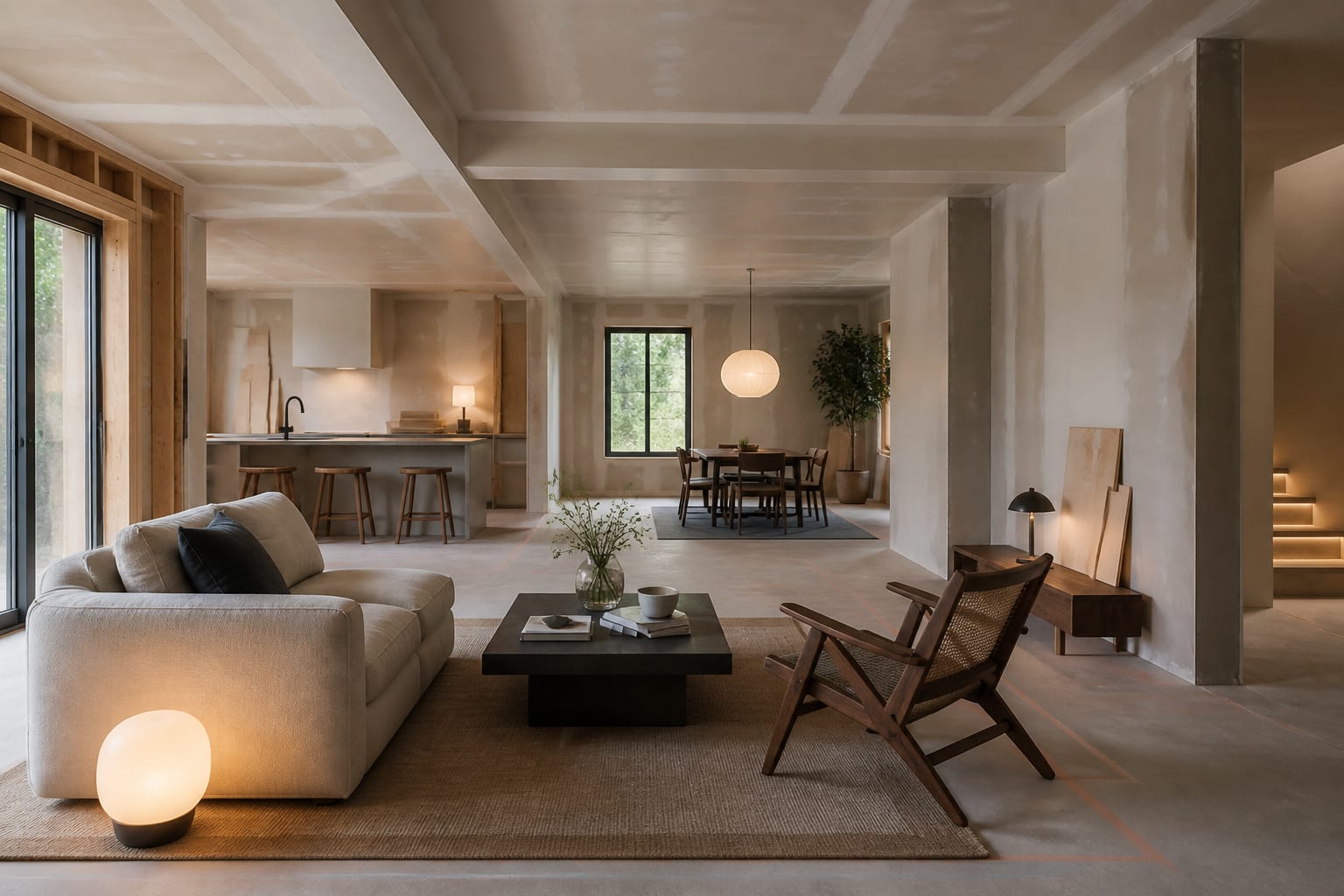
AI interior design for a new build home means turning floor plans, builder renderings, site photos, and finish samples into visual previews of layouts, colors, lighting, and furniture before construction finishes. This lets you make the five or six decisions that actually matter, such as paint, lighting, and furniture scale, before drywall closes rather than in a post-closing panic. A builder's finish package is a construction plan, not a design plan, so previewing early closes that gap.
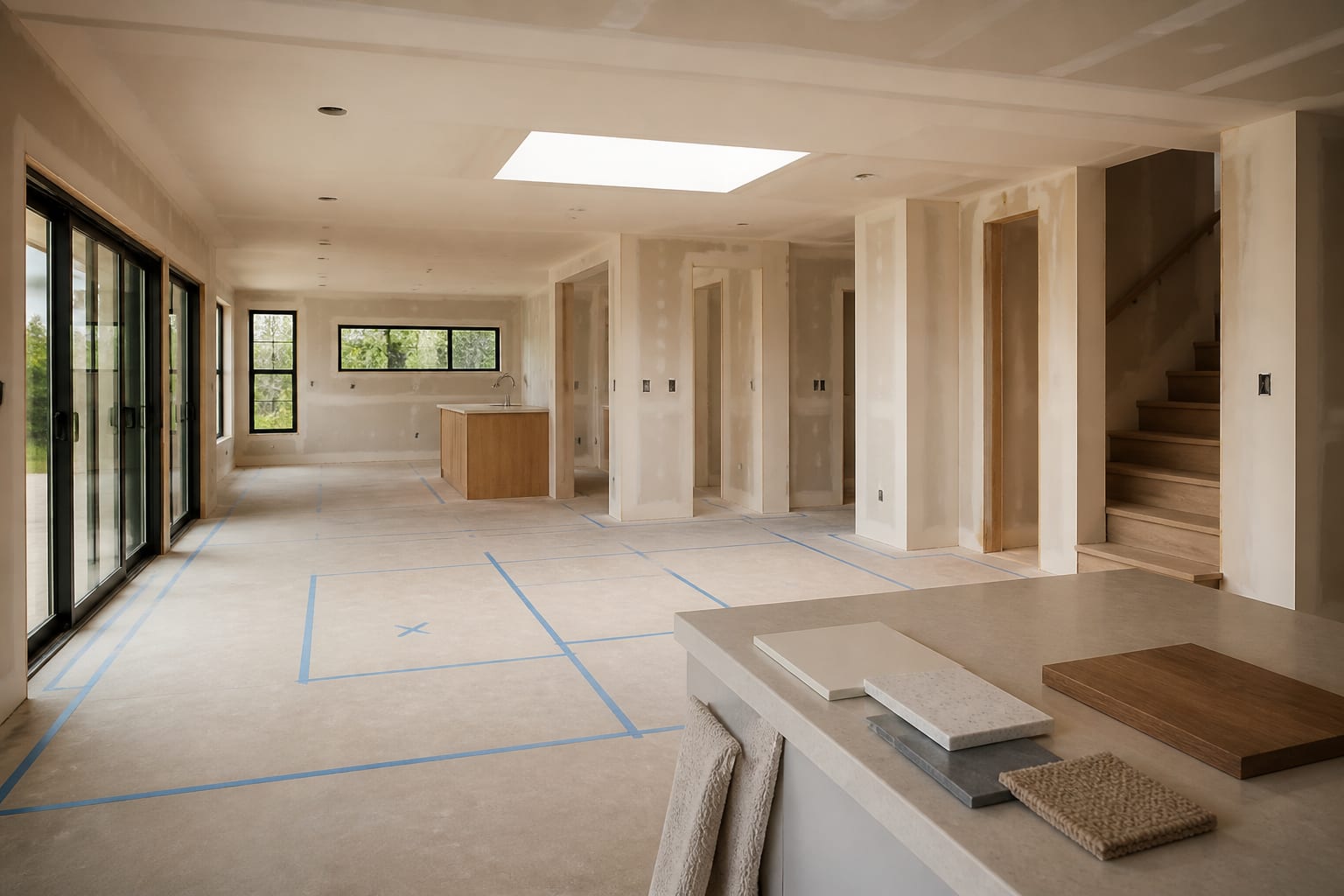
Can AI actually help before the house is complete?
Yes. A floor plan gives the AI room proportions, a model-home photo gives it architectural language, and a construction-site photo shows ceiling height, window placement, and sightlines. If the build is part of a larger project, plan rooms together rather than as separate shopping carts; the same logic applies in a whole-home AI design plan.
The advantage is as emotional as it is practical. Seeing a warm white kitchen against your actual flooring, or a 96-inch sofa under the planned living-room windows, turns a folder of swatches into a room you can actually judge.
What should you decide before drywall closes?
Decide anything that gets expensive once walls are sealed. Paint can wait, but electrical boxes, sconce locations, blocking for heavy mirrors, and pendant placement cannot. Use AI previews to lock in choices before the electrician and framer move on to the next phase.
Prioritize the open-plan living area first, since a mistake in one zone bleeds into the next. Decide whether the living room centers on a fireplace, a television, a window wall, or conversation, then build lighting and furniture around that anchor.
- Island pendants: shades 30-36 inches above the counter, with 24-30 inches between pendants depending on fixture width.
- Dining chandeliers: hang 30-36 inches above the table, positioned over the table's final location rather than the room's geometric center.
- Drapery rods: mount 6-10 inches above the window casing, with panels landing within half an inch of the floor, to make standard ceilings feel taller.
Decide early whether builder-installed blinds stay, get layered with drapery, or come out entirely.
Which room-by-room order prevents costly second-guessing?
Set permanent visual anchors first, then use AI to test furniture scale and softer layers around them. This order stops you from buying a sofa to match a countertop that turns out to look gray under real light.
- Kitchen: Test cabinet color, backsplash tone, pendants, stools, and hardware together. A 42-inch island aisle feels generous; 36 inches is usually the practical minimum with stools tucked in.
- Living room: Test rug size before the sofa arrives, usually 8x10 feet for a smaller seating area or 9x12 feet so all front legs of the furniture sit on the rug.
- Primary bedroom: Plan around the bed wall. A king bed is 76 inches wide and needs 24-30 inch nightstands plus reachable sconces or lamps.
- Entry: A 36-inch console can work in a narrow foyer if the remaining walkway stays near 36 inches; a deep cabinet will feel cramped from day one.
- Bathrooms: A mirror 2-4 inches narrower than the vanity looks more deliberate than one floating between sconces.
If floors, cabinets, and counters are already locked in, the AI preview should show how to work with them, not fantasize about replacing brand-new material.
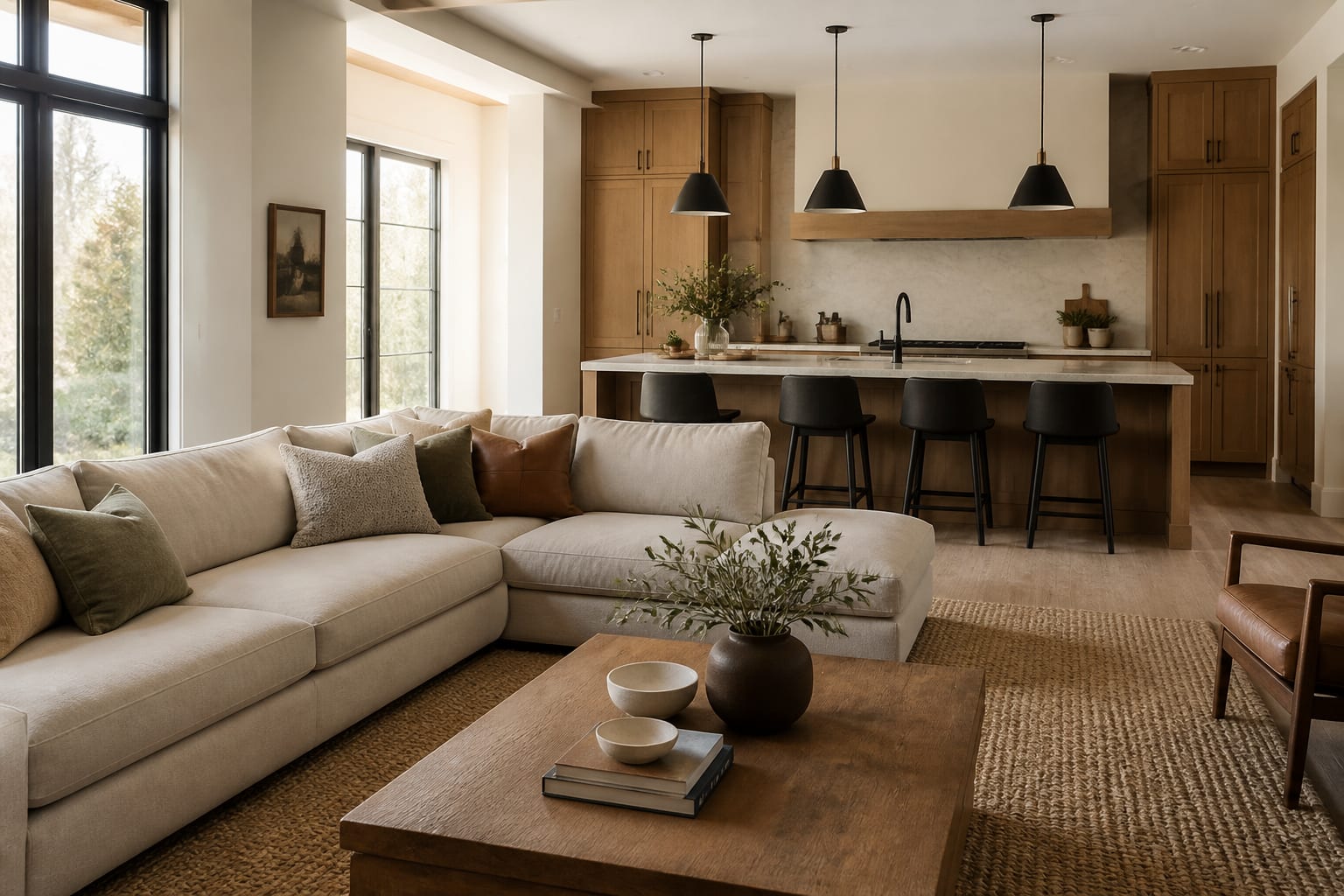
How should you use AI to preview a new build before moving in?
Treat each preview like a design meeting, not a magic picture. Upload the clearest available image, request one design direction at a time, and check results against the floor plan before committing. Use the builder's rendering, a model-home photo with the same layout, or a doorway-level site photo if the house isn't photographable yet.
Be specific in the prompt: ask for a warm modern new-build living room with a 9x12 wool rug, an 84-96 inch sofa, closed storage beside the fireplace, 2700K layered lighting, and no structural changes. The AI may exaggerate ceiling height or simplify trim, but the preview will reveal whether the palette and layout have a future.
Privacy matters more during construction. Floor plans, street-facing photos, and builder documents can reveal addresses or lot numbers, so crop images first and use tools with clear image-handling policies, as covered in private AI room design workflows. Generate several versions per room, testing warm palettes, deeper cabinet contrast, or black fixtures, so you reject bad directions before they become invoices.
What mistakes should you avoid when planning from builder drawings?
Plans confirm that furniture technically fits, not that it lives well. A breakfast nook can block a sliding door, or a television can face afternoon glare, even when the drawing looks fine on paper.
- Buying from dimensions alone. A 120-inch sectional might fit on paper but leave under 30 inches to the patio door; test a chaise sofa or two-chair layout first.
- Choosing finishes in isolation. A pretty cabinet sample, gray floor, and white quartz counter can turn icy together, so preview them as one scene and add warmth with wood, brass, clay tile, or a warmer wall color.
- Ignoring the ceiling plan. Recessed lights, pendants, fans, and chandeliers need to relate to furniture placement, especially if the bed wall might shift after move-in.
- Postponing storage. Mudrooms, pantries, and laundry rooms need hooks, shelves, and baskets sized for real routines; 12-15 inches of shelf depth usually fits folded linens or bins.
- Designing for resale blandness. If a quick sale is likely, add personality that photographs well and removes easily, the same restraint used in an AI redesign for resale.
When is the plan ready enough to buy furniture?
The plan is ready once the largest pieces pass three tests: scale, clearance, and finish compatibility. Don't wait for every pillow to be chosen, but don't order a custom sectional because an empty room looked big on a walkthrough; wide-angle model-home photos exaggerate space.
Before buying, check the AI preview against the measured plan: sofa length, rug size, table width, bed-wall clearance, and door swing. Keep 24 inches beside at least one side of a tight bedroom bed, 36 inches for main walkways, and 30-36 inches behind dining chairs.
Then sequence purchases:
- Buy scale-defining pieces first: sofa, dining table, beds, rugs, major storage.
- Buy lighting once furniture placement is stable enough for fixtures to align with tables and seating groups.
- Buy art, pillows, and accents last, since they're easiest to correct once real daylight reveals the space.
A good plan still leaves room for the first month of living, whether that means adding a desk to a sunny loft or realizing the pendants don't need dramatic stools beneath them. AI gets you close before move-in; daily routines sharpen the final edit.
Frequently Asked Questions
Can AI design a room from a construction-site photo?
Yes. A site photo taken from the doorway at eye level shows ceiling height, window placement, and sightlines, which is enough for AI to preview paint, lighting, and furniture scale even before flooring or cabinets are installed.
Should I choose paint colors before or after move-in?
Paint can wait until after move-in since it's low-cost and reversible, but decide it alongside cabinet and countertop finishes in an AI preview first so the palette doesn't clash once everything is installed together.
How do I keep my floor plan private when using an AI design tool?
Crop out addresses, lot numbers, and other identifying details before uploading floor plans or builder documents, and choose a tool with clear image-handling policies, as outlined in guidance on private AI room design workflows.
What size rug works for a new-build living room?
An 8x10 rug suits a smaller seating area, while a 9x12 rug works when you want the front legs of the sofa and chairs all resting on it. Confirm the size against your floor plan before ordering.
Which furniture should I buy first in a new build?
Buy scale-defining pieces first, including the sofa, dining table, beds, rugs, and major storage. Add lighting once furniture placement is settled, then finish with art, pillows, and small accents last.