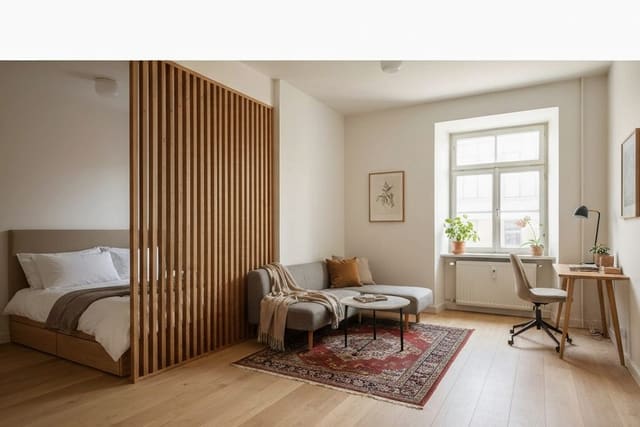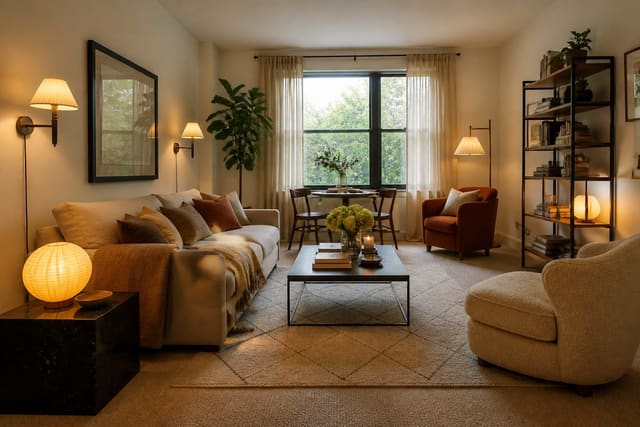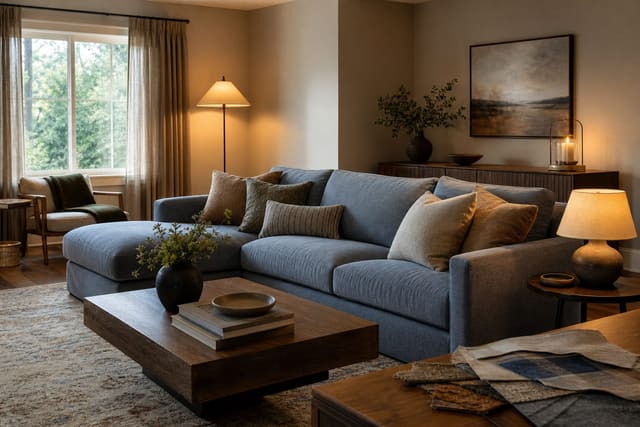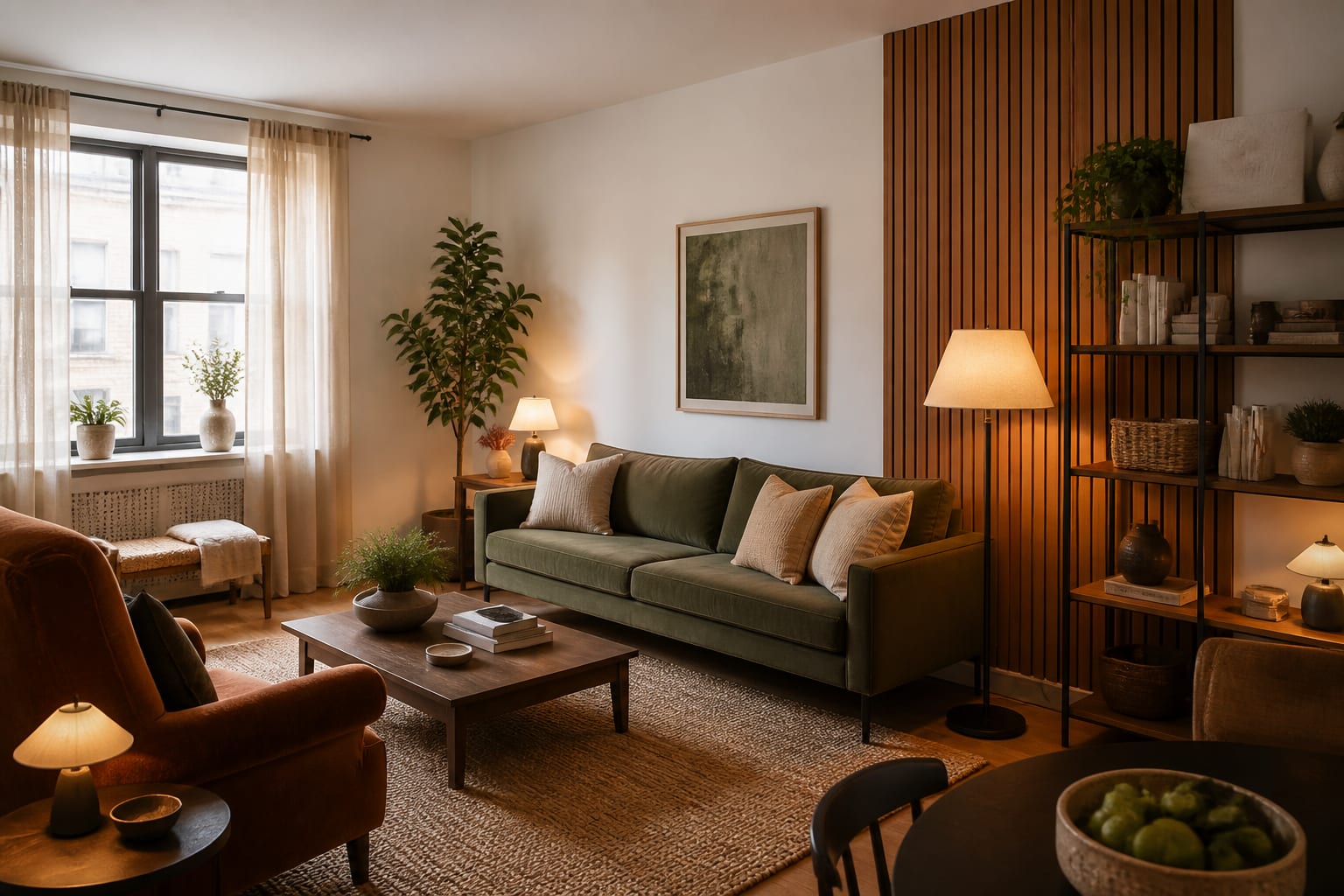
AI interior design for apartments can preview realistic layouts, paint direction, lighting, furniture scale, and removable storage inside a photo of your actual rental. It's most useful for awkward limits like no-drill walls, exposed radiators, or a studio bed visible from the front door. Treat it as a testing tool that must still answer to your lease and tape measure.
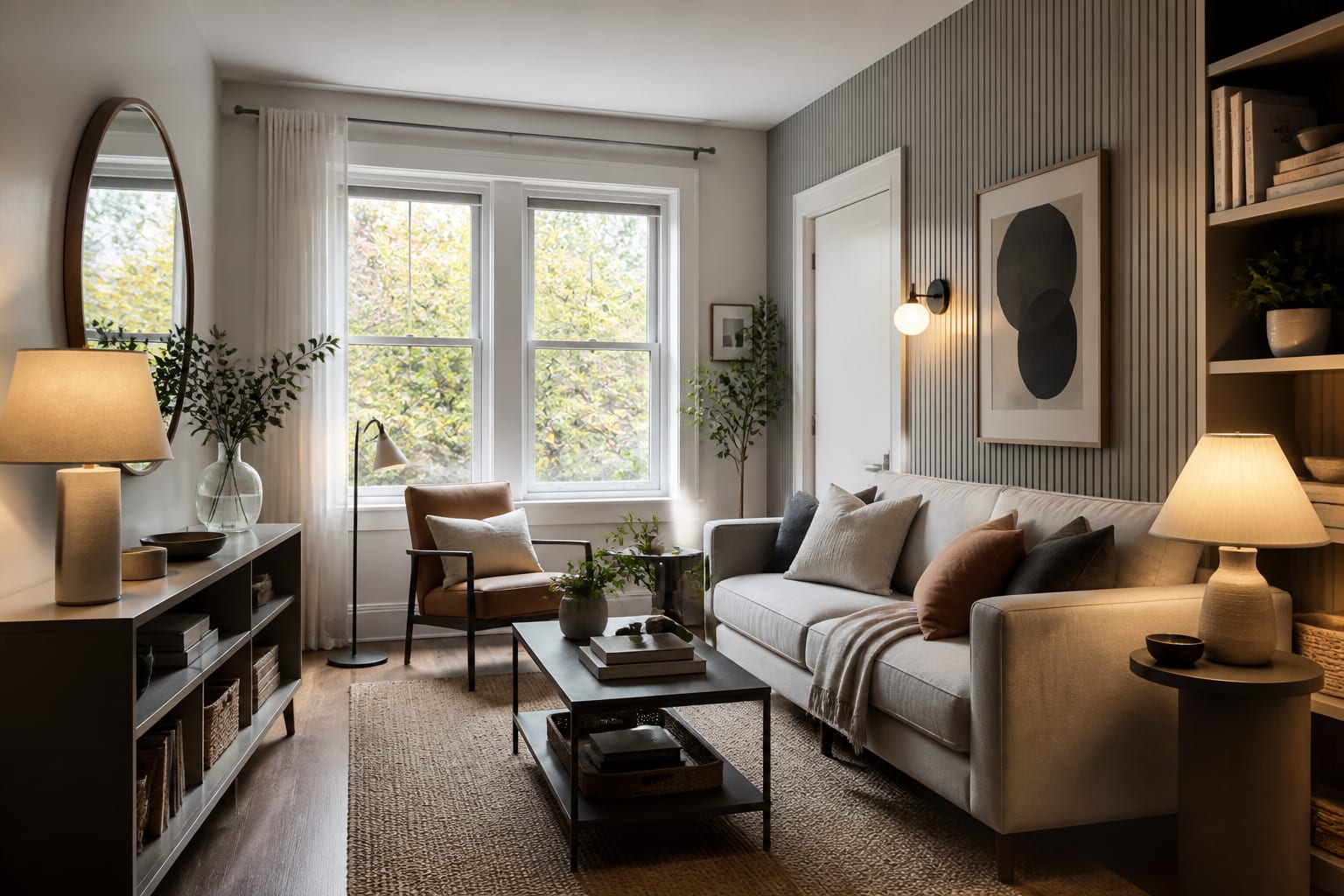
What can AI interior design actually do for apartments?
AI works best on rooms with awkward, fixed limits: a window wall with no outlets, a studio bed in view of the entry, beige carpet you can't remove, or a kitchen too small to justify a renovation. Name those limits in the prompt instead of asking for a "beautiful small apartment." Try: a 520 square foot living room, 84 inch sofa maximum, 30 inch clear path to the balcony, warm 2700K lamps, closed toy storage, peel-and-stick backsplash, no drilling into tile.
Specific prompts reveal real consequences: a 9x12 rug overwhelming a narrow room, a dark accent wall flattening a north-facing bedroom, or a storage cabinet at the entry solving more than another accent chair. For a studio, use a dedicated AI studio apartment design workflow so the sleeping, seating, and eating zones get judged as one plan instead of three separate images.
What apartment limits can AI not see for you?
AI may draw shelving over your breaker panel, add pendants where there's no ceiling box, or erase a baseboard heater because it ruins the composition. Every preview is a sketch that still answers to the lease, the tape measure, and the superintendent.
- Lease rules decide what's reversible. If painting, tile changes, or adhesives are forbidden, the image isn't permission; use tension rods, removable art rails, and freestanding storage instead.
- Mechanical fixtures need clearance. Never let a preview hide a radiator, PTAC unit, or return vent behind furniture; leave several inches of open air around them.
- Door swings beat style. A cabinet that looks perfect on screen fails if a closet door can't open; protect 30 inches for tight paths and 36 inches for main routes.
- Outlets decide lamp and desk placement. A rendered office nook across the room from power just means extension cords across a walkway.
- Light changes color. North-facing rooms flatten gray paint and cool bulbs; west-facing rooms flare warm colors late in the day. Test direction in the preview, then sample the actual wall.
Owners have more room to maneuver than renters, but condos still restrict plumbing stacks, shared walls, sprinklers, exterior windows, and balcony membranes.
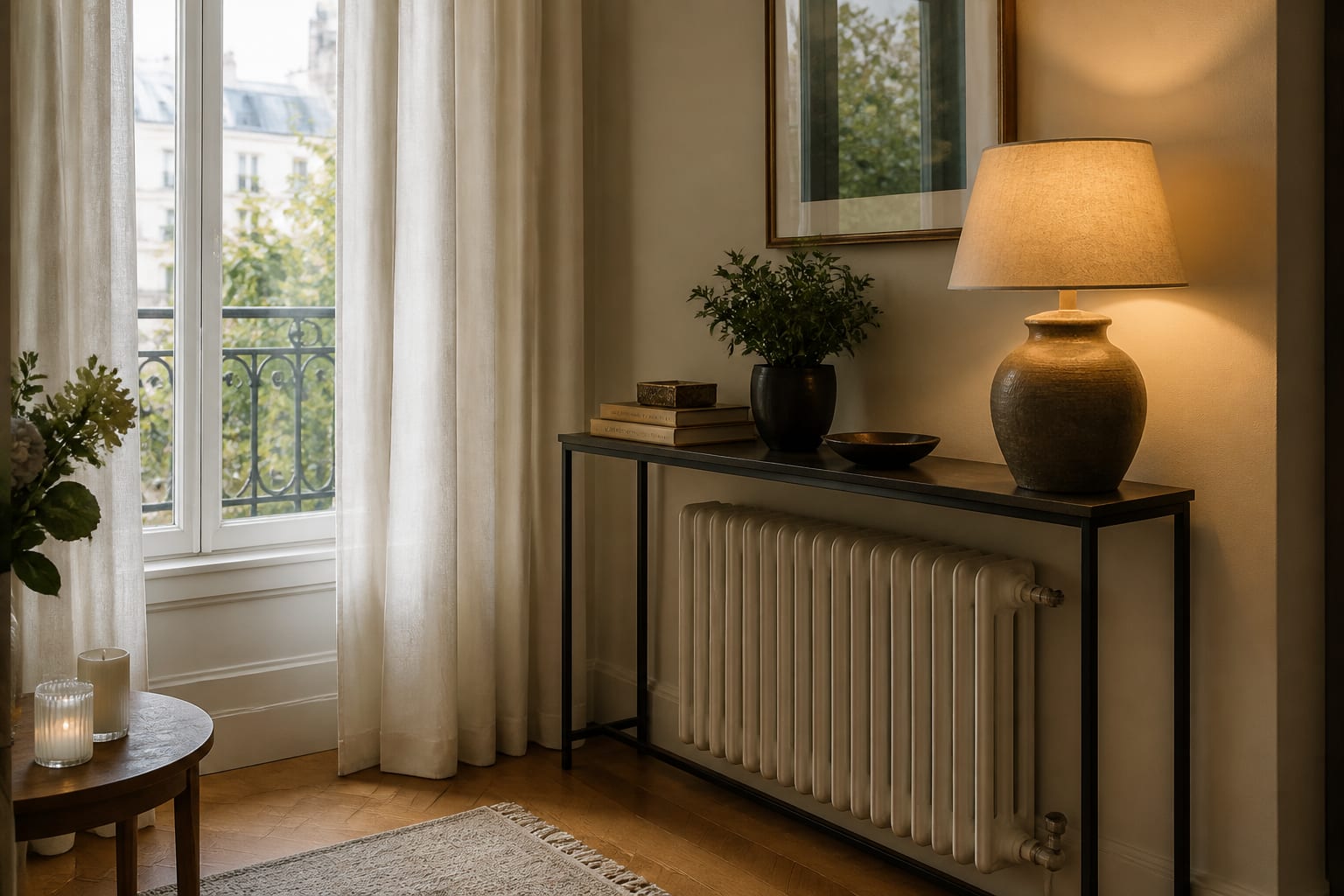
Which renter-friendly changes are worth previewing first?
Test whole-room decisions before decorative details. In an apartment, the wrong sofa depth or rug size causes more daily friction than the wrong pillow color.
- Paint direction, even if you can't paint. If warm white beats cool gray in the preview, carry that into curtains, bedding, and lampshades instead.
- Lighting: 2700K for living rooms and bedrooms, 3000K for kitchens or desks. Don't mix cool daylight bulbs with warm lamps in one small room. Plug-in sconces at 60-66 inches can frame a bed or sofa without hardwiring.
- Storage as architecture: a 15-18 inch deep cabinet works in a narrow entry; a 24 inch wardrobe can steal the whole path. Floor-standing, door-fronted storage hides visual noise best.
- Rugs: a 5x7 can define a small seating area, but an 8x10 usually works better when front furniture legs need to land on it.
Upload the clearest photo, taken from the doorway or farthest corner at chest height, showing floors, windows, door swings, heating units, and the storage wall. Name real limits in the prompt: try "a 640 square foot living room, 78 inch sofa maximum, 8x10 rug, 30 inch path to the balcony, closed storage under 16 inches deep, warm lamps, no ceiling wiring, no wall demolition." Mention ugly carpet or orange cabinets directly rather than letting the tool crop them out.
Run separate versions for separate priorities: one for storage, one for entertaining, one for a work-from-home setup. For mismatched floors, counters, or trim, use the logic in this clashing undertones room fix: identify the loudest fixed material and make new pieces support it.
Judge every result harshly. Did it widen the room, erase the radiator, add recessed lights, hide the AC, or invent a bigger window? Keep the palette direction; reject fake architecture.
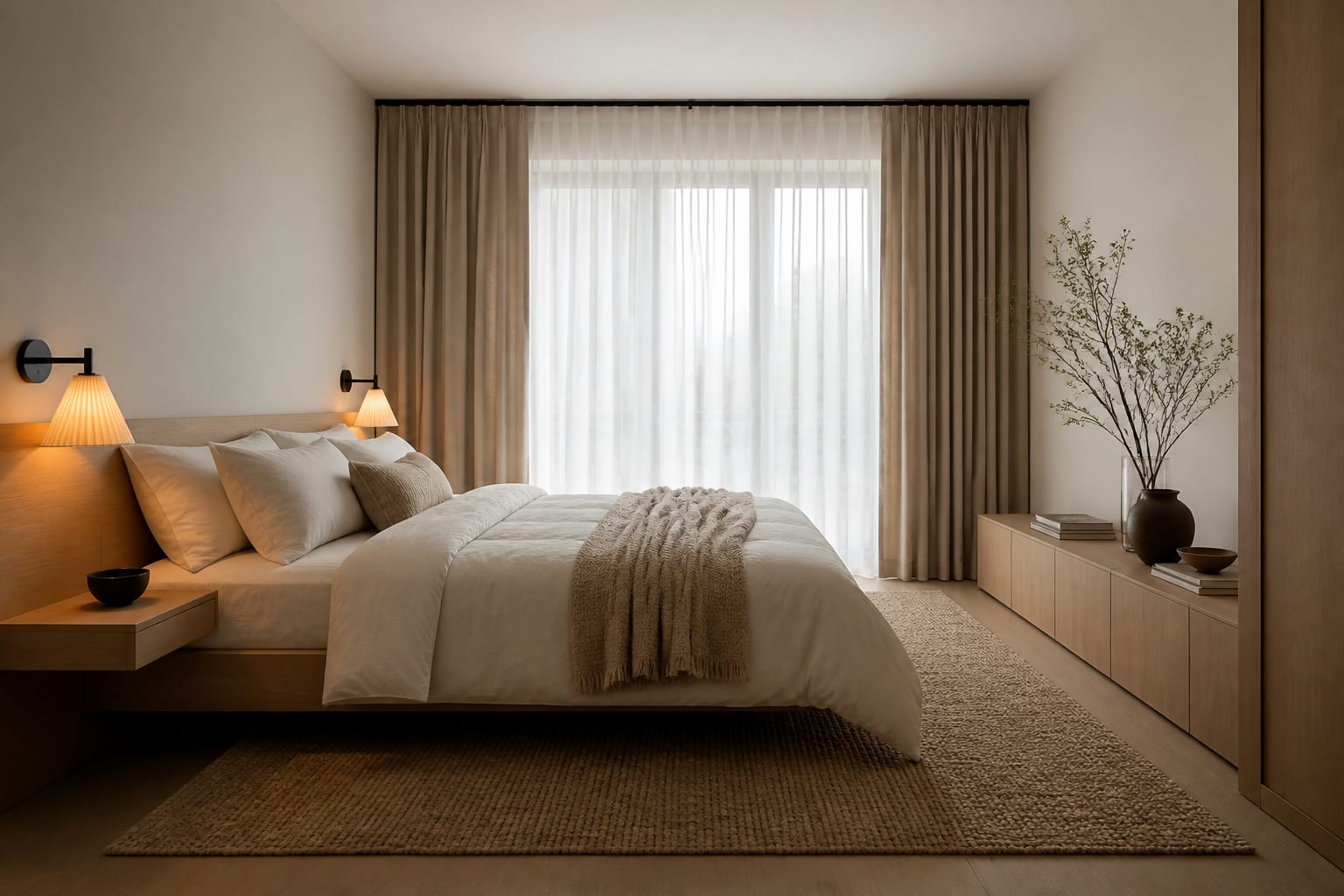
What mistakes should you avoid with AI apartment ideas?
- Buying from the prettiest preview. A sectional that looks calm in a wide shot may be 96 inches long in reality, leaving only 22 inches to pass the coffee table. Measure the wall, elevator, stair turn, and doorway first.
- Prompting for renovation language in a rental. Built-in banquettes, new pendants, tiled showers, and custom millwork produce seductive images but the wrong instincts. Ask for freestanding benches, plug-in lighting, and removable panels instead.
- Letting the AI erase lease-colored surfaces. Beige carpet, cherry cabinets, black granite, and yellow tile all have undertones; if the preview covers them with fantasy flooring, you lose the chance to coordinate around what stays.
- Making everything tiny. Small apartments need fewer, stronger pieces, not six apologetic mini items. A 72 inch sofa, one real storage cabinet, one 8x10 rug, and two good lamps often feels calmer.
- Forgetting move-out. If a change needs patching dozens of holes or scraping adhesive off tile, the reward should clearly outweigh that future labor.
When is an AI apartment plan ready to buy from?
A plan is ready when it survives three checks: the lease allows it, the measurements work, and the fixed finishes look better alongside the new choices. Don't shop from an image that has only passed the style test.
Confirm sofa length and depth, rug size, bed clearance, desk width, cabinet depth, lamp locations, outlet access, curtain height, and every door swing before ordering. Hang curtain rods 6-10 inches above the casing only if the lease and wall allow it; otherwise use tension rods or damage-free shades. Buy in this order: largest furniture first, storage second, lighting third, rugs and window treatments fourth, art and accessories last.
Frequently Asked Questions
Can AI interior design tools override my lease restrictions?
No. AI can show you what a painted wall or new fixture would look like, but it has no knowledge of your lease terms. Always confirm with your landlord or building rules before treating any preview as permission to paint, drill, or install anything permanent.
Will AI accurately show my apartment's radiators and vents?
Not reliably. AI frequently hides or removes mechanical fixtures like radiators, PTAC units, and return vents because they interrupt a clean composition. Check every preview against your real room to make sure heating and ventilation clearances are preserved.
What's the best photo to upload for an apartment preview?
Shoot from the doorway or farthest corner at chest height so floors, ceilings, windows, door swings, heating units, and the storage wall are all visible. This gives the AI the real boundaries of the room instead of a cropped, flattering angle.
How do I prompt AI for a small or awkward apartment layout?
Name the exact constraints: square footage, maximum furniture dimensions, required clearance paths, outlet locations, bulb color temperature, and any no-drill or no-paint rules. Specific prompts produce previews you can actually shop from, rather than generic "beautiful small apartment" images.
Are AI-generated apartment renovation ideas safe to act on directly?
Only after they pass three checks: your lease allows the change, real measurements confirm it fits, and the fixed finishes in your apartment still look right with it. Treat every AI apartment image as a sketch to verify, not a finished plan to purchase from.