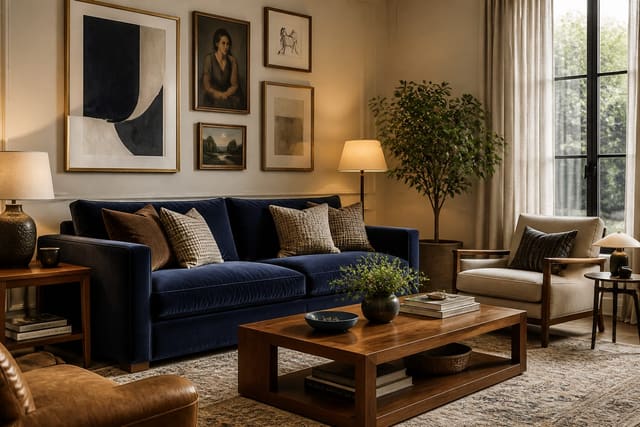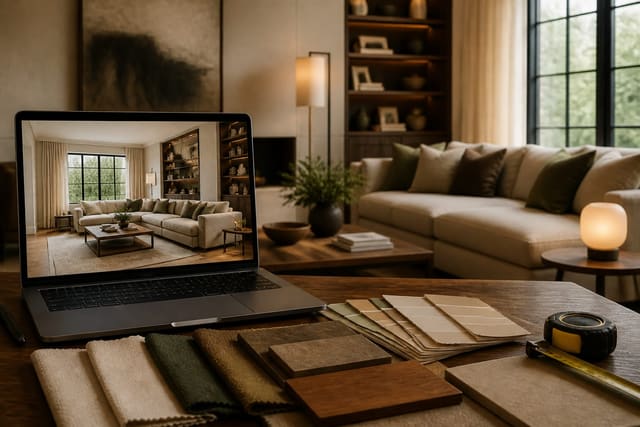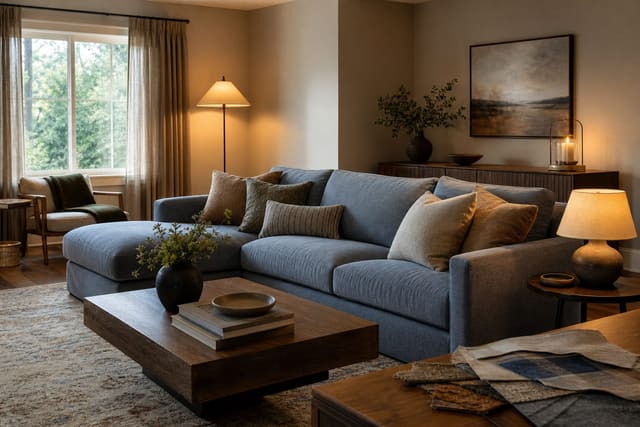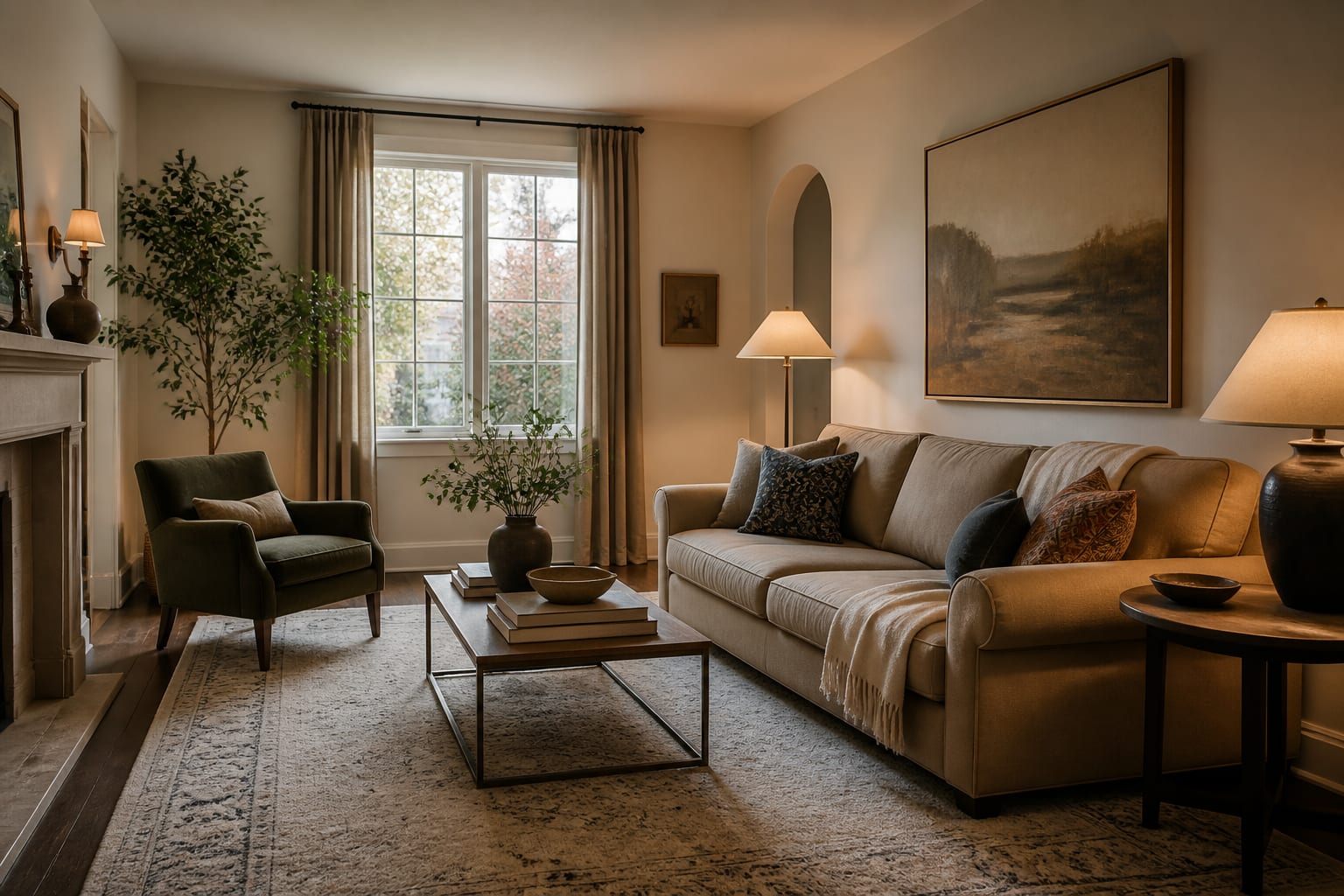
AI room design with existing furniture works when you upload a clear photo, name the sofa, table, or heirloom piece that must stay, and let the tool redesign only the flexible layers around it. Treat that furniture as a fixed constraint, not a placeholder, and the preview will make it look chosen instead of accidental.
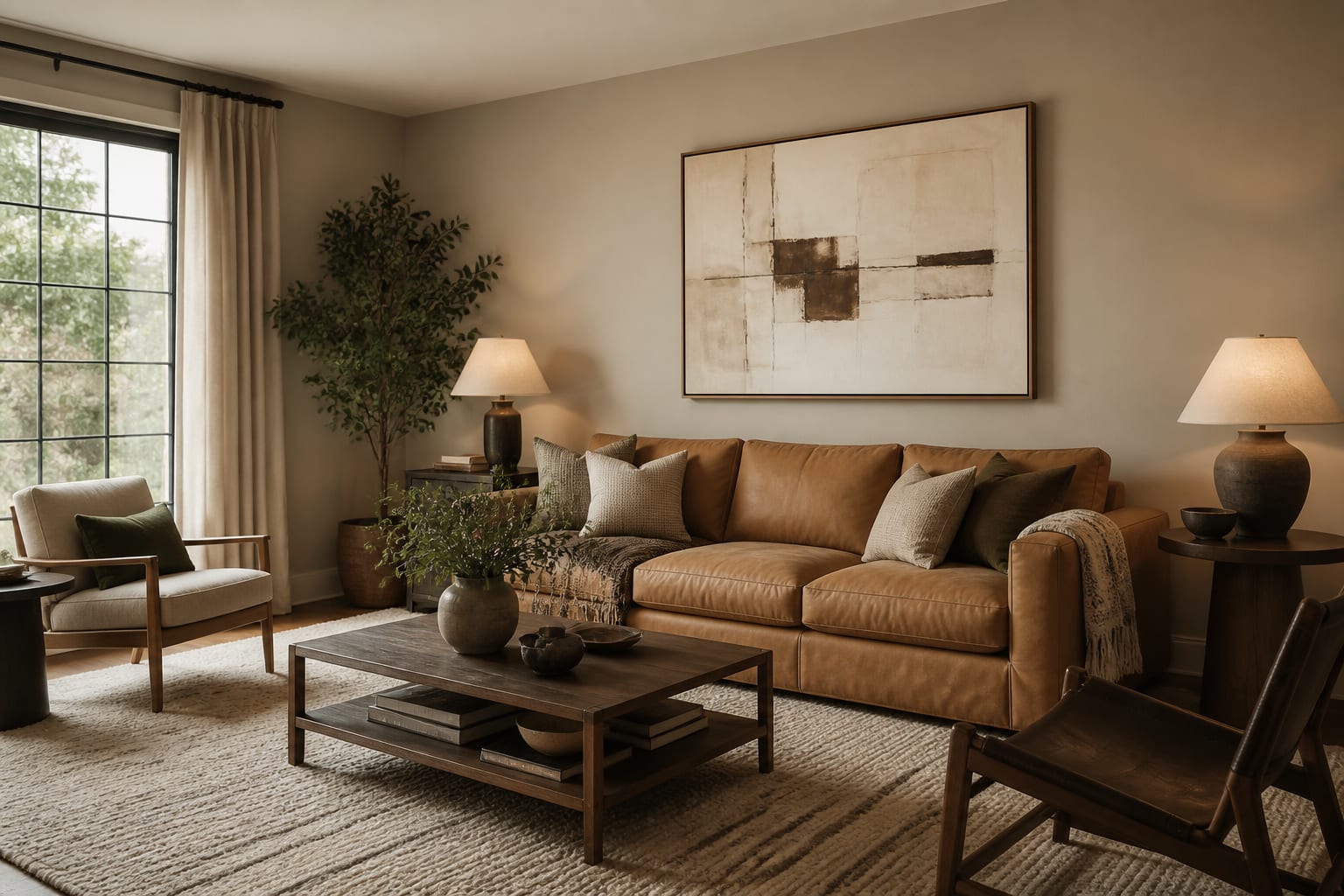
Can AI keep your existing furniture in the redesign?
Yes. AI room design keeps existing furniture in place when the photo clearly shows the pieces, the prompt names what must stay, and you judge the output against real dimensions. It works best when you ask the tool to redesign around a specific sofa, bed, dining table, cabinet, or rug instead of requesting a totally new room.
A practical prompt beats a poetic one: "Redesign this living room while keeping the 84-inch camel sofa, oak coffee table, black window frames, and current floor. Change the rug, lamps, wall color, art, curtains, and storage so the sofa looks intentional." That wording tells the tool what is permanent, what is flexible, and what success looks like.
If one piece is the emotional anchor, try a focused workflow like redesigning around one existing piece before testing a whole-room makeover. A single strong constraint usually beats a vague request for a "fresh room."
How do you make old furniture look intentional in a redesign?
Give the kept piece a design role: a sofa as the anchor, a dining table as the warm wood note, a cabinet as the character piece. Then use the surrounding layers to justify why it belongs:
- Match the rug to the piece, not the floor. An 8' x 10' rug usually supports a standard sofa better than a 5' x 7' because the front legs can land on it, unifying the seating group.
- Repeat one color from the furniture at least twice elsewhere. A walnut table can echo in a picture frame and a woven shade; a navy sofa can echo in art and a small patterned pillow.
- Fix the lighting first. Warm bulbs around 2700K–3000K make older wood, leather, and beige upholstery look richer; cool bulbs can make the same pieces look tired.
- Give it breathing room. Leave 18–24 inches for a side table and protect roughly 30–36 inches on the main walking route.
Control contrast, too. A visually heavy sofa needs a quieter rug and simpler drapery; a dark traditional table pairs better with lighter walls and tailored chairs. Don't ask AI to "modernize everything" unless you want it fighting the furniture you already own.
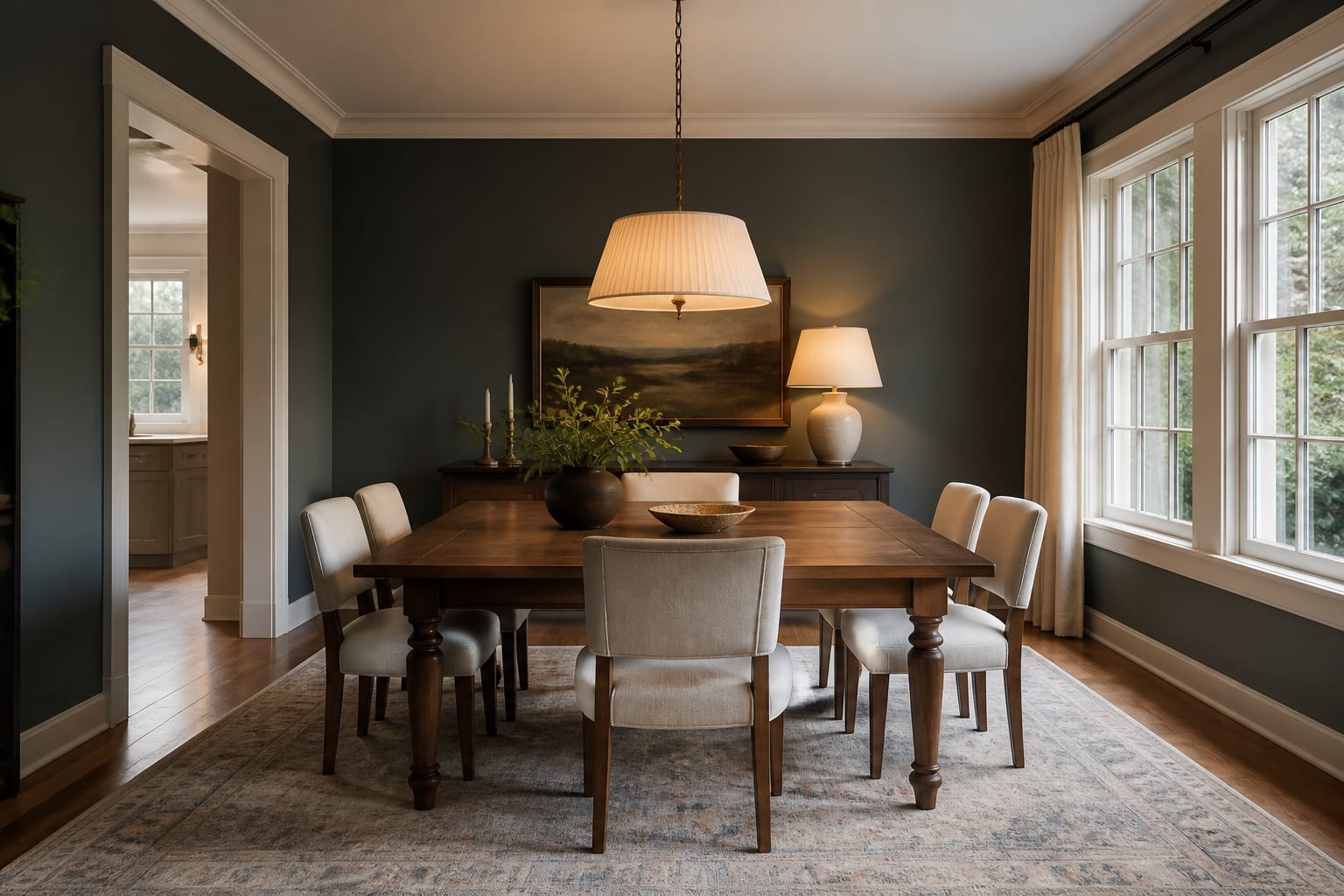
Undertones matter more than expected — a pink-beige sofa beside yellow oak flooring can look wrong even with expensive pieces. Before repainting, check a practical clashing undertones room fix so the AI image doesn't smooth over a conflict your paint samples will reveal.
What mistakes make AI replace furniture you wanted to keep?
AI rarely refuses to keep furniture outright. The failure happens when the prompt leaves the piece negotiable, so the tool quietly "improves" the room by swapping it out.
- Requesting a style without naming the must-keep item. Say "keep the existing 92-inch gray sectional exactly" before asking for warm minimal, traditional, or organic modern changes.
- Uploading a cropped photo. Show the floor, ceiling, windows, doorways, and full furniture footprint so the redesign respects circulation and wall relationships.
- Letting AI alter the color or silhouette of the kept piece. If your sofa is olive velvet with square arms, the preview shouldn't turn it into a cream curved sofa.
- Choosing new items that flatter the image, not the room. A 40-inch round coffee table may look balanced in a preview, but a 24 x 48-inch rectangle may fit a tight path better.
- Treating the old piece as the only constraint. Outlets, window height, pet traffic, and toy storage still shape what actually works.
A useful preview should make the kept furniture feel more resolved, not less visible. If the after-image only works because AI hid the recliner or replaced the dining chairs, tighten the next prompt.
How should you preview a keep-it redesign before you buy?
Upload a straight, bright photo and request controlled variations that preserve the named furniture. Keep the same sofa, bed, table, or cabinet in every version and change only the supporting layers.
Start with three directions — say, one warm traditional, one relaxed modern, one muted-color version — keeping the sofa, floor, windows, and TV wall identical. Let AI vary rug scale, lamp shape, art size, curtain height, wall color, and storage style.
Then compare what repeats. If every strong version uses a larger rug, taller curtains, warmer lamps, and lower-contrast pillows, those are the moves worth testing for real. If only one version works and it depends on replacing the floor or shrinking the sofa, set it aside.
Iteration matters here. A first pass usually reveals what the tool misunderstood; tightening constraints on a second or third pass helps, especially with the approach in iterating AI room design results. Use physical language in prompts — "8-foot ceiling," "north-facing window," "keep 30-inch walkway to the bedroom door" — so the room sounds like a room, not a showroom brief.
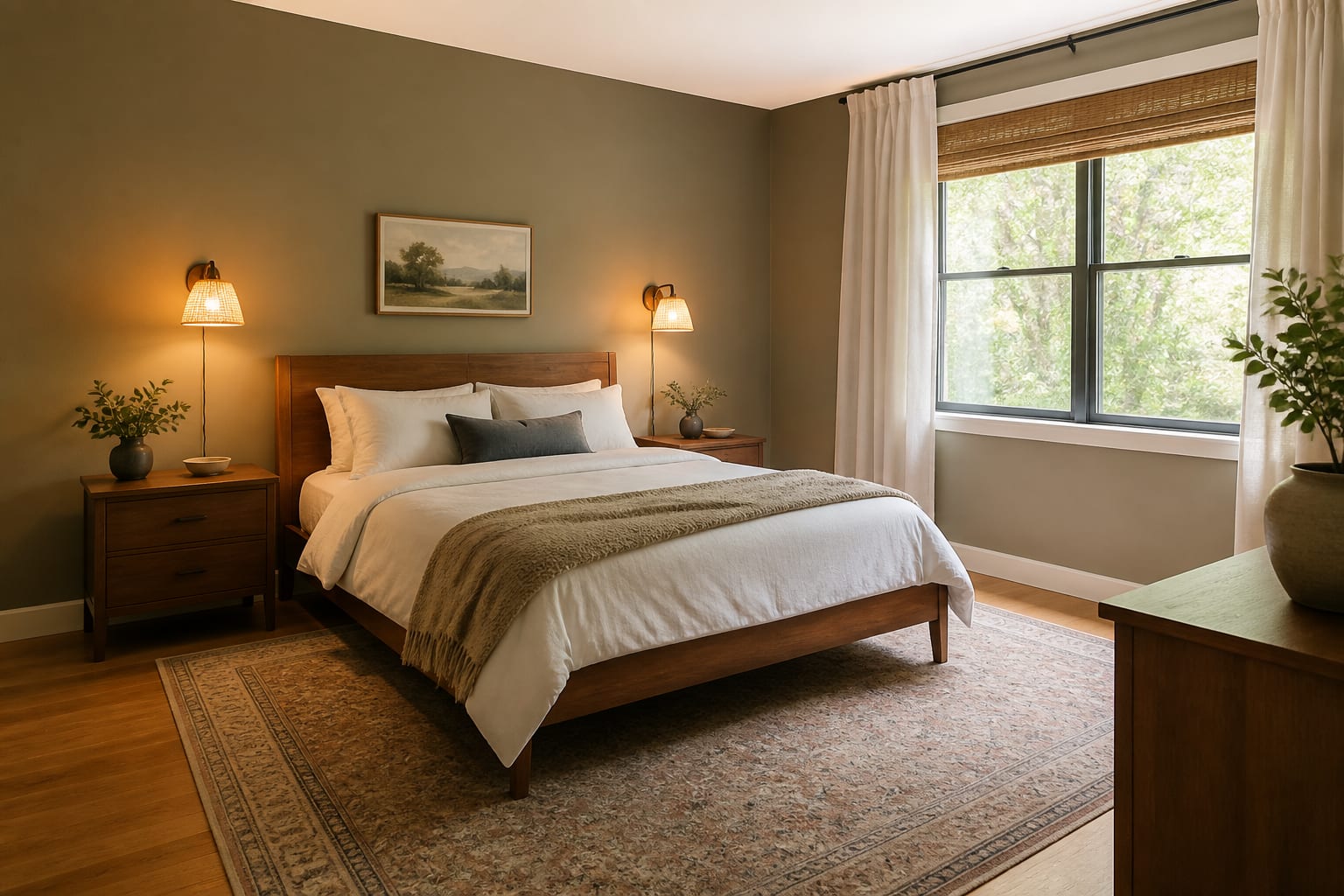
What should you check before buying around a kept piece?
Once the preview looks convincing, slow down and convert it into measurements. Write down rug size, curtain height, lamp height, table diameter, pillow colors, art width, wall color, and metal finish implied by the image.
In a bedroom, confirm whether nightstands need to be 18, 24, or 30 inches wide and whether dresser drawers still open. In a living room, tape the rug corners and coffee table footprint on the floor before ordering anything large. Art should generally center around 57–60 inches from the floor, though a tall headboard or large cabinet may push it higher or wider. Curtains often look better hung 6–8 inches above the casing, with panels touching the floor or hovering about 1/2 inch above it.
Samples still matter: hold paint, rug, wood, metal, and fabric samples beside the kept furniture in daylight and after dark. An AI preview might make a cream rug and beige sofa look related, but real light reveals whether one leans yellow, pink, gray, or green.
Keep the piece if it has good scale, real function, emotional value, or better quality than a rushed replacement. Replace it only if the room keeps failing around it after testing palette, lighting, rug size, and layout. A good AI redesign shows whether the furniture you already own can be the reason the room finally works.
Frequently Asked Questions
Can AI room design keep my sofa exactly as it is?
Yes, if you name the sofa specifically in the prompt and upload a full, well-lit photo showing it clearly. Generic prompts like "redesign this living room" leave the sofa negotiable, so the tool may swap its color or shape. Specify dimensions and details, such as "84-inch camel sofa," to keep it fixed.
What if the AI changes the color of my existing furniture?
This usually means the prompt didn't lock the piece down. Add explicit language such as "keep the olive velvet sofa exactly as shown, unchanged" and re-run the preview. If the color still shifts, the photo lighting or crop may be confusing the tool, so retake it in daylight.
How do I write a prompt that protects furniture I want to keep?
List the fixed items first, then the flexible ones: "Keep the oak table and black window frames; change the rug, lamps, wall color, and curtains." This separation tells the AI exactly what is permanent versus open for redesign, producing far more usable results.
Do I need a special photo for AI to keep furniture accurately?
You need a clear, uncropped, well-lit photo that shows the floor, ceiling, windows, and the full furniture footprint. Cropped or dim photos make it harder for the AI to understand scale and placement, increasing the odds it alters the piece you meant to keep.
How many redesign variations should I generate before deciding?
Generate at least three variations that keep the same furniture but vary the rug, lighting, color, and accessories. Comparing what repeats across the strongest versions tells you which changes are worth making for real, rather than committing based on a single lucky image.
Should I trust the AI preview when buying a rug or lighting?
Use the preview for direction, not final measurements. Confirm rug size, lamp height, and curtain length against your actual room dimensions, and check paint and fabric samples in real daylight before purchasing anything based solely on the image.