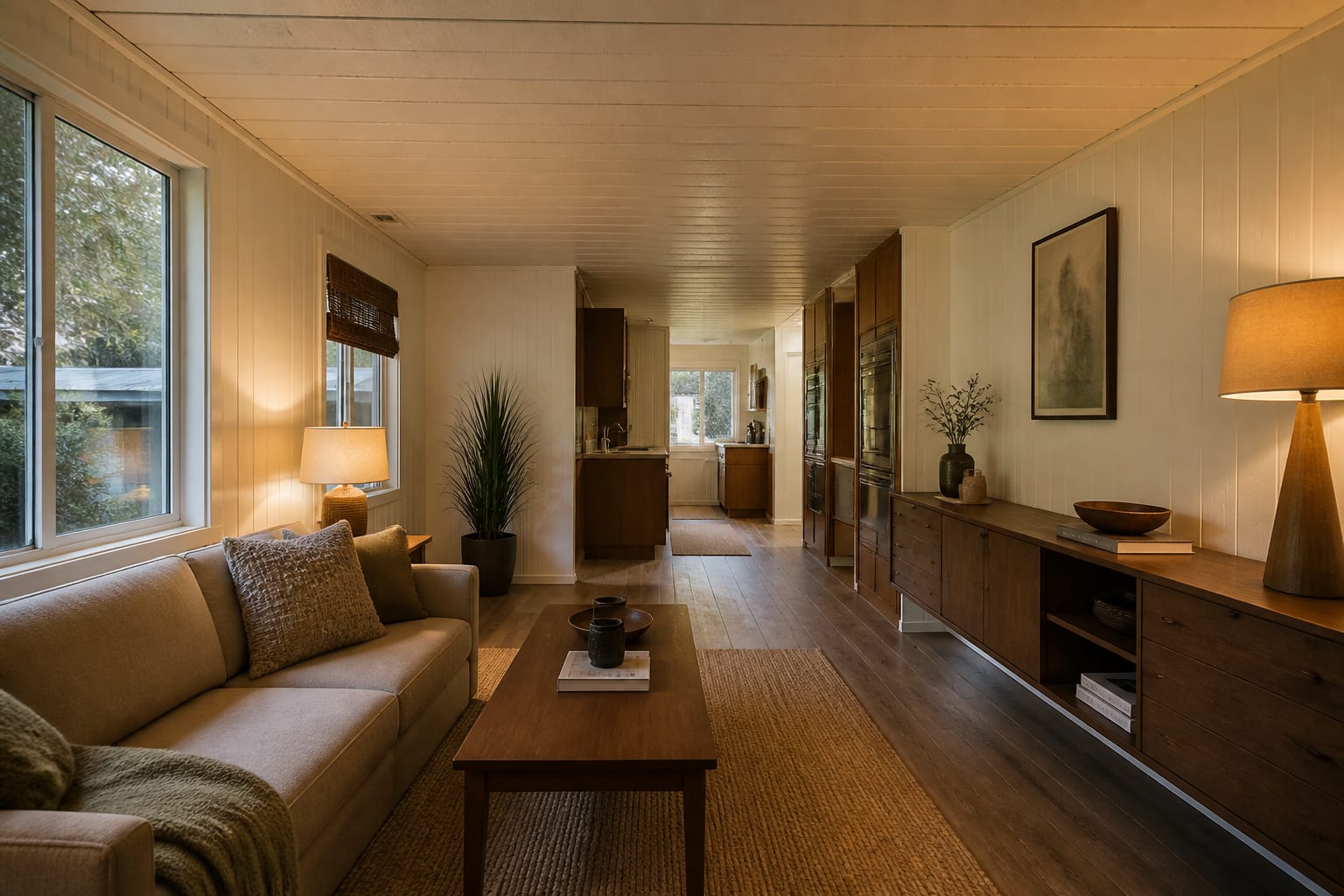
Yes, AI mobile home interior design works when the tool previews layouts, colors, storage, lighting, and furniture scale using your real room photo and actual manufactured-home dimensions, not a fantasy floor plan with widened rooms and taller ceilings. Keep wall lengths, window positions, ceiling height, and cabinet runs intact so the result matches the house you actually own.
How do you get realistic AI previews for a mobile home?
Mobile home rooms are often 12 to 16 feet wide, with long rectangular living areas, compact bedrooms, shallow closets, and kitchens opening directly into the main sitting space. A generic "living room design" prompt is too loose here. Ask for a 72 to 84 inch sofa instead of a deep sectional, a 5 by 8 or 8 by 10 rug instead of one that swallows the aisle, and storage under 18 inches deep where the path is tight.
If the home has a bump-out, angled hall, built-in dining bench, or oddly placed window, name it directly in the prompt and treat it as a feature to solve, not a flaw to erase. The same discipline used for designing unusual floor plans with AI applies: show the constraint clearly and judge the preview by whether it actually addresses it.
What makes a mobile home room feel intentional instead of squeezed?
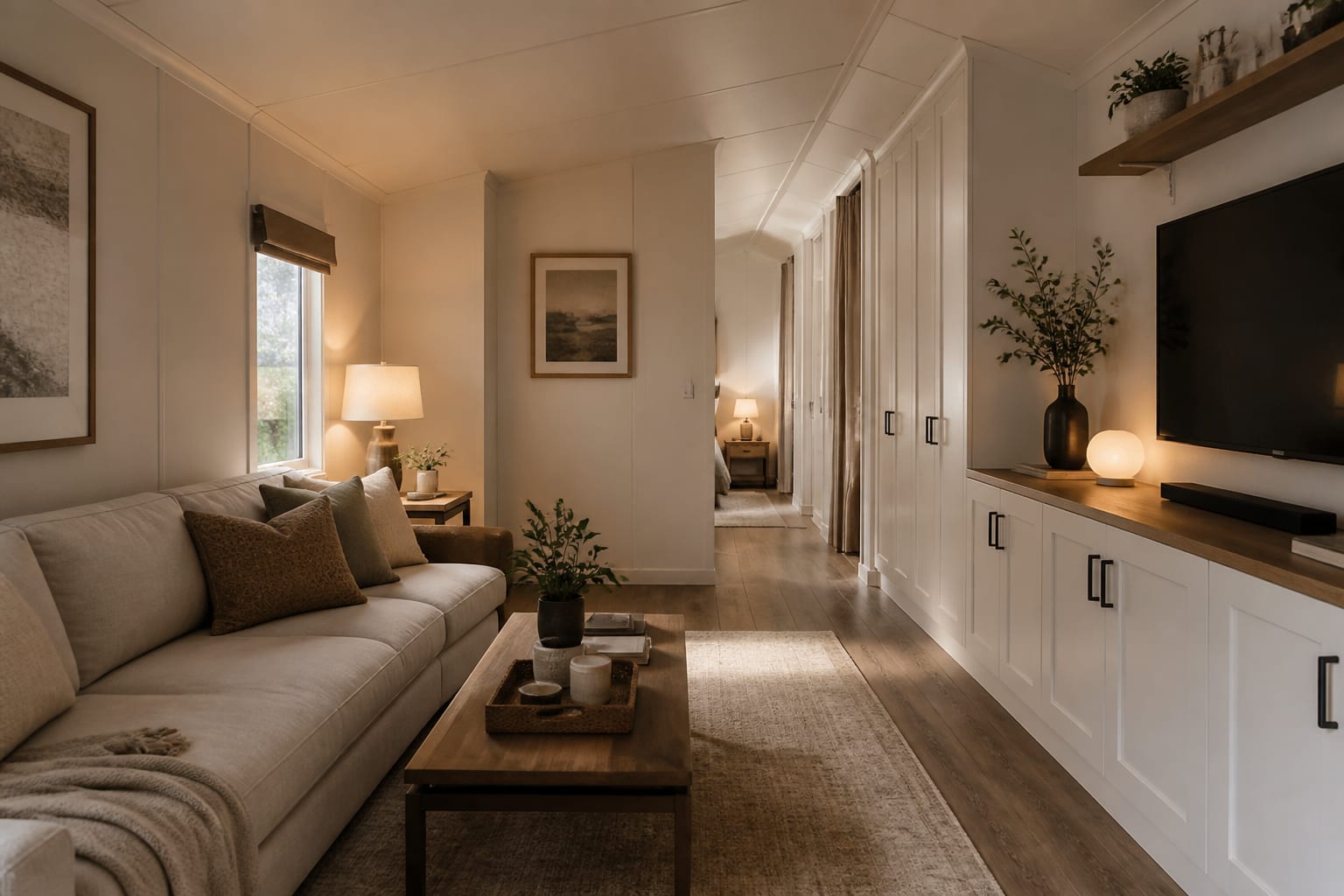
Control the long axis. Many manufactured homes stretch the front door, living room, dining edge, and kitchen into one continuous view, so scattered furniture makes the whole home feel busy within three steps of the entry.
Establish one clear visual lane from the entry onward. Keep the deepest furniture off the main route and let the sofa sit along the longest uninterrupted wall, leaving about 18 inches to the coffee table (16 inches with rounded corners in very tight rooms).
Scale matters more than style. A 40 inch deep sofa can stall a narrow room, while a 34 to 36 inch deep sofa gives similar comfort with less bulk. Favor flush-mount fixtures, short drum shades, sconces, and table lamps over pendants under low ceilings, and use 2700K bulbs in living rooms and bedrooms, reserving 3000K for kitchen counters or laundry task zones.
Which layout moves work in single-wide vs. double-wide homes?
Single-wides usually need corridor discipline; double-wides need better zone definition. Don't force the same open-plan arrangement on both.
- Protect the walking lane — living rooms often share circulation with the entry, kitchen, or hall. Keep 30 inches on the tightest everyday path and 36 inches where people carry laundry or groceries.
- Size rugs to define, not divide — a rug crossing the main route visually cuts the home in half. A 5 by 8 rug suits a compact sitting area; an 8 by 10 works in a wider double-wide.
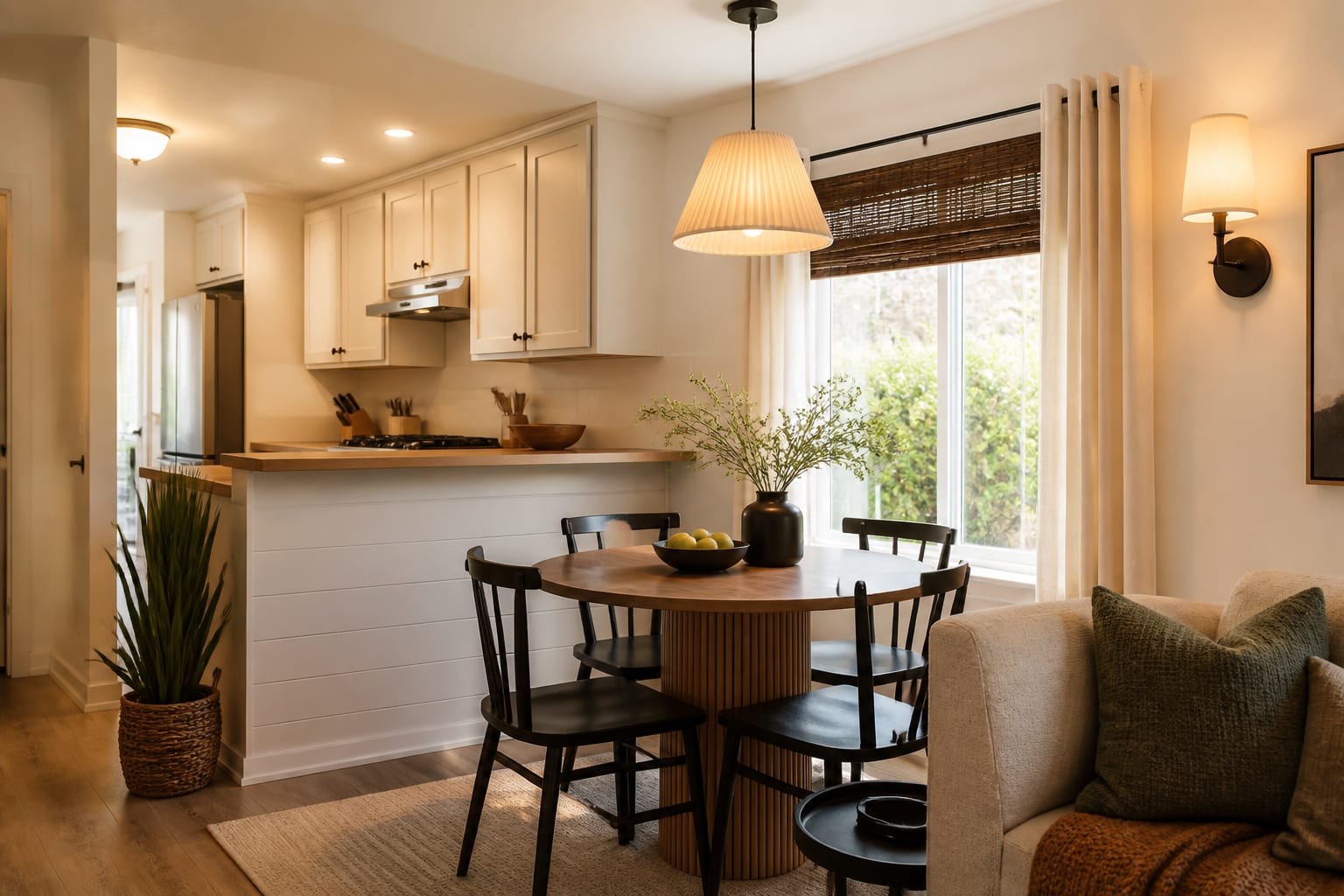
- Keep dining flexible near shallow kitchens — a rectangular table can block cabinets. A 36 to 42 inch round table or a wall bench with two chairs handles meals without blocking the sink route.
- Use vertical, closed storage on the least attractive wall — look for 12 to 16 inch deep units near entries and halls, and save deeper storage for bedrooms or laundry rooms.
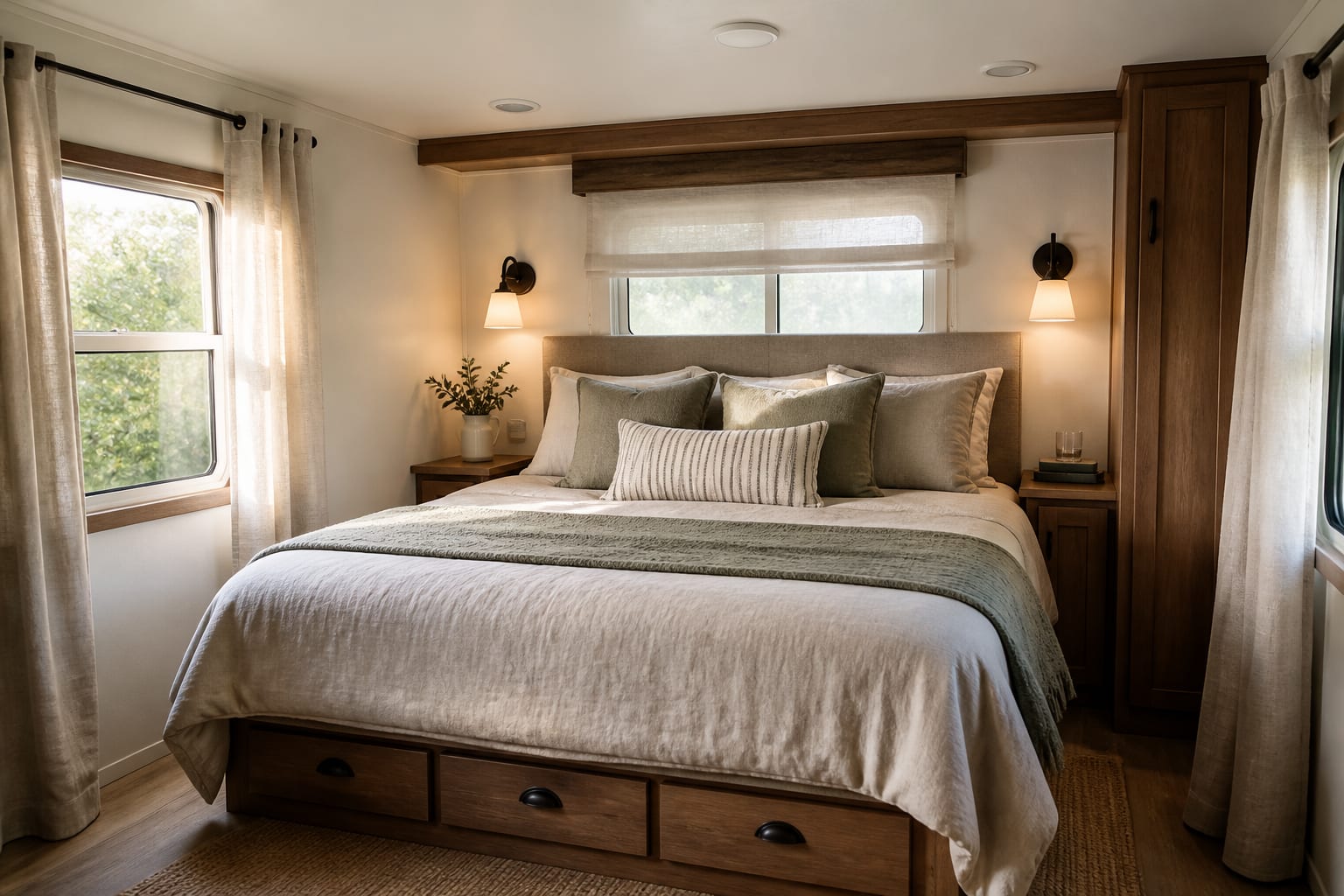
Tiny bedrooms borrow logic from studio apartment zoning with AI: a queen bed is 60 inches wide before the frame, so two 24 inch nightstands may not fit. One 20 to 24 inch table plus a wall shelf often looks more deliberate than two cramped tables.
How should finishes handle paneling, cabinets, and low ceilings?
Mobile homes often carry strong fixed surfaces: vinyl floors, wall panels, oak-look cabinets, laminate counters, metal vents, and factory doors. The goal is to make these look chosen, not erased.
If walls have vertical seams, either lean into the rhythm or quiet it with warm white paint; a cool gray beside honey cabinets can sour the whole room. When floor, cabinets, and counters disagree, pick the bossiest surface and build around it, the same method used for a fixed-finish undertone strategy.
Low ceilings dislike high-contrast horizontal bands, so keep drama to one strong area: a cabinet color, a patterned runner, or a vertical art stack. Curtains help more than expected — mount rods 4 to 8 inches above plain casing and let panels land within 1/2 inch of the floor, or use tension rods and inside-mount shades where wall panels are delicate.
How do you test a mobile home design with AI before you buy?
Upload a straight photo from the main doorway or farthest corner, keeping floor line, ceiling line, windows, vents, built-ins, door swings, and cabinet edges visible. A strong prompt might read: design a single-wide living room with the existing wall paneling, a 78 inch sofa, a 5 by 8 rug, 30 inch path to the kitchen, closed storage under 16 inches deep, warm 2700K lamps, light curtains, no wall removal, no new windows, and no change to ceiling height.
Run versions that test one decision at a time: sofa placement, then storage, then palette, then lighting. If the AI removes a vent, widens the hallway, changes the cabinet run, or turns a low window into a picture window, keep the mood but reject the layout.
What mistakes should you avoid in mobile home AI makeovers?
The most common mistake is letting the preview solve the wrong house — a pretty image is useless if it depends on extra width, taller ceilings, or a missing built-in.
- Standard suburban furniture scale blocks narrow rooms. A 96 inch sofa may fit one wall, but 76 to 84 inches with slimmer arms leaves a better path.
- Heavy ceiling fixtures lower the room. Use flat flush mounts, table lamps at varied heights, and a plug-in sconce instead of pendants.
- Stark white paint can harshen older cabinets and vinyl. Test warmer whites, mushroom, clay, soft olive, or muted blue against the fixed finishes.
- Open shelving adds visual noise in compact rooms. Closed shoe cabinets, lidded benches, and shallow wardrobes do more work than another display shelf.
- AI can delete practical systems. Protect registers, access panels, furnace closets, electrical panels, and plumbing walls directly in the prompt.
A plan is ready when it survives the tape measure: sofa length and depth, rug size, walkway width, bed clearance, cabinet depth, curtain height, outlet locations, vent clearance, and every door swing. Buy in this order: layout-defining furniture, storage, lighting, rugs and curtains, then art. The goal isn't making a manufactured home impersonate something else — it's making its real proportions feel calm and deliberately designed.
Frequently Asked Questions
Can AI redesign a mobile home interior accurately?
Yes, when the room photo and prompt lock in real dimensions like wall length, ceiling height, window and vent positions, and cabinet depth. Without those constraints, AI tools tend to draw a wider, taller generic room instead of the actual manufactured home.
What sofa size works in a single-wide living room?
Most single-wide living rooms suit a sofa between 72 and 84 inches long and 34 to 36 inches deep. This keeps a 30 to 36 inch walking path open while still providing real seating depth.
How do I keep a low ceiling from feeling lower?
Avoid pendant lights and dark horizontal bands across the room. Use flush-mount fixtures, table lamps at different heights, 2700K bulbs, and curtains hung 4 to 8 inches above the window casing to draw the eye upward.
What rug size fits a narrow mobile home living room?
A 5 by 8 rug suits a compact single-wide sitting area, while an 8 by 10 works better in a wider double-wide layout. Keep at least the front sofa legs on the rug so it defines the seating zone without crossing the main walking route.
Should I trust AI previews for structural changes?
No. AI is strongest for layout, color, lighting, and storage direction, but it can mistakenly remove vents, widen hallways, or delete built-ins. Verify any structural detail, electrical work, or HUD-label requirement against the physical home before acting on a preview.