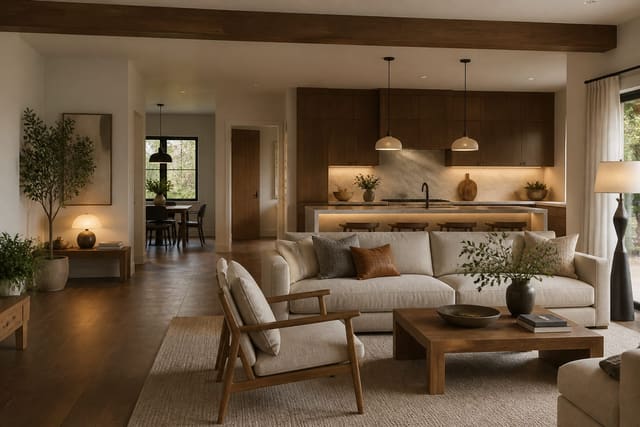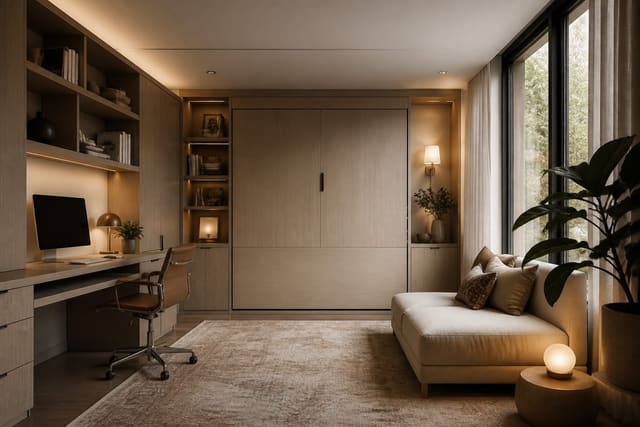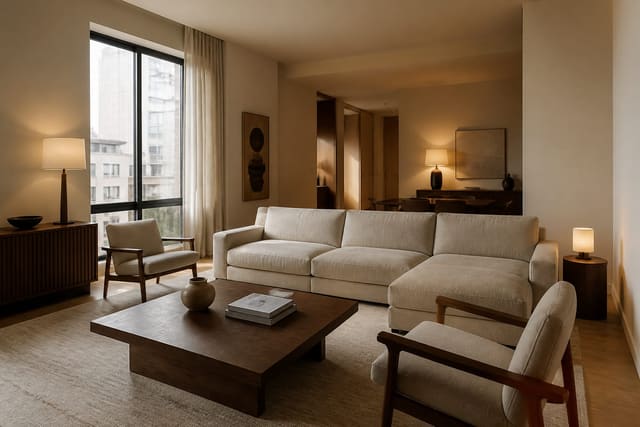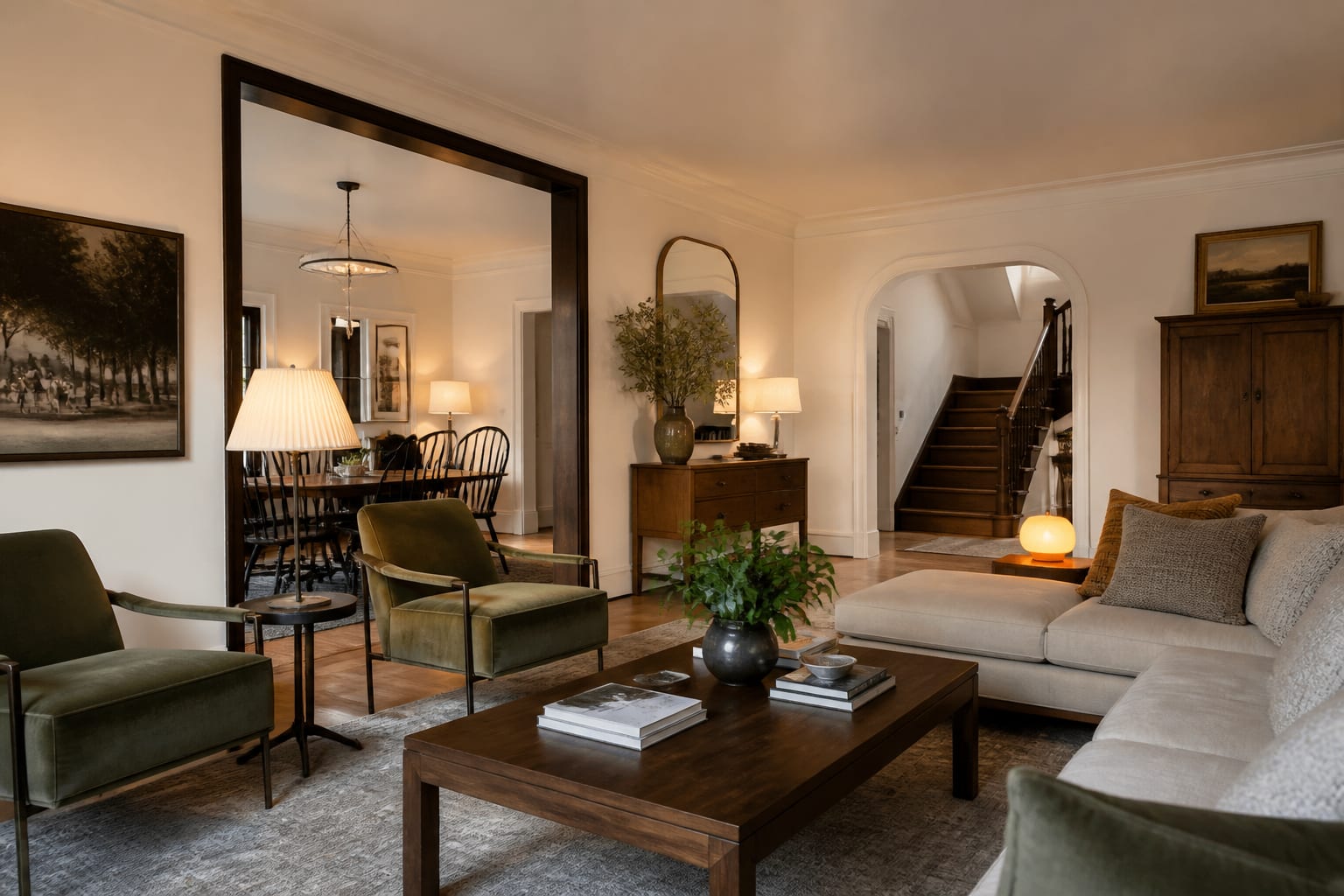
AI multi-generational home design works by letting you preview shared rooms, private zones, furniture scale, palettes, and mixed styles from real room photos before you buy anything. It won't settle a family taste debate, but it makes the conflict visible while the fix is still cheap: a rendered option, not a returned sofa.
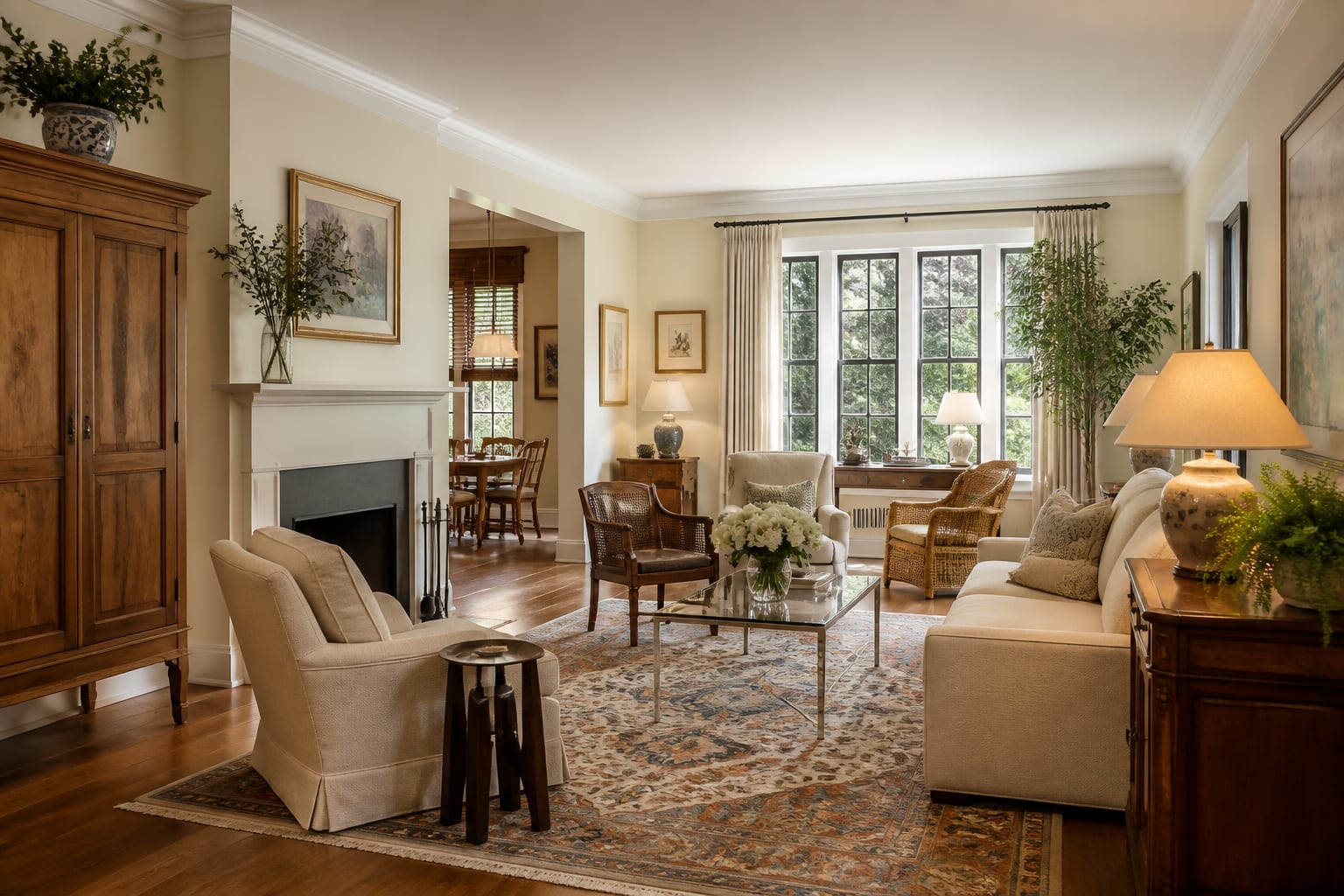
Start with photos of the actual rooms, including non-negotiable pieces like a recliner, piano, or toy basket, and add measurements: sofa wall length, ceiling height, doorway width, rug size. For multi-room projects, a whole home AI design plan treats the entry, living room, kitchen, and guest suite as one sequence, so the house gets a shared grammar instead of a different style behind every door.
Which rooms need one shared style, and which can split?
The biggest mistake is asking every room to carry every preference. Shared rooms need enough consistency to feel calm but enough personality that no one feels erased; private rooms can be more specific because they aren't carrying the whole family's identity.
- Living room: the style bridge. Pair one warm anchor (wood coffee table, framed landscape) with one clean modern anchor (an 84-96 inch sofa in plain performance fabric) so each side gets a visible vote.
- Kitchen: fewer competing finishes. If cabinets are fixed, repeat that tone in stools, runner, or hardware, and hang pendants 30-36 inches above the island.
- Bedrooms: more personal. A grandparent's room may need a 24-30 inch nightstand and a chair with arms; a teen room may need wall storage above 60 inches and a durable desk.
- Bathrooms and hallways: quiet connectors. Warm white walls, simple mirrors 2-4 inches narrower than the vanity, and washable runners link rooms without forcing matching taste.
Dual-use rooms need a clear priority. If a guest room doubles as a sitting room or a den handles overnight visitors, check AI dual-purpose room design so furniture doesn't solve one generation's need by blocking another's.
How do two styles become one house instead of a compromise?
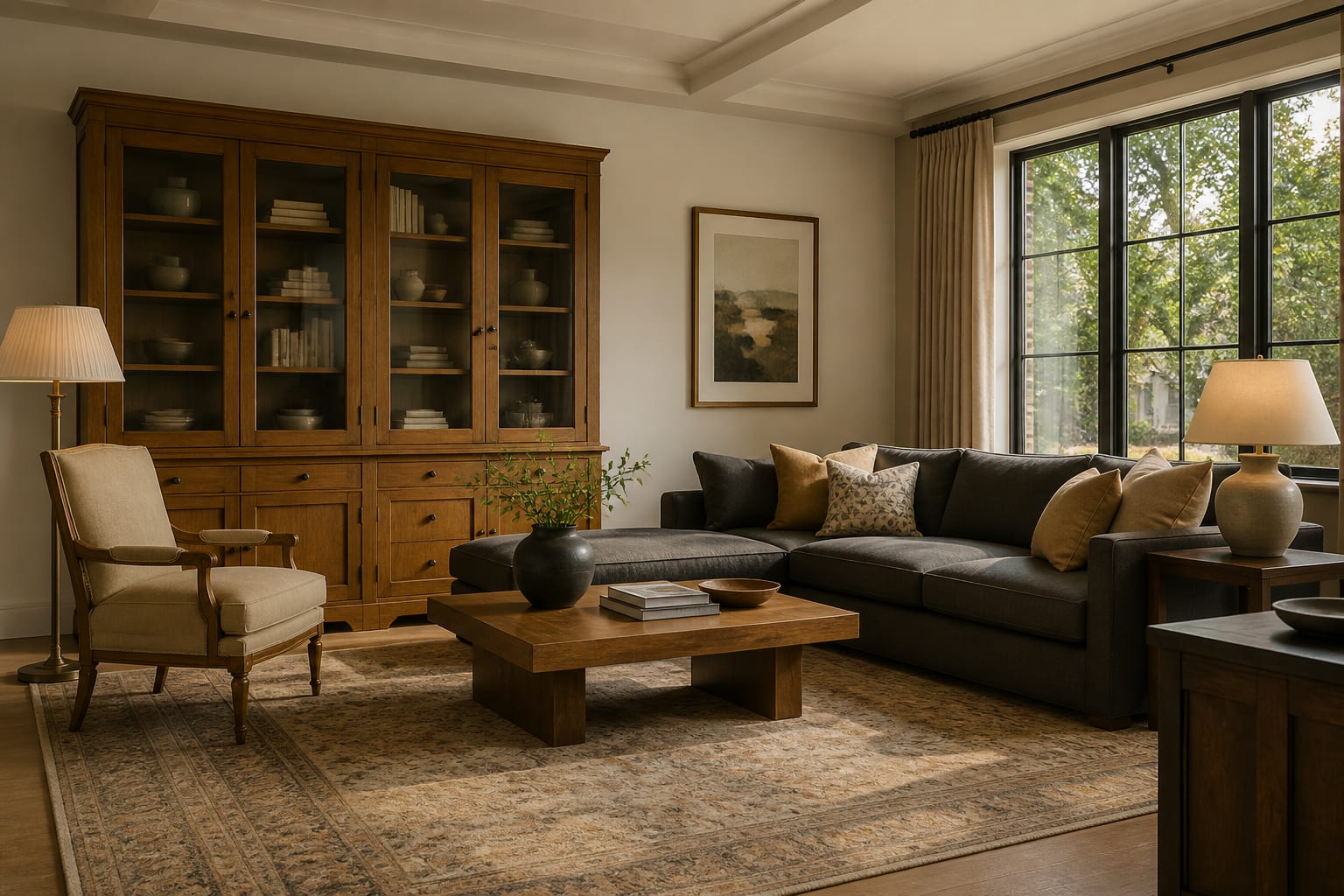
Two styles unify through shared color temperature, scale, and repeated materials, not through matching. Matching is often the enemy in a family home; it makes inherited pieces look accidental and new pieces look timid.
Pick one dominant mood for shared areas. Warm traditional plus modern clean lines works with a connected palette: cream walls, walnut or oak, blackened bronze, olive, clay, linen, and one deep accent. Coastal modern plus antiques works if the antiques are edited, upholstery lightened, and wood tones repeated rather than scattered.
Scale acts as referee. A heavy carved sideboard can sit near a modern table if the table has enough visual weight (a 1.5 inch or thicker top, substantial legs, or a textured rug). A delicate antique chair beside a large sectional needs a companion piece, like a small table or floor lamp, so it reads as an intentional reading corner rather than an afterthought.
Lighting calms mixed styles too. Use 2700K bulbs in living rooms, bedrooms, and dens; reserve 3000K for kitchens or task-heavy baths. Matching lamps aren't required, but matching shade color, like three cream linen shades, makes different bases feel related.
What privacy choices keep everyone comfortable?
Privacy is usually lost through sightlines before square footage. If a bed, medicine cabinet, monitor, or laundry pile is visible from a main route, the house feels more crowded than it is. Layer visual privacy, sound control, and storage access rather than relying on a door alone.
Bedrooms for older adults should avoid obstacle-course layouts: keep at least 30 inches on the easier side of the bed, choose low-pile rugs with a pad, and place lamps within reach without crossing a dark room. A chair with arms at dining-chair height is often more useful than a low accent chair chosen only for looks.
Younger residents need privacy without isolation. A teen room can carry stronger color or gaming storage, but a consistent door color, runner, or sconce style keeps it connected to the rest of the house.
For remote work, caregiving, or returning adult children, privacy becomes a planning requirement. Frosted film, lined drapery, bookcases as partial screens, and closed storage change daily life without construction. Review AI room design privacy options before uploading photos, and crop out addresses, medication labels, or personal papers.
How do you use AI to preview the family style agreement?
Describe the actual household tension in the prompt. Instead of "a beautiful family living room," ask for a multi-generational living room that keeps a traditional wood cabinet, adds a modern washable sofa, includes two supportive chairs, uses a 9x12 rug, leaves 36 inches of circulation to the kitchen, and blends warm neutral walls with muted blue or olive accents.
Run separate previews for the main disagreement: one warmer and traditional, one cleaner and modern, one that splits the difference. Judge the results by what survives: sofa shape, rug size, wall color, lighting temperature, storage wall, and whether the inherited piece looks honored or merely tolerated.
Don't let AI invent impossible architecture. If a preview removes a column, widens a doorway, or turns a small den into a hotel suite, treat it as a style sketch only. The best preview respects the real window, ceiling, and door swing, and reduces family friction while staying buildable.
What mistakes should you avoid?
- Designing shared rooms for the loudest opinion. A house can look decisive and still be unfair; overruled generations often respond with clutter or avoided rooms.
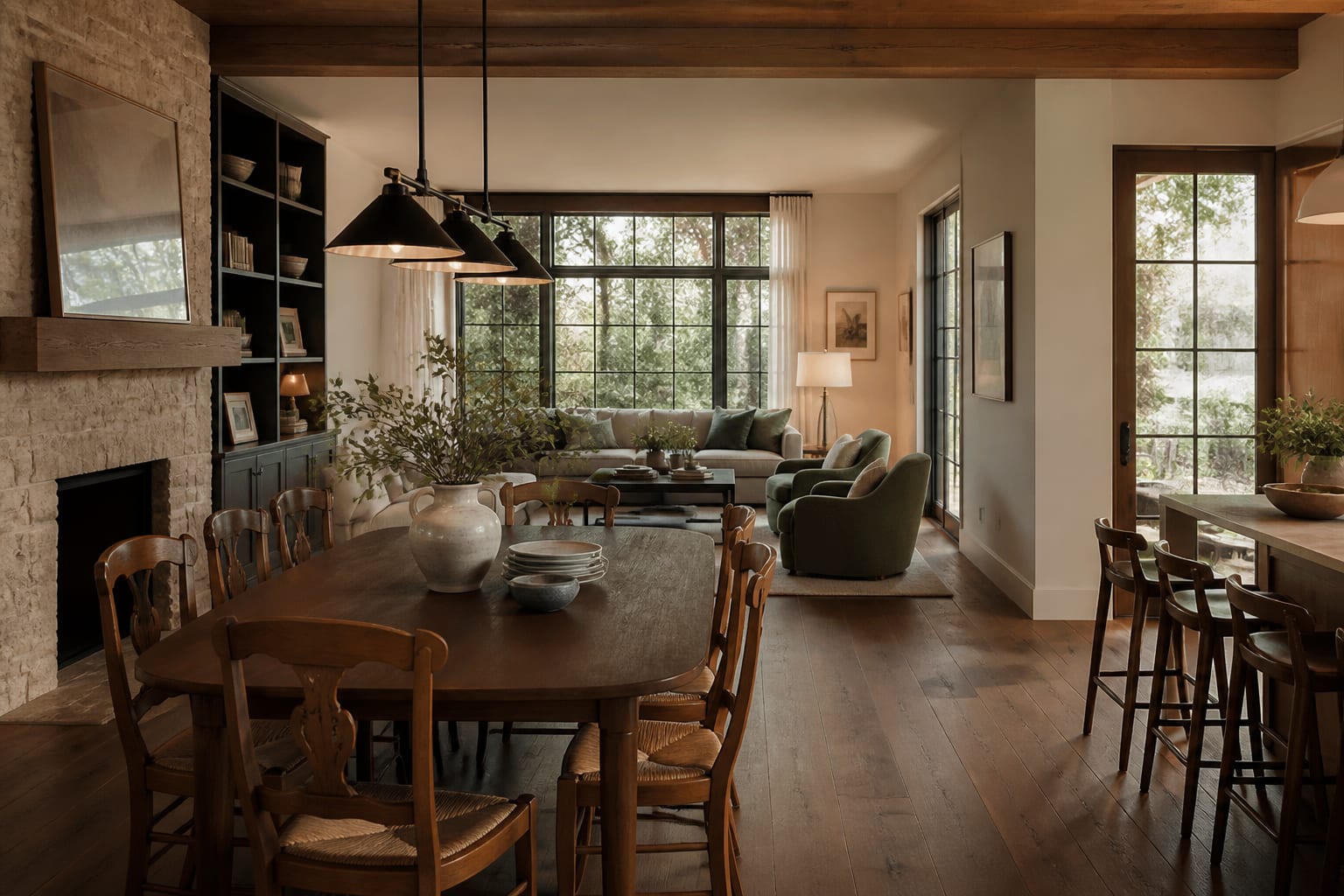
- Using beige as a peace treaty. Blandness isn't agreement. Try warm white, oak, charcoal, olive, rust, and brass in shared spaces, and let private rooms take stronger turns.
- Ignoring comfort differences. Test seat depth, arm height, table edges, and walking routes; a low lounge chair or glass coffee table can fail a different generation entirely.
- Placing every inherited piece in the most public room. If a cabinet is too tall or a dining set blocks circulation, preview it in a bedroom, hall, or office instead.
- Buying large furniture before agreeing on room roles. A sectional, dining table, or pair of recliners can set the whole plan; confirm purpose, clearances, and style bridge before shopping.
A multi-generational home is ready for purchases once the public rooms share a palette, the private rooms have permission to differ, and the largest furniture has survived a measured preview.
Frequently Asked Questions
Can AI design a home for multiple generations living together?
Yes. AI can preview shared rooms, private zones, furniture scale, and mixed styles from real room photos so families see conflicts, like clashing styles or blocked circulation, before buying furniture. It won't resolve taste disagreements on its own, but it makes tradeoffs visible while changes are still cheap.
Which rooms should have one shared style?
Living rooms, kitchens, and hallways benefit most from a shared style bridge because they carry the family's collective identity and get the heaviest daily use. Bedrooms, home offices, and hobby spaces can lean into individual taste since they aren't shared visual territory.
How do you blend traditional and modern furniture in one house?
Match color temperature, scale, and materials instead of trying to match styles exactly. Keep a connected palette (cream, walnut or oak, bronze, olive, clay), use rugs or substantial tabletops to balance heavy antique pieces next to modern furniture, and repeat wood tones across the room.
What lighting works best in a multi-generational home?
Use 2700K bulbs in living rooms, bedrooms, and dens for a warm, relaxed feel that suits most ages. Reserve 3000K for kitchens or task-heavy bathrooms where a crisper light supports cooking and grooming tasks without clashing with softer finishes elsewhere.
How do you protect privacy without adding walls?
Layer visual and sound privacy using frosted window film, lined drapery, bookcases as partial screens, acoustic panels disguised as art, and closed storage. These solutions control sightlines and noise for remote work, caregiving, or returning adult children without requiring construction.