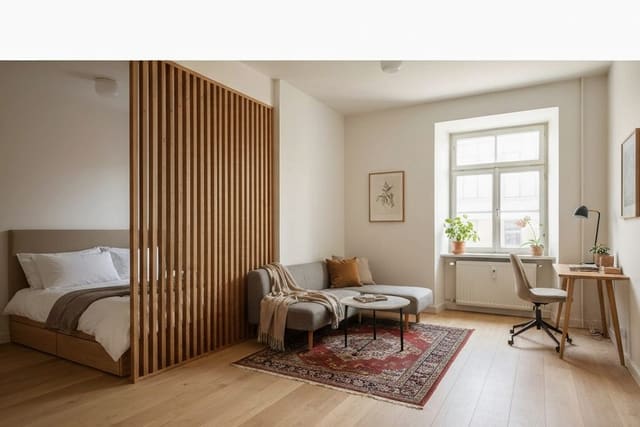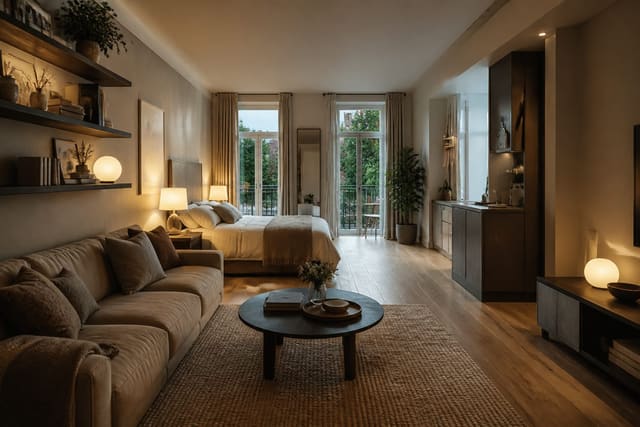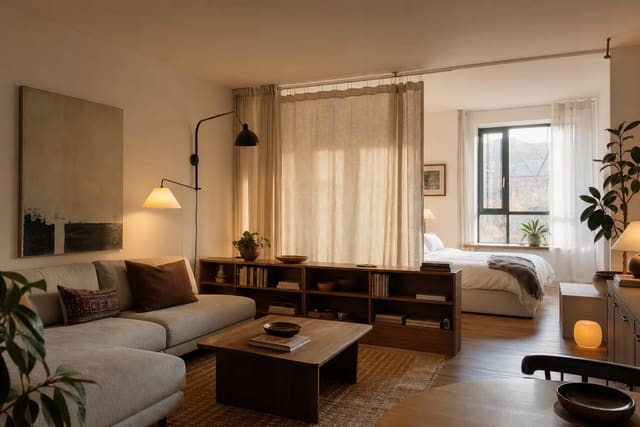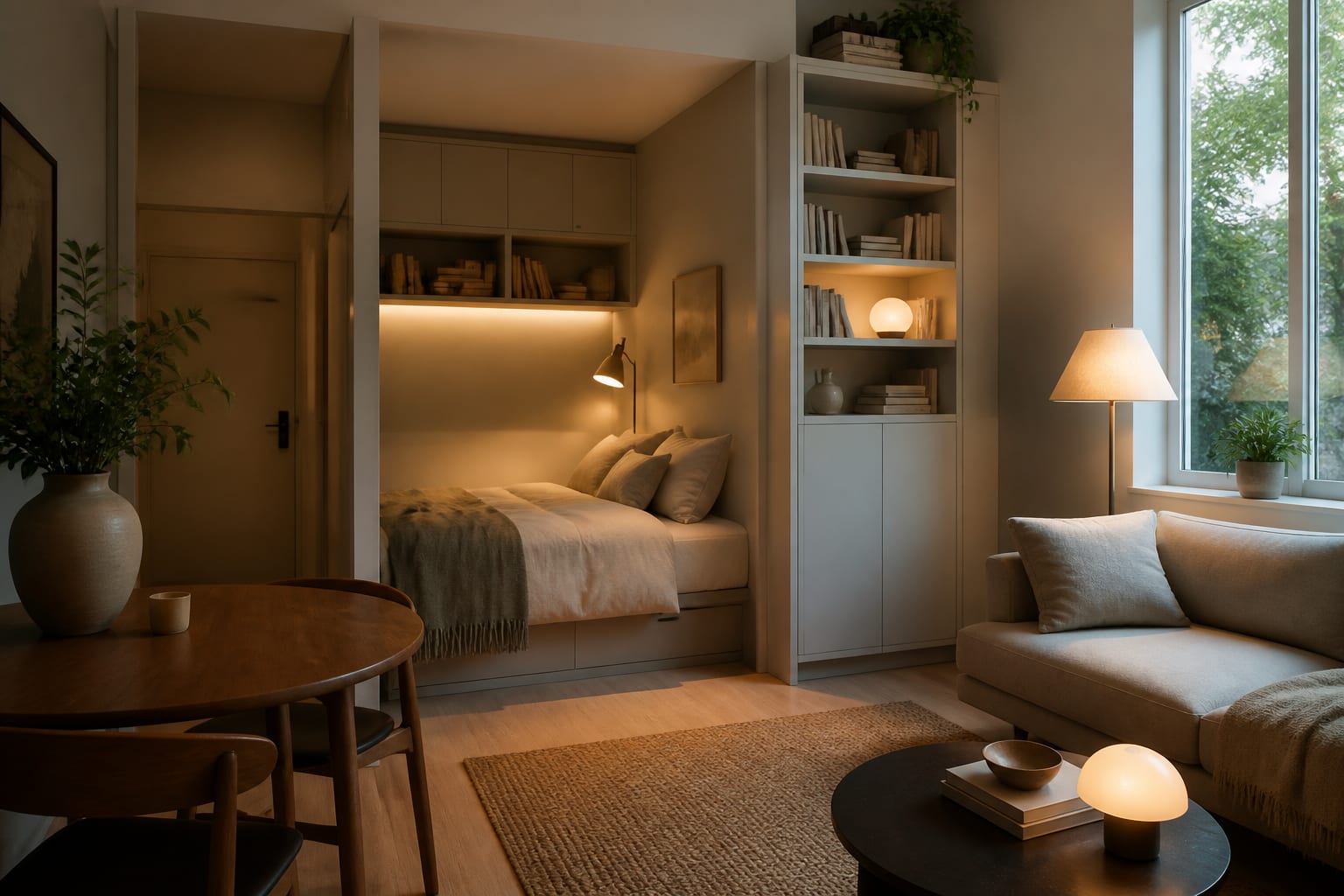
AI studio apartment design under 300 sqft works by testing where the bed lives, how a 72-inch sofa pairs with a 30-inch round table, and which wall holds closed storage before you buy anything. It cannot enlarge a 285-square-foot apartment, but it exposes which choices — like a bed facing the entry or a rug that cuts the floor in half — are stealing room.
Can AI design a studio apartment under 300 square feet?
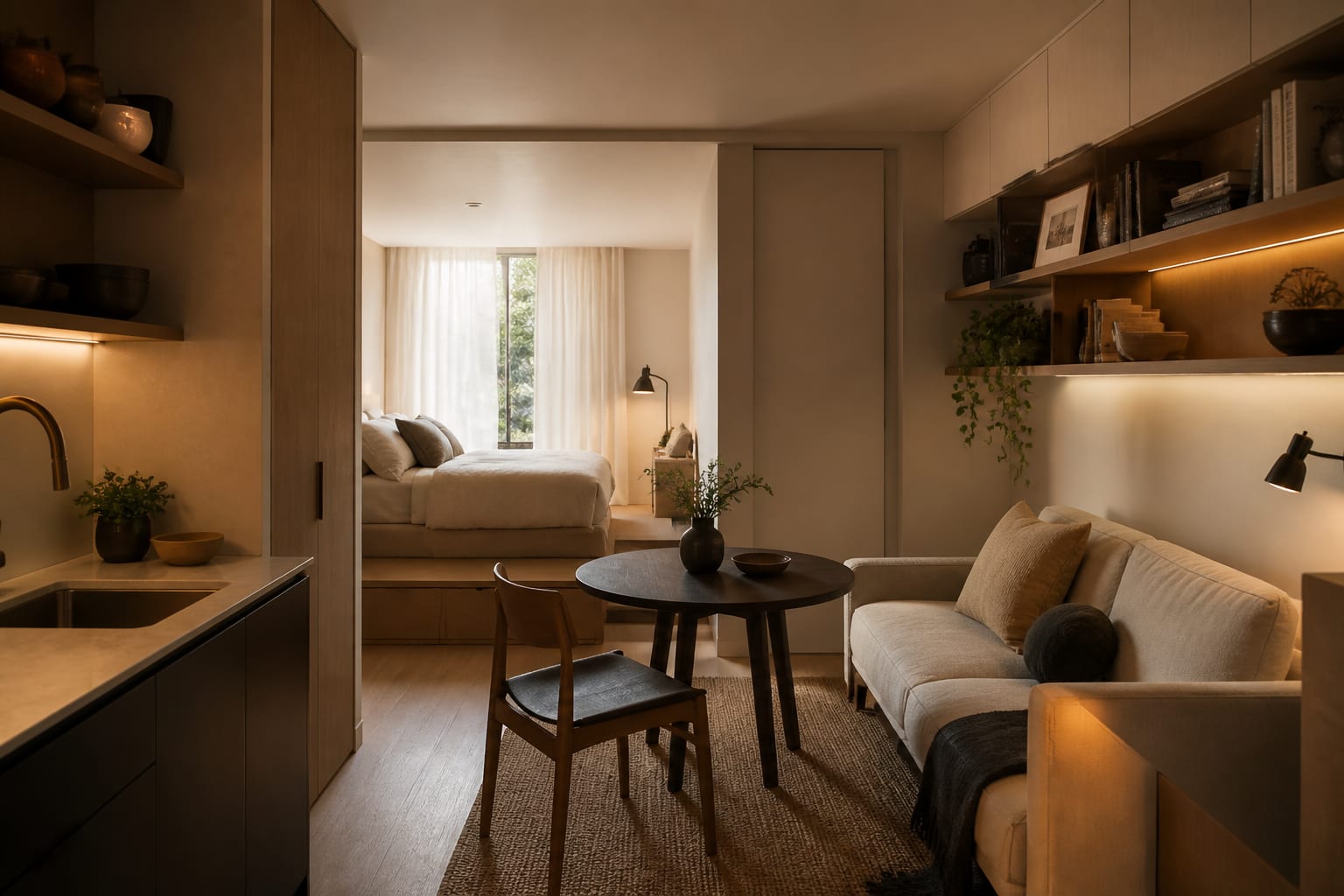
Yes. AI can preview the bed zone, sitting area, storage wall, lighting, and circulation inside your actual room photo, then show what changes when you move one piece at a time. The best input is a straight shot from the doorway or farthest corner with the floor line, ceiling line, windows, radiators, closet doors, and kitchen edge visible.
Add measurements in the prompt: bed size, wall lengths, ceiling height, window width, and the depth of any fixed cabinet. Compare your preview against a full AI studio apartment design process so the image gets judged on zoning, not just style. Start with one question — where does the bed go so the apartment doesn't feel like a bedroom you cook in — and everything else gets easier.
What makes a tiny studio feel like a real apartment?
A tiny studio feels real when the eye reads separate functions without running into furniture walls. The goal is permission: to sleep without staring at dishes, to sit without sitting on the bed, and to walk in without seeing every possession at once.
Start with the bed. If the apartment is narrower than 11 feet, push it lengthwise along a wall instead of floating it. A 54-inch full bed often beats a queen if the queen forces nightstand gymnastics; if you keep the queen, use an 8-to-12-inch-deep wall shelf on one side instead of two proper tables.
Keep the sofa compact but not miniature — 68 to 78 inches long, under 36 inches deep if the walking lane is tight. A 30-inch round table usually beats a rectangular desk since it handles dining, laptop work, and drop-zone duty without sharp corners in the walking path.
Lighting matters as much as furniture. A single ceiling fixture exposes every zone equally. Use 2700K bulbs, a plug-in sconce at the bed, and one shaded lamp near the sofa so shadows help the room stop reading as one bright box.
The before-and-after framework for a sub-300-square-foot layout
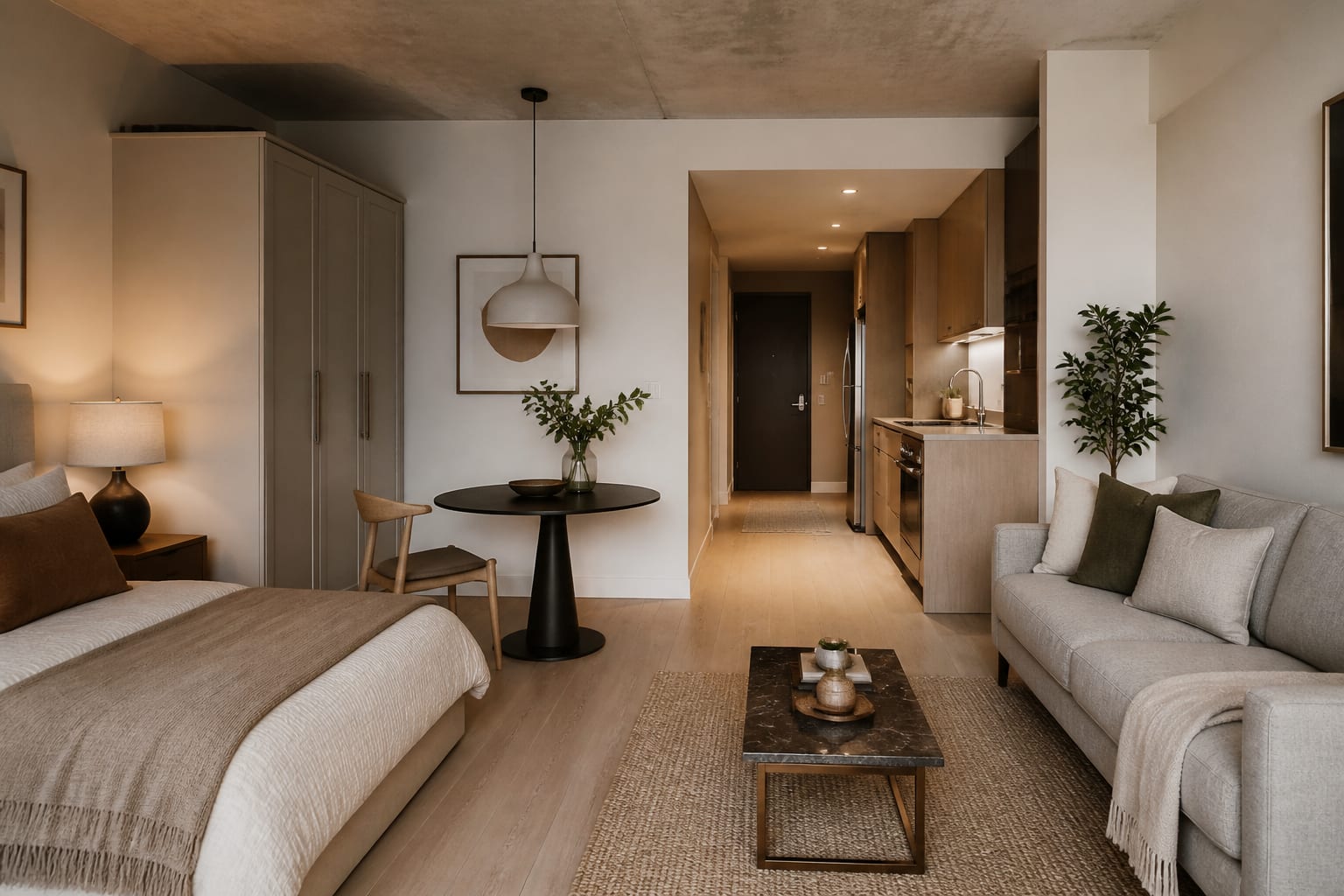
A failing micro studio has the same symptoms: the bed is the focal point from the entry, storage is scattered, and the floor's middle is treated as leftover space. The fix isn't more stuff — it's assigning jobs to walls and leaving the floor calm. Test changes in this order:
- Place the bed where privacy is easiest, then test a shallow divider — a ceiling-mounted curtain, a 12-inch open shelf, or a folding screen.
- Put closed storage on the least beautiful wall, not the brightest one. A 15-to-20-inch-deep wardrobe or cabinet absorbs clutter while the window wall stays clear.
- Keep seating honest. One 72-inch sofa, a small drink table, and a 5x7 or 6x9 rug beat a sectional that eats the only open path.
- Let the dining surface overlap functions. A 30-to-36-inch round table with two stackable chairs handles meals, work, and guests.
After placing big pieces, check clearances: roughly 30 inches on the main path (36 if possible), 24 inches in front of drawers, and enough room for the closet door to swing without hitting a chair.
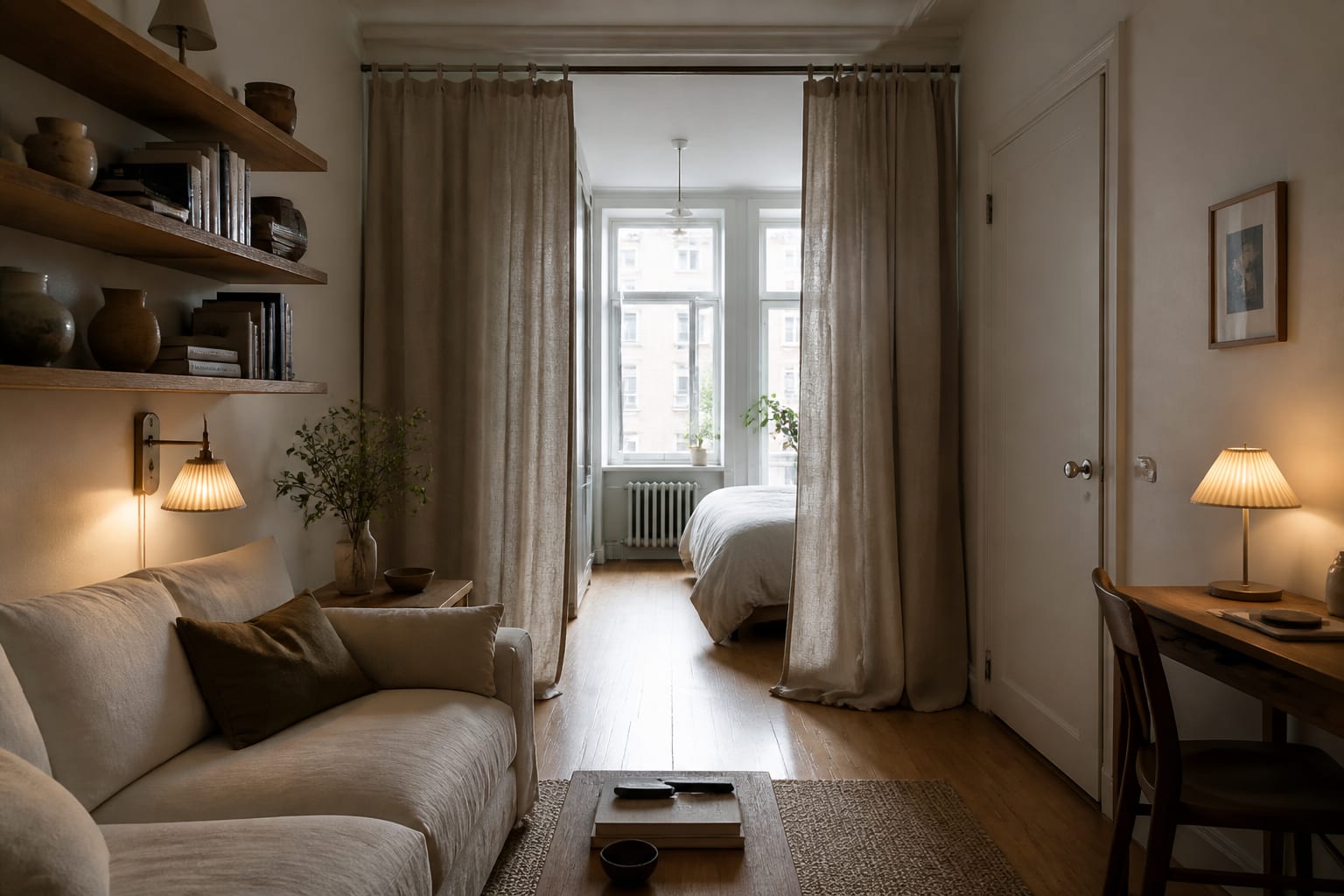
Dividers can solve the studio or ruin it. A solid bookcase across from a small window can create a bedroom nook and kill the only daylight; a ceiling-track curtain closes at night and parks during the day.
AI design works best here with one layout change per prompt — bed on the long wall, sofa under the window, storage on the entry wall — rather than changing everything at once. A strong prompt: "Design a 280-square-foot rental studio with a full bed along the right wall, a 72-inch sofa, a 30-inch round dining table, closed storage near the entry, warm 2700K lamps, peel-and-stick friendly finishes, and no demolition." A weak prompt like "make my studio cozy" ignores door swings, outlets, and baseboard heaters.
For rentals, run a "minimum purchase" preview first: keep the current bed frame, add only a rug, lamp, curtain, and storage cabinet, and avoid drilling more than a few holes. This mirrors the approach in AI room design for small apartments — test scale, then style, then spending. Judge every preview against the photo: if the AI widens the window, removes the radiator, or shrinks the mattress, treat the image as direction only and confirm real dimensions before you shop.
Common mistakes that make tiny studios feel smaller
The fastest way to ruin a micro studio is making every piece "small" without giving the room one confident structure. Fewer pieces with clearer edges beat scattered tiny furniture.
- Choosing the bed before the storage plan forces the apartment to serve the mattress. If a queen leaves no wall for a wardrobe, drop to a full, add under-bed drawers, or use a platform with 12 inches of storage height.
- Floating a rug in the middle chops the room into awkward islands. Let it define the seating area with front sofa legs on it, or skip it in the bed zone.
- Open shelving for everything turns daily life into visual noise. Reserve open shelves for books and a few good objects; put cleaning supplies and cables in closed bins.
- Blocking daylight with the divider punishes the whole apartment for the bed's privacy. Choose a translucent curtain or partial screen and keep the top third of the sightline open.
- Ignoring vertical inches wastes space that doesn't charge rent. Use wall hooks, shelves above 60 inches, tall wardrobes, and plug-in sconces so the floor isn't doing all the work.
Color choices matter too. A dark accent wall behind the bed can look heavy in a north-facing 260-square-foot apartment. Try a textile, art panel, or removable headboard for contrast first; warm white, muted clay, soft mushroom, or pale olive give more depth without shrinking the room.
When is the AI studio plan ready to shop?
The plan is ready when three previews agree on the bones: bed location, main storage wall, and the path from entry to kitchen or bath. Don't buy the chair if the closet door still hits the table, and don't order the wardrobe if the bed divider is unresolved — in a studio this small, one wrong large piece becomes the room.
Buy in sequence: mattress or bed solution first (once size is settled), storage second (it determines how much open shelving the room can tolerate), sofa or lounge chair third, then rug, lamps, divider hardware, and art. Leave pillows and accessories until the room shows where it needs softness.
Stand at the entry and ask what the apartment says in two seconds. If it says "bed," revise. If it says "calm place to live, with a tucked-away sleeping zone," the layout is working.
Frequently Asked Questions
Can AI design a studio apartment under 300 square feet?
Yes. Upload a photo from the doorway or farthest corner showing the full floor line, ceiling, windows, and any radiators or closet doors. Test bed placement, divider strategy, and closed storage while keeping the kitchen edge and door swings fixed.
Full or queen bed for a sub-300 studio?
Choose a full when surrounding storage can't fit otherwise. A 54-inch full beats a queen if the queen forces nightstand gymnastics or blocks the closet swing. Keep the queen only if the wall length and wardrobe still work.
Should I use a curtain divider or a bookcase divider?
Use a curtain when the studio has one window, since solid bookcases steal daylight from the whole apartment. A ceiling-mounted curtain track closes at night and parks during the day without changing the room's light.
What rug size works in a 280-square-foot studio?
A 5x7 or 6x9 under the seating area works better than a runner down the middle. The rug should define one zone, not chop the apartment into disconnected islands.
How many lamps does a small studio actually need?
Three minimum: one at the bed, one at the sofa, and one near the table or kitchen counter. A single ceiling fixture exposes every zone equally and makes the room feel temporary.