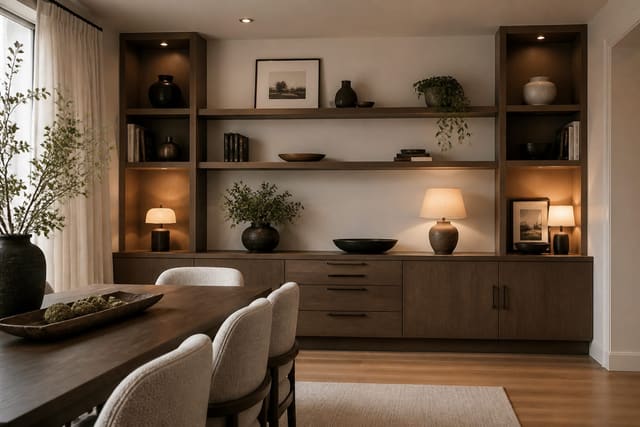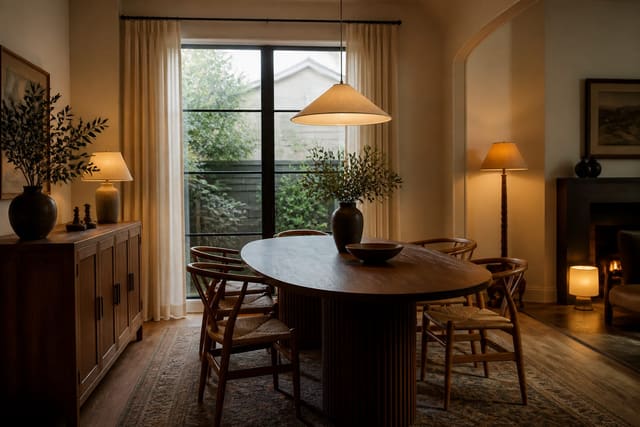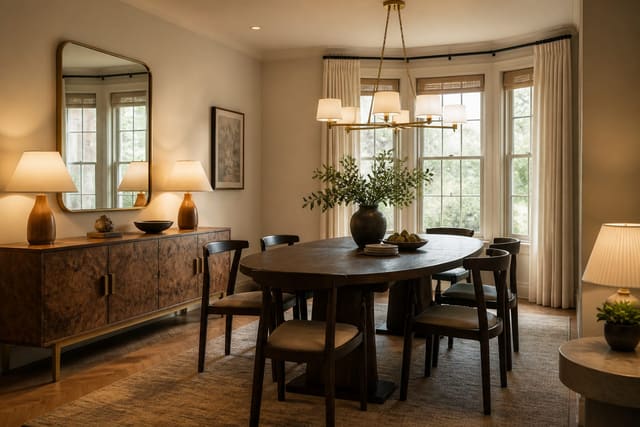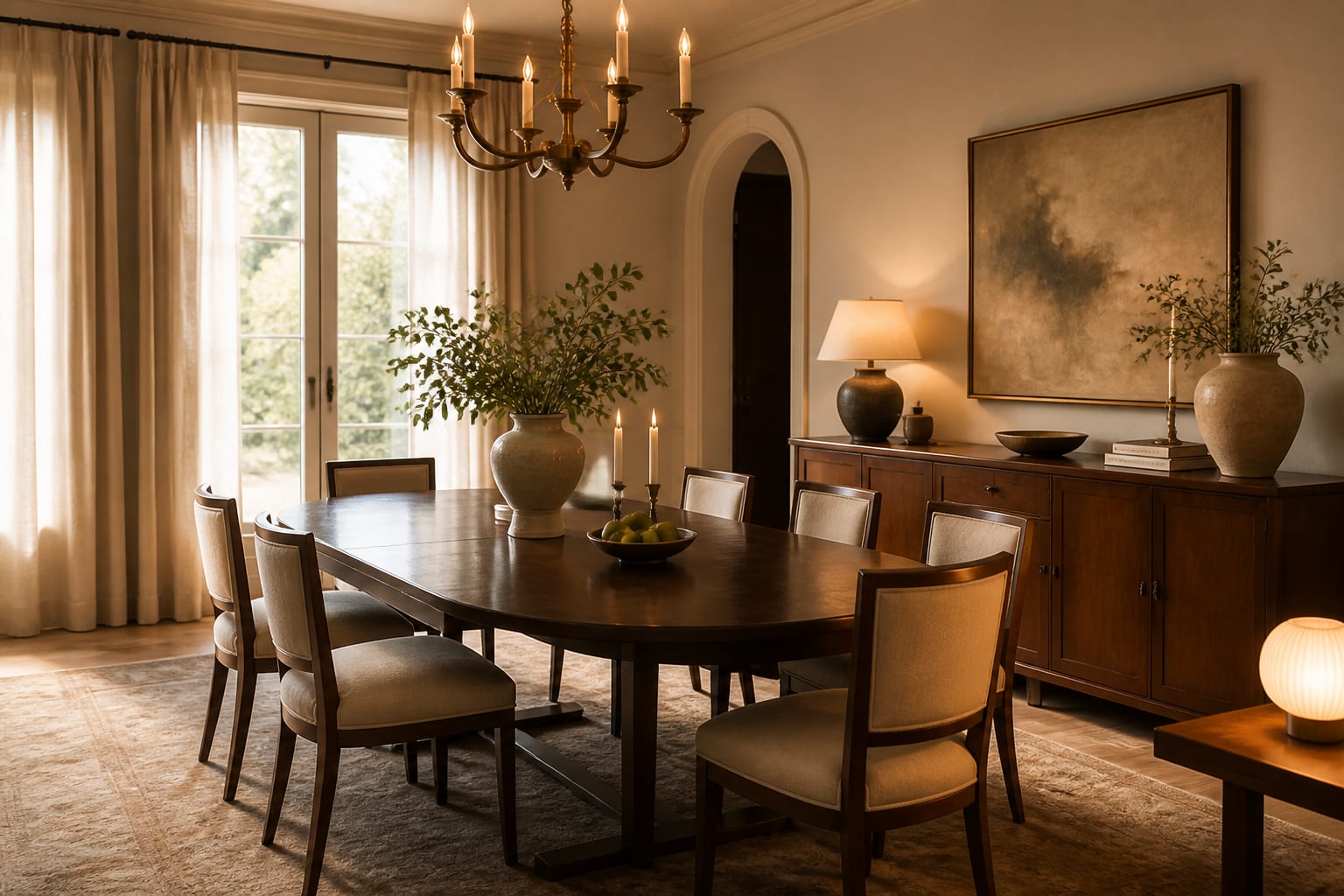
AI can design a dining room by turning a photo of your real space into visual options for layout, table shape, lighting, and storage before you spend a dollar. Upload a clear shot showing the full table zone, windows, doorways, and fixed fixtures, and use the result to test whether a piece you love actually fits the room's traffic and clearances.
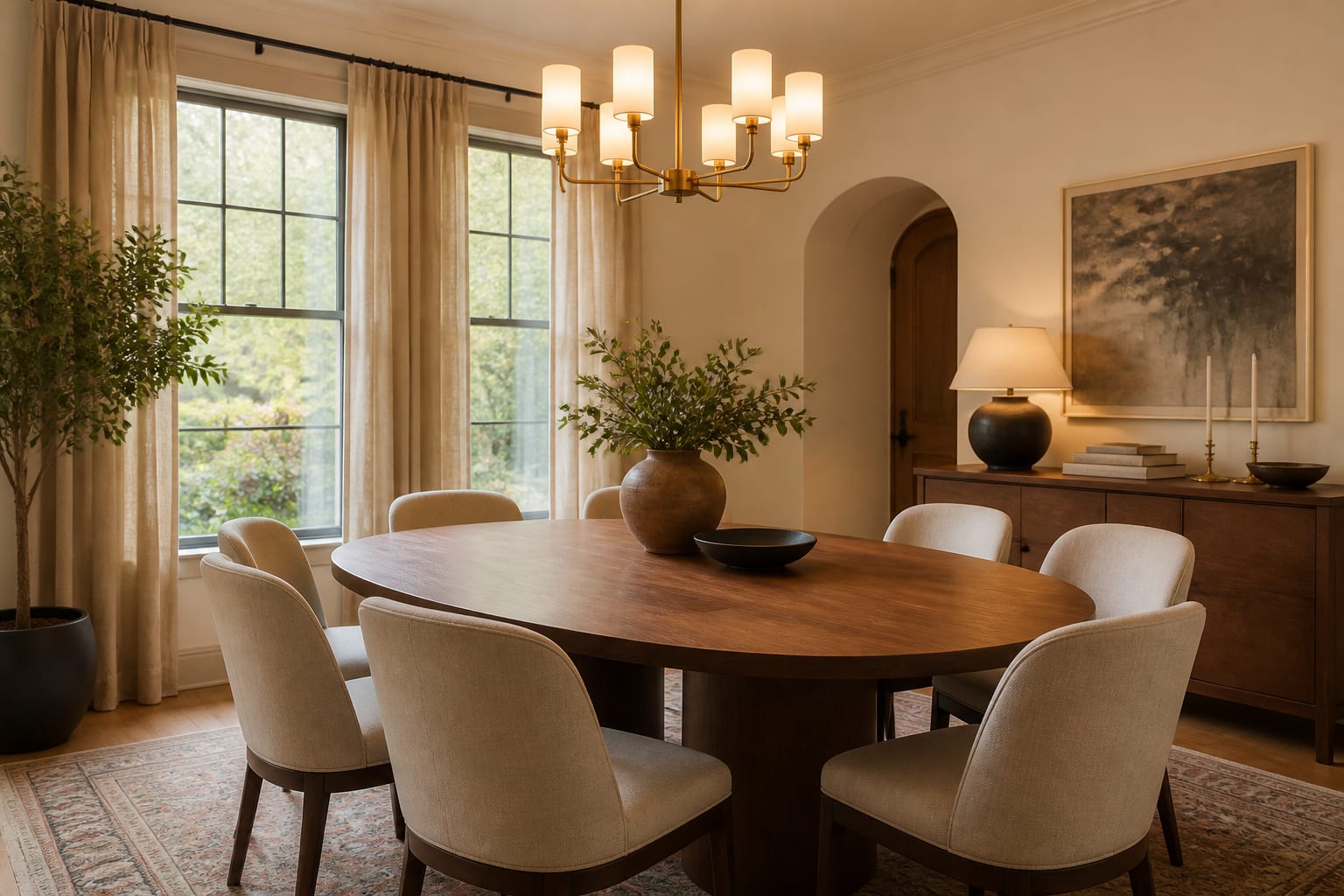
Can AI design a dining room before you buy furniture?
The goal is not letting software pick your final shopping list. It's seeing whether a round table solves a tight corner, or whether the sideboard you love steals the clearance chairs need. Dining rooms are strong candidates for this because most of the pain is spatial: chair depth, table length, light placement, and the route from kitchen to seat.
If you already know the room needs a storage piece, compare your preview against practical credenza and sideboard ideas before choosing a cabinet that looks handsome but blocks circulation.
What makes a dining room feel ready for real meals?
A dining room feels ready when the table, chairs, light, and storage all serve the same kind of meal. A breakfast nook for four, a holiday table for ten, and an apartment dining corner beside a sofa should not be designed from the same reference photo.
Start with the meal pattern. If the room is used nightly, comfort and wipeability matter more than a dramatic chair silhouette. If it hosts twice a year but sits visible from the entry daily, the surface, rug, and sideboard need to read clean even when no one is eating.
The table anchors the room, but it shouldn't dominate it. Leave landing space for platters, light that flatters faces, a clear kitchen-to-chair route, and enough softness that hard furniture doesn't feel like a conference room. In narrow spaces, an oval or racetrack table often beats a sharp rectangle, since corners are where bruised hips and blocked pullouts happen.
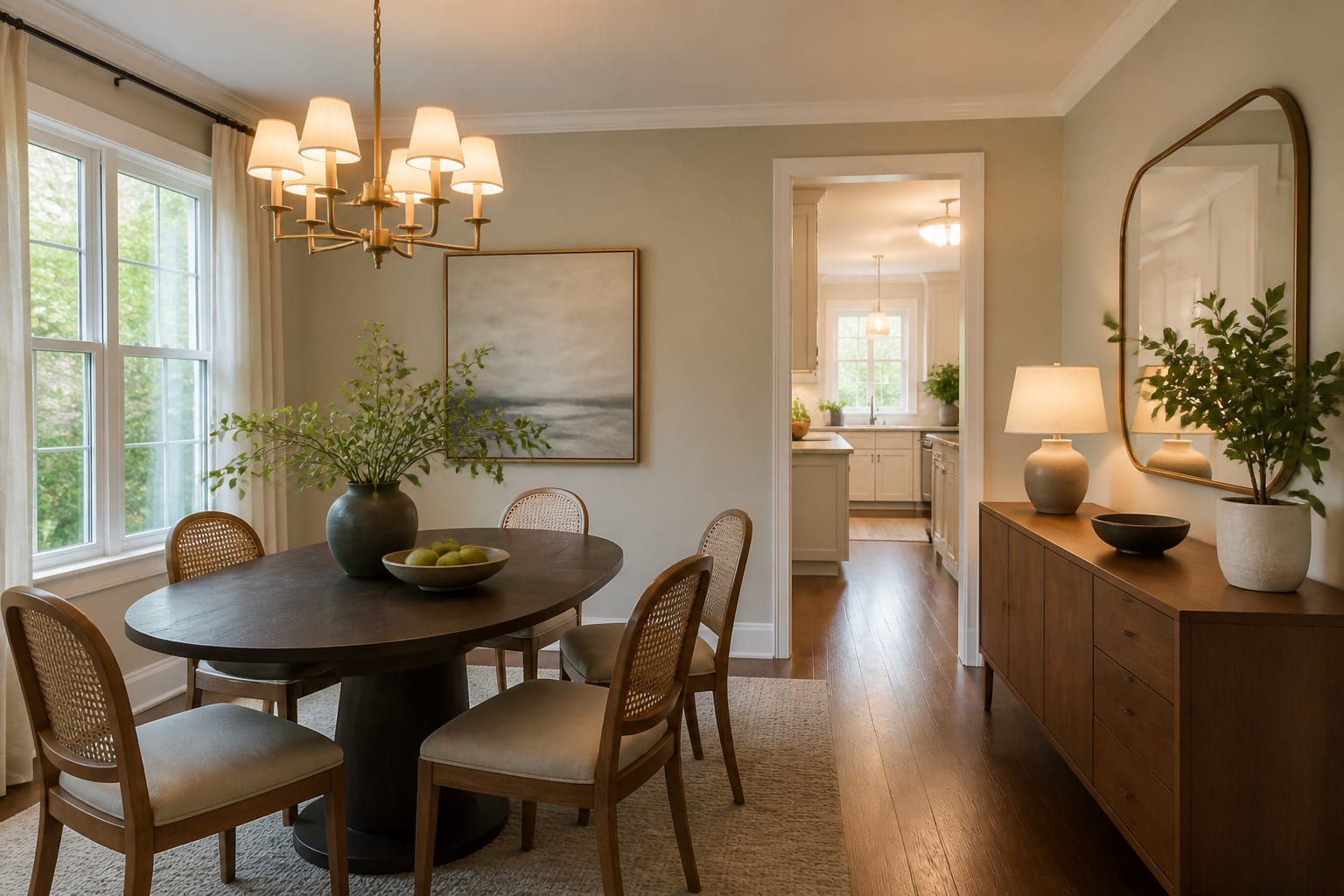
Which table, lighting, and storage specs should guide the preview?
The best dining room visualization starts with measurements, not adjectives. Style comes later; scale decides whether the room works.
| Element | Recommended Spec | Why It Matters |
|---|---|---|
| Table width per diner | ~24 inches | Tighter place settings make even an expensive table feel stingy |
| Table-to-wall/path clearance | At least 36 inches (42 if traffic passes behind seats) | Chairs need pullout room, and someone still has to carry plates |
| Chandelier height above tabletop | 30-36 inches | Too high looks disconnected; too low blocks faces and dishes |
| Rug size | Extends ~24 inches beyond the table on all sides | Keeps chairs on the rug even when pulled back |
| Storage depth | 14-16 inches in tight rooms, up to 20 inches otherwise | A deep sideboard can eat the exact clearance chairs need |
A 72 inch rectangular table usually seats six comfortably; a 42-48 inch round table suits four. For more on shape and sizing, see this dining table size and shape guide. For fixture height, bulb warmth, and layered glow, borrow rules from dining room lighting ideas so the preview doesn't lean on one dramatic pendant to do every job.
What are the most common AI dining room design mistakes?
Most mistakes come from asking for a mood when the room needs a plan. The image can look polished and still leave you with chairs hitting the wall or a pendant centered on nothing.
| Mistake | Why It Fails | Fix |
|---|---|---|
| Picking table shape from taste alone | Wrong geometry pinches movement | Use round/oval in tight corners, rectangular in longer rooms |
| Ignoring chair depth | Chairs aren't flat icons | Check real chair depth; leave 36 inches behind the table edge |
| Letting AI relocate the ceiling fixture | Junction box is often fixed in real homes | Ask for a swagged pendant or table placement that respects the existing point |
| Buying storage after the table | Leftover wall may be too shallow | Measure cabinet depth, drawer swing, and walking path first |
| Using a pale rug under daily meals | Shows every crumb and chair mark | Choose low-pile, patterned, cleanable material |
One more trap: treating the dining room as a separate stage set when it's visible from the kitchen or living room. Wood tone, metal finish, and wall color need to speak to adjacent spaces, especially in open plans.
How should you prompt AI to preview your dining room?
Measure the dining zone and name what cannot change before you start. Upload a straight daylight photo from the doorway or widest corner, showing the ceiling light, table area, windows, kitchen path, and any existing cabinet. Don't crop out the awkward radiator or off-center fixture; that detail decides the layout.
A grounded prompt: redesign this 11 by 13 foot dining room while keeping the oak floor, white trim, window, and existing ceiling junction box. Add a 42 by 72 inch wood table, six upholstered chairs, a warm brass chandelier 32 inches above the tabletop, a shallow sideboard no deeper than 16 inches, an 8 by 10 foot low-pile rug, linen curtains, and 2700K lighting. Preserve a 36 inch path from kitchen to table.
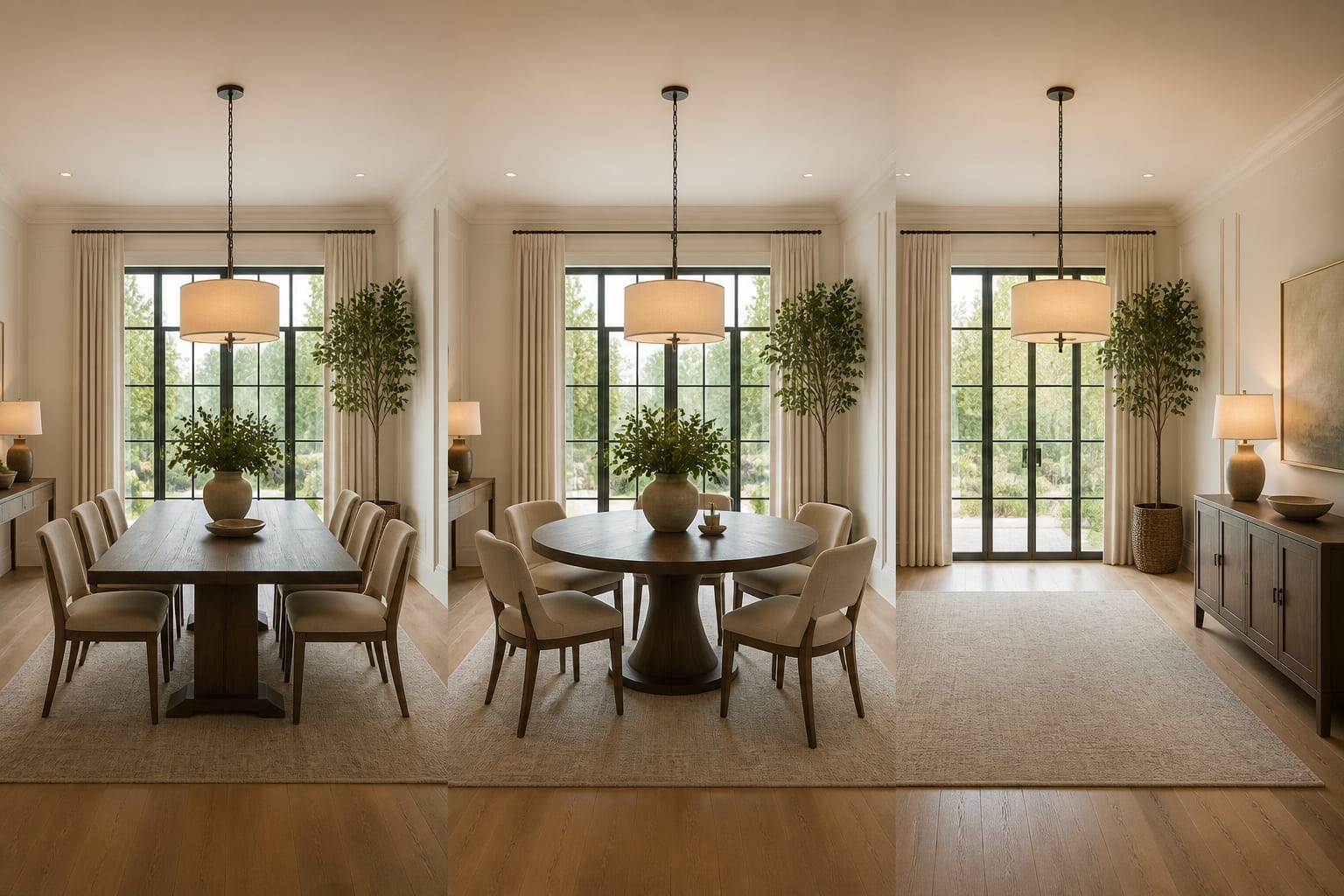
Run three versions with different priorities: everyday family meals, hosting, and a smaller budget using your existing table. The useful preview is the one that clarifies tradeoffs, like whether a larger table kills the route to the patio, or a smaller round table leaves room for a sideboard.
Which finishing decisions make the room feel settled?
The dining room feels settled when finishes repeat without looking matched from a catalog. Choose one wood tone, one metal finish, one textile direction, and one wall or art color to carry the mood. If the table is walnut, repeat warmth in a frame or chair leg; if the chandelier is black, echo it in curtain hardware or cabinet pulls.
Lighting should flatter people, not just furniture. Warm bulbs around 2700K suit intimate dinners, while 3000K works when the room doubles as a homework or puzzle table. Put the chandelier on a dimmer and add a buffet lamp or sconce so the room isn't dependent on one overhead pool of light.
Storage deserves the same attention as the table. A sideboard should hold what makes meals easier: napkins, candles, serving bowls, bar tools, extra flatware. Keep the top mostly clear, with one lamp, one tray, or art above it; a crowded sideboard adds noise where the room needs calm.
Before buying, tape the table, rug, sideboard, and chair pullout on the floor, then walk from kitchen to every seat with a platter in hand. If the taped version feels easy, the AI preview has done its job.
Frequently Asked Questions
Can AI actually show how a dining table will fit my room?
Yes, if the uploaded photo shows the full table zone, doorways, and existing furniture. AI can preview how a specific table size and shape sit against your walls, windows, and traffic paths, letting you catch clearance problems before ordering rather than after delivery.
How much space do I need to leave around a dining table?
Leave at least 36 inches from the table edge to the nearest wall or cabinet, and 42 inches where people walk behind seated guests. This gives chairs room to pull out fully and lets someone pass with plates without squeezing past diners.
How high should a dining room chandelier hang?
Hang it 30 to 36 inches above the tabletop. Lower than that blocks sightlines and serving dishes; higher makes the fixture feel disconnected from the table it's meant to light.
What size rug works under a dining table?
Choose a rug that extends about 24 inches beyond the table edge on all sides so chair legs stay on the rug even when pulled back. An 8 by 10 foot rug typically suits a 42 by 72 inch table.
Should I buy the table or the storage piece first?
Buy the table first. Storage depth and placement depend on the leftover wall space and walking path once the table and chair clearances are set, so choosing a sideboard before the table risks blocking circulation.