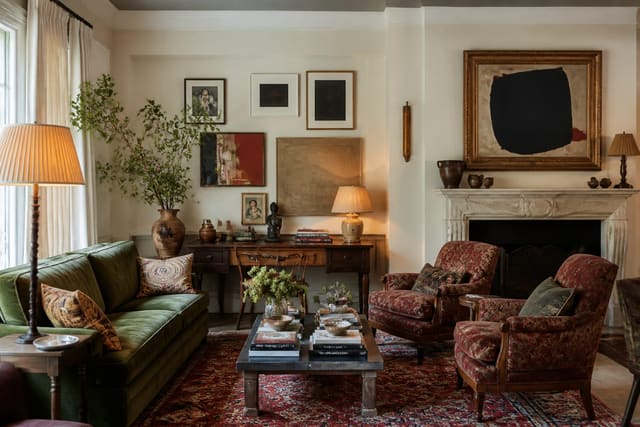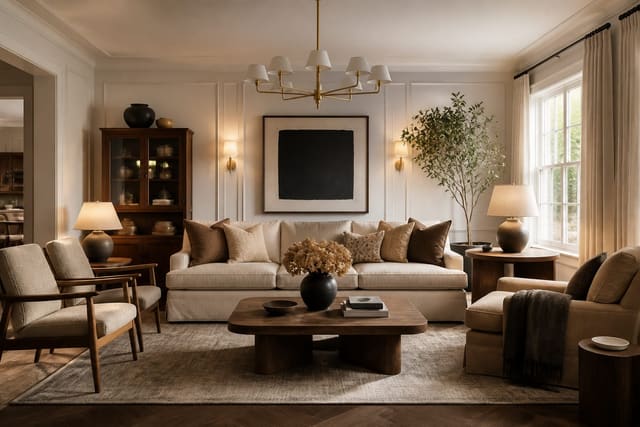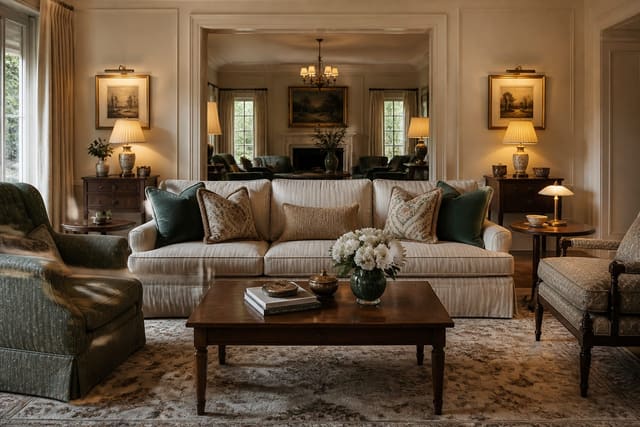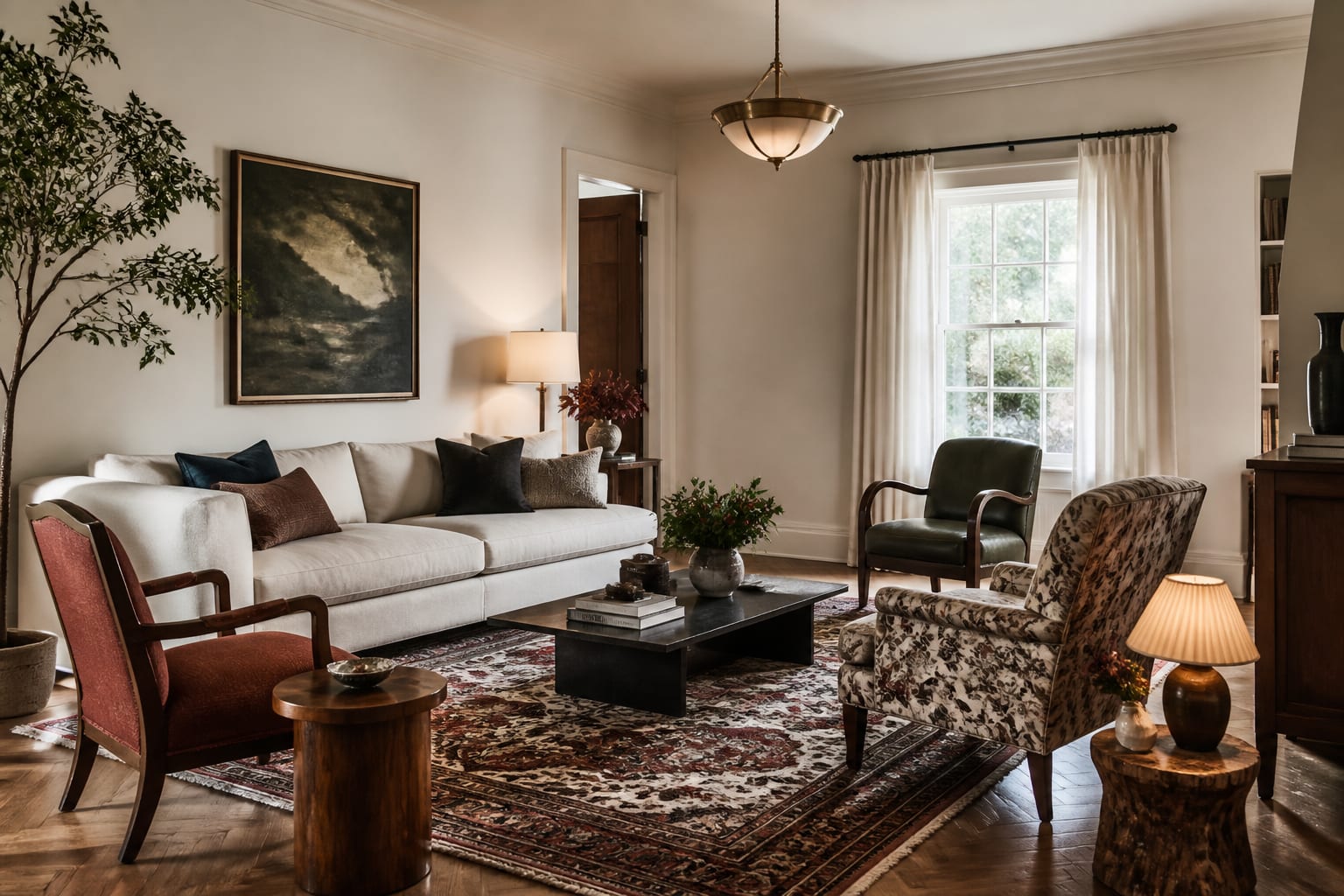
AI eclectic room design works when the brief has hierarchy: which piece leads, which colors ground it, and which eras are allowed in the room. Skip that structure and AI either flattens the mix into one safe aesthetic or piles on so much contrast the room reads as clutter rather than curated.
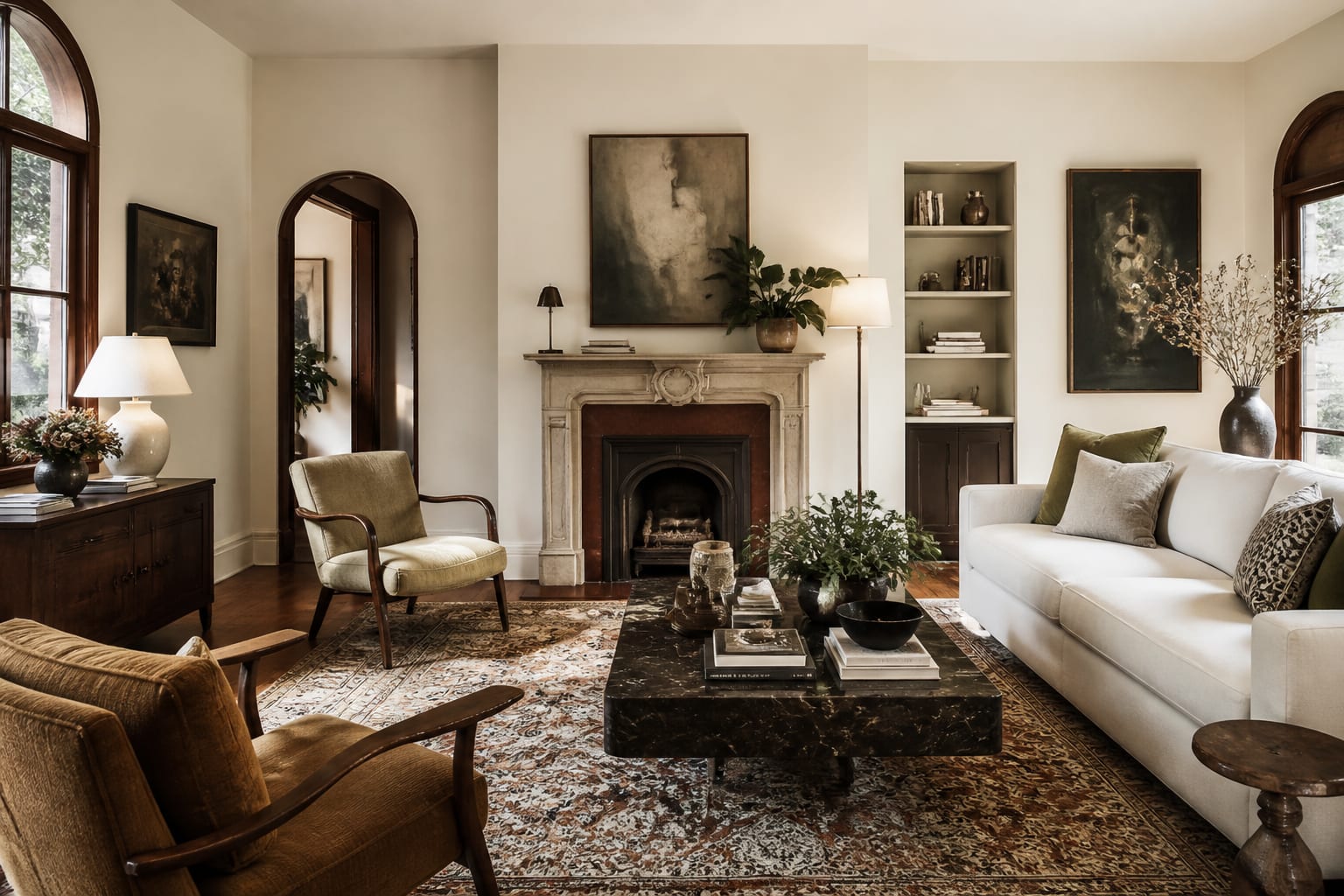
How well does AI handle eclectic interior design?
AI recognizes individual pieces easily: a midcentury chair, traditional rug, contemporary sofa, carved cabinet, gallery wall, sculptural lamp. What it struggles with is taste hierarchy, deciding which piece is the star and which pieces stay quiet.
A plain prompt like "make this room eclectic" tends to produce beige transitional with one colorful pillow, or the opposite: mismatched chairs, too much art, five wood tones, and no place for the eye to rest. For a stronger foundation before prompting, see this eclectic interior design guide, which treats eclectic style as composition rather than randomness.
A better brief: "Use the existing white walls and oak floor; create a collected eclectic living room with an 84 inch modern sofa, vintage wood coffee table, traditional 8 by 10 rug, one sculptural floor lamp, warm 2700k lighting, and a palette of cream, rust, olive, and black." That structure lets AI mix styles without melting them into one showroom look.
Where does AI collapse mixed style into one aesthetic?
AI collapses eclectic rooms when a prompt lists too many references without picking a leader. "Boho, modern, vintage, colorful, cozy, traditional, artistic" isn't a direction, it's a crowded shopping tab, and the model will chase the easiest visual majority.
| Prompt approach | What AI usually produces | Better eclectic instruction |
|---|---|---|
| "Make it eclectic and stylish" | Safe neutral room, scattered accessories | "Keep the room 70% calm modern with 30% vintage color and pattern" |
| "Mix every style I like" | Furniture eras fighting for dominance | "Use one modern anchor, one antique wood piece, one patterned textile" |
| "Add personality" | Gallery walls, plants, objects everywhere | "Create one art wall and keep the media wall mostly plain" |
| "Colorful eclectic" | Saturated pieces, no grounding shade | "Use rust, olive, cream, black, with walnut as the main wood tone" |
Assigning percentages is the fix. A room can be 60% modern, 25% traditional, 15% playful vintage, or 50% clean-lined rental furniture, 30% collected art, 20% inherited wood. It forces the preview to choose a dominant language instead of averaging everything into neutral.
Which eclectic mix should you compare?
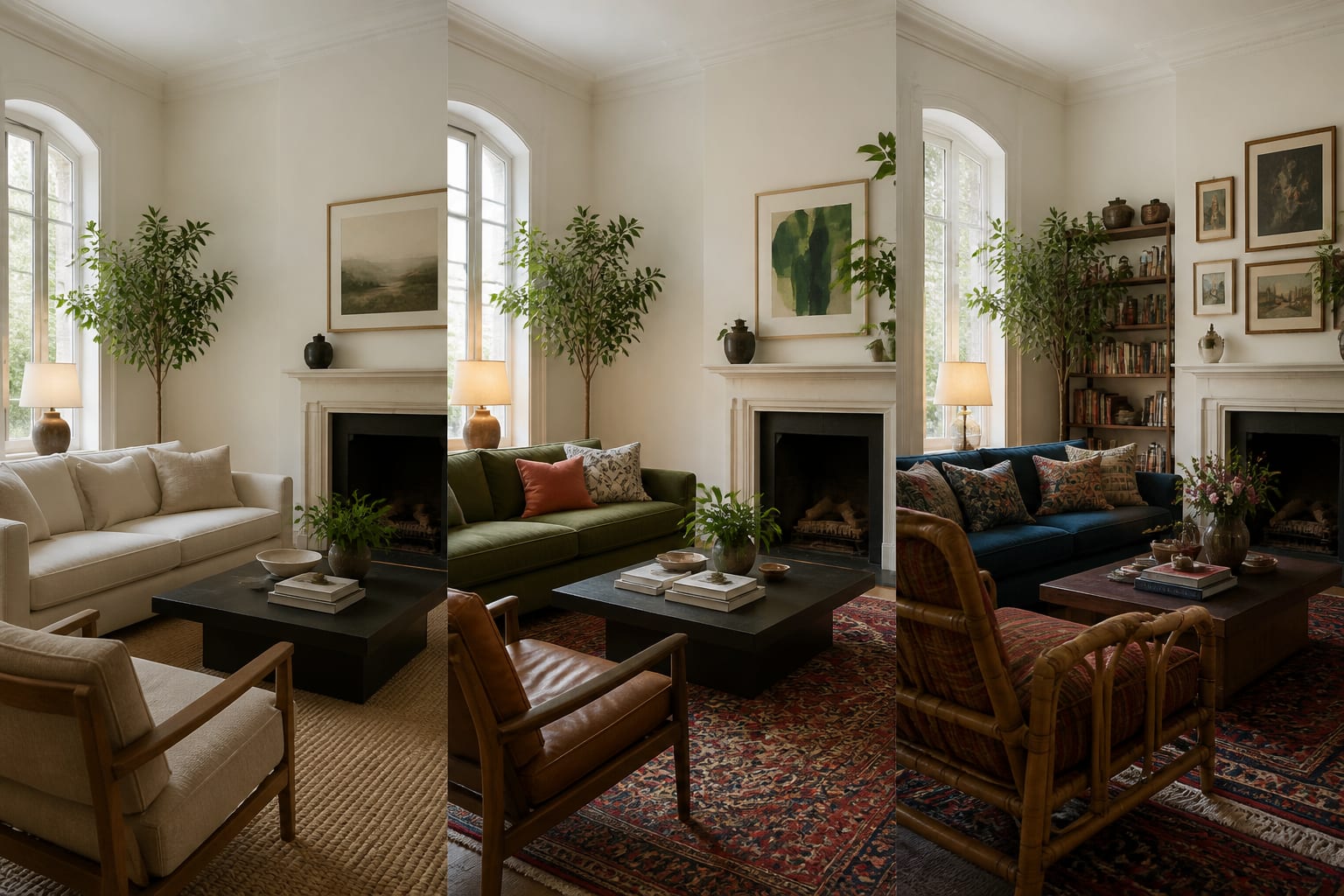
Test three versions of the same room, not twenty unrelated fantasies. Keep camera angle, fixed furniture, ceiling height, and window wall consistent so the comparison is about style mixing, not staging tricks.
- Modern base, vintage warmth: an 84 inch sofa, 16-18 inch sofa-to-table gap, walnut or teak accents, and one vintage rug sized so front seating legs land on it.
- Traditional base, contemporary art: keep classic bones, add abstract art around 57-60 inches on center, simple lamps, and a cleaner coffee table so it doesn't turn stiff.
- Global collected, restrained color: limit to 3 main colors, cluster objects by material, use closed storage 14-18 inches deep for categories AI tends to erase.
- Playful eclectic, one loud object: let a tiger ottoman, red cabinet, or mural textile lead, and keep everything else quieter so it reads witty, not frantic.
- Classic-modern eclectic: if this fits your taste, compare against AI transitional style design, which edits contrast more tightly than true eclectic allows.
What common mistakes make AI eclectic rooms look messy?
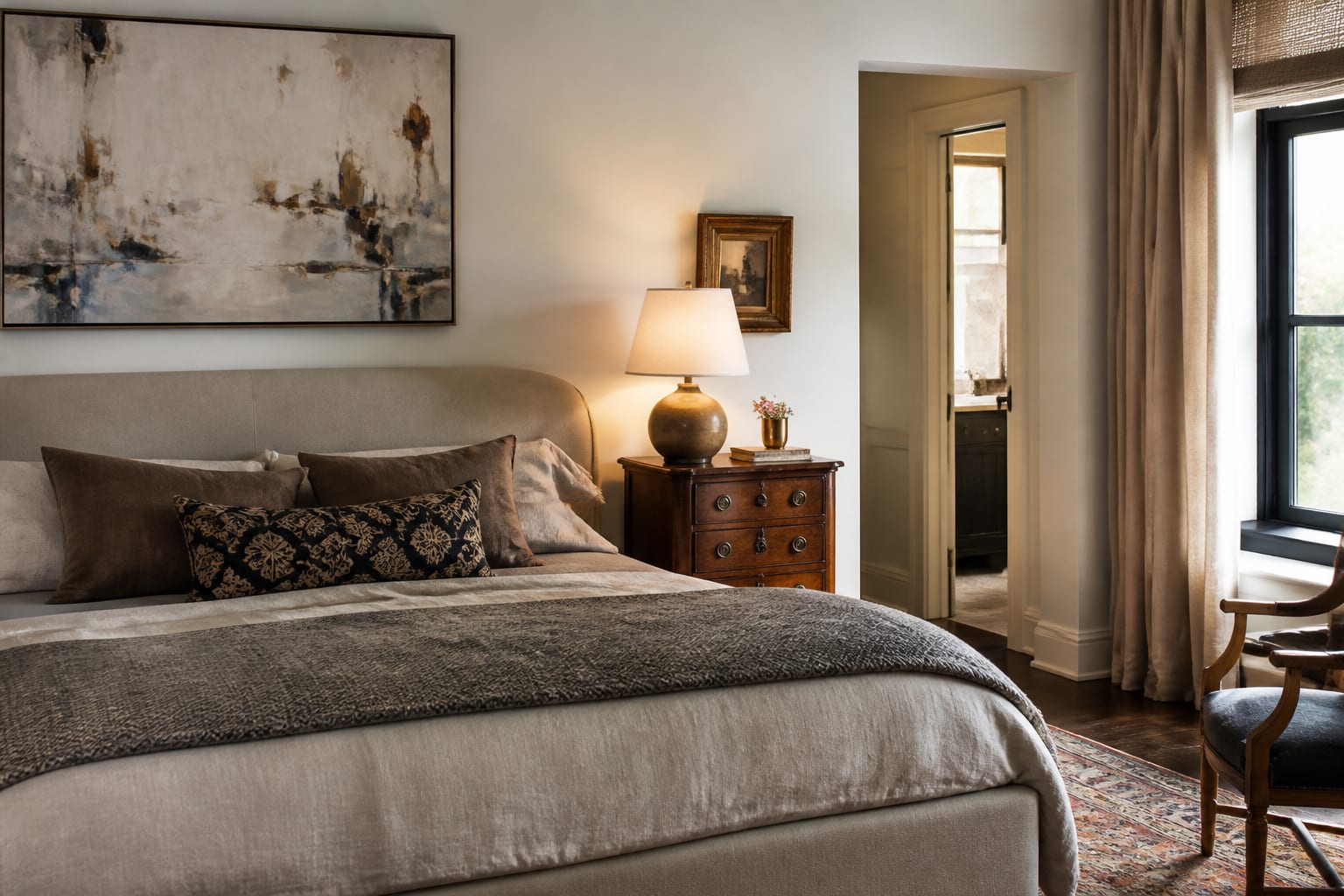
Giving every furniture piece a different style is the biggest one. A midcentury sofa, farmhouse table, Victorian chair, Moroccan pouf, industrial shelf, and coastal lamp can each be interesting, but together they read like a resale aisle. Pick 2 style families for main furniture and let smaller pieces carry the surprise.
Ignoring wood tone is next. Two visible wood tones is easy, three can work if one is small, but five tones across floor, legs, frames, shelves, and tables unravels even a good render.
Color without value control is a third issue. Rust, cobalt, emerald, mustard, pink, and black can work only if some are muted and one shade clearly dominates; tell AI which color owns the largest surface, which is the accent, and which dark tone grounds the room.
Using every wall is a fourth trap. Art walls, loaded shelves, patterned curtains, a bright rug, and sculptural lighting all at once exhausts a room. Leave one plain wall or quiet curtain run for contrast.
Finally, don't confuse eclectic with layered traditional. If previews keep producing paired lamps, heavy wood, formal rugs, and symmetrical seating, check AI traditional interior design instead.
How should you use AI to preview the mix before buying?
Upload a straight, well-lit photo showing floor, ceiling, windows, trim, door swings, and furniture that must stay. Add a second angle if a fireplace, radiator, low sill, or open sightline controls the layout.
Protect the room with limits: "keep the existing 8 foot ceiling," "do not change the windows," "use the current gray sofa," or "rental friendly, no paint, no built-ins." Eclectic style reads as more believable when real quirks stay visible, not erased.
Run at least three previews: restrained, bolder, and more collected. Restrained tests whether the room still feels eclectic with fewer objects; bolder shows how much color the architecture tolerates; collected tests art, books, and vintage pieces without turning every surface into storage.
How do you choose the winning eclectic AI result?
Pick the preview where the structure stays calm while contrast feels deliberate. A winning image usually agrees on five things: one anchor style, one repeating color, one dominant wood tone, one lighting temperature, and one intentionally odd piece.
Translate the image into measurements before buying: sofa width, chair depth, rug size, art height, lamp reach, table clearance, storage depth. A great render is useless if a 42 inch coffee table blocks the walkway.
Reject results that depend on invented architecture. If a preview only works because AI added taller windows, herringbone floors, or perfect built-ins, keep the palette and furniture mix but revise the plan around your real room.
Frequently Asked Questions
Can AI actually design a good eclectic room?
Yes, but only with a structured prompt. AI handles individual pieces well but needs explicit percentages, a dominant color, and a lead style era to avoid either flattening the room into one safe aesthetic or overloading it with competing furniture and patterns.
Why does my AI eclectic room look too matched or too messy?
Vague prompts cause this. "Too matched" comes from asking for "eclectic vibe" with no direction, so AI defaults to neutral. "Too messy" comes from naming too many styles at once with no hierarchy, so every piece competes for attention.
How many styles should I mix in one AI prompt?
Limit the main furniture to 2 style families, 3 main colors, and 1 dominant pattern. Smaller accessories can introduce a third style or an unexpected color, but the core pieces need agreement or the room loses its anchor.
What's the difference between eclectic and transitional AI design?
Transitional style edits contrast tightly, blending modern and traditional lines into one cohesive look. Eclectic allows more visible friction between eras and cultures, as long as one anchor, like color or wood tone, ties the room together.
How do I stop AI from adding fake architecture to my eclectic room?
State limits directly in the prompt: keep the existing ceiling height, don't change the windows, no built-ins, no paint. Then reject any preview whose best qualities depend on architecture your actual room doesn't have.