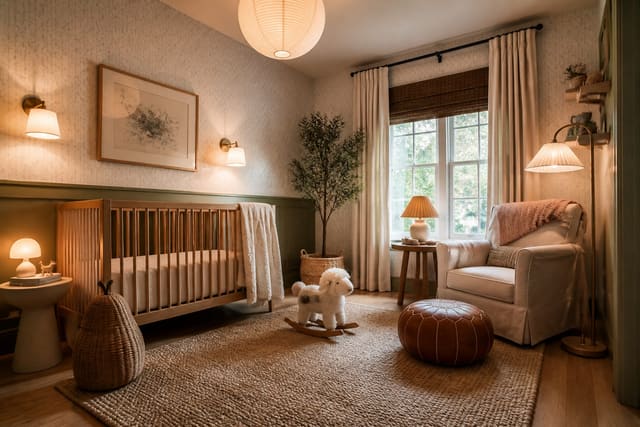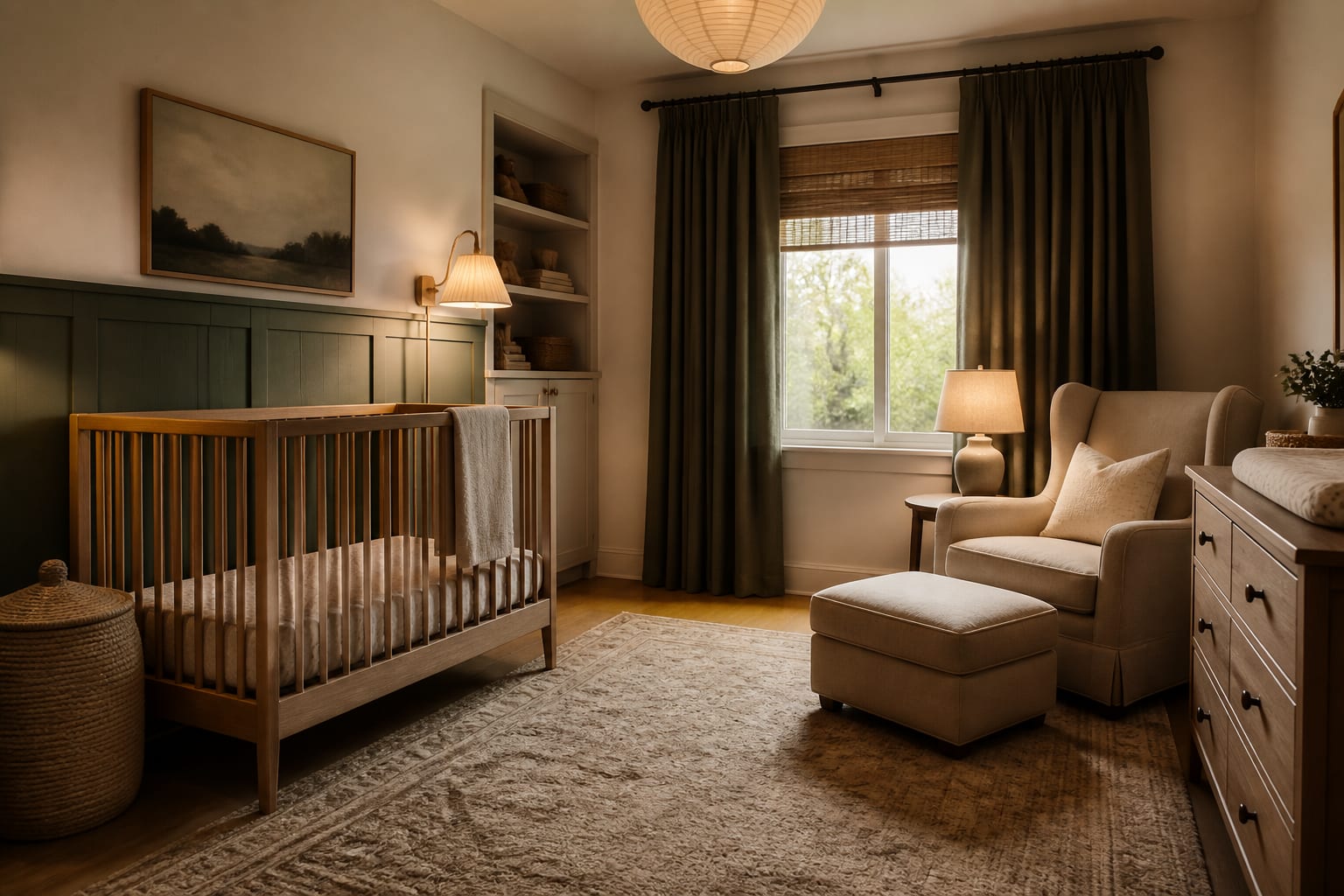
AI nursery design turns a photo of your baby's room into visual concepts for crib placement, storage, lighting, color, and feeding zones before you buy anything. It's a planning draft, not a safety authority: assembly, anchoring, cord safety, and sleep guidance still come from manufacturer instructions and pediatric standards. Start with clear specs instead of vague style words for better results.
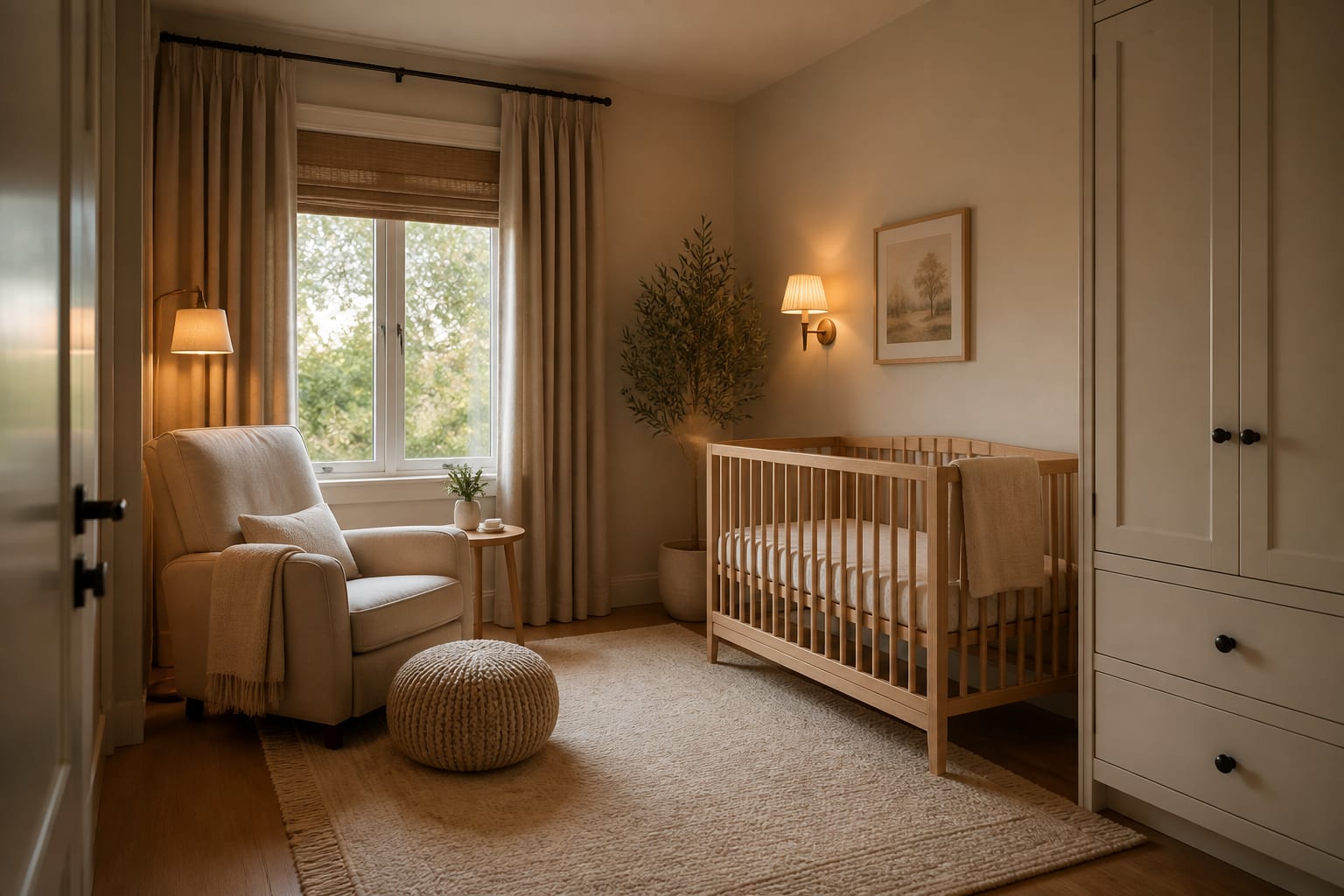
How does AI nursery planning actually work?
Upload a straight, well-lit photo showing the full room: windows, closet, door swing, ceiling light, outlets, vents, and any furniture you're keeping. The AI generates layout and style concepts you can compare before committing to paint or furniture. For style language, browse practical nursery design ideas so your prompt says "warm white walls, natural wood crib, blackout curtains, closed diaper storage, washable 5' x 8' rug" instead of "soft and cute."
What makes a nursery feel calm instead of just cute?
Babies bring visual chaos fast: bottles, wipes, swaddles, and gear multiply overnight. If walls, rug, curtains, and furniture are already busy, the room has no visual rest. Pick one direction and let everything else support it:
- Warm neutral: cream walls, oak furniture, linen curtains, clay rug, aged brass lighting.
- Soft color: pale blue or mushroom walls, white oak furniture, woven texture.
- High contrast: keep the contrast in art or one dresser color, not every surface.
Keep the crib wall settled: one large art piece, a painted arch, or a shallow ledge is enough. Skip heavy frames, loose fabric, or reachable cords near the sleep zone.
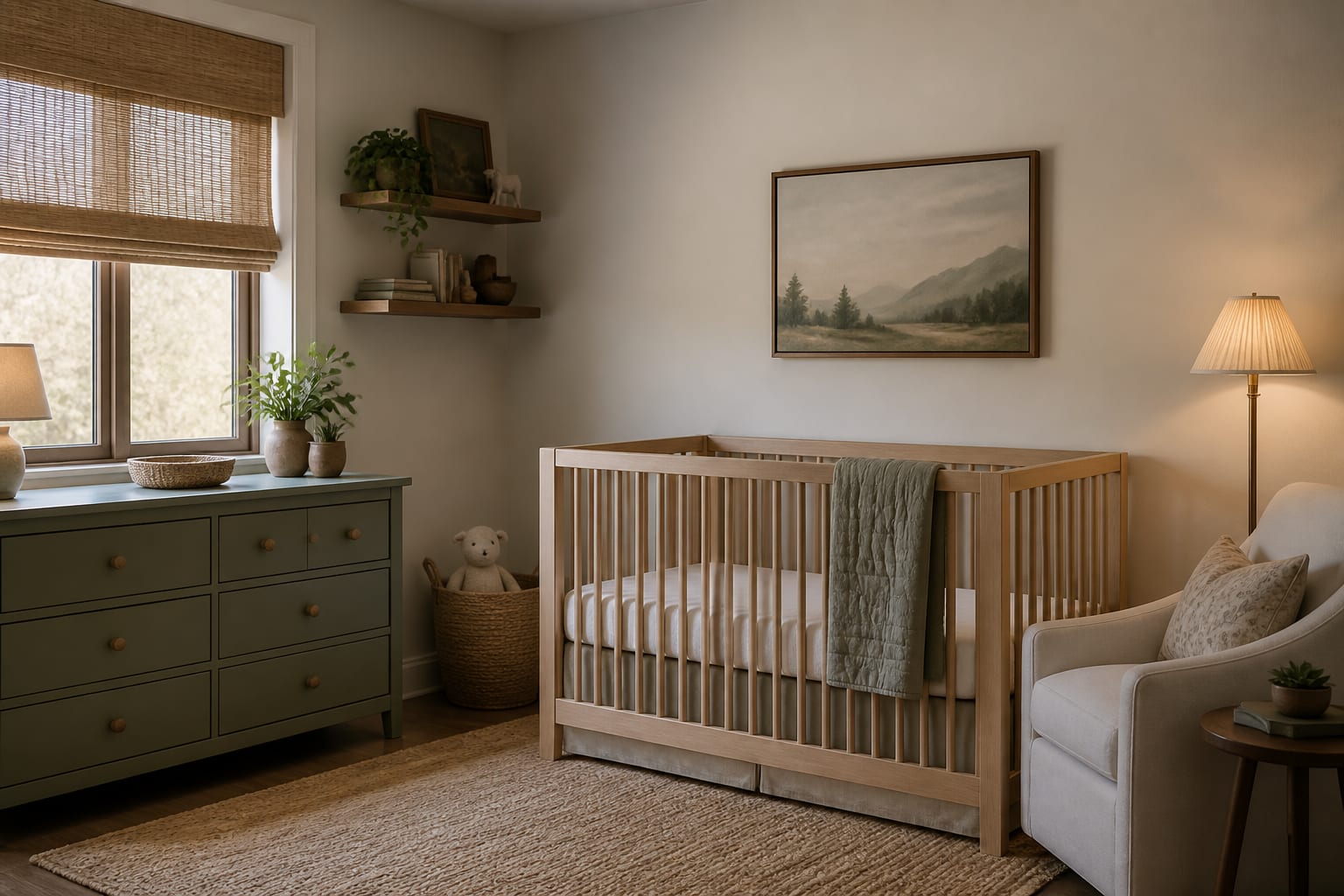
How should sleep, feeding, changing, and storage share one room?
Assign every zone a job before choosing a theme. A small nursery needs fewer conflicts between crib, glider, dresser, and nighttime path, not more decoration.
- Keep the path from door to crib around 30"-36" clear for half-awake nighttime care.
- Give the feeding chair a side table (16"-20") and outlet nearby for water, burp cloths, and light.
- Leave about 24" in front of the dresser so drawers open fully for diapers and clothes.
- Layer light instead of relying on one ceiling fixture: 2700k near the chair, 3000k for changing tasks.
- Size the rug to the furniture group: 5' x 8' for smaller rooms, 8' x 10' when crib, glider, and dresser need one shared field.
Renters have extra limits. If painting or wall-mounted storage isn't allowed, use freestanding bookcases (anchored properly), plug-in lamps with managed cords, peel-and-stick panels, and curtains on approved hardware. See AI room design for rentals for reversible fixes that still work in a baby's room.
What nursery design mistakes should you avoid?
Most mistakes come from designing for a photo, not the first six months of use.
- Theme before layout: Choosing animals or stars before the crib wall and storage plan means the room looks cute but doesn't function. Let the theme live in art or bedding instead.
- Crib under the prettiest window: Light, drafts, and curtain cords complicate sleep safety. A solid wall is often the better choice.
- Open storage for everything: Diapers, creams, and pump parts create clutter fast. Use closed drawers and baskets for small items; reserve open shelves for books and one toy basket.
- Ignoring adult comfort: The glider needs back support, a reachable lamp, and enough floor clearance to stand without shuffling around an ottoman.
- Designing only for a newborn: The baby stage moves fast. Leave room for a future play zone and keep the dresser useful past the diaper years.
How do you write a good AI nursery prompt?
Measure the room and name your nonnegotiables first. Upload a straight daylight photo from the doorway, keeping the radiator, narrow closet, or off-center window visible if the AI needs to solve around them.
Example prompt: "Redesign this 10' x 12' nursery while keeping the existing wood floor, white closet doors, ceiling light, and window location. Add a natural wood crib on a solid wall, a glider with a small side table, blackout curtains hung 8" above the trim, a 5' x 8' washable rug, a dresser with changing storage, closed baskets, warm 2700k lamps, and a soft green and cream palette. Avoid construction, dangling cords, oversized wall decor near the crib, and furniture blocking the closet."
Generate three versions: one maximizing storage, one improving feeding comfort, and one prioritizing the calmest sleep zone. The best result is the one where the crib feels settled, the chair has a purpose, the dresser opens fully, and the nighttime path makes sense, not the most styled image.
If the nursery shares space with a larger bedroom plan, borrow scale ideas from AI bedroom design layouts so baby furniture doesn't overwhelm the room.
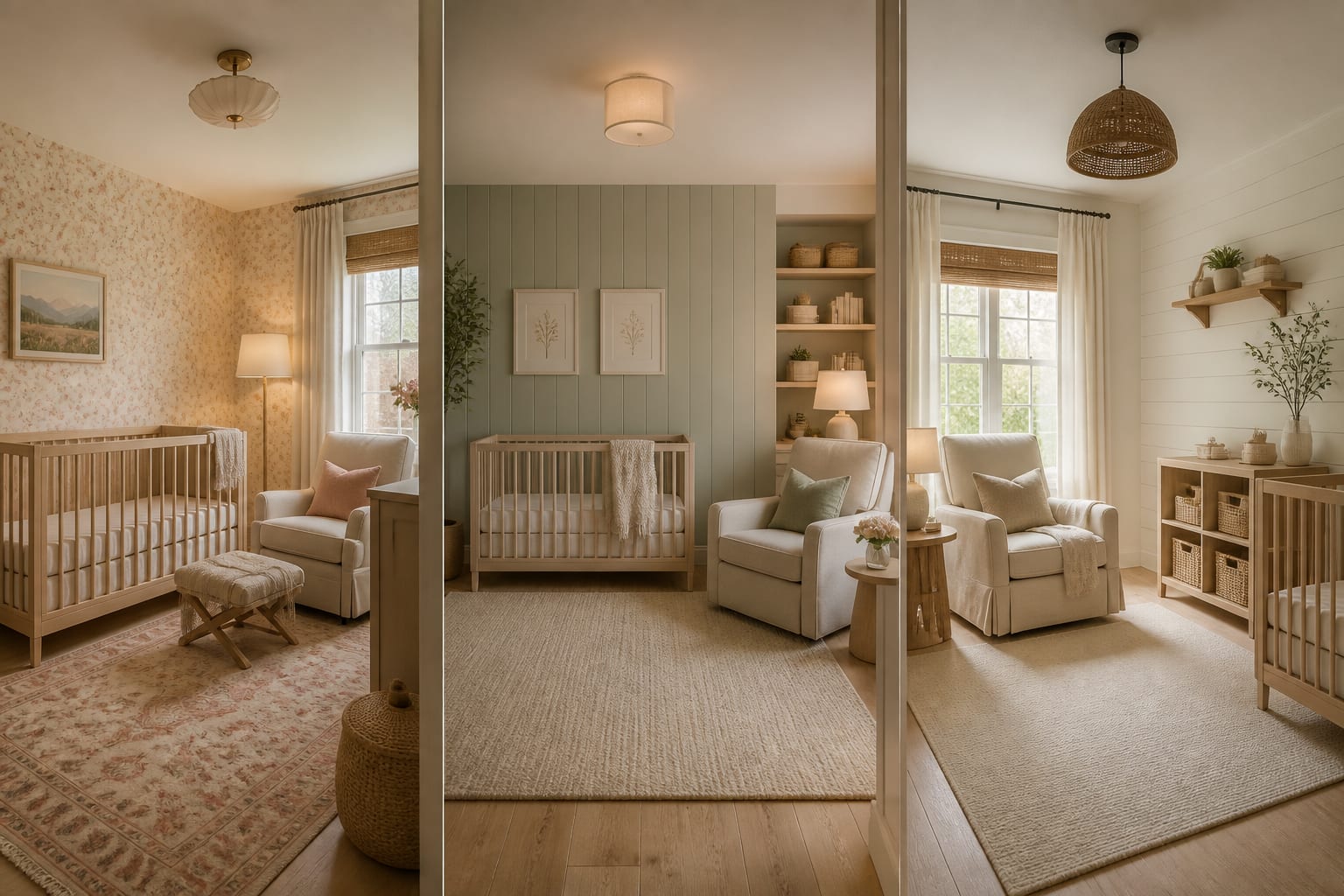
Which finishing choices help the nursery grow up well?
Restrain spending on the crib, dresser, glider, rug, and window treatment so they can survive a second baby or a future toddler room. Let personality live in art, bedding, decals, and one accent color you can change later.
Blackout curtains matter more than most decorative choices. Hang them 6"-10" above the casing and wider than the frame so panels clear the glass during the day; keep cords and hardware out of reach of the crib.
Repeat one finish at least three times to tie the room together: natural wood on crib, frame, and basket; matte white on lamp and shelf; or muted green on art, pillow, and dresser knob. The real test: can a tired adult feed, change, and soothe the baby without turning on a harsh light or moving furniture? If yes, the room is working.
Frequently Asked Questions
Can AI design a full nursery for me?
AI can generate layout and style concepts for crib placement, storage, and color from a room photo, but it can't replace manufacturer safety instructions, mattress fit checks, or current sleep guidelines. Treat the output as a planning draft to discuss with your partner, then verify dimensions and safety details before buying.
Where should the crib go in a nursery?
Place the crib on a solid wall away from windows, cords, radiators, and heat sources rather than under the prettiest window. This avoids drafts, light interference, and reachable hardware near the sleep zone while keeping the room visually calmer.
What size rug works best in a nursery?
A 5' x 8' rug anchors most small nurseries, while an 8' x 10' rug suits rooms where the crib, glider, and dresser need one shared soft field. Choose a washable material given the inevitable spills and diaper changes.
How much walking space does a nursery need?
Keep a clear path of about 30"-36" from the door to the crib and changing area. This width lets a parent carrying a baby move safely at night without clipping the glider, hamper, or dresser corner.
What lighting works best for a nursery?
Layer light instead of relying on one ceiling fixture: 2700k bulbs feel gentle near the feeding chair, while 3000k works better for closet or changing-table tasks. This lets you shift from bright cleaning light to dim nighttime feeding easily.