The best nursery design ideas balance a soothing newborn environment with furniture and storage that survive the toddler years. Start with a soft, low-contrast palette, build in generous storage, add warm dimmable lighting for night feeds, and pick convertible furniture so the room adapts as your baby grows, without a full redo eighteen months in.
What Color Palette Calms a Nursery?
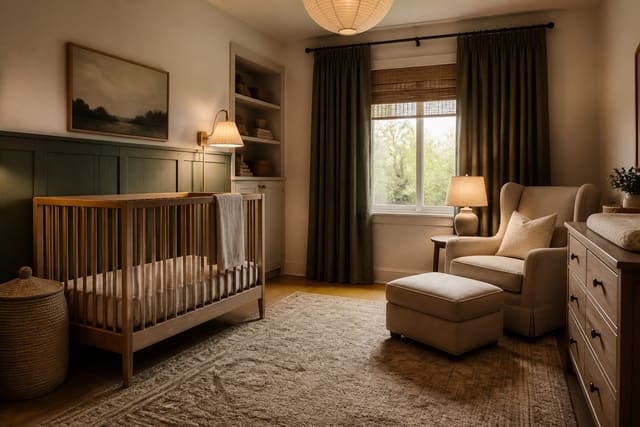
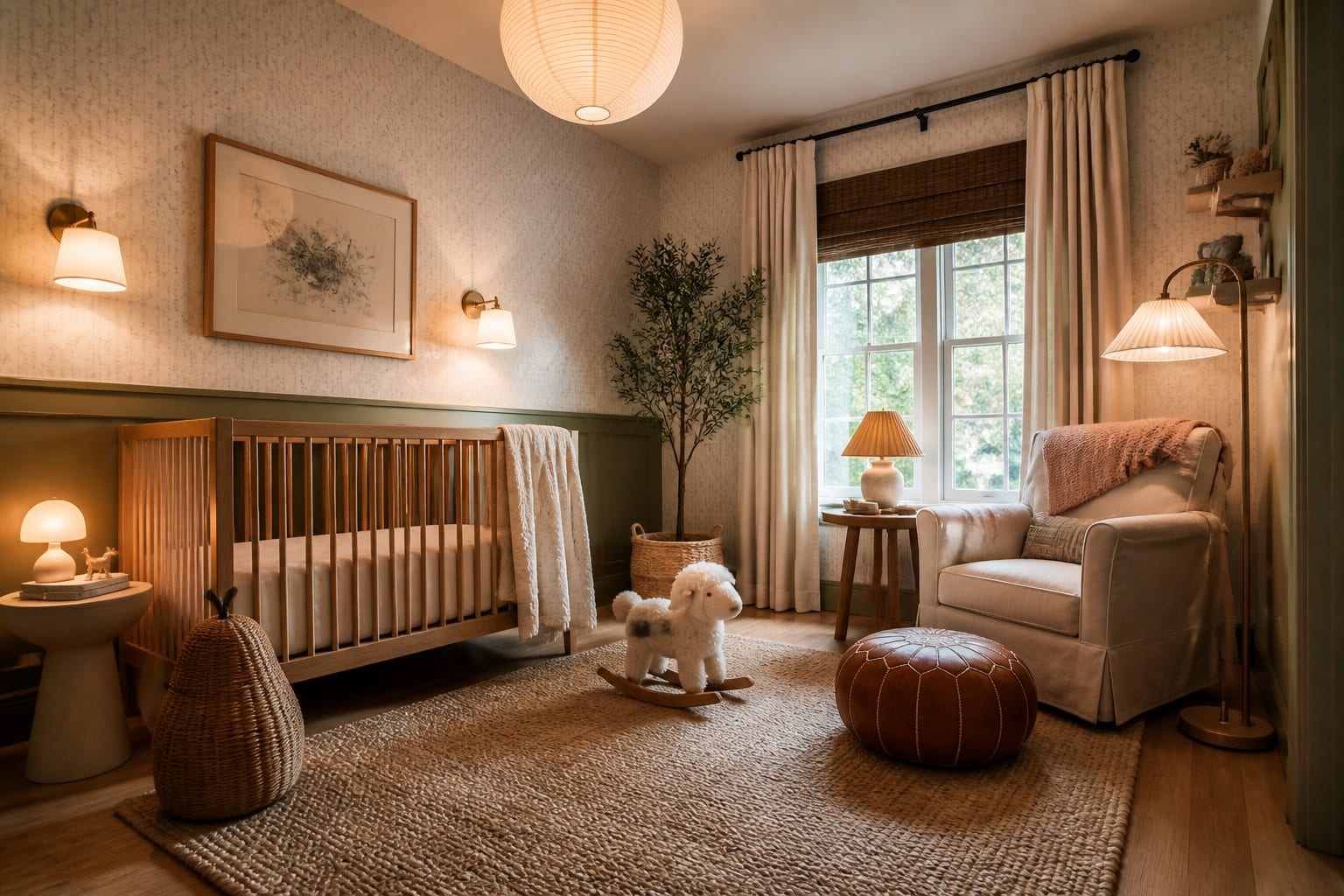
Calm color settles a baby's developing eyes and nervous system far better than high-contrast, busy themes. Soft, muted tones, warm white, sage, dusty blue, oatmeal, pale terracotta, create a restful backdrop that won't overstimulate at bedtime. Save bold pattern for one controlled spot: a painted accent wall behind the crib, a section of removable wallpaper, or a cluster of framed prints, rather than wrapping the whole room in it.
Removable wallpaper is especially useful here, since the print you love for a newborn rarely suits a four-year-old, and you'll want to change it without repainting. Layer in softness through texture instead of color: a washable rug, woven baskets, a knit throw over the glider, and blackout curtains in a calming shade. Keep the ceiling and most walls light so they reflect what little night light you use and keep daytime naps from feeling cave-like.
See also our guide to AI Nursery Design Ideas for more on nursery palettes.
How Do You Plan Storage That Lasts?
Baby gear accumulates faster than almost anything else, so plan for the toddler stage from day one. A dresser topped with a contoured changing pad does double duty, saving you from buying a separate changing table you'll retire within months. Think in zones: diapering supplies within arm's reach of the change surface, daily clothing in top drawers, and overflow, next-size-up items, seasonal gear, in labeled closet bins.
Low open baskets along the floor work now and become a spot where a toddler learns to put toys away. Use vertical space too: wall shelves mounted out of reach hold books and keepsakes while keeping surfaces clear. A nursery with honest, generous storage stays peaceful through the early chaos; one short on storage turns into a floor covered in gear within weeks.
For a related take on room organization, read Living Room Without TV Ideas.
What Lighting Works Best for Night Feeds and Naps?
Nursery lighting has one unglamorous job: let you function at 3 a.m. without fully waking anyone. A dimmable, warm light source near the feeding chair and changing area, a small lamp on a low dimmer or a warm 2700K bulb, lets you handle a feed or diaper change without the jolt of a bright overhead fixture.
Keep day and night light separate. Blackout curtains or a well-fitted shade darken the room for naps, while a dimmer on the overhead fixture lets you flood the room for tidying and drop it low for wind-down. Avoid cool, bluish bulbs entirely; that office-grade light works against sleep for both baby and parent. A plug-in amber night light placed low and away from the crib gives just enough orientation to move safely in the dark.
How Do You Design a Nursery That Grows With Your Baby?
The smartest nursery decisions refuse to become obsolete. A convertible crib that becomes a toddler bed and then a daybed can serve from birth into the preschool years, and a dresser with timeless lines outlives any theme painted around it. Lean on changeable layers for anything trend-driven:
- Removable wallpaper instead of a permanent mural
- Swappable art and frames
- Bedding, basket textiles, and a rug you can roll up
Choose a neutral, durable foundation and let cheap, easy elements carry the personality, so updating the room costs an afternoon rather than a renovation. Leave a clear stretch of floor for a play mat now that becomes space for blocks or a small drawing table later. On safety, the planning is yours: anchor dressers and bookcases to the wall, follow crib and mattress guidelines from the manufacturer, and keep cords and small objects out of reach. A rendering can help you picture color and layout, but those protective choices rest with you, not with any tool.
Bring the Look Home With Re-Design
Picturing a calm nursery before the baby arrives is hard, so test the look first. Upload a photo of the room to Re-Design and preview soft palettes, an accent wall behind the crib, and warm lighting moods rendered in your actual space. Treat the rendering as a planning aid; anchoring, hardware, and safety choices stay with you and the product guidelines.
Frequently Asked Questions
What color palette works best for a nursery?
Lead with soft, muted tones such as warm white, sage, dusty blue, or oatmeal, since calm, low-contrast color soothes a newborn far better than busy themes. Concentrate any bold pattern on a single accent wall or removable wallpaper behind the crib. Build interest through texture, a washable rug, woven baskets, a soft throw, rather than loud color.
How do I plan nursery storage that lasts?
Plan for the toddler stage from day one, since baby gear multiplies fast. Use a dresser with a contoured pad as the change surface so one piece does two jobs, keep diapering supplies within reach, and route overflow into labeled closet bins. Add low baskets a child can later reach to learn tidying.
What furniture actually converts as a baby grows?
A convertible crib that becomes a toddler bed and later a daybed can last from birth into the preschool years. A dresser with timeless lines, doubling as a changing station now, outlives any nursery theme. Pairing durable furniture with swappable textiles and art lets the room's look change without replacing pieces.
Is an AI design tool safe to use for planning a nursery?
It's a useful planning aid for picturing color, layout, and lighting before you commit, but it is not a safety authority. Use it to settle the look, then anchor dressers and bookcases to the wall, follow the manufacturer's crib and mattress guidelines, and keep cords and small objects away from the crib yourself.