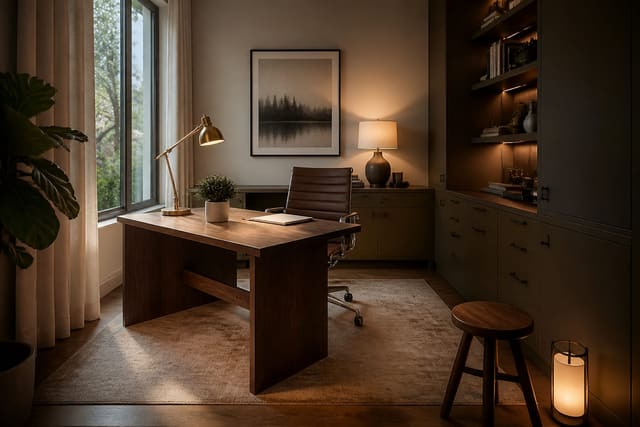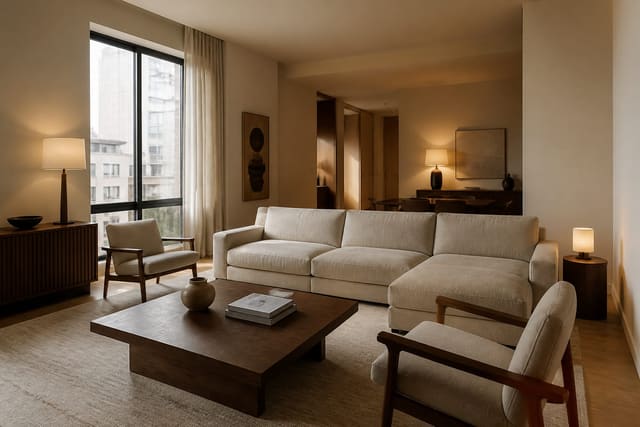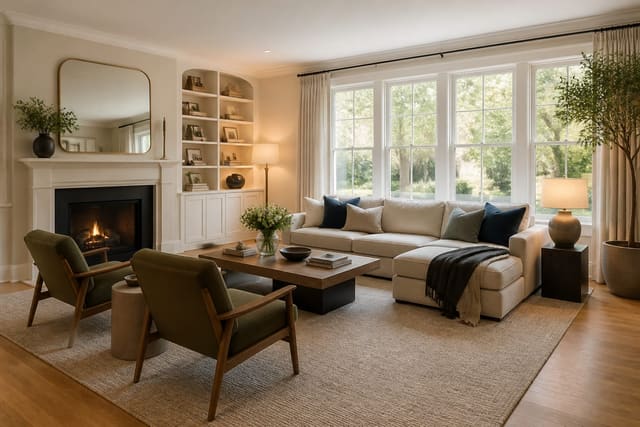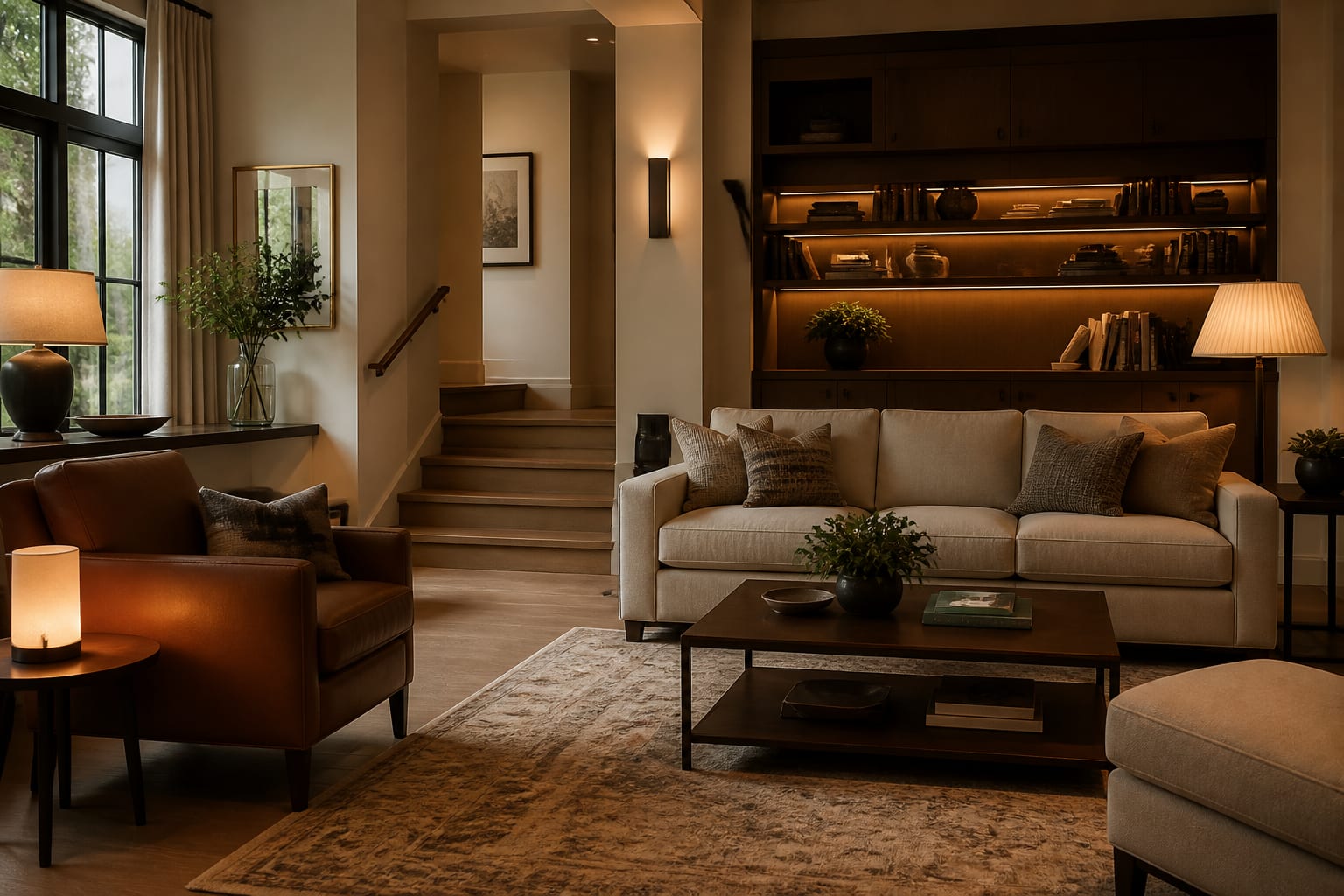
AI senior friendly home design uses your real room photos to preview safer clearances, furniture, lighting, storage, and finishes before you buy or build anything. It can't diagnose mobility needs or approve construction, but it can show whether a safer layout still feels like a home instead of a care facility. The best prompts name real constraints: knee pain, walker width, poor night vision, or a favorite recliner that must stay.
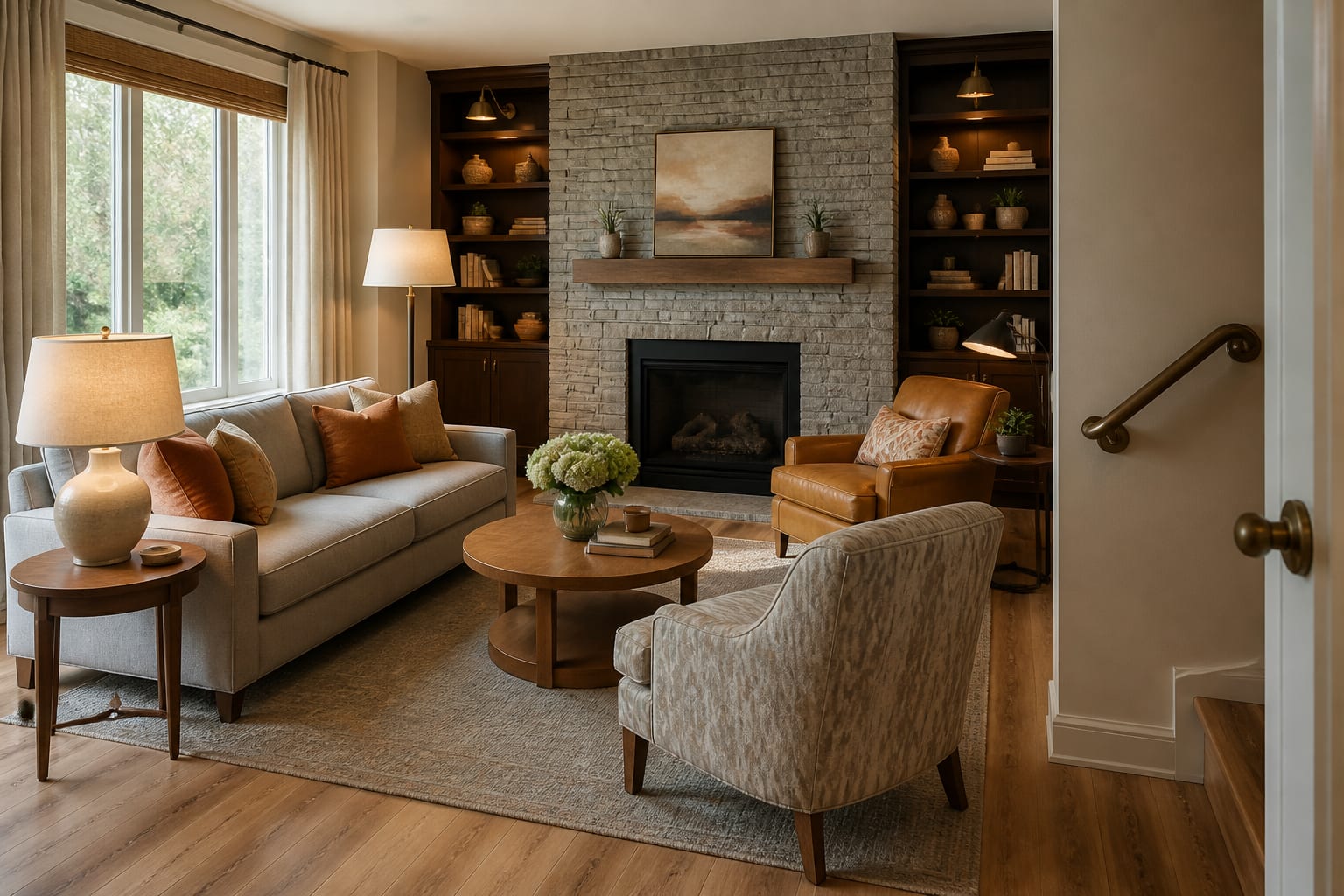
Which accessible choices come before decorating?
Decide how the body moves through the room before picking colors. A slippery floor or a low sofa is harder to fix later than a paint choice. Beauty should follow a plan that already respects balance, reach, vision, and fatigue.
| Element | Target spec | Why it matters |
|---|---|---|
| Main walkways | 36 in (30 in at tight pinch points) | Prevents sideways shuffling and keeps a clear route to seating, bed, bath, kitchen |
| Seating height | 18–20 in, sturdy arms | Supports standing without rocking forward or straining hips and knees |
| Task lighting | 2700K bedrooms/living rooms, 3000K kitchens/baths | Adds contrast for aging eyes without harsh glare |
| Flooring transitions | Flush thresholds, low-pile rugs with pads | Removes small trip points between rooms |
| Storage reach | Waist to eye level for daily items | Keeps meds, dishes, and glasses out of unsafe reach zones |
If a senior uses a desk for bills, telehealth, or hobbies, the same thinking applies to a safer work-from-home setup, including chair clearance, screen glare, and reachable storage.
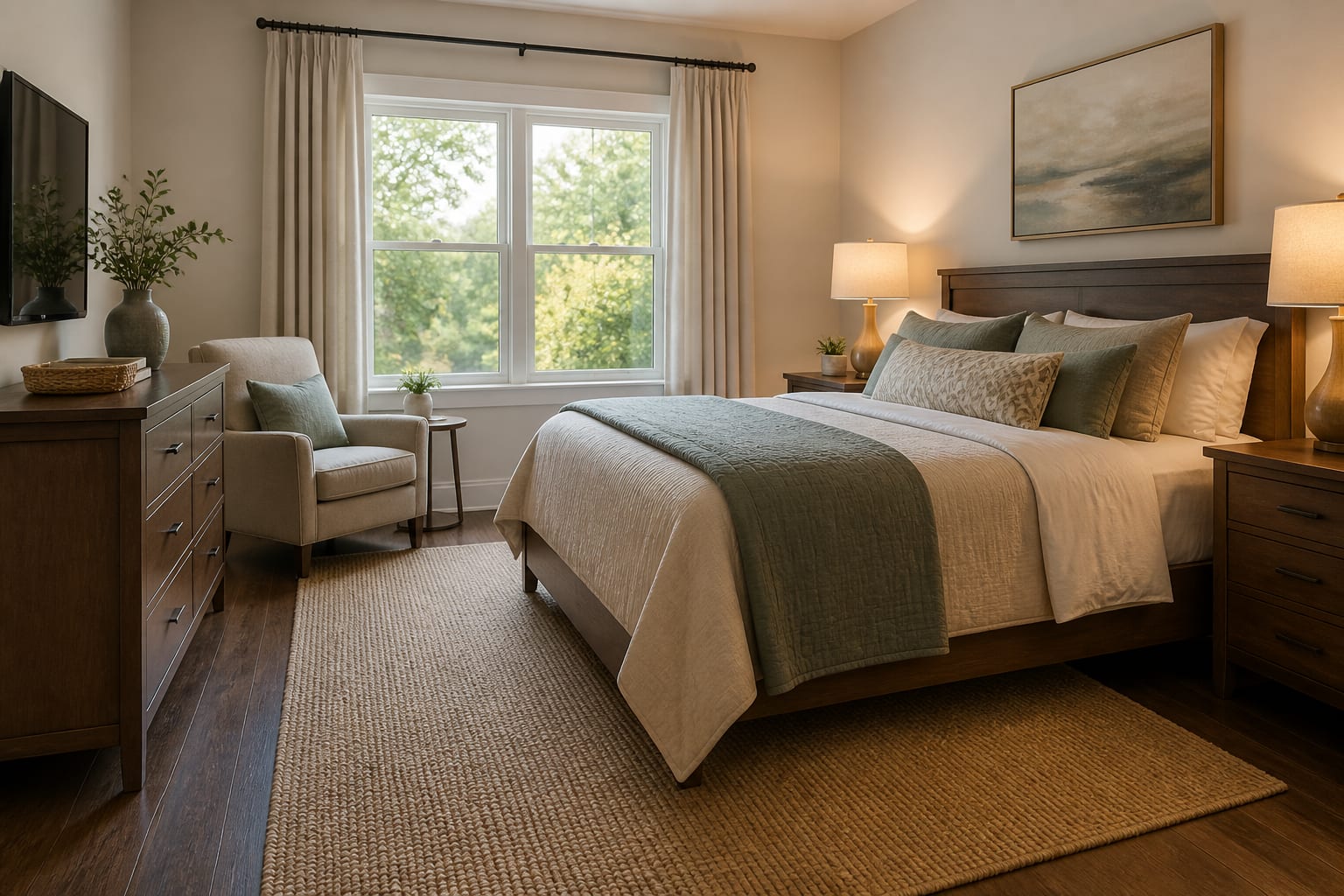
How do you make safety features look intentional?
Stop hiding accessibility and start coordinating it. A matte black grab bar looks sharp in a modern bath when it matches the faucet and towel hooks; a warm brass rail fits a traditional bath when it echoes the sconces and cabinet pulls. White plastic on beige tile looks clinical because it has no design allies.
Bathrooms need the most discipline. A curbless shower, if construction allows, should have proper slope, drain placement, non-slip tile, and a seat. Without a full remodel, a handheld shower on a slide bar, a fold-down teak seat, and blocking for future grab bars still read as refined. Towel bars are not safety devices — install grab bars where hands actually need support.
Entries benefit from a bench around 18 inches high with nearby arms and a 30–36 inch clear path past it, giving a place to sit while changing shoes. Kitchens need contrast and reach: under-cabinet lighting, contrasting cabinet pulls, and pull-out shelves help more than a stylish but shoulder-height microwave.
How do you preview aging-in-place changes with AI?
Upload a straight photo from the main doorway, then add measurements for doorway width, pinch points, sofa length, bed size, vanity width, shower opening, and any furniture that must stay. A strong prompt might read: design a senior-friendly living room that keeps the existing 84-inch sofa, adds two supportive armchairs, leaves a 36-inch route to the kitchen, uses a low-pile 8x10 rug, adds warm layered lamps, hides cords, avoids glass tables, and stays traditional but not formal.
- Run one version, then try a smaller coffee table or a round ottoman instead.
- Compare which version makes safer movement look natural rather than staged.
- Reject any change that alters real geometry — a widened hallway, a deleted radiator, a resized shower, or a low armless chair swapped in for style alone.
Crop bedrooms, medication areas, or mail before uploading, and review private AI room design workflows for sensitive rooms. The tool only needs geometry, fixed finishes, and furniture constraints — not prescription labels or addresses.
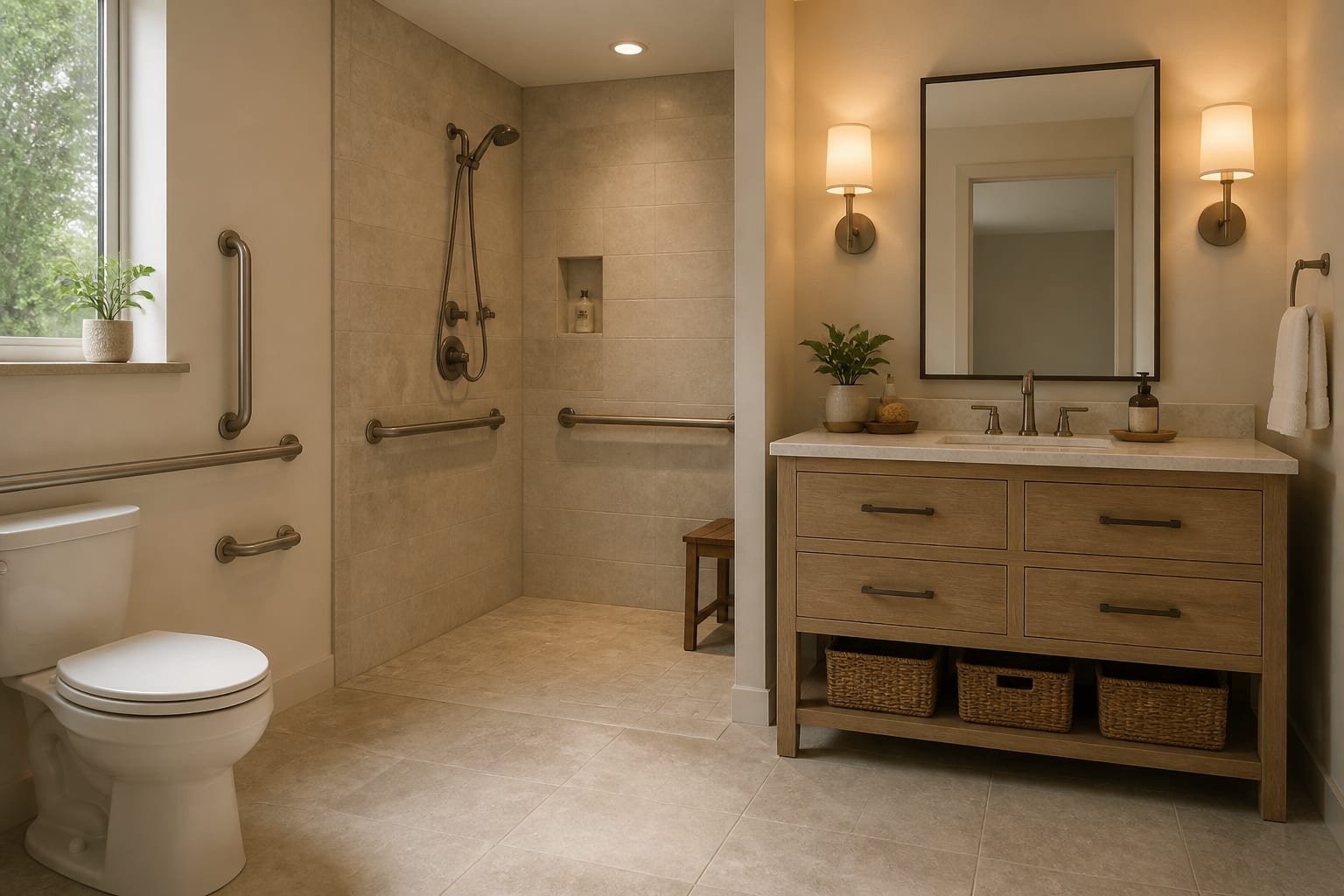
What mistakes should you avoid in senior-friendly design?
The most common mistake is making safety look temporary. A suction grab bar, loose rug, or clip-on light might solve one afternoon but rarely feels dignified long-term.
- Low, deep furniture looks relaxed but makes standing harder daily; test seat height and arm strength before choosing upholstery style.
- Glare from glossy tile or cool bulbs confuses depth perception; use matte surfaces and layered warm light instead of one bright ceiling fixture.
- Grab bars without blocking fail structurally; plan stud locations with a professional, then match the finish to nearby hardware.
- Too many small side tables create obstacle courses; one stable table beside a chair beats three decorative stands.
- Designing only for frailty can make a home feel prematurely limited; it should still host grandchildren, pets, and holiday meals.
There's also a resale angle for homeowners adapting a long-time house before a future move. Better lighting, circulation, and storage read as quality to many buyers, not just older adults — see an AI redesign for resale plan to keep that restraint intact.
When is the plan ready to buy or build?
The plan is ready when the safer version and the beautiful version are the same version. Confirm walking routes, seat heights, rug sizes, lamp placement, outlet access, cabinet reach, shower entry, and door swings before ordering anything.
Buy or build in this order: hazards first, then lighting, then seating and bed height, then storage, then rugs and window treatments, then decorative layers. A room with one good lamp, a stable chair, a clear path, and a coordinated grab bar beats a styled room that makes someone brace against the wall.
Frequently Asked Questions
Can AI design tools make aging-in-place rooms look less clinical?
Yes. AI previews let you test coordinated finishes, warm lighting, and furniture placement in your actual room photo, so safety features like grab bars or benches can match the room's style instead of looking added on. It won't approve construction or diagnose mobility needs, but it clarifies whether a safer layout still feels like home.
What clearance width do seniors need in main walkways?
Aim for 36 inches on primary routes to the bathroom, bedroom, kitchen, and entry. At unavoidable pinch points in older homes, 30 inches can work if the path stays clear of baskets, plant stands, and sharp corners.
What seat height works best for older adults?
Look for seat heights around 18 to 20 inches with sturdy arms that support pushing up to stand. Overly low or deep lounge furniture can trap people with hip, knee, or balance issues, even if it looks comfortable.
What light temperature is best for senior-friendly rooms?
Use warm 2700K bulbs in bedrooms and living rooms for a relaxed feel, and 3000K in kitchens and task-heavy bathrooms for better contrast. Layer task lighting at chairs, beds, and hallway routes rather than relying on one overhead fixture.
Are towel bars a substitute for grab bars?
No. Towel bars aren't rated to bear body weight and shouldn't be used for support. Install actual grab bars with proper wall blocking where hands need to brace, and choose a finish that matches nearby hardware for a coordinated look.
Should accessible design work with a home's existing style?
Yes. Accessible choices — grab bars, benches, contrasting pulls — should match the room's existing finishes and hardware language. This keeps safety features from reading as clinical additions and helps the room feel intentional rather than retrofitted.