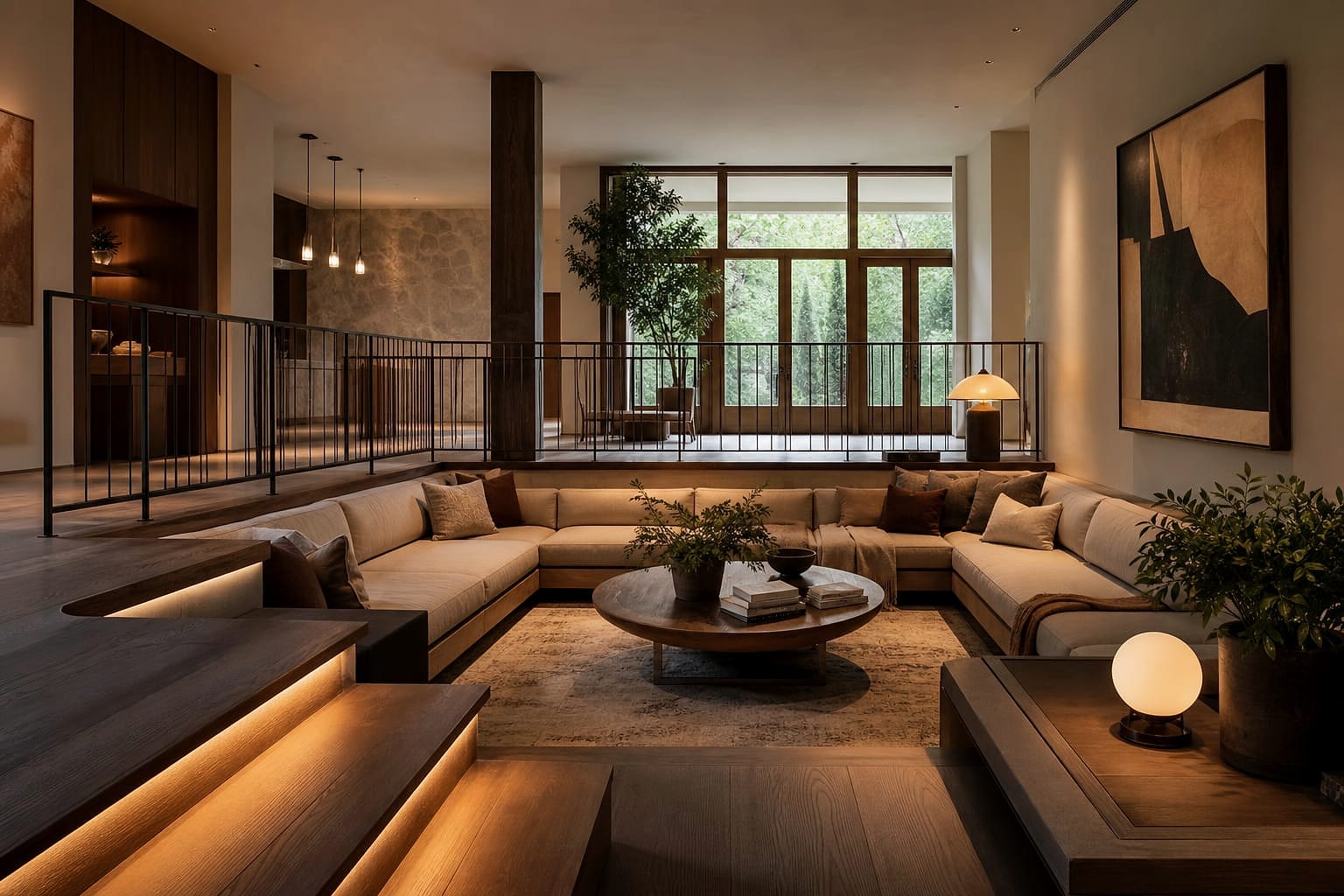
AI sunken living room design uses your uploaded photo to preview step-down seating, perimeter railing or none, fireplace anchor, and rug scale so a conversation pit reads intentional instead of dated. Don't erase the drop unless it's unsafe or unusable — the pit gives the room architecture, and architecture is expensive to fake. The fix is making the level change feel deliberate, not accidental.
How does AI handle a sunken living room design?
AI reads the uploaded photo for the level change, step edges, wall openings, ceiling height, flooring, and furniture scale, then generates options that modernize the pit without pretending it's flat. It won't know your exact joist structure or local code, but it gives you fast visual comparison before you buy a sectional, rail, rug, or light fixture.
Every piece of furniture in a sunken room has to work from both elevations. A sofa back that feels fine from inside the pit can look like a barricade from the dining room above. AI previews catch these scale problems before you spend money.
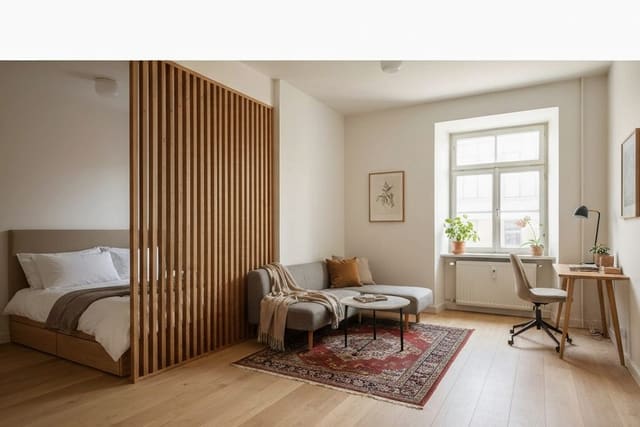
Be specific in your prompt: number of steps, existing fireplace material, rail type, ceiling height, window locations. If the pit shares space with a small apartment-style layout, check AI studio apartment design for tight layouts before asking for bulky lounge furniture — sunken spaces punish oversized pieces fast.
The decision that makes a conversation pit feel intentional
The key choice: should the edge disappear or become the feature? Old pits often fail because the edge is half-hidden — one lonely step, a vague carpet change, a sofa floating with no relationship to the drop. That makes guests hesitate.
At 4–6 inches, continuous flooring can work because the change is subtle. At 7–8 inches, define the edge clearly with darker stair nosing, a wood trim band, LED tape in a reveal, or sconces that make the step legible at night.
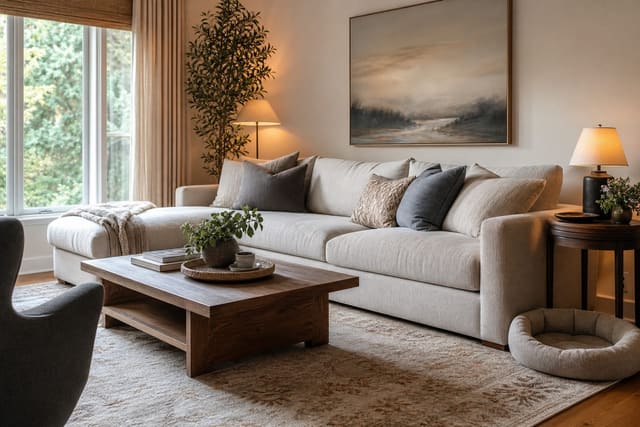
Furniture should reinforce the pit shape. In a square pit, try an L-shaped sectional plus one swivel chair instead of four unrelated pieces. In a long rectangular pit, two facing sofas or a sofa-and-chaise pairing reads cleaner. Keep 18–24 inches between sofa and coffee table, and avoid sharp glass corners near a step. If pets or kids use the space daily, check the pet-friendly sofa fabric guide before committing to a fabric.
Test this on your own room photo with ReDesign and keep the room structure, daylight, ceiling line, and main path visible so the preview solves the space you actually have.
What changes in the before-and-after?
A convincing before-and-after doesn't flatten the vintage character. It edits what makes the pit feel accidental: tired carpet, weak lighting, wrong sofa height, and a step edge lost in shadow.
| Before problem | Better after move | Spec to preview |
|---|---|---|
| Pit reads like an old carpeted hole | Continuous flooring or a bound area rug filling the lounge | 8x10 or 9x12 rug, depending on footprint |
| Sofa backs block the upper-level view | Lower seating with cleaner arms | 16-18 inch seat height, arms under ~28 inches |
| Step edge disappears at night | Warm step lighting, sconces, or contrast trim | 2700K-3000K light, avoid blue-white bulbs |
| Furniture ignores the pit shape | Arrange seating around the drop, not across it | Keep 30-36 inches for upper-level circulation |
| The space feels like a time capsule | Keep one vintage detail, modernize the rest | Pair brick, wood, or built-ins with simpler upholstery |
Keep one period detail — a brick fireplace, timber rail, terrazzo, or original paneling — and simplify everything around it. A cream bouclé sofa, walnut ledge, or smoked bronze floor lamp can modernize the pit without stripping its identity.
Use AI design to preview the pit before you commit
Upload one photo from the upper level looking down into the pit, and a second from inside the pit looking back at the main room. These two views show whether the redesign works as architecture, not just as a pretty seating vignette.
Run separate versions instead of one vague prompt: continuous flooring, a large rug with painted rail, built-in perimeter seating, and a flexible sofa-and-chair plan. If there's a fireplace, ask for one version where it dominates and one where the seating circle dominates.
Keep structural posts, radiators, floor outlets, vents, or handrails visible in the photo and named in the prompt. Reject any image that erases the step, widens the pit, or moves a fireplace unless construction is actually planned.
Ask for tangible design moves: low walnut platform sofa, washable ivory rug, blackened bronze sconces at 60-66 inches, 3000K step lighting, matte clay walls, round 36 inch coffee table. For broader style range, browse AI living room design ideas, then bring the best concept back to your sunken layout.
Common sunken living room mistakes
- Buying a tall sectional because the room feels large from above — tall backs block off the pit. Choose lower profiles, add comfort through depth and upholstery instead of height.
- Ignoring the step edge until someone trips, especially when flooring color matches on both levels. Add contrast at the nosing or a wash of warm light along the step's vertical face.
- Scattering furniture as if the room were flat. Keep the conversation group inside the lower zone; use the upper level for circulation, a console, or a reading chair.
- Overcorrecting with a full infill when a design fix would work. Filling a pit can suit accessibility or resale needs, but it isn't automatically the most beautiful answer — preview a modernized version first.
- Choosing glossy finishes near the floor change. Shiny tile and glass tables create glare on the step. Matte paint, low-sheen wood, and textured performance upholstery feel more relaxed.
For the broader upload workflow, use the AI design complete guide as the parent checklist, then return here for scale, light, and layout choices specific to the pit.
Frequently Asked Questions
Can AI design a sunken living room from one photo?
Yes — upload a photo showing the level change, perimeter, and adjacent floor, and the AI tests built-in benches, modular sectionals, fireplace anchors, and railing options while preserving the step-down dimensions. Treat it as a scale and circulation test, not a shopping command, and keep openings, ceiling line, and daylight visible.
How deep should a sunken living room be?
Two steps down, about 14-16 inches, reads as a defined zone without becoming a trip hazard; deeper than 18 inches usually requires a railing under residential code. Compare results against real use — door swing, chair pullout, walkway width, and evening light matter more than a perfect catalog angle.
Do you need a railing on a sunken living room?
It depends on local code — most US jurisdictions require a railing on grade changes over 30 inches, while a 14-16 inch step is usually railing-optional, with bench-back seating doubling as a soft barrier. Run a conservative version and a bolder version, then pick what still works with existing windows and trim.
Built-in seating or modular sectional for a sunken room?
Built-in wins when the room is permanent and seating needs to wrap three sides; modular wins when the household changes often or resale is likely within 5 years, since built-ins are a love-it-or-rebuild-it commitment. Use a preview to narrow measurements before ordering anything custom.
How do I light a sunken living room?
Use one warm 2700K pendant centered over the pit on a dimmer, perimeter wall sconces at the upper floor edge, and a floor lamp at any reading corner. Recessed overhead lighting alone makes the pit feel cave-like at night.
Ready to see this on your own room? Open Re-Design and run the preview before you buy, paint, drill, or move furniture.
Three transformations to try
1. Built-in bench pit pass with fireplace anchor and pendant 2. Modular sectional pass with no railing and floor lamps 3. Conversation pit pass with carpet wraparound and low table