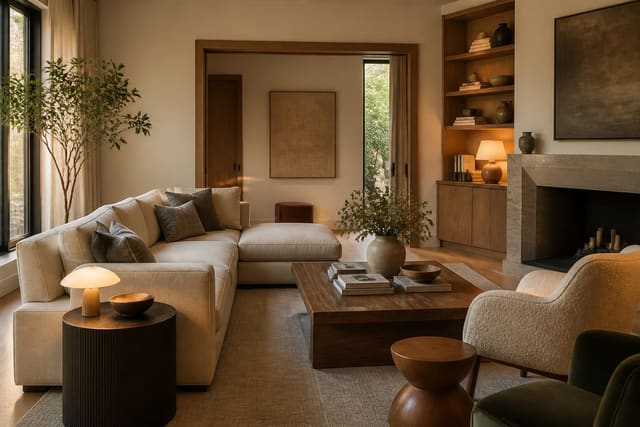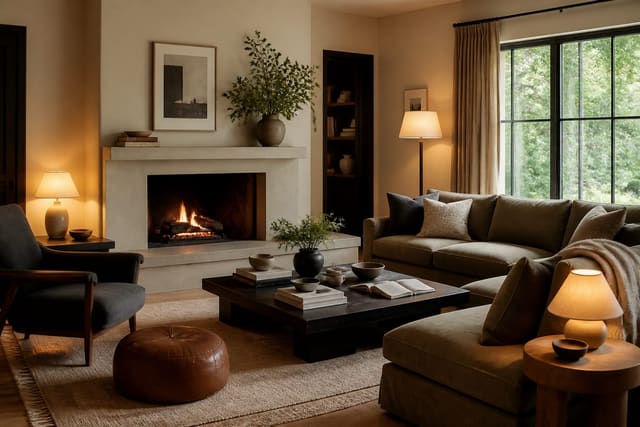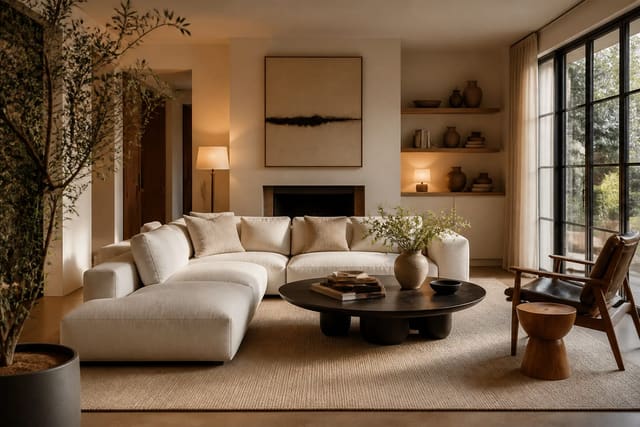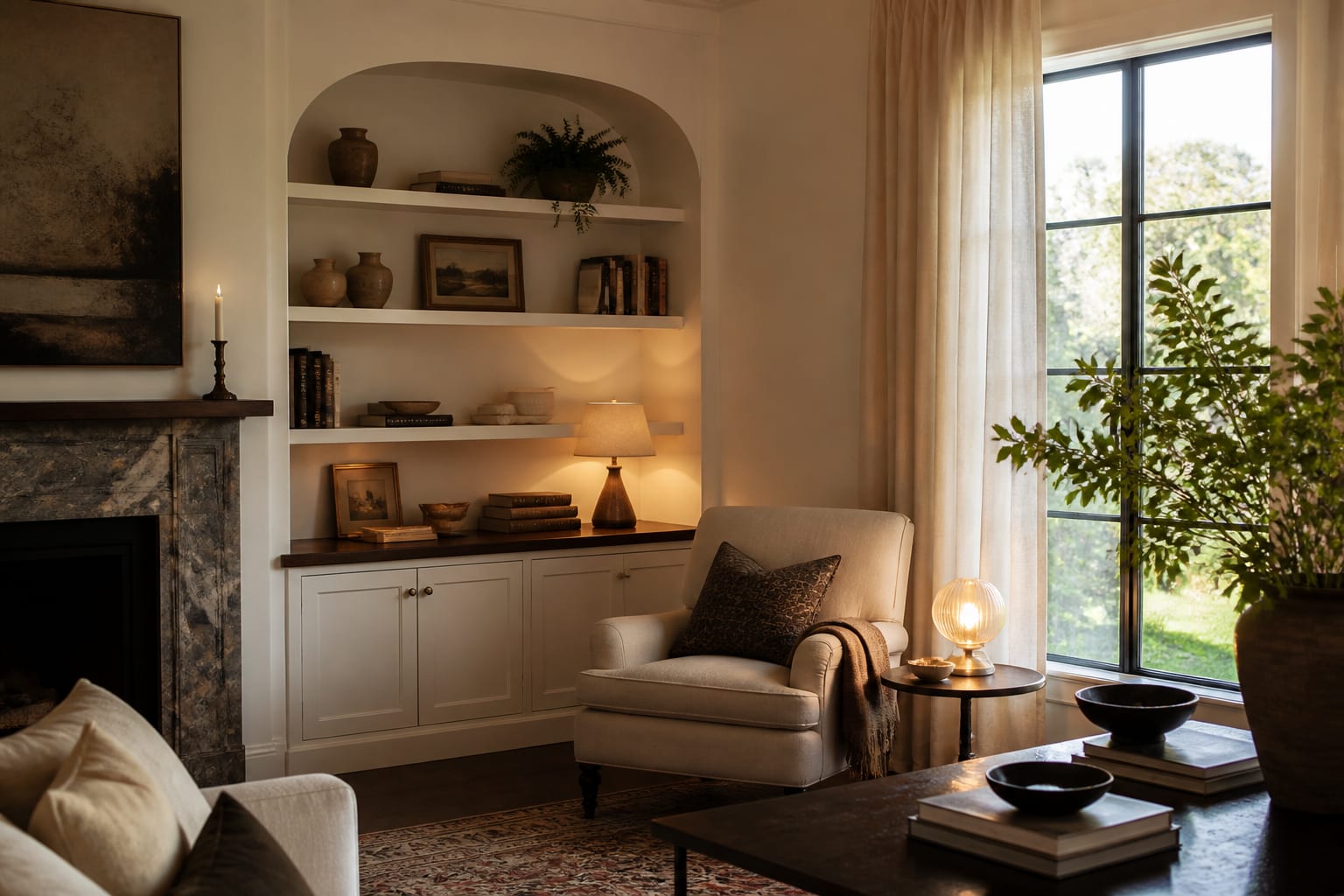
Alcoves are the most under-used square footage in a living room. I think the two recesses flanking a chimney breast are quietly the best design opportunity most homes have, and people waste them by shoving a floor lamp in one and forgetting the other exists. They're framed, symmetrical, and the right depth for storage or display without eating into the room.
My read is that the worst thing you can do with an alcove is treat it as leftover space. A recess that's 10 to 14 inches deep is purpose-built for shelving; one a little deeper can hold a desk, a bar, or a seat. Below are the approaches that work, organized from full commitment to a single weekend afternoon. Before you pick one, spend ten minutes measuring: width at the top and bottom (older walls taper), depth, and the height to any picture rail. Those three numbers rule out half the options and make the rest obvious.
Built-in joinery: the full commitment
Full-height built-ins are the answer when you want the alcoves to disappear into the architecture. Run cabinets to about 30 inches tall for a base, then open shelving above, and you get hidden storage plus a display zone. The detail that makes it look bespoke rather than flat-pack is setting the face of the joinery back 2 to 3 inches from the front of the chimney breast, so the recess still reads as a recess.
Color choices change everything here. Matching the joinery to the wall makes the room feel larger and calmer; painting it a contrasting tone turns the alcoves into a feature. If you're choosing a palette, it's worth looking at living room color ideas before you commit a whole wall of cabinetry to one hue. Built-ins are the priciest option, but they also add the most usable storage.
Proportion is where DIY built-ins usually fall down. The base cabinets want to land around 28 to 32 inches tall so the worktop above them works as a display ledge at a comfortable height. Above that, keep your shelf gaps consistent, 12 to 14 inches reads as a library, while a single oversized 18-inch gap near the top gives a tall object room to breathe. If the two alcoves flanking a chimney aren't perfectly symmetrical, and in older homes they rarely are, build to the narrower one and pack the difference behind a scribe panel so the fronts still line up. That symmetry is what your eye reads as expensive.
Shelving and display: the flexible middle
Not everyone wants joinery. Floating shelves give you 80% of the look at a fraction of the cost and let you change the layout later. Here are alcove ideas across effort levels:
- Full-height floating shelves, spaced 12 to 14 inches apart, for a library wall effect.
- A single thick 2-inch oak shelf at picture-rail height to break up a tall recess.
- Asymmetric shelves on one side, a hanging plant on the other, for a relaxed look.
- A painted back wall behind glass-front cabinets to make ceramics pop.
- Stacked baskets on the lower half for toys or throws, open display above.
- A narrow bar zone with a tray, two bottles, and stemware in the deeper recess.
- Vertical wallpaper or a tile panel on the back wall as a low-commitment feature.
The trick with any open shelving is restraint: leave roughly a third of each shelf empty so the objects you do display actually get noticed.
Floating shelves also solve the depth problem that traps people. A standard alcove at 10 to 14 inches deep is too shallow for a deep cabinet but perfect for a 10-inch shelf that holds books face-out or ceramics at the front edge. Brackets matter more than the board: a hidden-bracket floating shelf rated for at least 30 pounds will hold a row of hardbacks without sagging, where a cheap pin-fixed shelf bows within a year. Spend on the fixings and the cheap pine board will outlast its hardware.
Nooks, seating, and the no-TV option
Deeper alcoves, or a single wide recess, open up seating. A bench built across the bottom of an alcove with a 20-inch-deep cushion and a shelf above becomes a reading nook that costs less than an armchair and uses zero floor space. Add a wall sconce at 60 inches from the floor and you have a corner people will actually fight over.
If your living room doesn't center on a screen, alcoves can carry the whole room's interest instead, an approach that pairs well with living room without TV ideas. One alcove becomes a small home office with a 24-inch-deep desk; the other becomes display. And if your scheme leans pared-back, the recesses are the easiest place to add warmth without clutter, which fits neatly with neutral living room ideas where texture matters more than color.
Lighting is the detail that separates a nook you use from one you don't. A reading bench wants a directional light: a swing-arm wall lamp mounted around 48 to 60 inches up, or a recessed strip tucked under the shelf above. Aim for a warm 2700K bulb so the corner reads as cozy rather than clinical. For a display alcove, a slim LED strip run vertically behind the front edge of the joinery washes the back wall and makes ceramics and glass glow at night. Either way, plan the wiring before the joinery goes in; retro-fitting a cable into a finished built-in is the kind of small regret that nags for years.
If budget is the constraint, rank the options by impact per dollar. A $20 sample pot on the back wall and a single well-placed object is the cheapest meaningful change you can make. Floating shelves with good brackets land in the low hundreds. A built-in bench is a weekend of carpentry. Full joinery is the four-figure commitment. The honest move is to start at the cheap end, live with it for a season, and only build in when you're certain the recess earns it.
Use AI design to preview alcove ideas before you commit
Alcoves are deceptively hard to picture, because a recess looks completely different empty versus filled. Upload a straight-on photo of your chimney breast to Re-Design and you can test full built-ins against floating shelves against a reading nook in minutes, without sketching a thing or measuring twice.
The preview matters most for the color call. AI design lets you render the same alcove with a matched wall, a contrasting back panel, and a wood-toned built-in side by side, so you can see which one makes the room feel bigger before you buy paint or book a joiner. Seeing your actual recess rendered three ways beats imagining it once and hoping.