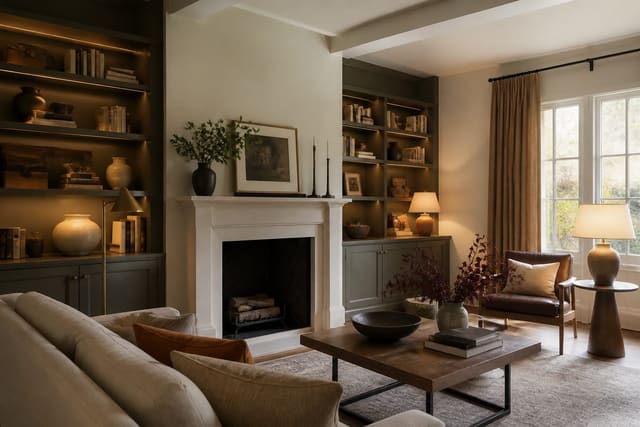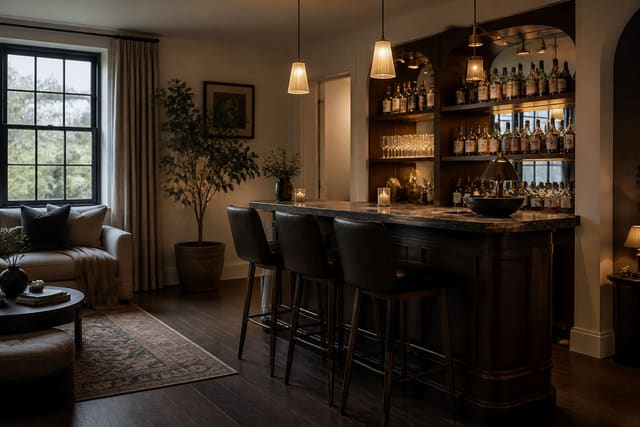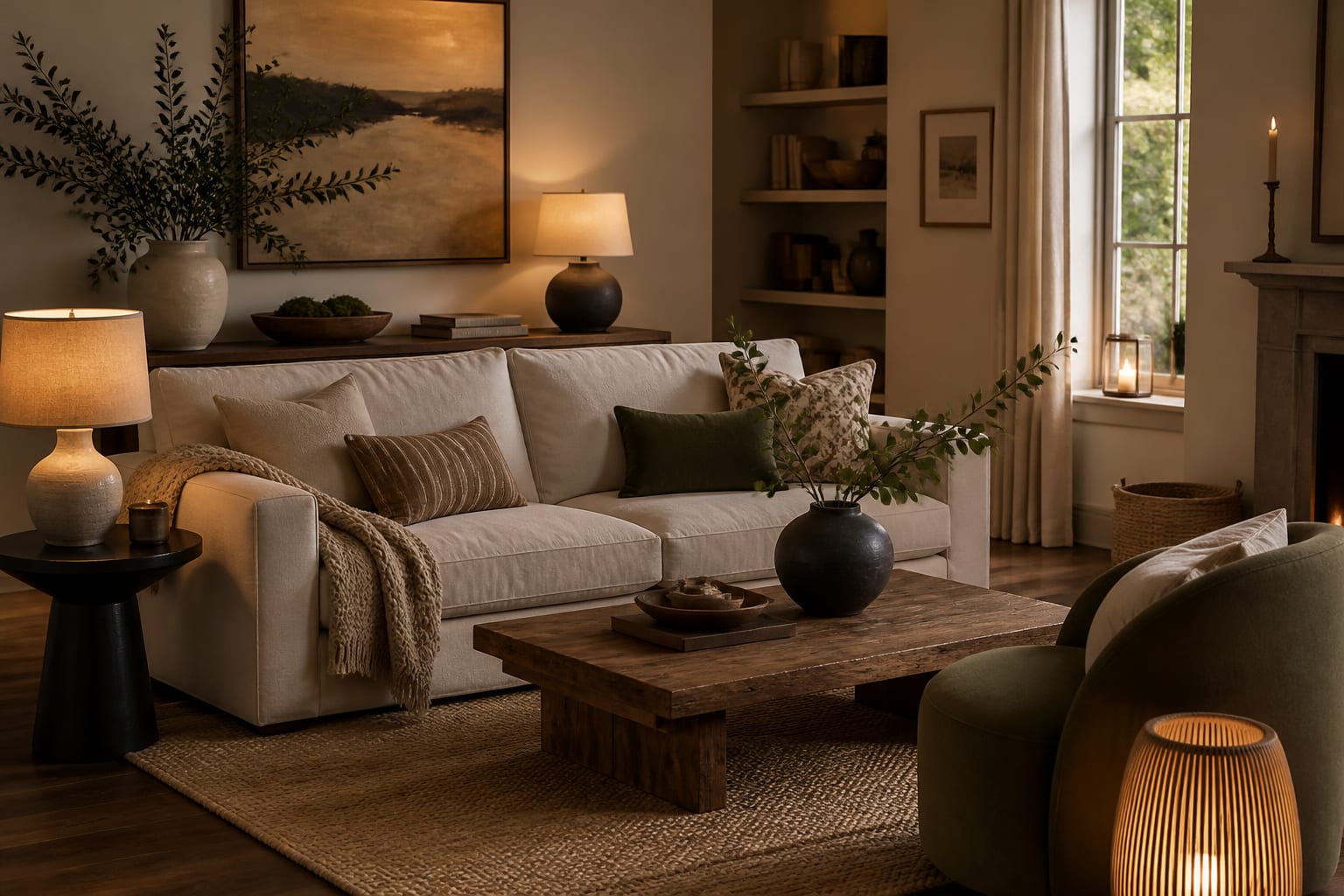
Amazon is full of decor that looks great in the listing photo and cheap in your living room, but a handful of categories are genuinely worth the cart. The winners are the items where function matters more than provenance: lighting, mirrors, baskets, and textiles you would pay triple for at a design store. The losers are trendy furniture and anything sold purely on a styled photo. Knowing the difference is the whole game, because the right $30 picture light or $25 faux fern can do as much for a room as a piece costing ten times more. Here are the finds that hold up and how to style them so they never look like a budget order.
What's actually worth buying on Amazon
The smart Amazon decor strategy is to buy the categories where the material or function carries the value, not the brand. A woven seagrass basket is a woven seagrass basket whether it costs $22 on Amazon or $70 at a home store, so that is exactly where your money stretches. The same holds for mirrors, where the glass and frame are what you pay for, and for lighting, where a $30 battery picture light throws the same warm pool over art as a hardwired fixture costing far more.
Textiles are the other strong bet. Linen-look curtains, washed-cotton throws, and a chunky knit blanket read as expensive texture even at $25 to $40, especially once you hang curtains high and wide so the window looks grander. The trick is to avoid Amazon for the items that depend on craftsmanship you cannot verify from a photo, like solid wood furniture or upholstered seating. For those, the secondhand route makes more sense, while Amazon stays the cheapest way to add a patterned wall, and the options in our wallpaper ideas guide help you pick a peel-and-stick print that reads as expensive instead of plastic.
Amazon also shines for the small finishing pieces that dress up bigger projects. If you have an open shelf run or a niche, inexpensive LED puck lights, brass bookends, and decorative boxes from Amazon are exactly the props that make built-in shelving look styled rather than bare. The same logic applies to a corner setup like a home bar, where a $25 set of matched glassware, a woven tray, and a small picture light turn a plain console into a finished moment. These are the categories where a $20 to $40 accessory does the work of a much pricier styling budget, because the value is in the look, not the brand.
The best Amazon decor finds under $50
These are the categories that consistently beat their price on Amazon, with the rough numbers to target. Build a cart from this list and you can refresh a whole room for a couple hundred dollars:
- Peel-and-stick wallpaper, $30 to $45 a roll, for an accent wall or the back of a shelf that removes cleanly later.
- Battery-powered picture lights and LED strips, $20 to $40, to add warm gallery lighting with no wiring.
- A large round or arched mirror, $40 to $80, hung to bounce daylight and make a wall feel taller.
- Realistic faux plants and stems, $15 to $45, for the dim corners where a living plant slowly dies.
- Woven seagrass and rope baskets, $18 to $35, that double as storage and texture on the floor or a shelf.
- Linen-look curtains, $25 to $40 a panel, hung 4 to 6 inches above the frame and wide enough to clear the glass.
- Framed or unframed art prints, $15 to $50, in a coordinated palette for a quick gallery wall.
Work from the top and you cover light, reflection, greenery, storage, softness, and wall interest, the six things that finish a room. The mirror and the lighting deliver the most visible change per dollar, while baskets and faux plants quietly fill the gaps that make a space feel unfinished.
How to style budget finds so they look high-end
The difference between a room that looks designed and one that looks drop-shipped is almost always styling, not price. Group objects rather than spreading them thin: three baskets of staggered heights in a corner read as intentional, while one lonely basket reads as utility. The same logic governs art, where a tight cluster of prints in matching frames outclasses a single small piece floating on a big wall. Repetition of one or two colors across pillows, art, and a throw ties cheap pieces into a deliberate scheme.
Lighting is the multiplier that hides every budget origin. Warm bulbs around 2700K, a couple of battery picture lights over art, and a string of hidden LED behind a shelf make the whole room feel considered rather than fluorescent. Scale matters too: an undersized mirror or rug is the fastest way to signal cheap, so size up to a 30 inch round mirror or a rug that runs under the front legs of the sofa. Hang curtains high, fluff the faux stems so they do not look molded, and tuck the basket of throws where it reads as styling. Those small moves are what let a $40 mirror and a $25 print sit in a room that looks like it cost far more than it did.
Read reviews differently than you read the listing. The photos are styled and often stolen, so the signal worth trusting is the customer image gallery, where you see the curtains in a real living room rather than a studio. Filter to reviews that include photos, scan for complaints about color accuracy and flimsy fabric, and treat anything under a 4.2 star average with several thousand ratings as a gamble. A $30 mirror that ships cracked or a curtain panel two shades off from the swatch erases the savings, so the ten minutes you spend reading buyer photos is the cheapest insurance in the whole process.
Preview your Amazon cart in Re-Design
Frequently Asked Questions
What home decor is actually worth buying on Amazon?
Lighting, mirrors, woven baskets, faux plants, and textiles are the strongest categories, since their value comes from material or function rather than a brand you cannot verify. A $30 battery picture light or a $40 round mirror rivals design-store versions costing several times more. Skip solid wood furniture and upholstered seating, where you cannot judge build quality from a listing photo.
How do I make cheap Amazon decor look expensive?
Style in groups, repeat one or two colors, and size up so nothing looks undersized. Three staggered baskets beat one lonely one, a tight cluster of matching frames beats a single small print, and a 30 inch mirror reads pricier than a 16 inch one. Warm 2700K bulbs and a couple of hidden picture lights make the whole arrangement feel designed.
Are faux plants from Amazon worth it?
For dark corners, yes. A realistic faux fern or olive stem at $15 to $45 holds its look in spots where a real plant would slowly die from low light. Choose ones with fabric or coated leaves rather than shiny plastic, then fluff and bend the stems so they fall naturally instead of looking molded straight from the box.