Wallpaper has shed its dated reputation and become one of the fastest ways to give a room personality, but where you put it matters as much as the pattern. A single accent wall delivers drama for a fraction of the cost and effort of papering an entire room, while a small powder room is the perfect canvas for a bold print you would never commit to in a living room. The trick is matching pattern scale to room size and choosing between removable peel-and-stick and durable traditional paper based on how long you plan to keep it. These ideas show exactly where wallpaper earns its keep.
Should you wallpaper an accent wall or the whole room?
An accent wall is the highest-impact, lowest-risk way to use wallpaper. Papering a single wall, often the one behind a bed or sofa, costs roughly a quarter of a full-room job in both materials and labor while still transforming the space. It also lets you commit to a bolder pattern, since one wall of a large print reads as a feature rather than overwhelming the eye.
Full-room wallpaper suits spaces where you want an enveloping, cocooning effect, such as a moody dining room or a richly patterned study. Reserve all-over patterns for rooms you spend limited continuous time in, or choose a subtle, small-scale design that does not exhaust you. A good middle path is papering the upper two-thirds of a wall above wainscoting, which adds pattern while grounding the room. Order at least one extra roll beyond the calculated amount so dye lots match if you need repairs later.
See also our guide to Built In Shelving Ideas for more on wallpaper ideas rooms.
Is peel-and-stick or traditional wallpaper better?
Peel-and-stick wallpaper has opened the category to renters and the commitment-shy. It applies without paste, repositions during installation, and peels off cleanly later, which makes it ideal for a rental, a child's room that will change, or a quick weekend refresh. The tradeoff is durability and a sometimes plasticky finish, plus a higher per-roll cost than budget traditional paper.
Traditional paste-the-wall or paste-the-paper hangs more permanently and offers richer textures like grasscloth, embossed designs, and true matte papers. It rewards careful installation with a seamless, high-end look that lasts a decade or more. Choose traditional paper for a forever home's main rooms and peel-and-stick where flexibility wins. Both demand smooth, clean walls, so fill nicks and sand glossy paint before hanging either type. For high-moisture rooms, confirm the paper is rated washable or vinyl-coated before you buy.
For a related angle on wallpaper ideas rooms, read Home Bar Ideas.
Can you wallpaper the ceiling and other surfaces?
The ceiling, often called the fifth wall, is one of the most underused surfaces in the home. A subtle pattern or soft sky motif overhead adds intimacy to a bedroom and a sense of occasion to a dining room. Because nobody expects pattern up there, even a quiet print feels like a designer flourish, and it draws the eye upward to make the ceiling feel higher.
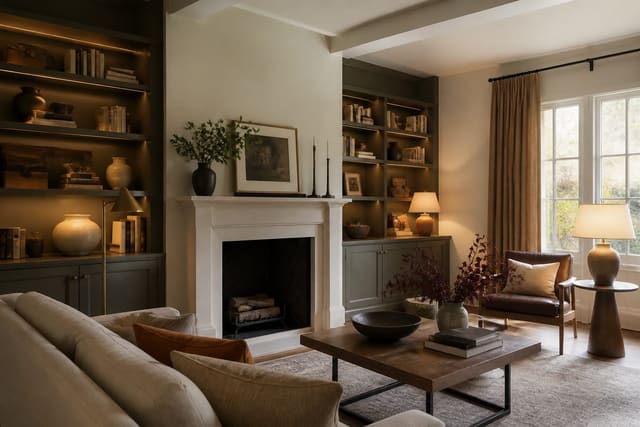
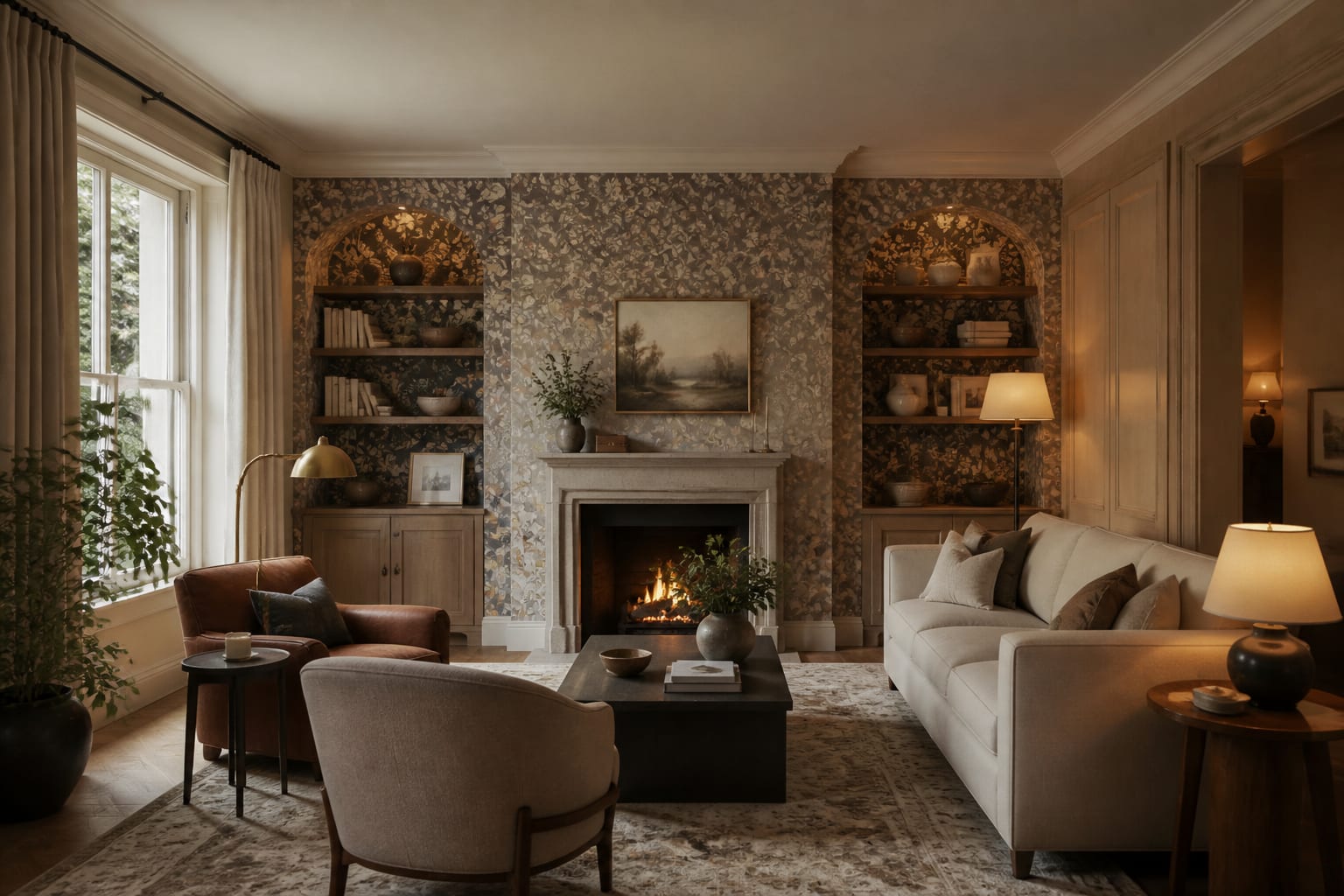
Wallpaper also shines on smaller, contained surfaces. Lining the back of a bookcase or open shelving frames your objects against pattern and is a low-stakes way to test a print. The riser faces of a staircase, the inside of a closet, or a single niche all take wallpaper beautifully and use very little material. These small applications let you experiment with bold prints in doses, and they are easy to redo when your taste shifts, since the surface area and cost are both modest.
How do you match pattern scale to room size?
Pattern scale is the quiet decision that makes wallpaper feel right or wrong for a room. Large, sprawling motifs need breathing room, so they suit spacious walls in living rooms, primary bedrooms, and open dining areas where you can see the full repeat. Crowding a big print into a tiny room chops the pattern into confusing fragments.
Compact rooms and narrow walls do better with smaller, tighter prints or geometric designs that repeat quickly and read as texture from across the room. A powder room is the exception that proves the rule: its small size and brief occupancy make it the perfect place to go dramatic with a large, saturated print precisely because the impact is concentrated. Consider sightlines too, placing the busiest pattern where it greets you on entry. When in doubt, order a sample sheet and tape it up for a few days to judge the scale in your room's actual light.
- Paper the wall behind the bed as a single bold accent for high impact at low cost.
- Use removable peel-and-stick paper in a rental or a child's room that will change soon.
- Treat the ceiling as a fifth wall with a soft pattern in a bedroom or dining room.
- Go dramatic with a large, saturated print in a small powder room where impact concentrates.
- Line the back of a bookcase or open shelving to frame objects against pattern.
- Wrap a staircase riser faces in pattern for an unexpected detail using little material.
- Match a large motif to a spacious living room wall so the full repeat reads clearly.
- Pick a tight geometric print for a narrow hallway so it reads as texture, not chaos.
Bring the look home with Re-Design
Wallpaper is notoriously hard to judge from a tiny swatch, since pattern scale changes everything once it covers a wall. With Re-Design you can upload a photo of your room and preview a print on an accent wall, the ceiling, or behind your shelving before you order a single roll. Compare a large floral against a tight geometric, or test a bold powder-room paper, to see how each scale reads in your actual light. Seeing the re-design on your own walls saves you from costly mismatches and committing to the wrong pattern.
Frequently Asked Questions
Is an accent wall or full-room wallpaper better?
An accent wall gives big impact at about a quarter of the cost and labor, and it lets you use a bolder print without overwhelming the room. Full-room paper suits cocooning spaces like a moody dining room or study. For most homes, a single feature wall behind the bed or sofa is the safest high-impact choice.
What is the difference between peel-and-stick and traditional wallpaper?
Peel-and-stick applies without paste, repositions easily, and removes cleanly, making it perfect for renters and quick refreshes. Traditional paste paper hangs more permanently, offers richer textures like grasscloth, and lasts a decade or more. Choose removable for flexibility and traditional for a long-term, high-end finish in main rooms.
Can I really wallpaper a ceiling?
Yes, the ceiling is often called the fifth wall and it is one of the most underused surfaces in a home. A subtle pattern overhead adds intimacy to a bedroom and occasion to a dining room. Because pattern up there is unexpected, even a quiet print feels like a designer move and draws the eye upward.
How do I choose the right pattern scale?
Match scale to room size: large motifs need spacious walls so the full repeat shows, while compact rooms suit tighter prints that read as texture. Powder rooms are the fun exception, where a bold large print concentrates impact. Always tape up a sample for a few days to judge the scale in your real lighting.