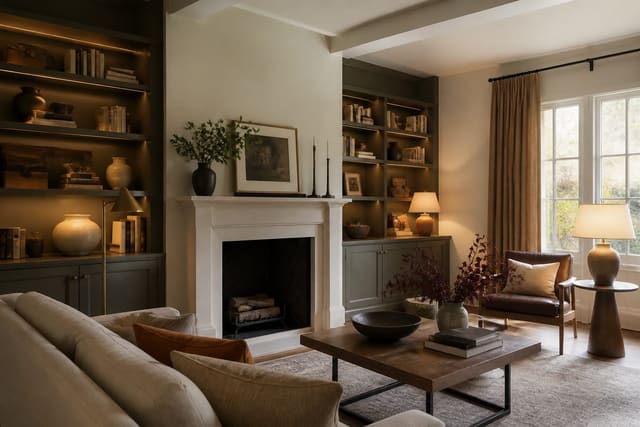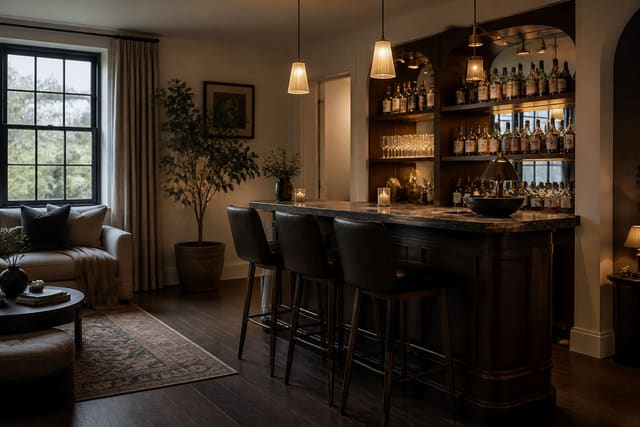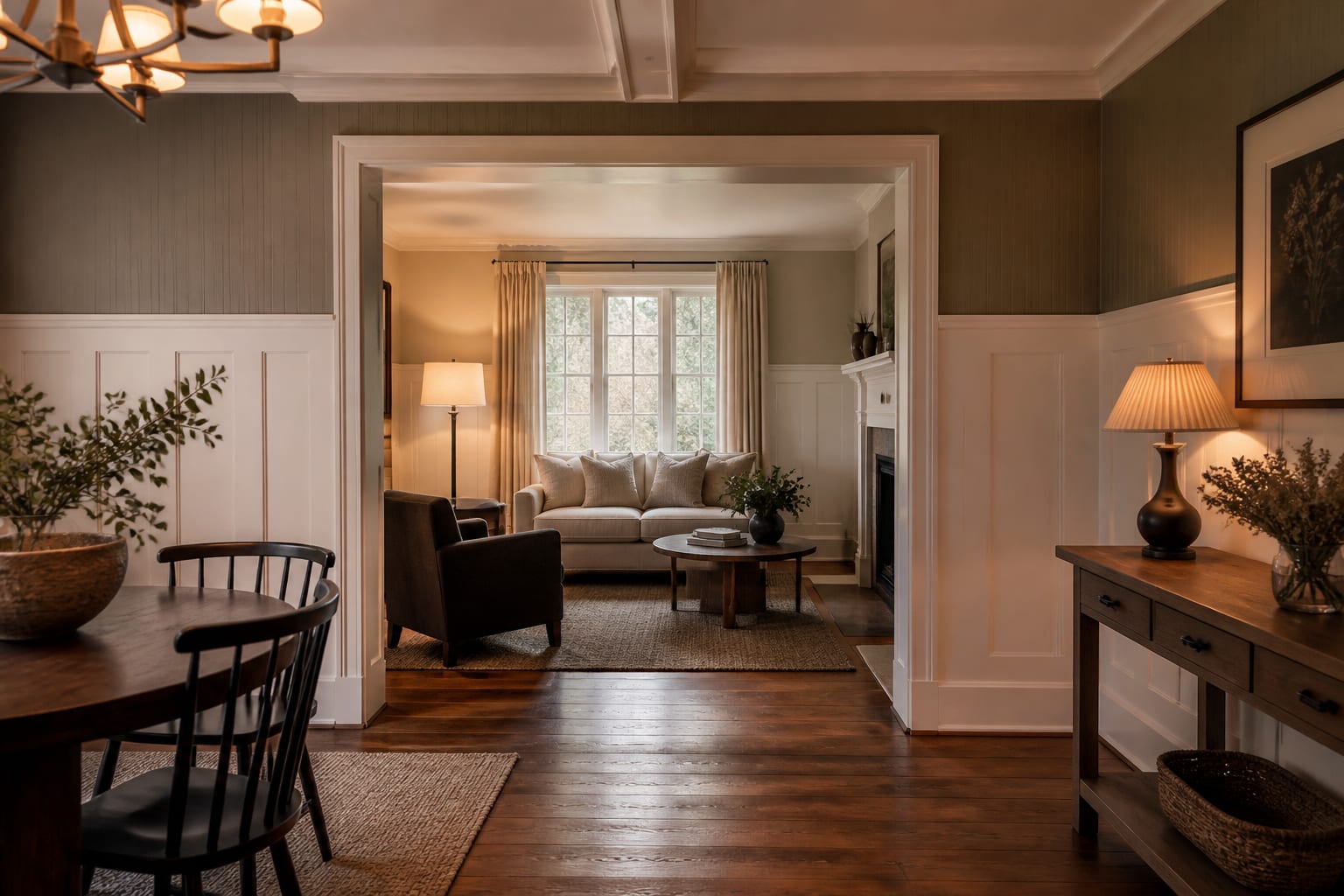
Wainscoting is the detail that makes a plain box of a room look like it was built with intention, and it costs far less than most people assume. Whether you choose chunky board-and-batten, cottage-style beadboard, formal raised panels, or simple picture-frame molding, the paneling adds texture, protects walls, and gives the eye a satisfying horizontal line to rest on. The two decisions that shape the whole look are the style of molding and the height you run it to, from a low chair-rail at hip level to a dramatic two-thirds-wall treatment. These ideas cover the styles, the standard measurements, and the rooms where each one shines.
What are the main wainscoting styles?
Four styles cover nearly every wainscoting project. Board-and-batten layers narrow vertical battens over a flat base to create a grid of recessed panels, giving a clean, architectural look that suits farmhouse and transitional homes. Beadboard runs continuous narrow vertical grooves and reads as cozy and cottage-like, which is why it dominates bathrooms, mudrooms, and porches.
Raised-panel wainscoting features a center panel that sits proud of its surrounding frame, the most formal and traditional option, well suited to studies, dining rooms, and older homes. Flat-panel, or Shaker-style, wainscoting uses recessed panels with simple square frames for a calmer, more modern feel. The lightest-touch option is picture-frame molding, where thin molding is applied directly to the wall in rectangles to mimic panels without building out a full system. Each style carries a different formality, so match it to the room's character before committing to materials.
See also our guide to Built In Shelving Ideas for more on wainscoting ideas.
How high should wainscoting be?
Height changes the entire mood of wainscoting, and three standard lines guide the choice. The classic chair-rail height runs 32 to 36 inches from the floor, originally meant to protect walls from chair backs in dining rooms. This lower band feels traditional and keeps the upper wall open for paint, art, or wallpaper.
Taking the paneling up to two-thirds of the wall, roughly 48 to 60 inches in a standard 8 foot room, creates a bolder, more enveloping effect that suits hallways, stairwells, and powder rooms. A third option runs wainscoting nearly full height as a plate-rail or tall paneled treatment around 60 to 72 inches, which feels stately in entryways and libraries. As a rule, avoid stopping the molding exactly at the room's vertical midpoint, since splitting the wall in half looks static. Picking a height that relates to windows and door casings keeps everything visually aligned. Aligning the top rail of the wainscoting with a window sill or door header gives the whole room a calm, deliberate rhythm.
For a related angle on wainscoting ideas, read Home Bar Ideas.
Which rooms suit wainscoting best?
Wainscoting earns its keep in high-traffic and high-formality rooms alike. Entryways and mudrooms benefit from durable beadboard or board-and-batten that hides scuffs and handles bumps from bags, boots, and pets. A hard-wearing paneled lower wall takes daily abuse far better than flat painted drywall in these busy zones.
Dining rooms and studies lean toward more formal raised or picture-frame paneling that signals occasion and craftsmanship. Bathrooms love moisture-tolerant beadboard, especially behind a vanity or around a tub, provided it is sealed and painted with a durable finish. Bedrooms can use a low chair-rail treatment behind the bed for a soft, architectural backdrop. Even hallways and staircases, often overlooked, gain rhythm and interest from paneling that follows the stair line. The common thread is that wainscoting suits rooms where you want either toughness, formality, or a sense of finished architecture. A small home office also benefits from a low paneled band that hides cable runs and scuffs behind the desk chair.
What color should you paint wainscoting?
Color is what makes wainscoting feel custom rather than builder-grade. The most timeless approach paints the paneling a crisp white or off-white while keeping the upper wall a soft color, which highlights the molding's shadow lines and reads classic in any room. This high-contrast pairing makes the architectural detail pop.
For a more grounded, contemporary look, paint the wainscoting a shade or two darker than the wall above, such as a deep green or charcoal lower band beneath a paler top. This anchors the room and adds a sense of weight near the floor. A monochromatic treatment, where wainscoting and wall share the same color, feels serene and modern and lets the paneling read as quiet texture rather than contrast. Use a satin or semi-gloss finish on the molding so it wipes clean and catches light, since flat paint on wainscoting shows scuffs and dulls the crisp edges that make the detail worthwhile.
- Install board-and-batten grids in an entryway to hide scuffs from bags and boots.
- Run beadboard around a bathroom vanity and tub, sealed with a durable semi-gloss finish.
- Add picture-frame molding to a dining room for formal paneling without building out a full system.
- Set a classic chair-rail at 32 to 36 inches in a traditional dining room.
- Take Shaker flat-panel wainscoting to 48 to 60 inches in a hallway for a bold, modern band.
- Paint the lower paneling deep green beneath a pale wall to ground the room.
- Use raised-panel wainscoting in a study to signal formality and craftsmanship.
- Run a low chair-rail treatment behind the bed as a soft architectural backdrop.
Bring the look home with Re-Design
Wainscoting is a commitment of carpentry and paint, so it pays to see the height and style before you cut a single board. With Re-Design you can upload a photo of your room and preview board-and-batten, beadboard, or picture-frame molding at different heights in seconds. Test a 36 inch chair-rail against a 60 inch two-thirds band, or compare a crisp white panel to a deep charcoal one, right on your own walls. Seeing the re-design in your real lighting makes the proportions and color obvious before any trim work begins.
Frequently Asked Questions
What are the most common wainscoting styles?
The main options are board-and-batten, beadboard, raised panel, and flat Shaker panel, plus lightweight picture-frame molding applied straight to the wall. Board-and-batten reads clean and transitional, beadboard feels cottage-like, raised panels are formal, and flat panels look modern. Pick the style whose formality matches the room before choosing materials.
How high should wainscoting be?
A classic chair-rail runs 32 to 36 inches from the floor and feels traditional. Taking paneling to two-thirds of the wall, about 48 to 60 inches in an 8 foot room, makes a bolder statement. Avoid stopping exactly at the wall's midpoint, since splitting the height evenly looks static rather than intentional.
Which rooms work best for wainscoting?
Entryways and mudrooms benefit from durable beadboard or board-and-batten that hides scuffs. Dining rooms and studies suit formal raised or picture-frame panels. Bathrooms love moisture-tolerant sealed beadboard, and bedrooms can use a low chair-rail behind the bed. Hallways and stairs gain welcome rhythm from paneling that follows the stair line.
What color should wainscoting be painted?
Crisp white paneling under a soft colored wall is the timeless, high-contrast choice that highlights the molding. For a grounded modern look, paint the lower band a shade or two darker, like deep green or charcoal. Use satin or semi-gloss so it wipes clean and catches light rather than showing scuffs.