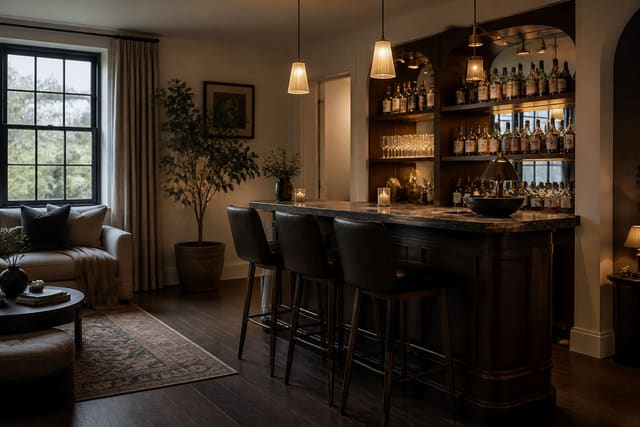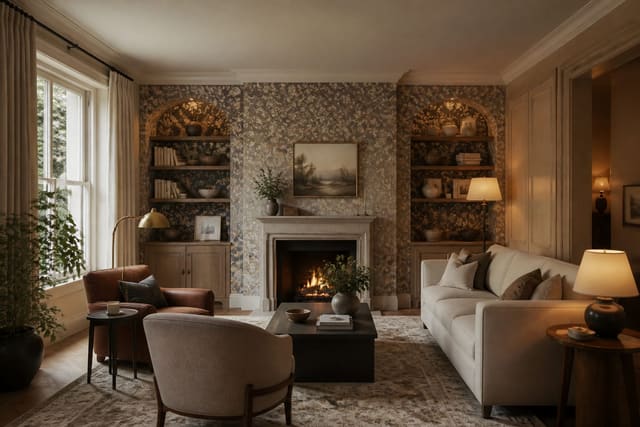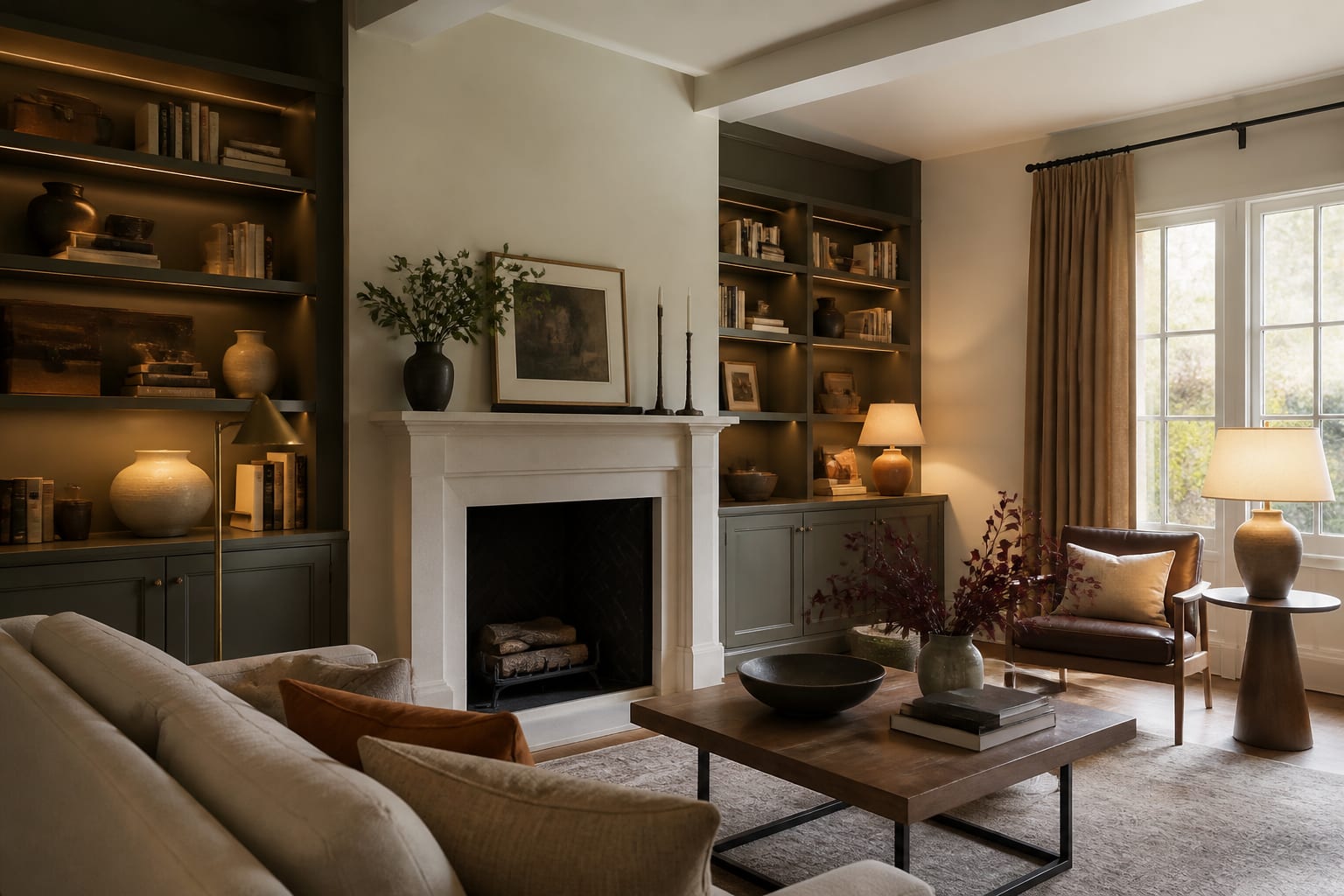
Built-ins beat freestanding bookcases almost every time, because they read as architecture instead of furniture and they recover dead corners, alcoves, and awkward chimney breasts. The trick is treating shelves as a designed system: consistent reveals, a clear rhythm of openings, and depths matched to what they actually hold. A wall of cabinets sized for paperbacks looks wrong holding a turntable. Plan around your real objects, commit to one trim profile, and let the shelving frame the room rather than clutter it. Done right, built-ins add storage and a sense of permanence at once.
Where do built-in shelves actually pay off?
The best built-ins solve a specific structural problem rather than just filling a blank wall. Chimney breasts create two natural alcoves roughly 24 to 36 inches wide on either side of the fireplace, and those recesses are practically begging for symmetrical shelving that squares off the room. Hallways with a few spare inches can carry shallow 6-inch ledges for art and books without stealing walking room. Under a staircase, a stepped run of cubbies turns dead triangular volume into shoe storage or a tucked reading nook. Around doorways and windows, a bridge of shelving overhead connects two tall columns and frames the opening like a proscenium. The unifying idea is that built-ins should follow the bones of the house. When you wrap shelving into an existing recess, the unit gains depth visually and physically, and the wall stops looking like an afterthought. I steer clients away from floating a built-in look on a flat, featureless wall, because without a recess or a flanking element it just becomes an expensive bookcase that happens to be screwed down. Measure the awkward spots first: the alcove that collects junk, the slot beside the refrigerator, the landing nobody uses. Those are the locations where custom millwork returns the most value per dollar. A 30-inch alcove fitted with adjustable shelves can hold more than a 6-foot freestanding unit while occupying zero usable floor space, and it looks deliberate instead of crammed.
See also our guide to Home Bar Ideas for more on built in shelving ideas.
How deep and how tall should shelves be?
Depth is where most built-ins go wrong, so size it to your actual collection before anything else. Standard hardcover and paperback books sit comfortably on shelves 8 to 10 inches deep; go shallower and large art books tip forward. Vinyl records need a clear 13 inches plus a little breathing room, so a 14-inch interior keeps them upright and easy to flip through. Baskets, board games, and media gear usually want 16 to 18 inches, which starts to read as cabinetry rather than a ledge. Mixing depths within one run is fine and often smart: deeper closed cabinets along the bottom, shallower open shelves climbing the wall. For spacing, leave 11 to 12 inches between book shelves and bump it to 15 inches for tall objects, but always build in adjustability with shelf pins so the rhythm can change later. Vertical proportion matters too. A base run around 30 to 36 inches tall doubles as a display surface at counter height, and open shelving above it should stop a few inches shy of the ceiling or run right into it with a small crown for a finished cap. Avoid the trap of evenly dividing a tall wall into identical squares; that grid feels mechanical. Instead vary the openings, with a taller central bay for a TV or large pieces and tighter shelves toward the edges. Long unsupported spans sag, so keep individual shelves under 36 inches between supports for inch-thick boards, or thicken to 1.5 inches for wider gaps.
For a related angle on built in shelving ideas, read Wallpaper Ideas.
What materials and finishes hold up?
Plywood is the honest workhorse for built-ins, and three-quarter-inch furniture-grade birch or maple ply with a hardwood face edge resists sagging far better than particleboard or MDF on long spans. MDF takes paint beautifully and stays dead flat, which makes it ideal for painted shelves where you want a seamless, brush-mark-free finish, but it hates moisture, so keep it out of bathrooms and damp basements. For a warmer, natural look, solid hardwood or veneered ply with a clear matte finish lets grain carry the design. Backs deserve thought: a quarter-inch beadboard or shiplap panel adds texture and shadow, while a painted flat back keeps things crisp and modern. Hardware should disappear or commit fully. Hidden shelf pins and integrated finger pulls read clean, whereas unlacquered brass or aged bronze pulls become jewelry on a painted cabinet base. Finish choice steers the whole mood. Painting built-ins the exact wall color makes them melt into the architecture and calms a busy room, which I favor in bedrooms and small spaces. A deep, saturated tone like forest green or charcoal against lighter walls turns the unit into a confident focal point, perfect for a den or office. Lighting is the upgrade people forget: a slim LED strip tucked behind a front lip, around 3000K for warmth, washes each shelf and makes ceramics and books look intentional rather than stored. Whatever you choose, carry one finish across the entire run so it reads as a single designed object, not a patchwork.
How do you style built-ins so they look designed?
Empty shelves look unfinished and crammed shelves look chaotic, so aim for roughly 60 percent filled and 40 percent breathing room. Start by clearing everything and grouping objects by type, then build each shelf around a mix of three things: something vertical like stacked books, something sculptural like a vase or bowl, and something with a little negative space around it. Stack some books horizontally to break the relentless vertical spines and create small pedestals for objects to sit on. Color discipline does the heavy lifting; pull jacket covers off loud paperbacks or turn a few spines inward, and limit your decorative palette to two or three tones plus natural materials. Vary heights across the run so your eye travels in a gentle zigzag rather than scanning a flat line. Leave the occasional shelf nearly bare with a single framed piece leaning against the back; that pause is what separates a styled built-in from a storage unit. Anchor the bottom cabinets with bigger, heavier items and let things get lighter and airier as they climb. If the unit flanks a television, repeat the TV's black rectangle elsewhere with a dark frame or box so the screen stops feeling like an intruder. Resist filling every gap the day you finish; live with it for a week and edit. The goal is a composition you can read from across the room, where books and objects feel collected over time rather than bought to fill linear feet. A few personal pieces beat a catalog full of matching accessories.
- Flank a fireplace with symmetrical alcove shelving, closed cabinets below and open ledges climbing to the ceiling.
- Build a shallow 6-inch picture-ledge wall in a hallway for rotating art and oversized books.
- Wrap a window with a U-shaped run, adding a cushioned bench between the two shelf columns.
- Tuck stepped cubbies under a staircase for shoes, baskets, or a compact tucked-away reading corner.
- Frame a doorway with tall side columns bridged by a shelf header for a library-style entry.
- Recess a desk into a built-in run so the workspace disappears into the wall when unused.
- Add a 14-inch-deep bay sized for vinyl, with the turntable on a pull-out shelf at hip height.
- Light each shelf with warm LED strips hidden behind a front lip to spotlight ceramics and books.
Bring the look home with Re-Design
Not sure if a wall of built-ins will feel grand or just bulky? Upload a photo of the room and Re-Design renders shelving in place, so you can compare floor-to-ceiling stacks against a lower run with cabinets below. Test paint colors, see whether matching the wall or contrasting it reads better, and judge proportions against your actual ceiling height before you call a carpenter or spend on materials you cannot return.
Frequently Asked Questions
Are built-in shelves worth the cost compared to bookcases?
Usually yes when they solve a structural problem like an alcove or under-stair void. Built-ins recover dead space, add resale appeal, and read as architecture, which freestanding units cannot match. On a plain flat wall with no recess, a quality bookcase often delivers nearly the same look for far less money and effort.
Can I add built-in shelving as a renter?
Yes, with freestanding units styled to mimic built-ins. Push tall bookcases tight into an alcove, fill the side gaps with trim you can remove, and add a painted top board to bridge them. The look reads as custom millwork but unscrews cleanly when you move, protecting your deposit and your investment.
How much weight can a built-in shelf hold safely?
A three-quarter-inch plywood shelf spanning 32 inches comfortably holds a full row of books, roughly 25 to 30 pounds per running foot. Longer spans sag over time, so add a center support or thicken the board to 1.5 inches. Always anchor tall units to wall studs to prevent any tipping risk.