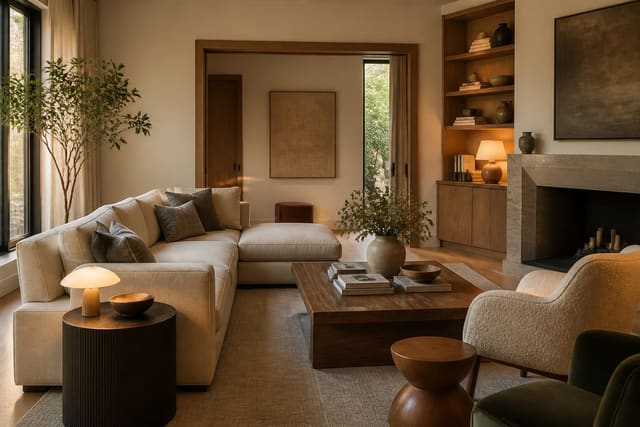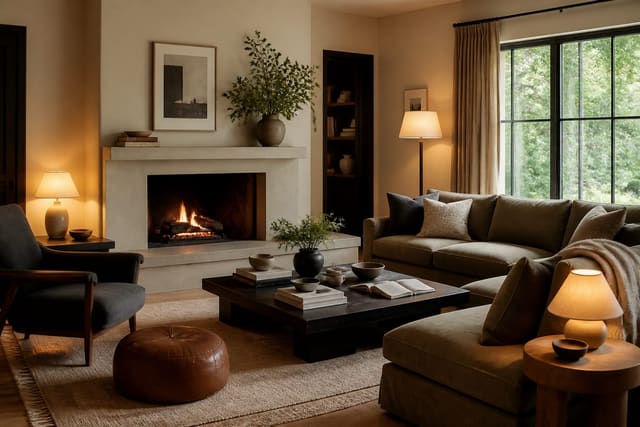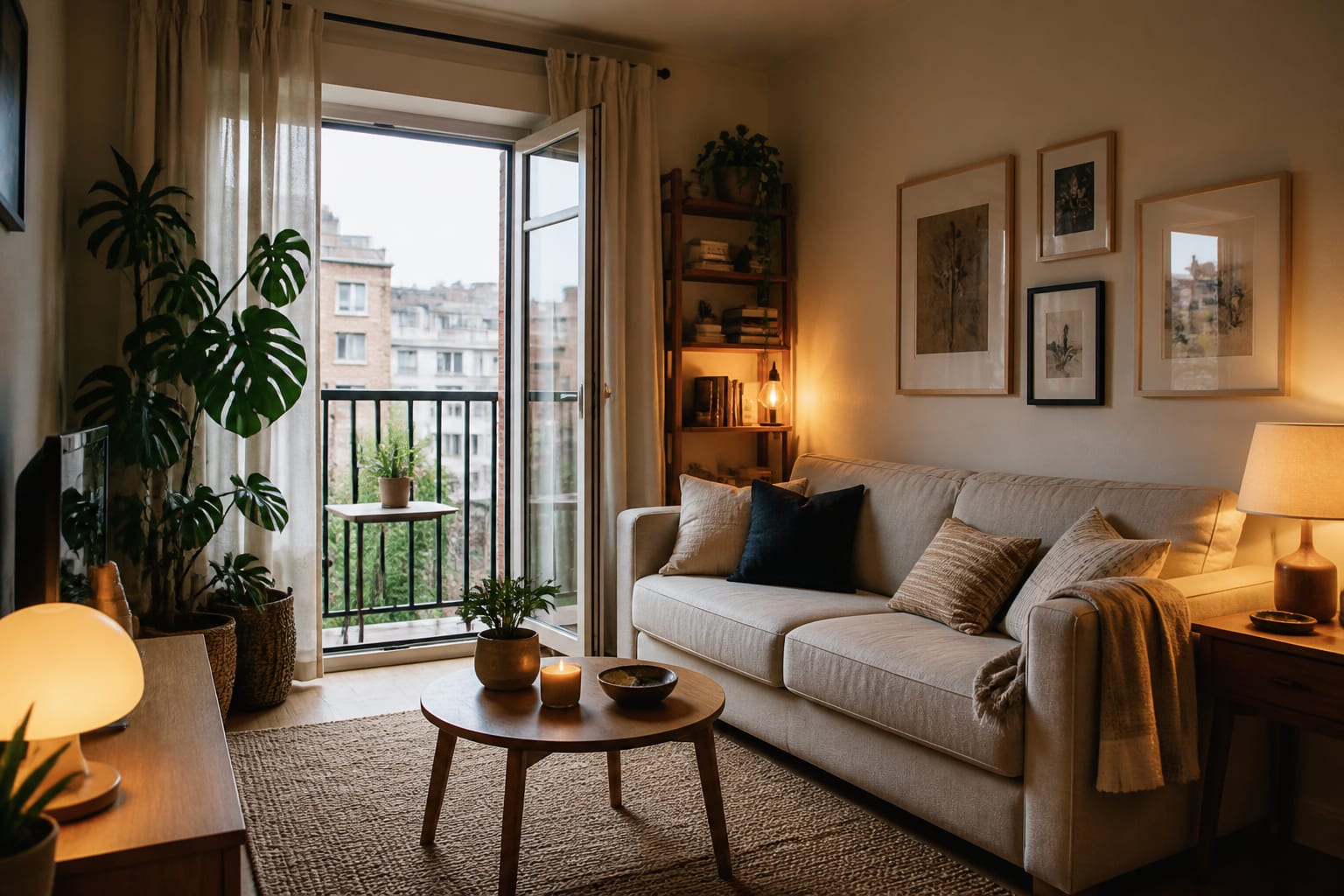
A small rented living room rewards restraint and clever layout far more than it rewards new furniture. Because you cannot drill freely or knock down walls, the wins come from how you arrange what fits, light the corners, and define zones inside an open plan. The biggest mistake renters make is pushing every piece flat against the walls, which actually makes a room feel smaller and more like a waiting area. Floating the sofa, layering light, and choosing furniture scaled to the footprint will do more for a compact apartment than any single statement piece ever could.
How do you lay out a small apartment living room?
Start by finding the focal point, usually a window, a television wall, or a fireplace, and orient the main seating toward it. In a small apartment the instinct is to shove the sofa against the longest wall, but pulling it a few inches forward and angling a chair toward it reads as a designed conversation group rather than a hallway. Aim for a 30- to 36-inch walking path through the main route so traffic flows without anyone turning sideways.
Multifunctional pieces carry their weight in tight square footage. A storage ottoman serves as a coffee table, a footrest, and a hidden bin for blankets, while nesting tables expand only when guests arrive. A sofa with a chaise can replace a sofa-plus-chair when floor space is scarce. Keep the largest piece against the wall and let smaller, lighter pieces float, so the eye reads open floor between them. Leaving 14 to 18 inches between the sofa and the coffee table keeps legroom comfortable while still letting you set a drink down without leaning.
See also our guide to Living Room Without Tv Ideas for more on apartment living room ideas.
How can renters decorate walls without drilling?
Rental walls are the trickiest constraint, but the no-drill toolkit has grown well beyond a couple of command strips. Adhesive picture hooks rated for the frame weight hold most prints and small mirrors, and removing them cleanly is a matter of stretching the tab rather than gouging the plaster. For a gallery wall that you want to rearrange, a tension-mounted picture rail or a leaning ledge lets you swap art freely with zero holes.
Leaning is your friend in a rental. A large framed piece or mirror propped on the floor against the wall, or set on a low console, gives the scale of a statement artwork with no hardware at all. Peel-and-stick wallpaper or a removable mural on one wall adds color and pattern that comes off when you move out. Freestanding shelving, a tall ladder shelf, or a bookcase delivers display and storage without touching the structure. These moves let a renter inject real personality while keeping the deposit fully intact at the end of the lease.
For a related angle on apartment living room ideas, read Living Room Color Ideas.
How do you light a rental living room well?
Most rentals come with one builder-grade ceiling fixture that floods the room with flat, unflattering light. The fix is to build layers from portable lamps so you are never relying on that single source. A floor lamp in a dim corner provides ambient fill, a table lamp beside the sofa handles task light for reading, and a small accent lamp on a shelf adds the warm glow that makes a room feel inhabited at night.
Keep the bulb color consistent, around 2700K to 3000K, so the layers blend instead of clashing between warm and cool. Plug-in dimmers or smart bulbs let you drop the brightness in the evening without rewiring anything, which matters when you cannot install a wall dimmer. If the overhead fixture is genuinely ugly, many landlords allow a swap to a simple flush mount as long as you keep the original to reinstall. Three well-placed lamps will transform a flat rental box into a layered, comfortable living room far more than any furniture purchase.
How do you define zones in an open-plan apartment?
Open-plan studios and one-bedrooms blur the living, dining, and sometimes sleeping or working areas into one undivided box. A rug is the most effective tool for drawing a boundary: place an 8-by-10 or larger rug under the seating group so it visually claims that footprint as the living zone, distinct from the bare floor of the dining area. The rug tells the eye where one room ends and the next begins.
Backless furniture reinforces the divide without blocking sightlines. A sofa floated with its back to the dining table, or a low console behind it, creates a soft wall that keeps the apartment feeling open while still separating functions. An open bookshelf or a slatted divider does the same job vertically when you need more privacy for a work nook. Vary the lighting by zone so the living area glows warm while the dining table gets its own pendant or lamp. Defining zones this way makes a single open room feel like a sequence of purposeful spaces rather than one cluttered area.
- Float the sofa six to twelve inches off the wall and angle a chair toward it to build a real conversation group.
- Anchor the seating with an 8-by-10 rug so the living zone reads as separate from the rest of an open plan.
- Swap the single overhead fixture for a floor lamp, a table lamp, and an accent lamp at a consistent 2700K.
- Lean a large mirror or framed print against the wall for statement scale with zero drilling.
- Use a storage ottoman as coffee table, footrest, and hidden blanket bin in one footprint.
- Place a low console behind a floated sofa to softly divide the living area from the dining nook.
- Apply peel-and-stick wallpaper to one wall for color and pattern that comes off at move-out.
- Choose an apartment-scaled sofa under 80 inches so walking paths stay a clear 30 to 36 inches.
Bring the look home with Re-Design
Rearranging a small apartment living room over and over is exhausting when the furniture is heavy and the layout never quite clicks. Upload a photo of your rental living room to Re-Design and try floating the sofa, adding a defined rug zone, or swapping in apartment-scaled pieces without moving a thing. You can re-design the same room with layered lamp lighting or a leaning gallery wall to judge scale and traffic flow before you buy or haul anything. It is the fastest way to test small-space ideas while keeping every wall and the deposit untouched.
Frequently Asked Questions
Should the sofa go against the wall in a small living room?
Not always. While pushing the sofa flat against the longest wall maximizes floor space, floating it six to twelve inches forward and angling a chair toward it usually makes a small apartment feel more intentional. The key is keeping a 30- to 36-inch walking path clear so the floated layout reads as designed rather than cramped or blocking traffic.
How do I hang things in a rental without losing my deposit?
Use adhesive hooks rated for your frame's weight, a tension-mounted picture rail, or a leaning ledge so you never drill. For larger pieces, lean a mirror or framed art against the wall or set it on a console. Peel-and-stick wallpaper and freestanding shelving add personality without touching the structure, keeping your deposit fully intact.
What size rug works in an apartment living room?
An 8-by-10 rug suits most apartment living rooms, large enough to slip the front legs of the sofa and chairs onto it so the seating group feels unified. In a tighter studio, a 5-by-8 under the coffee table can still anchor the zone. The rug should define the living area and sit distinct from the dining floor.
How do I make a rental living room feel less generic?
Replace the flat overhead light with layered lamps at a warm 2700K, add one removable wallpaper or mural wall, and lean a large piece of art for scale. A textured rug, a few patterned pillows, and a bookcase styled with personal objects do more than any single purchase. These damage-free moves give a builder-grade box genuine character.