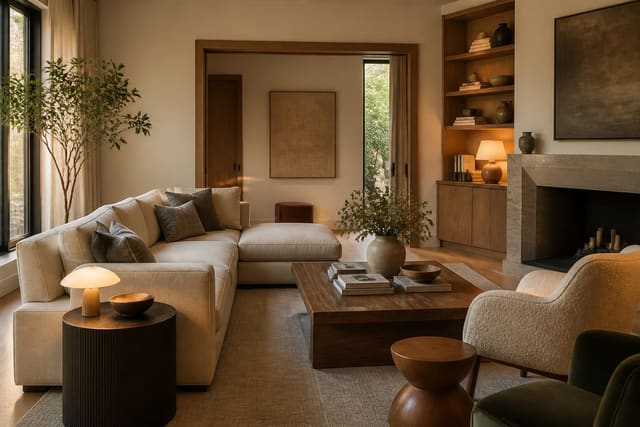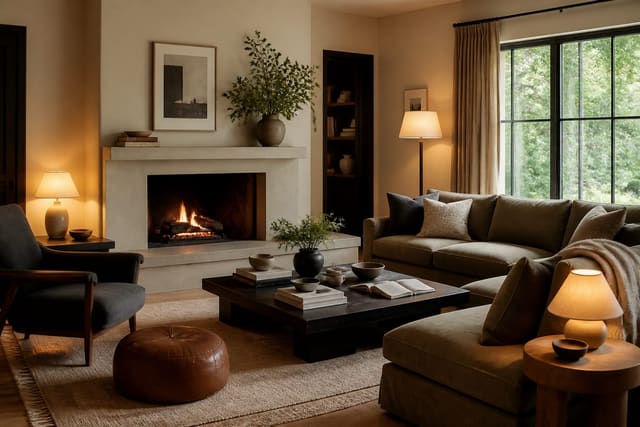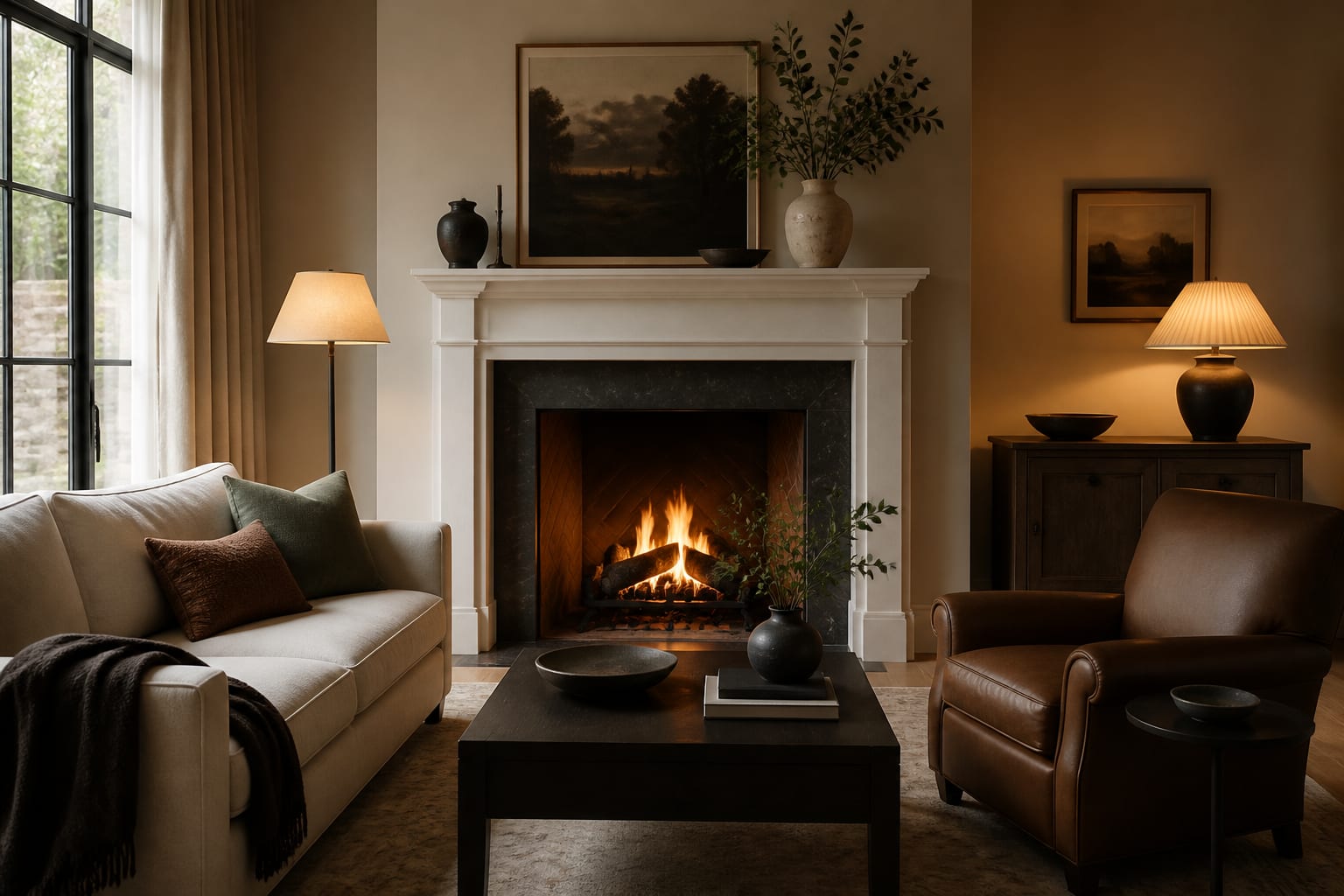
The surround is the single biggest lever you have over a fireplace's character, far more than the firebox itself. Most rooms are stuck with a dated 1990s oak mantel and a band of mauve tile, and swapping just that surround resets the whole space without touching the chimney. Decide first whether the fireplace should be a quiet backdrop or the room's headline, because that choice drives material, scale, and color. A confident floor-to-ceiling treatment commands attention; a flush plaster panel disappears. Either can be right, but a timid half-measure pleases no one and wastes the focal wall you already own.
Which surround material fits your style?
Material sets the entire mood, so start there. Tile is the most versatile and forgiving choice, ranging from crisp white subway and zellige with its handmade shimmer to bold cement patterns that turn the surround into graphic art; it cleans easily and handles heat without fuss. Natural stone, whether honed marble, travertine, or rough stacked ledgestone, brings weight and texture that reads timeless, though marble stains and wants sealing. For a soft, seamless look that is having a long moment, troweled plaster, limewash, or microcement wraps the surround in a single monolithic skin with subtle movement and no grout lines, beautiful in modern and Mediterranean rooms alike. Wood paneling and shiplap suit traditional and cottage spaces and pair naturally with a painted mantel, but keep combustible material away from the opening per code. Brick remains a workhorse; if existing brick feels dated, a coat of limewash or German smear calms it without hiding the texture entirely. Metal accents like a blackened steel slab or a thin brass reveal add a tailored, contemporary edge for those who want something less expected. Match the material to the architecture rather than chasing a trend: zellige in a clean modern loft, fluted limestone in a formal living room, painted wood in a farmhouse. The surround touches the floor and often climbs a tall wall, so whatever you pick becomes one of the largest finished surfaces in the room. Choose something you will still like when the trend cycle moves on, and let one strong material carry the design rather than combining three competing ones.
See also our guide to Living Room Without Tv Ideas for more on fireplace surround ideas.
How big should the surround and mantel be?
Scale is where surrounds succeed or look apologetic. The mantel shelf typically lands 54 to 60 inches above the floor, high enough to clear the firebox opening with its required hearth and clearance, low enough to relate to seated sightlines. For the shelf itself, a depth of 5 to 7 inches holds candles and art without crowding, and let it overhang the surround face by an inch or so for a defined shadow line. The width of the surround band around the opening should feel generous; a stingy 3-inch border looks like an afterthought, while a 6- to 12-inch field of tile or stone frames the fire with intent. The biggest scale decision is how high to go. A surround that stops just above the mantel suits traditional rooms and lower ceilings. But with a tall wall, running the material from floor to ceiling, especially with no mantel at all, makes even a small firebox feel like a major architectural element and draws the eye up. On a soaring two-story wall, a full-height plaster or stone chimney breast is one of the most dramatic moves available. Center matters too; the firebox should sit roughly centered in its surround, and if the existing opening is off-center, a wider field on one side can quietly correct the imbalance. For a TV above the fireplace, plan the mantel and clearance so the screen lands at a comfortable height, ideally with the bottom around 60 inches, and recess the niche so the television sits flush rather than jutting into the room.
For a related angle on fireplace surround ideas, read Living Room Color Ideas.
What are the clearance and safety rules?
Surround design has to respect fire safety, and the rules are not optional. For most wood-burning fireboxes, combustible materials like wood mantels, trim, and paneling must sit at least 6 inches from the edge of the firebox opening, and that distance increases as the element projects forward; a mantel that sticks out more than 1.5 inches generally needs additional clearance for every inch of projection. Always check your specific unit's manual and your local code, because gas and electric inserts and zero-clearance fireplaces each carry their own listed requirements that can differ sharply from a traditional masonry firebox. The materials directly bordering the opening should be noncombustible, which is why tile, stone, brick, metal, and plaster are the standard choices for that field, with wood reserved for the outer mantel and trim beyond the clearance zone. Hearth extensions matter too; a raised or flush hearth of stone or tile must project a code-specified distance in front of and to the sides of the opening to catch embers, often 16 to 20 inches out front depending on the firebox size. If you are mounting a TV above, watch the heat; a deep mantel shelf helps deflect rising warm air away from the screen, and many units publish a minimum mantel height for exactly this reason. When in doubt, build the surround so noncombustible material lines everything within the danger zone and treat the mantel as a separate applied element installed at the proper offset. A beautiful surround that ignores clearance is a liability, so confirm the numbers before you commit to a layout.
How do color and finish change the result?
Once material and scale are set, color decides whether the fireplace recedes or takes over. Matching the surround to the wall color, including a painted brick or plaster treatment, makes the whole assembly melt into the room and reads serene and architectural; this works beautifully when you want the furniture or a piece of art above to be the star. The opposite move, a dark or boldly colored surround against pale walls, turns the fireplace into the room's anchor and gives the eye a clear destination. A charcoal limewash, a deep green tile, or a black steel slab all command a room with confidence. Texture is its own form of color: a stacked stone surround in neutral tones still reads rich because the rough surface catches light and shadow throughout the day, while a high-honed marble feels cool and formal. Grout choice quietly shifts a tile surround; matching grout lets a pattern read as a continuous field, while contrasting grout emphasizes each tile's geometry. Sheen tells the room how formal to feel, with matte plaster reading soft and lived-in and a polished stone reading dressy. For brick, limewash gives a chalky, weathered patina that softens orange tones, whereas a solid paint delivers a crisp, modern uniform finish. Coordinate the mantel finish with the surround: a stained wood mantel warms a cool stone field, while a painted mantel keeps a monochrome scheme tight. The safest path is to limit the surround to two finishes at most, letting one dominate, so the fireplace looks composed rather than busy and stays restful in a room you live in daily.
- Run zellige tile floor-to-ceiling to make a small firebox feel like an intentional architectural feature.
- Wrap the surround in troweled limewash or microcement for a soft, monolithic look with no grout lines.
- Limewash dated red brick to keep the texture while calming the orange tone toward a chalky neutral.
- Frame the opening with fluted limestone and a slim 6-inch mantel for a formal living room.
- Add a blackened steel slab surround with a thin brass reveal for a tailored, modern edge.
- Stack ledgestone on a tall chimney breast to anchor a two-story wall with rich texture.
- Recess a TV niche above the mantel so the screen sits flush at roughly 60 inches high.
- Match a painted wood surround to the wall color so the fireplace recedes into calm architecture.
Bring the look home with Re-Design
Torn between a bold floor-to-ceiling stone surround and a quiet painted panel? Upload a photo of your fireplace and Re-Design shows each treatment on your actual wall, so you can compare zellige tile against limewashed brick or a charcoal plaster chimney breast. Test mantel heights, judge whether the surround should match or contrast the walls, and see the result in your room's real light before you order materials or hire a mason.
Frequently Asked Questions
Can I put wood directly around a fireplace opening?
No. Combustible materials including wood must sit at least 6 inches from the firebox opening, with more clearance as the piece projects forward. Line the area touching the opening with noncombustible tile, stone, brick, or metal, and install any wood mantel or paneling beyond the required offset. Always confirm your specific unit's manual and local code first.
How high should a fireplace mantel be?
Most mantels land 54 to 60 inches above the floor, which clears the firebox and required hearth while relating to seated sightlines. Taller ceilings can carry a higher mantel or none at all. If a TV mounts above, follow the unit's published minimum mantel height to protect the screen from rising heat, often higher than a decorative shelf.
Should the surround match or contrast the wall color?
Both work, depending on intent. Matching the surround to the wall makes the fireplace recede into calm architecture, ideal when art or furniture should lead. A dark or bold surround against pale walls turns the fireplace into the room's focal point. Choose contrast when you want a clear destination for the eye, and matching when you want serenity.