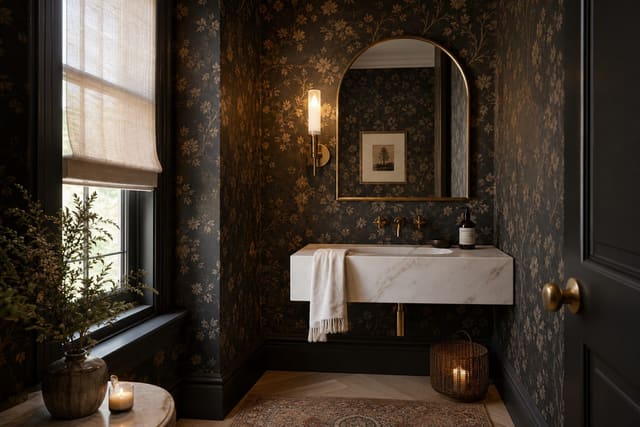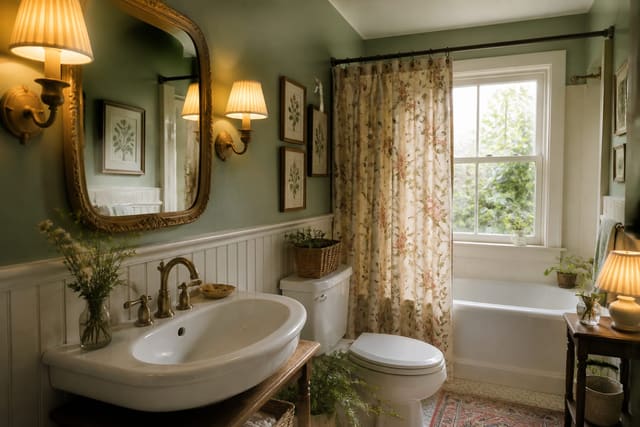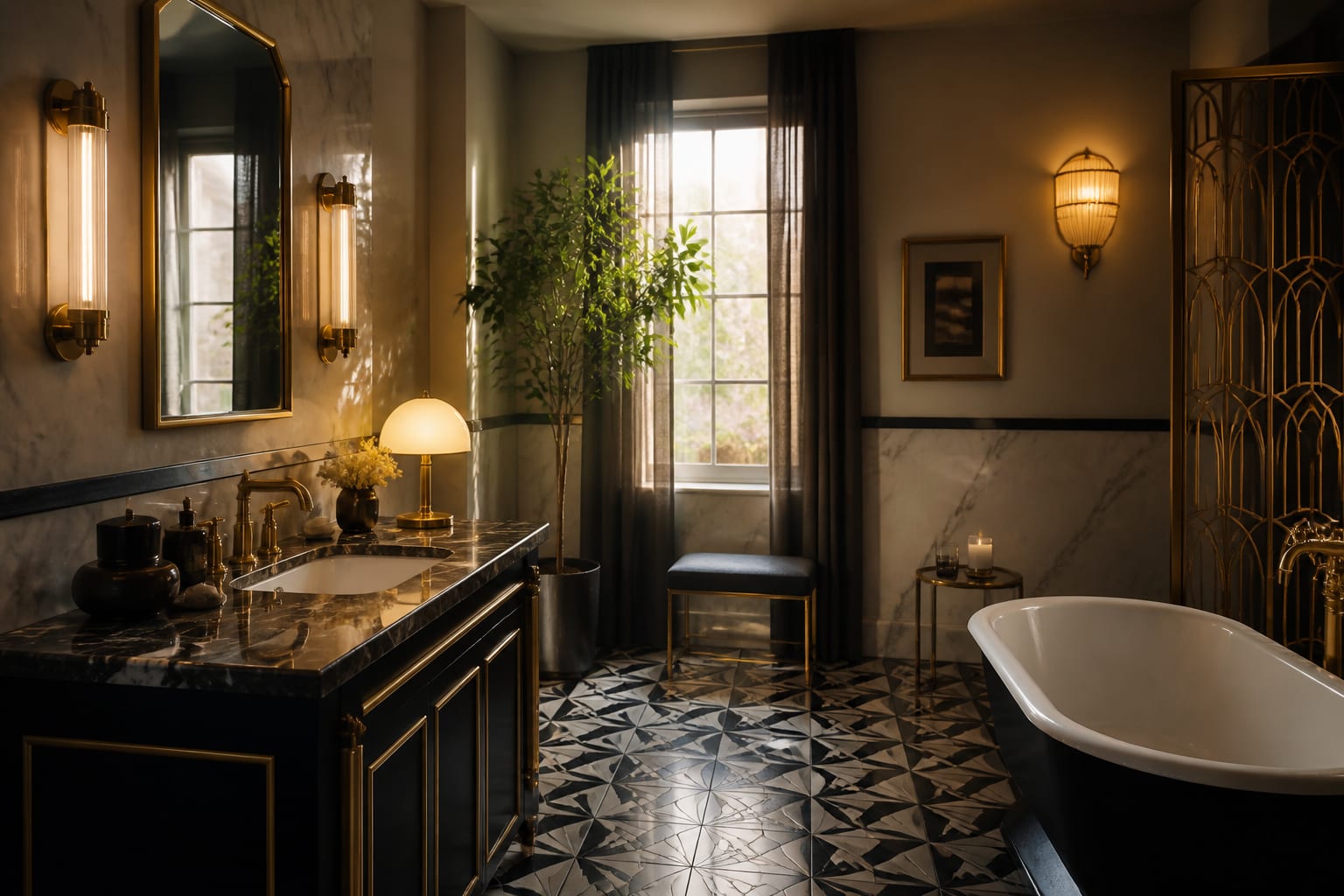
Art deco bathroom ideas work best when you commit to strong geometry, gleaming metal, and one confident color rather than scattering timid accents. The style suits small rooms particularly well: high-contrast tile, brass fixtures, and jewel-toned walls read as intentional glamour rather than clutter. Balance bold pattern with calm surfaces so the eye has somewhere to rest, and the result feels like a 1920s hotel suite, not a costume.
What Tile Patterns Define an Art Deco Floor?
Repeating geometric shapes root a bathroom in the deco era faster than anything else. Look to hexagons, fans, sunbursts, and tight chevrons in high-contrast pairings; black and white is the classic move, though cream and charcoal soften the effect. Marble mosaics with a brass inlay strip read as luxurious for little cost, and a contrasting border around the perimeter frames the room like a rug. Penny tile in a flower or scallop motif is a budget-friendly alternative. Repeat the same shape in smaller doses elsewhere, such as a mirror frame or shower niche, so it feels deliberate rather than a one-off.
See also our guide to Powder Room Design Tiny for more art deco bathroom ideas.
Which Metal Finishes Suit Art Deco Fixtures?
Polished brass brings a warm golden glow to faucets, towel bars, and lighting, while chrome offers cooler, machine-age sparkle against black tile and white porcelain. Many designers mix both deliberately, using brass for statement pieces and chrome for smaller accents to keep the look layered. Choose fixtures with fluted columns, stepped profiles, or fan-shaped escutcheons, and flank the mirror with sconces since symmetry was central to the style. Small details, like a faceted glass drawer pull or brass-framed shaving mirror, reinforce the theme at close range and make even modest fixtures feel curated.
For a related take, read Cottagecore Bathroom Ideas.
What Color Palette Reads as Art Deco?
Black and white delivers the era's eternal graphic punch, but jewel tones were equally beloved: emerald green, sapphire blue, oxblood red, and amethyst all suit deco's love of saturation. Pair any bold hue with crisp white fixtures and a generous dose of brass so the room doesn't feel heavy. Blush pink and seafoam offer a gentler, residential take. Let one strong color lead, whether it's a lacquered black vanity, an emerald accent wall, or a sapphire ceiling, and keep the rest of the palette disciplined with neutrals and metallic accents.
How Do Mirrors and Lighting Add Deco Drama?
An oversized mirror with a stepped or sunburst frame enriches the room while bouncing light around a small footprint. Mirrored or antiqued-glass surfaces on a vanity front multiply the glamour further. For lighting, choose frosted glass shades, fluted detailing, or geometric forms instead of a builder-grade vanity bar, and flank the mirror with sconces for the most authentic, symmetrical arrangement. Warm bulb temperature matters here, since cool light undercuts the cozy luxury the style depends on.
- Fan-shaped marble mosaic floor with brass inlay strips
- Black lacquered vanity topped with veined white marble
- Emerald green tile wall behind a freestanding tub
- Sunburst mirror flanked by fluted brass sconces
- Chevron subway tile running the full shower height
- Mirrored vanity front reflecting geometric floor pattern
Bring the Look Home With Re-Design
Upload a photo of your current bathroom to Re-Design and preview an art deco scheme rendered onto your actual walls, floor, and fixtures. Try a black-and-white geometric floor against an emerald accent wall, or swap brass sconces for chrome, before buying a single tile. Seeing the glamour applied to your real room turns a vague idea into a confident plan.
Frequently Asked Questions
What tile patterns work best in an art deco bathroom?
Geometric layouts define the style: black-and-white checkerboard floors, fan-shaped scallops, or chevron walls all work well. Hexagonal marble mosaics suit smaller rooms, while sunburst inlays make a statement behind the vanity. Pair glossy subway tile with contrasting grout to sharpen edges, and keep one busy pattern per surface so the room reads crisp rather than cluttered.
Which fixtures give a bathroom an authentic art deco look?
Choose a freestanding tub with stepped or pedestal feet and a wide-spout deck faucet. Polished chrome and brushed brass both fit the era, especially on cross-handle taps and exposed shower arms. Flank a round or octagonal mirror with frosted-glass sconces, and pick cabinet hardware with stacked, linear ridges for machine-age detailing.
How do I add art deco style on a small bathroom budget?
Start with paint and peel-and-stick options before touching plumbing: a geometric wallpaper accent wall, a black-framed mirror, and swapped brass cabinet pulls shift the mood for little money. Add a fluted glass shower panel or a single fan-motif mosaic strip as a focal point, plus gold-toned towel bars and a vintage stool.
What colors suit an art deco bathroom?
Lean on a high-contrast base of black and white, then layer one jewel accent such as emerald, sapphire, or deep coral. Metallic gold or chrome trim catches light and frames the palette. Soft blush or sage works for a gentler, pastel-leaning version. Limit yourself to two or three hues so the geometry stays the visual star.