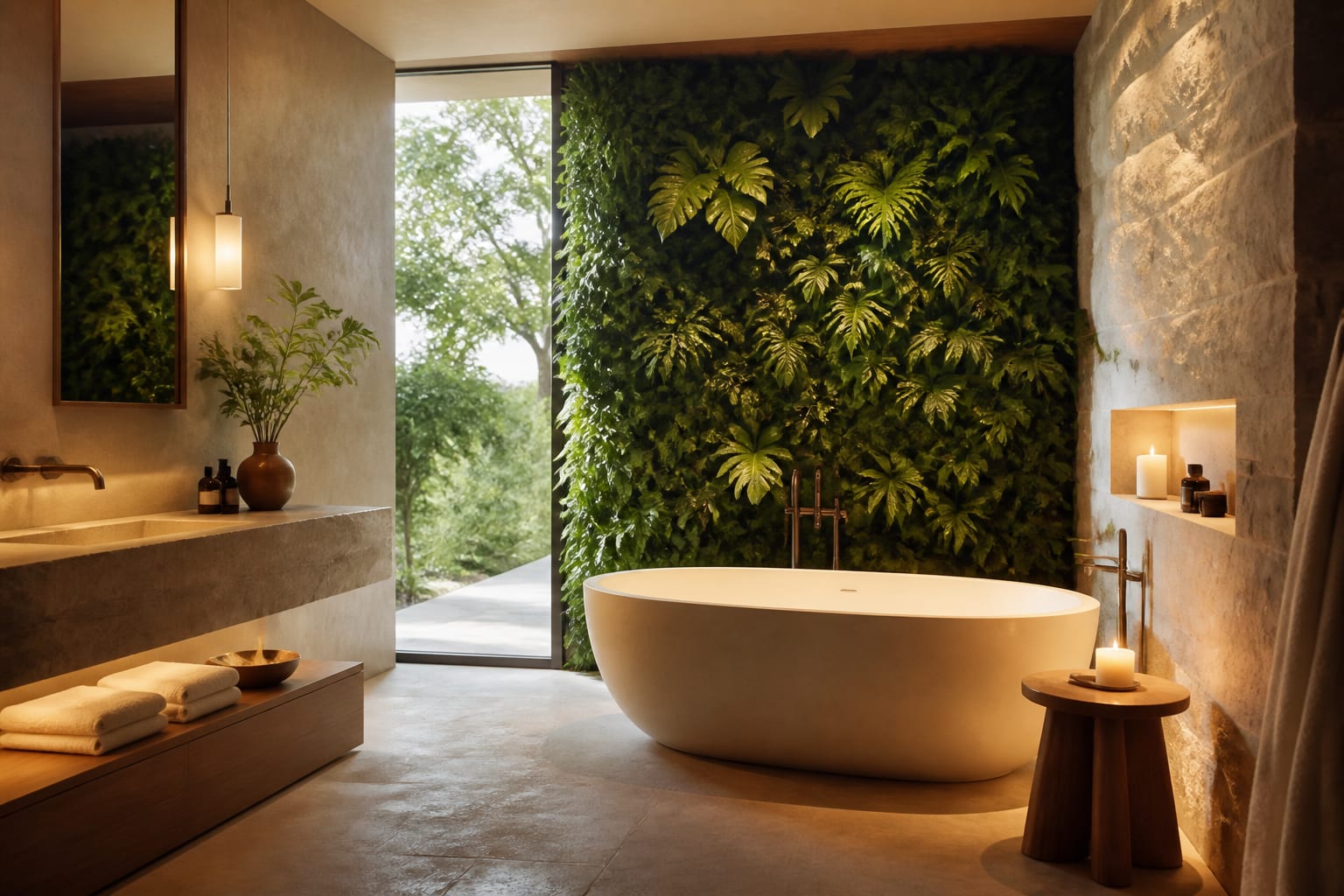
Biophilic bathroom ideas have an advantage other rooms lack: the warmth and humidity already make it the easiest place in the house to grow lush greenery. The smartest approach treats the bathroom like a small indoor garden wrapped in stone and wood. Lean into the moisture with ferns and pothos, ground the room with natural textures, and soften the lighting so every routine feels closer to a spa visit. Done right, a biophilic bathroom turns the most utilitarian room into a daily reset. Here are specific ways to get there without a full renovation.
Use the Humidity to Grow a Real Jungle
A biophilic bathroom has a built-in advantage, because the steam from daily showers creates exactly the moist environment tropical plants crave. Lean into it with species that struggle elsewhere in the house, like Boston ferns, maidenhair ferns, calatheas, and orchids that thrive in the warmth and damp air. Pothos and philodendron trail beautifully from a high shelf or the top of a cabinet, drawing the eye upward and softening hard tile edges. If your bathroom has a window, cluster the leafiest specimens nearby where they catch the most light, since even humidity-loving plants still need brightness to flourish. For windowless rooms, choose true low-light survivors such as cast-iron plants, ZZ plants, and snake plants that tolerate dim corners without complaint. Hang a plant from the ceiling near the shower so it benefits from the steam while freeing up your limited counter space. Mount a small wall shelf or two for medium plants, and tuck a single dramatic specimen beside the tub where you can see it while you soak. Group pots in odd numbers and vary their materials, mixing terracotta, glazed stoneware, and woven baskets so the greenery reads as a collected garden rather than a uniform set. Keep the layout practical by leaving plants clear of splash zones and easy to reach for watering. The result is a room that feels alive and tropical, where the everyday act of stepping into the shower happens surrounded by living green rather than blank walls and cold porcelain. Wipe leaves occasionally so they stay glossy, and let the steam do much of the misting these plants would otherwise demand. A bathroom full of thriving foliage proves the room is used and cared for, which is the living quality biophilic spaces are after.
See also our guide to Home Sauna Room Design for more on biophilic bathroom ideas.
Ground the Room in Stone and Wood
Greenery alone will not carry a biophilic bathroom, so anchor the space with the natural materials that read as earth, water, and forest. Stone does the most work here, whether through a pebble-mosaic shower floor underfoot, a travertine vanity top, or a slab of marble that brings real veining into the room. Wood softens the hardness that tile and porcelain bring, so introduce it through a teak bath mat, a reclaimed timber vanity, or wood-look porcelain tile that survives the moisture without warping. Pair warm wood tones with cool stone to mirror the contrast you find in nature, where rock and timber sit side by side along a riverbank. Woven texture lightens the scheme, so add a rattan basket for towels, a jute runner outside the shower, or a cane-front cabinet that breaks up solid surfaces. Keep metals warm and matte, choosing brushed brass or aged bronze taps and hardware over bright chrome that reads cold and clinical. Even small swaps register, so trade plastic soap dispensers and acrylic accessories for stone bowls, wooden trays, and clear glass that feel honest and tactile. River rocks in a low dish, a wooden stool beside the tub, and a stone diffuser all reinforce the theme in the details. The aim is a bathroom where nearly every surface you touch has natural texture and weight, which is what separates a genuinely biophilic room from a green-styled imitation. Layered this way, the materials make the greenery look intentional and the whole room feel like a spa carved from the landscape. Even renters can lean on freestanding pieces, so a stone basin, a teak duckboard, and a wooden ladder for towels deliver the look without touching the existing tile or fixtures.
For a related angle on biophilic bathroom ideas, read Powder Room Design Tiny.
Soften the Light and Keep Privacy
Lighting decides whether a biophilic bathroom feels like a spa or a clinic, so prioritize soft, layered, nature-inspired light over a single harsh ceiling fixture. Daylight is the prize, so keep any window as clear as privacy allows, using frosted glass, a film, or a sheer linen panel that admits brightness while blocking the view in. A skylight or a high transom window works wonders if your layout permits one, washing the room in changing daylight from above the way a forest canopy filters sun. For artificial light, choose warm bulbs that echo late-day sun rather than cold blue-white tones, and put them on a dimmer so you can drop the level for a relaxed evening soak. Layer the sources by combining a soft overhead glow with sconces flanking the mirror at face height, which flatters and removes the harsh shadows a single downlight casts. Candles or a warm-toned waterproof lamp near the tub push the room fully into spa territory after dark. Position your plants where the best light lands, since greenery glows when backlit and adds gentle movement as steam drifts past. Avoid the flat, even brightness of a typical bathroom, because that uniformity flattens all the natural texture you worked to build. Reflective surfaces help carry whatever light you have, so a pale stone wall or a strategically placed mirror will bounce daylight deeper into the room. When the light feels warm, layered, and connected to the day outside, the bathroom finally reads as a retreat rather than a purely functional space. Keep a brighter setting available for grooming tasks that need clarity, then drop the level for evenings, so a single room serves both the practical morning and the restful night.
Keep the Palette Calm and Earthy
Color ties a biophilic bathroom together, so pull a restful, earthy palette straight from the natural materials already in the room. Anchor walls and large tile fields in warm whites, soft greige, sand, or pale stone tones that recede and let plants and texture become the brightest elements. Treat green as an accent through the living plants themselves rather than painting every surface, since a wash of green competes with the foliage and muddies the calm. Bring in deeper grounding shades sparingly, layering muted sage, clay, or charcoal through a single feature wall, the vanity, or the towels. Keep contrast gentle so the room feels like a continuous natural scene rather than a set of competing zones, and let texture rather than bold color carry the interest. Wood tones add warmth, stone adds depth, and woven baskets introduce a soft mid-tone that keeps the neutral scheme from feeling cold. Natural and warm artificial light shift these colors through the day, so test tile and paint samples against your actual lighting before committing, since a greige that glows at noon can turn flat and gray by evening. Avoid stark black-and-white pairings and high-gloss bright tile, both of which fight the organic, spa-like mood you want. Metallic accents should stay matte and warm so nothing reads as clinical or industrial. When the palette mirrors a quiet stretch of coastline or a stone-and-moss creek bed, the plants, stone, and wood finally read as one cohesive habitat, and the bathroom feels genuinely calming rather than simply decorated with a few green touches. Carry the same neutral tones across towels, bath mat, and accessories so nothing jumps out as a stray color, keeping the eye moving smoothly around a quiet, unified space.
- Hang a fern near the shower so steam keeps it lush
- Trail pothos from a high shelf to soften tile edges
- Choose wood-look porcelain tile that resists moisture without warping
- Add a pebble-mosaic shower floor for natural texture underfoot
- Frost the window or add film for daylight without losing privacy
- Swap chrome taps for brushed brass or aged bronze fittings
- Store towels in a rattan basket beside a teak bath stool
Bring the look home with Re-Design
Want to see these biophilic bathroom ideas in your own room before tiling or shopping? Open Re-Design, upload a photo of your bathroom, and preview the style applied to your real fixtures, walls, and window. You can test wood-look tile against your current vanity, judge where a hanging fern belongs, and compare a sage feature wall with warm greige before committing. Seeing stone, greenery, and soft light rendered on your actual bathroom makes the jump from idea to a confident renovation plan far easier and faster.
Frequently Asked Questions
What plants survive best in a bathroom?
Humidity-loving species thrive in shower steam, so ferns, calatheas, orchids, pothos, and philodendron do well near light. For dim, windowless bathrooms, choose tougher low-light plants like ZZ plants, cast-iron plants, and snake plants that handle the lower brightness without struggling.
How do I get a biophilic bathroom without renovating?
Start with plants suited to the humidity, then add natural materials through a teak stool, rattan basket, and stone accessories. Swap chrome for warm brass, add a dimmer and warm bulbs, and ground the palette in earthy neutrals to shift the whole mood affordably.
Will the humidity hurt natural wood in a bathroom?
Properly sealed teak, oak, and wood-look porcelain tile handle bathroom moisture well, which is why teak appears in spas and shower benches. Keep solid wood sealed, ensure decent ventilation, and avoid leaving timber accessories sitting in standing water to protect their finish over time.


